Our picks at a glance
| Pick | Best for | Key certifications | Price | Details |
|---|---|---|---|---|
| Caraway Glass Airtight Container Set, 13-Piece | Best overall | LightLabs PFAS tested | $$$ | Full review |
| Weck 743 Mold Jar, Box of 6 | Best pantry jars | Glass lid, rubber seal, no plastic | $ | Full review |
| LunchBots Large Trio | Best stainless steel | 18/8 (304) alloy disclosed | $$ | Full review |
| Stasher Silicone Bowl, 8-Cup | Best silicone bowl | Platinum-cured silicone | $$ | Full review |
| Zip Top Full Set of 8 | Best silicone value set | Platinum silicone, NSF certified | $$ | Full review |
| ECOlunchbox Seal Cup Splash Box | Best for lunch | B Corp, FDA/NSF silicone lid | $$ | Full review |
| U-Konserve Round Nesting Trio | Best budget stainless | B Corp, LFGB platinum silicone lid | $ | Full review |
| Glasslock Sens 24-Piece Set | Best value glass set | BPA-free lids, tempered glass | $$ | Full review |
The FDA's 2023 action withdrawing authorization for several PFAS compounds in food-contact materials renewed scrutiny on what containers most households use every day. That same year, California's AB 1200 expanded restrictions on PFAS in food packaging. Most food storage coverage asks whether something is "BPA-free." That question is a decade behind the science: BPA replacement plastics -- BPS, BPF, BPAF -- act through the same estrogen-receptor pathway as BPA and were flagged by the European Food Safety Authority's 2023 re-evaluation of bisphenols as a class.
Our screening starts at the container material itself, then moves to the lid and sealing system. What is actually touching your food matters more than what certification appears on the box.
What we look for
Container material. Glass does not leach. 304 stainless steel is widely accepted as inert for food contact, with 316 (marine grade, with molybdenum) as the upgrade for highly acidic foods. Platinum-cured, food-grade silicone is stable at food-contact temperatures when properly graded. These are the three material families in this guide.
Lid and sealing chemistry. This is where most food storage fails our criteria. Conventional plastic lids in BPA-free ABS, polycarbonate, or generic polypropylene may avoid BPA while substituting an equally active bisphenol. We accept: silicone lids and seals with documented grade (platinum-cured preferred), glass lids with rubber gaskets (Weck's approach), and BPA-free PP lids only when the brand names the specific replacement compound. "BPA-free" alone is not a pass.
PFAS documentation. Waterproof, stain-resistant, and easy-release finishes can appear on lids and containers. We screen for any PTFE or fluoropolymer coating, and for brands that claim "PFAS-free" without third-party backing. Caraway is the only pick in this guide with independent third-party PFAS testing (LightLabs, 600 compounds, zero detected), which is why it leads the list.
Silicone grade. "Food-safe silicone" is not a regulated term. The relevant distinction is between platinum-cured and peroxide-cured: peroxide-cured silicone may retain volatile compounds from the curing process; platinum-cured does not. We require documented platinum cure for any silicone pick. LFGB (European food contact standard) or NSF/ANSI certification are the benchmarks we look for.
Brand transparency. Brands that publish their alloy grades, silicone curing method, and coating composition earn more confidence than those using "food-safe" or "non-toxic" as marketing. Every pick here either links to a spec page or has responded to materials inquiries.
The container is not the only surface touching your food. We screen every lid, seal, and gasket with the same rigor as the vessel.
1. Caraway Glass Airtight Container Set, 13-Piece -- Best overall

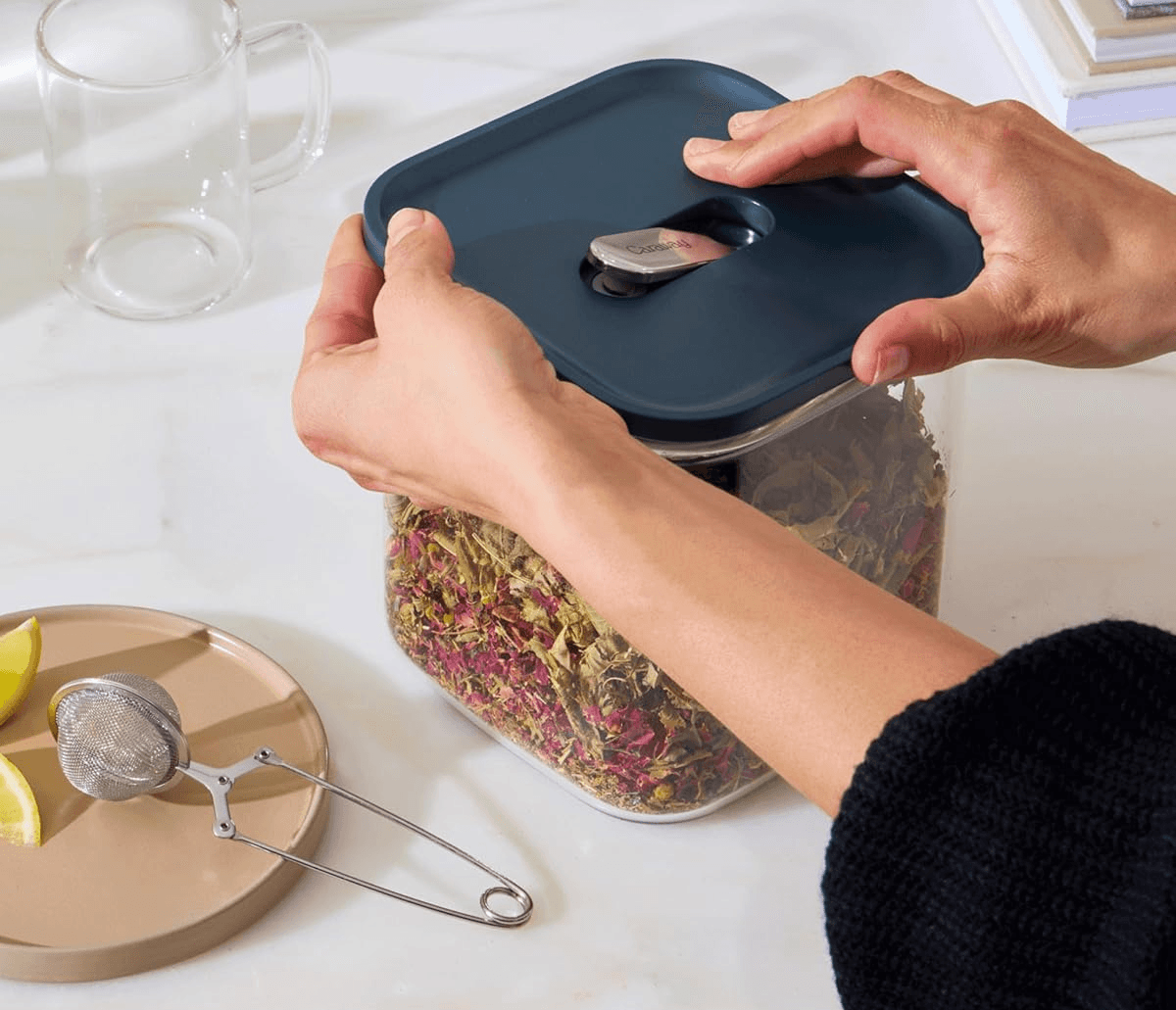
The Caraway Glass Airtight Container Set earns the top position on one specific credential: LightLabs tested Caraway cookware for over 600 PFAS compounds and detected zero. That result covers the glass and the lid assembly -- which is the gap that catches most glass-container brands. A clean glass body is common; a documented clean lid is not.
The glass is borosilicate. The lids are BPA-free with a silicone seal. Thirteen pieces ranging from 3.2 to 53 oz cover refrigerator storage, meal prep, and pantry use. The set sits at the upper end of the price range here, but it is the only pick in this guide where "PFAS-free" is a documented result rather than a marketing claim.
Who it's for: Households that want third-party materials verification across the full container, not just the glass body.
2. Weck 743 Mold Jar, Box of 6 -- Best pantry jars
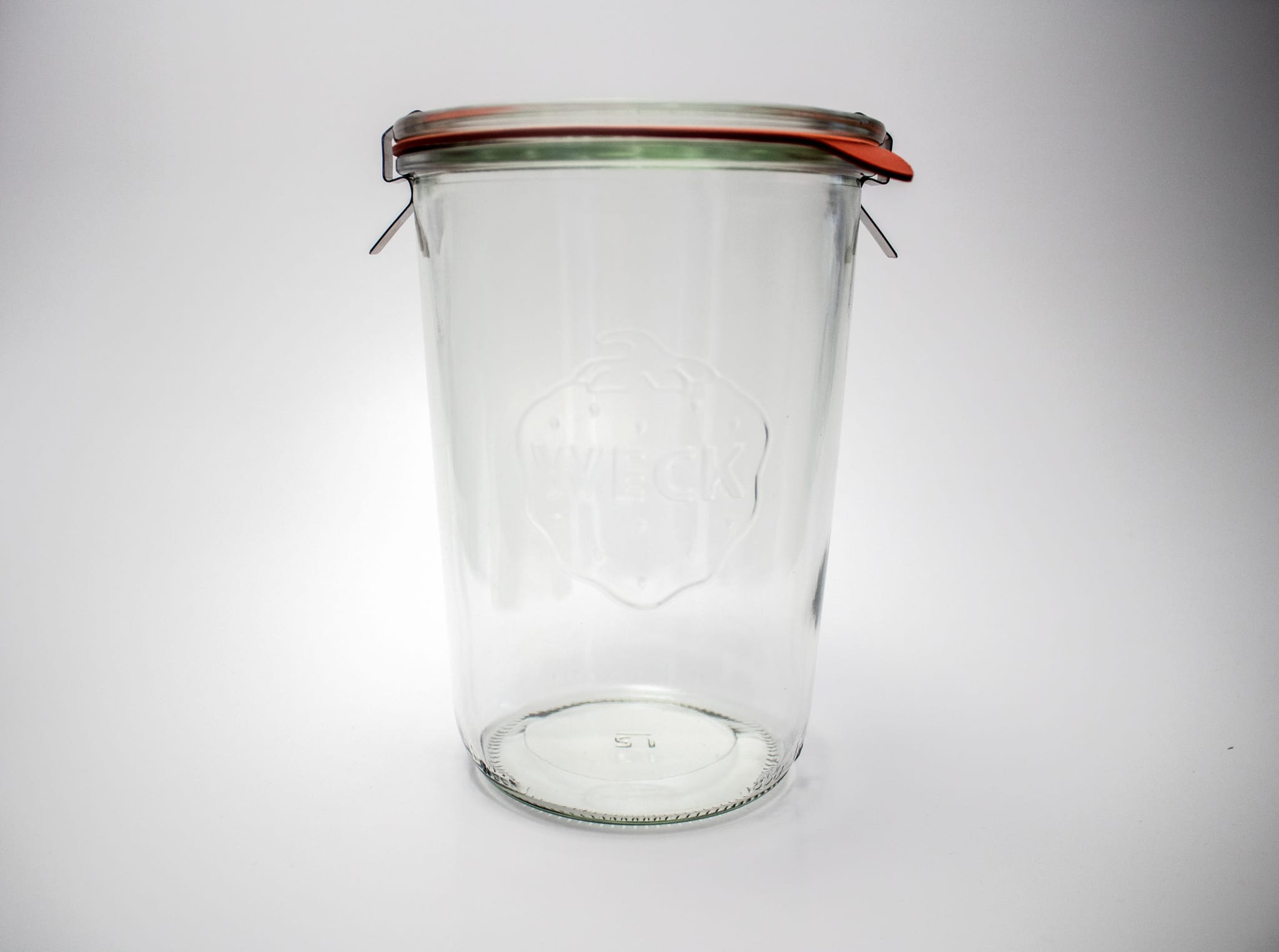
The Weck 743 Mold Jar solves the lid problem by eliminating plastic from the sealing system entirely. The glass lid sits on a natural rubber ring; stainless steel clips hold it in place. No BPA-free plastic, no silicone of unspecified grade -- just glass on glass with a rubber gasket.
Weck jars are made in Germany to a design that has not changed in over a century. The 743 Mold Jar holds 290 ml and is suitable for refrigerator leftovers, condiments, or pantry staples. The clips are reusable; rubber rings are consumable and sold separately. The system is not leak-proof for transport, but for refrigerator and pantry storage it offers the simplest, purest material stack on this list.
Who it's for: Pantry storage and batch cooking where the goal is removing plastic from the seal surface entirely.
3. LunchBots Large Trio -- Best stainless steel

The LunchBots Large Trio distinguishes itself among stainless options by disclosing the alloy grade on the product page: 18/8 (304) stainless steel. Most stainless food storage brands omit this disclosure entirely. 201 stainless, common in budget containers, has a higher manganese content and is less stable for acidic foods. LunchBots explicitly does not use 201.
The trio provides three containers (20 oz, 28 oz, and 44 oz) for lunch, leftovers, and large batch storage. Lids are BPA-free polypropylene. Containers are oven-safe without the lid and dishwasher-safe. LunchBots is a B Corp. No Amazon listing was found for the Large Trio at time of review; the brand-direct link is the verified buy path.
Who it's for: Those who want stainless steel with the alloy grade documented and do not need Amazon availability.
4. Stasher Silicone Bowl, 8-Cup -- Best silicone bowl

The Stasher Silicone Bowl is made from platinum-cured silicone. Stasher discloses its silicone as food-safe, platinum-cured, and free from BPA, BPS, lead, and latex. The 8-cup bowl handles microwave, dishwasher, freezer, and oven use up to 400F. The lid pinch-seals without additional clips.
Silicone's advantage for food storage is flexibility and microwave compatibility; its variable is the grade and curing method. Platinum-cured silicone does not produce volatile curing byproducts. Stasher's platinum cure is published on the product page, which is the standard we require for any silicone pick.
Who it's for: Those who want flexible, microwave-compatible storage in documented platinum silicone.
5. Zip Top Reusable Container Full Set of 8 -- Best silicone value set

The Zip Top Full Set covers the same platinum silicone standard as Stasher at a slightly lower cost across eight pieces. Zip Top's self-sealing design -- no separate lid required -- removes the lid chemistry question from the equation. The set spans cups, dishes, and a large bowl.
Zip Top discloses platinum-cured silicone on its product pages and holds NSF food-safety certification. The containers are microwave, dishwasher, and freezer safe. Where Stasher excels in single-bowl flexibility, Zip Top offers better coverage of container sizes in a single purchase.
Who it's for: Households that want a complete silicone set at a practical price and want to avoid a separate lid entirely.
6. ECOlunchbox Seal Cup Splash Box -- Best for lunch

The ECOlunchbox Seal Cup Splash Box pairs an 18/8 (304) stainless body with a silicone lid independently tested to FDA and NSF food-contact standards. For a container that needs to survive a bag, this combination -- documented stainless with documented silicone -- holds up to scrutiny.
ECOlunchbox is a B Corp. The Seal Cup line should not be confused with the Three-in-One Classic, which uses 201 stainless and does not carry the same alloy documentation. The Splash Box is the flat-lid version that meets our criteria.
Who it's for: Packed lunches where spill resistance and documented stainless-plus-silicone construction matter.
7. U-Konserve Round Nesting Container Trio -- Best budget stainless

The U-Konserve Round Nesting Container Trio nests for compact storage and uses LFGB-quality platinum silicone lids -- the European food-contact standard for silicone. The set is CPSIA lab-tested and BPA/BPS-free certified. B Corp.
Three nesting sizes cover most refrigerator storage scenarios. At this price point with a documented 304 stainless body and a lid meeting LFGB platinum silicone standards, it is the most accessible stainless entry in this guide.
Who it's for: Those who want stainless with documented silicone lids at the lowest price on this list.
8. Glasslock Sens 24-Piece Glass Food Storage Set -- Best value glass set
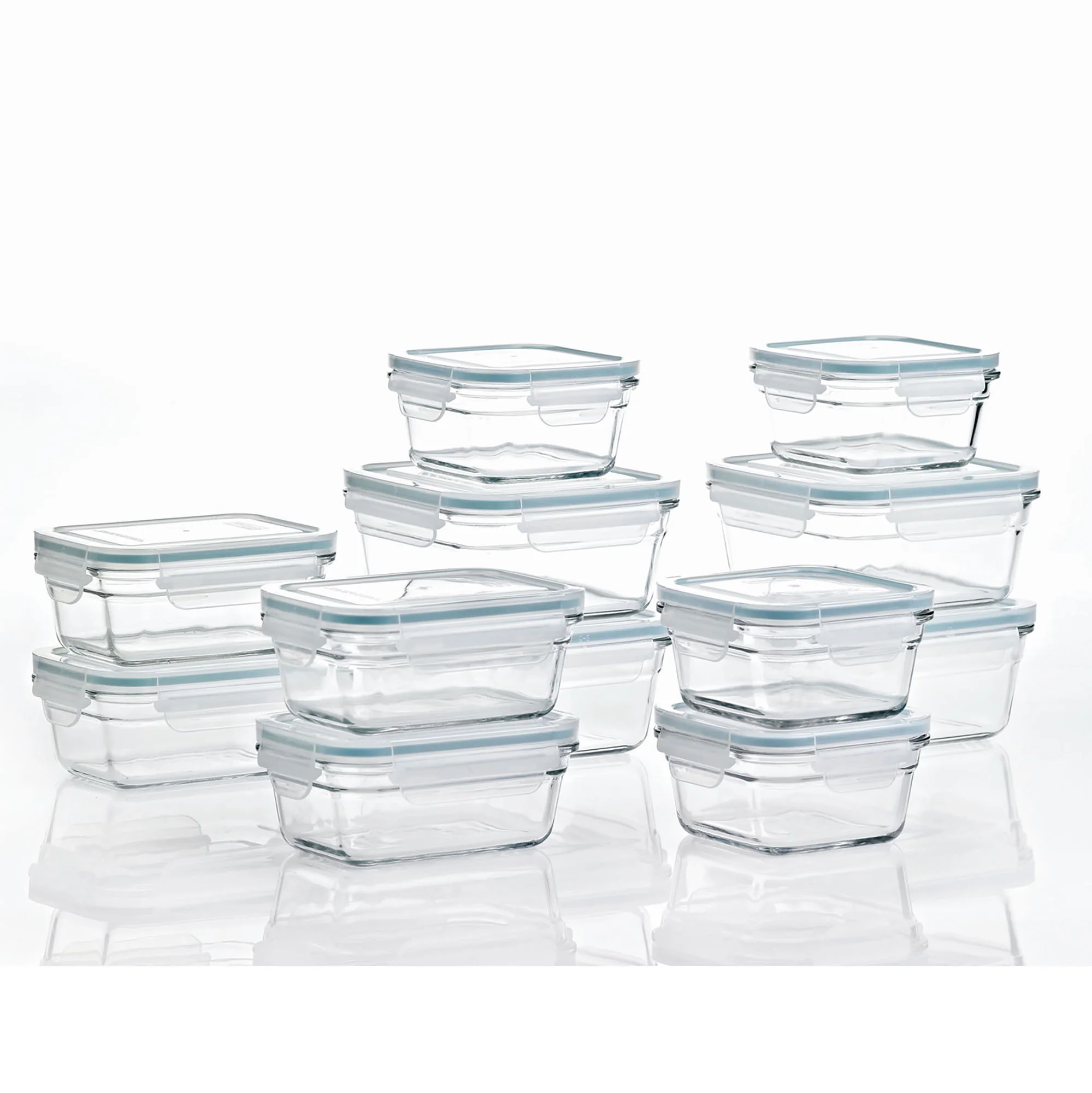
The Glasslock Sens 24-Piece Set is tempered soda-lime glass with BPA-free polypropylene lids and silicone gaskets, manufactured to Korean food-contact standards. Eight sizes across 24 pieces covers a full household at a price point significantly below Caraway.
The gap to be clear about: Glasslock does not publish third-party PFAS testing on its lid assembly, and the silicone gasket grade is not disclosed on the product pages we reviewed. The PP lids are BPA-free. For households that want gasket documentation, Caraway is the stronger choice. For households primarily concerned with replacing plastic storage containers in volume, this set is practical.
Who it's for: Households that want glass coverage across the full kitchen in one purchase and prioritize value over lid documentation.
What we passed on
Current US Pyrex ships borosilicate glass in some lines and soda-lime in others, with no consistent per-product labeling to distinguish them. The lids are BPA-free polypropylene with undisclosed gasket chemistry. We could not find published material specs sufficient for a definitive pass recommendation. Rubbermaid Brilliance uses borosilicate glass but Tritan copolyester lids -- BPA-free, but the specific bisphenol alternative is not named. We exclude unnamed BPA substitutes under the same reasoning we exclude BPA itself. Snapware Total Solution has the same gap: glass body, BPA-free lid, unnamed replacement compound.
Care
Glass (Caraway, Weck, Glasslock): Weck rubber rings should not go through the dishwasher -- they degrade. The glass and stainless clips are dishwasher-safe. For all glass, avoid thermal shock: let a hot dish cool before cold water. Stainless (LunchBots, ECOlunchbox, U-Konserve): avoid prolonged storage of highly acidic foods in scratched containers, which can accelerate metal migration. Dishwasher-safe. Silicone (Stasher, Zip Top): dishwasher top-rack or hand wash. Silicone can absorb odors from strongly flavored foods; baking the empty container at 350F for 30 minutes clears most of them.
FAQ
Is BPA-free plastic safe for food storage?
Not necessarily. BPA-free means the specific compound bisphenol A was removed, not that bisphenol substitutes were avoided. BPS and BPF -- common replacements -- act through the same estrogen-receptor pathway as BPA and were flagged by EFSA's 2023 bisphenol re-evaluation. Our preference is to avoid plastic at food-contact surfaces entirely rather than assume any particular BPA-free formulation is safe.
Is silicone safe for food storage?
Platinum-cured, food-grade silicone is generally considered inert at food-contact temperatures. The relevant distinction is between platinum-cured and peroxide-cured. Peroxide-cured silicone may retain volatile compounds from the curing process; platinum-cured does not. The silicone picks in this guide specify platinum cure. Generic or unbranded silicone containers rarely disclose curing method, which is why we do not recommend them.
What is the difference between borosilicate and soda-lime glass?
Borosilicate glass contains boron trioxide, which increases thermal stability and resistance to thermal shock. Soda-lime glass is the standard household glassware formulation. For refrigerator-to-microwave transitions within normal temperature ranges, both perform comparably. Borosilicate is the more relevant distinction for direct oven-to-freezer cycles.
Does stainless steel leach anything?
Chromium and nickel can migrate from stainless steel into food, particularly from scratched or lower-grade alloys in contact with acidic foods over time. 18/8 (304) stainless is the standard food-contact grade; 316 stainless (with molybdenum) is the upgrade for frequent acidic use. The stainless picks in this guide specify 18/8 at minimum.
Why does PFAS documentation on lids matter if the glass itself is inert?
The lid sits in contact with the food surface during storage. PFAS compounds have been used in easy-release and moisture-resistant coatings, and those coatings are more likely to appear on a lid than on a glass body. Brands that advertise "PFAS-free glass" are typically describing the glass -- not the full assembly. Caraway is the only pick with a third-party test covering the complete container.
Cover image: Arina Krasnikova via Pexels (Pexels License). Source.