The Food and Drug Administration maintains a public database called the Food Contact Notification (FCN) system. It documents every substance that has been formally authorized for use in food packaging, containers, and cookware sold in the United States — and the migration limits those substances are permitted to reach inside your food.
Reading it is instructive.
How the approval works
A manufacturer submits a notification to FDA. The agency has 120 days to raise a formal objection. If it doesn't, the substance can go to market. Silence equals authorization. FDA evaluates whether the proposed migration level poses a dietary risk — not whether the material is ideal, and not whether it holds up under conditions beyond the manufacturer's test protocol.
What's been authorized, and what's been quietly phased out, tells a more complete story than the labels do.
Tritan, and what "BPA-free" actually means
Tritan copolyester was authorized under FCN 1041 for food contact at temperatures up to 100°C — including microwave use. It was marketed, correctly, as BPA-free. What the marketing didn't say: a 2014 study in Environmental Health (Bittner and Denison) found that Tritan resins released chemicals with measurable estrogenic activity when subjected to UV exposure, microwave heating, and dishwasher cycling. The compound identified was triphenyl phosphate, a processing additive in the formulation, which showed estrogenic activity in both MCF-7 cell and BG1Luc assays.
FCN 1041 remains effective. Tritan remains on the market.
The "abandonment" language
In 2012, FDA announced it would no longer authorize BPA-based epoxy resins in baby bottles and sippy cups. The announcement contained a sentence that rarely gets quoted: the decision was "based solely on a determination of abandonment" by manufacturers. Not a safety finding. FDA's own statement.
BPA-based coatings remain authorized in infant formula can linings and most other food contact applications. The alternatives that replaced BPA in cans — primarily BPS (bisphenol S) and BPF (bisphenol F) — exhibit estrogenic activity in peer-reviewed testing: BPS at roughly one-third the potency of BPA, BPF at comparable potency depending on the assay.
In May 2022, FDA revoked authorizations for 23 phthalates in food contact materials. Eight phthalates remain authorized as plasticizers. The 2022 revocations were, again, recorded as abandonments — not safety determinations. In November 2024, FDA confirmed it would not move to prohibit the remaining authorized phthalates.
The PFAS chapter follows the same pattern. As of January 2025, FDA had revoked 35 FCNs for PFAS-containing grease-proofing agents used in fast food wrappers, microwave popcorn bags, and pizza boxes — through manufacturer agreements reached between 2020 and 2024, not a regulatory order.
This action is based solely on a determination of abandonment and is not related to the safety of BPA.
In your kitchen
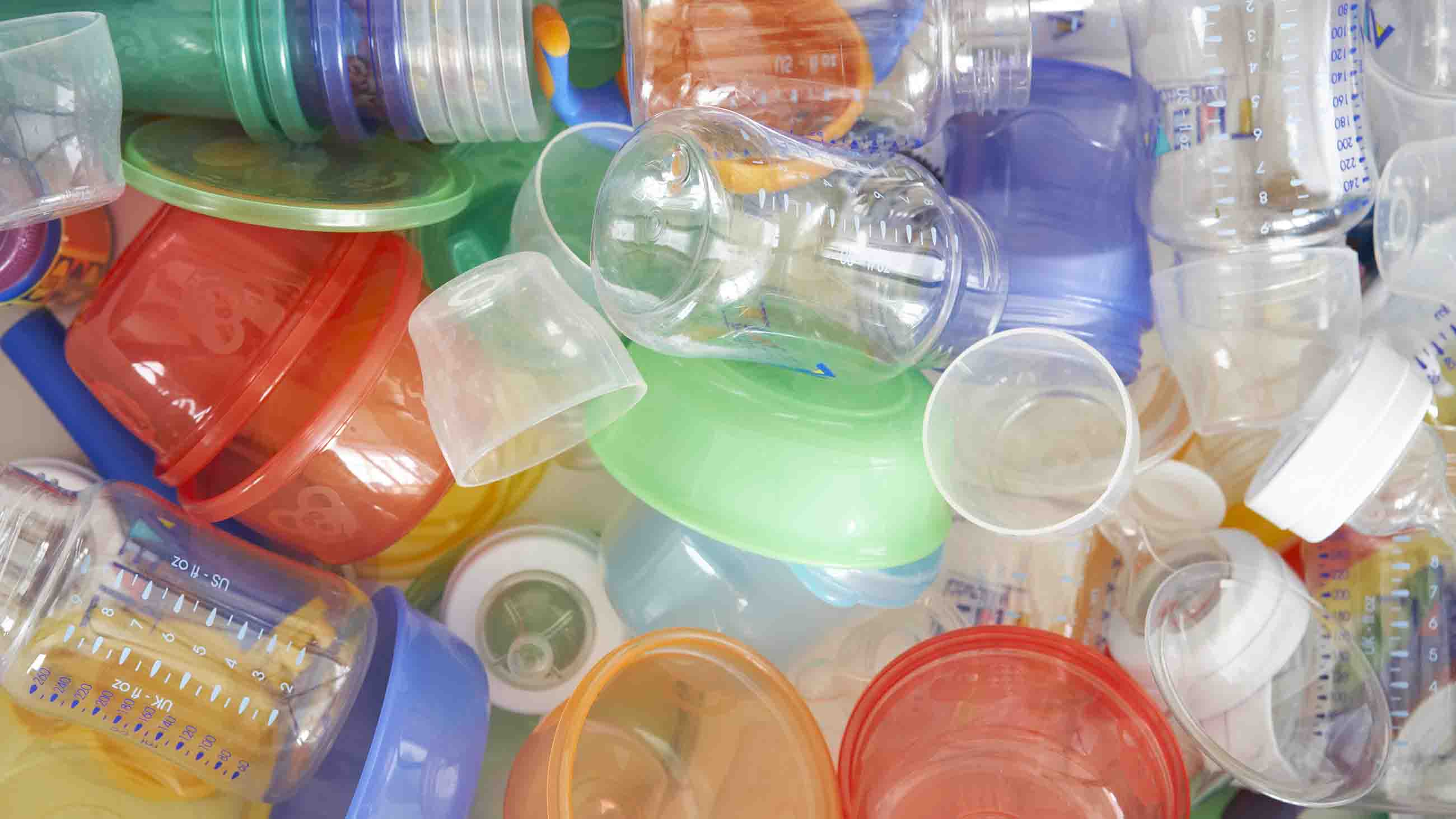
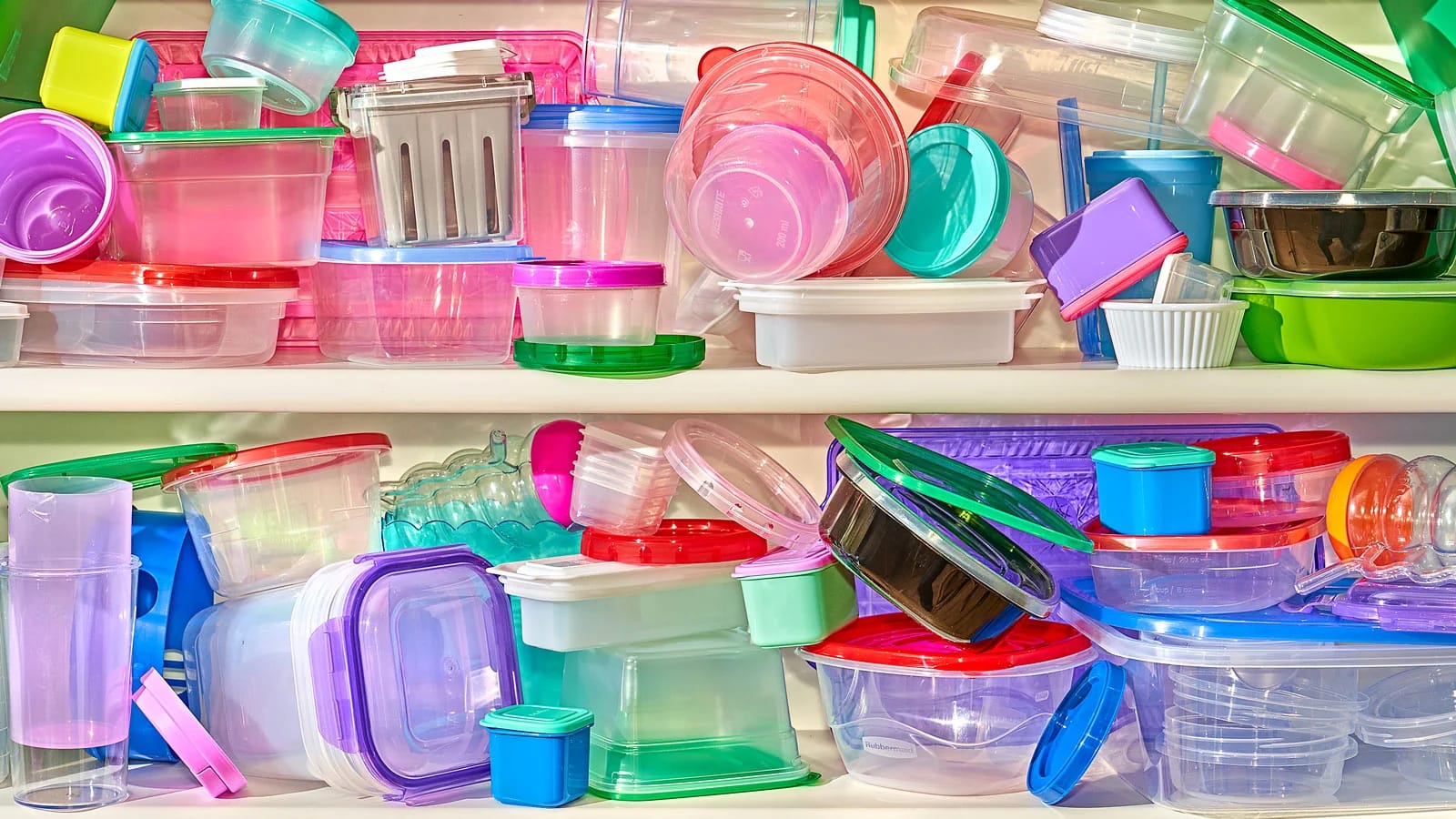
This matters because the materials that appear most in this database are the ones used in daily cooking and food storage: plastic containers, reusable bottles, canned goods, microwave-safe dishes. The migration conditions under which concerning compounds were detected — microwave heating, UV exposure, repeated dishwasher cycling — are normal use, not edge cases.
"FDA-authorized" describes the approval process. It doesn't describe what happens under full use conditions, or who conducted the testing.
If you're shopping now
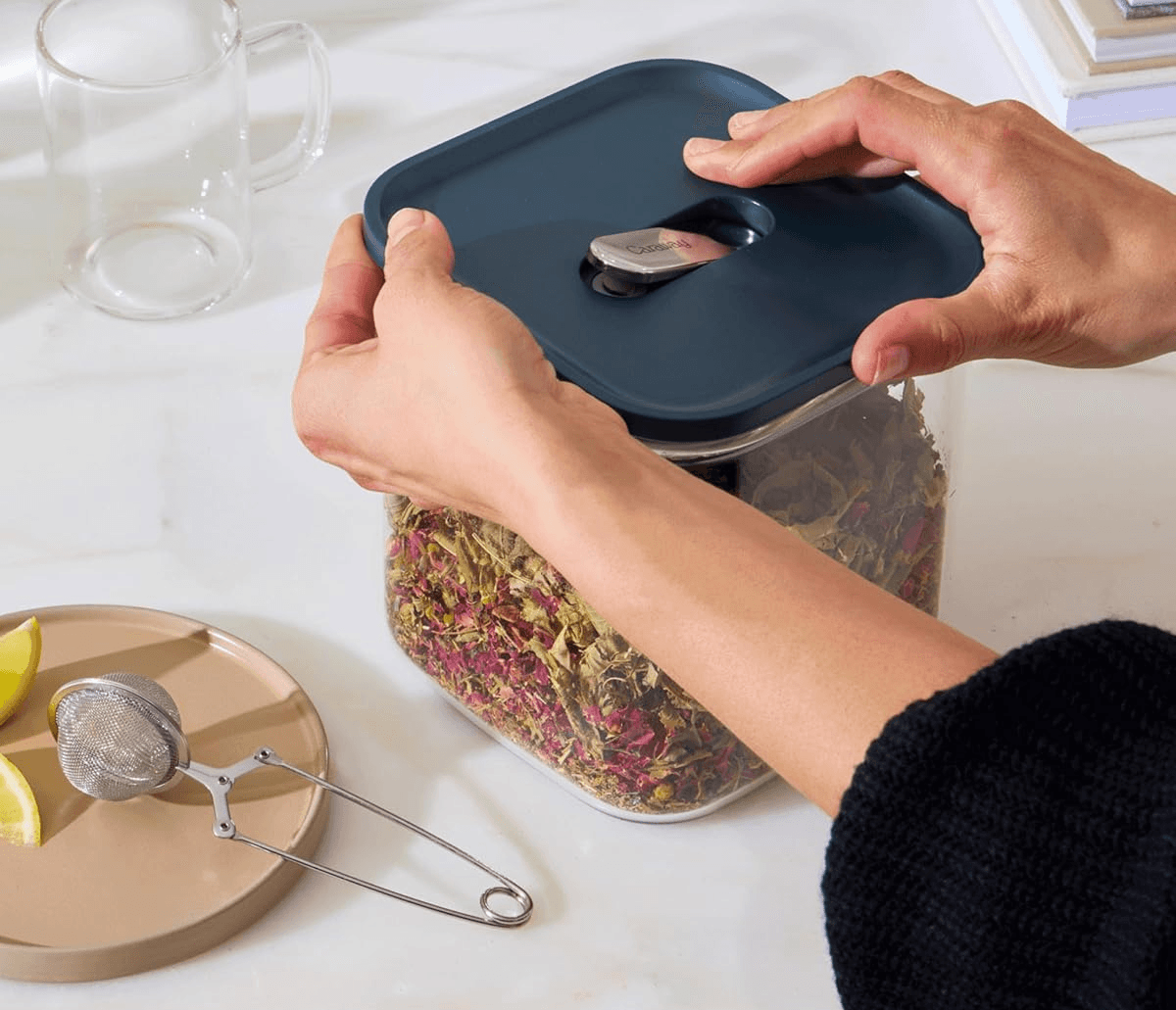
The kitchen cookware section is filtered for glass, stainless, and ceramic food contact — materials that don't migrate at the temperatures and conditions studied. The reasoning behind those choices is on our promise page.
Cover image: Kier in Sight Archives via Unsplash (Unsplash License) — source.