
Our picks at a glance
| Pick | Best for | Key certifications | Price | Details |
|---|---|---|---|---|
| Force of Nature Starter Kit | HOCl on demand | EPA List N | $$ | Full review |
| BRIOTECH HOCl Spray, 32 oz | Ready-to-use HOCl | EPA List N | $$ | Full review |
| Seventh Generation Disinfecting Spray | Thymol botanical | EPA List N | $ | Full review |
| Aunt Fannie's Fragrance-Free Spray | Fragrance sensitivities | EPA List N | $ | Full review |
| Branch Basics Oxygen Boost, 4 lb | Laundry and surface powder | Full disclosure | $$ | Full review |
| ECOS All Purpose Cleaner, Orange | Everyday plant-based cleaning | EPA Safer Choice | $ | Full review |
Conventional household disinfectants rely on quaternary ammonium compounds: benzalkonium chloride, DDAC, and their relatives. They kill pathogens effectively. They also accumulate in house dust, are absorbed through skin contact, and have been linked to respiratory sensitization in occupational and consumer settings. The European Chemicals Agency placed several quat compounds on its candidate restriction list in 2023 following a review of consumer product concentrations.
The same products typically include "fragrance" as a catchall for dozens of undisclosed compounds, alcohol solvents in quantities that can damage certain surfaces, and synthetic dyes. None of those pass our disclosure requirement.
Three other chemistries kill pathogens effectively, have established safety profiles, and leave no air quality concern behind. All six picks on this list use one of them.
What we look for
An active ingredient you can name. The disinfecting chemistry must be disclosed on the label, not obscured behind "kills 99.9%." The three chemistries that pass our screening:
- Hypochlorous acid (HOCl): produced by electrolyzing dilute salt water, the same molecule white blood cells use to destroy pathogens. Breaks down to water and salt. No residue.
- Thymol: the active compound extracted from thyme oil, EPA-registered as a disinfectant at 0.05% concentration. The botanical path to List N efficacy.
- Hydrogen peroxide: registered disinfectant chemistry at 2.5 to 3% concentration. Breaks down to water and oxygen. No buildup.
EPA List N registration. The EPA's disinfectant list for products effective against SARS-CoV-2 requires efficacy testing against a pathogen panel before the label claim goes on the bottle. A product on List N has been tested. We require it for any product labeled as a disinfectant.
Contact time disclosed. Spray-and-wipe at ten seconds is cleaning, not disinfecting. The contact time on the label (the minimum the surface must remain visibly wet) is the threshold for the efficacy claim to hold. The picks here range from 2 minutes to 10 minutes. We list contact time for each pick so you can match the product to your actual use case.
Full ingredient disclosure. Every ingredient must be listed, not just the active one. "Fragrance" with no constituent detail fails this standard. Only Seventh Generation (named essential oils) and ECOS (named botanical fragrance components) include any scent compound. Every other pick is fragrance-free.
No quats, no optical brighteners, no undisclosed fragrance, no VOC solvents. The full site disqualifier list applies.
Our picks
1. Force of Nature Starter Kit: Best overall
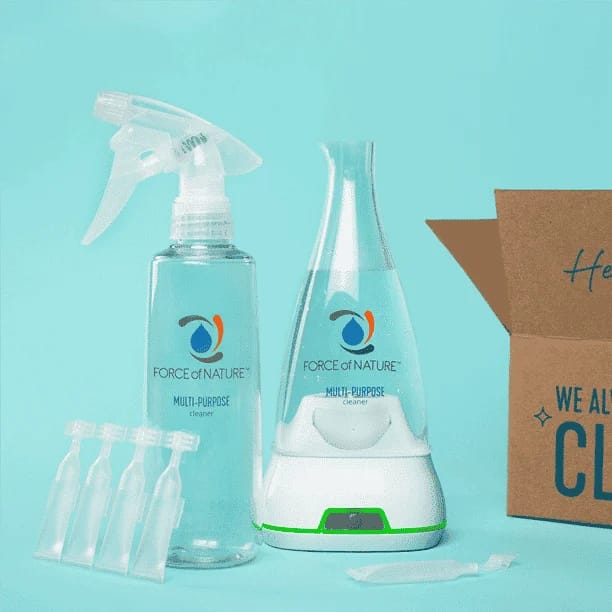
The Force of Nature Starter Kit uses a countertop electrolyzer to convert a salt-and-acetic-acid capsule with tap water into hypochlorous acid at pH 6.5 to 7.5, the same range as HOCl produced by white blood cells. It cleans, deodorizes, and disinfects from one spray bottle.
EPA Reg. No. 84683-6 is active on List N. The label efficacy covers SARS-CoV-2, staph aureus, salmonella, and influenza A with a 10-minute contact time. Cost per refill runs under $2 per 12-ounce bottle at current capsule pricing.
The trade-off: the device requires a counter outlet and the upfront hardware cost. HOCl degrades in UV light, so fresh solution should be used within a few days. For households without counter space for the electrolyzer, the Briotech pick below provides the same chemistry as a ready-to-use bottle.
2. BRIOTECH Sanitizer Disinfectant Spray, 32 fl oz: Best ready-to-use HOCl
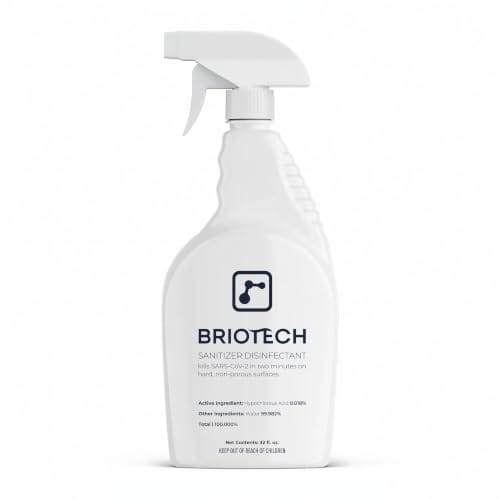
The BRIOTECH Sanitizer Disinfectant Spray is ready-to-use HOCl at 0.022% active concentration, stabilized in a sealed bottle without preservatives or synthetic fragrance. EPA Reg. No. 92564-1, List N efficacy against SARS-CoV-2 at a 10-minute contact time.
The label designation is "Nursery and Baby Safe": no rinse required on surfaces, no fumes on application, no residue. The ingredient list is salt water and hypochlorous acid at 0.022%. That is the complete formulation.
Bottled HOCl has a shorter shelf life than conventional disinfectants. Store it in a cool, dark spot and observe the expiration date. Households that prefer to make fresh solution on demand should look at the Force of Nature pick above.
3. Seventh Generation Disinfecting Multi-Surface Cleaner, Lemongrass Citrus: Best botanical
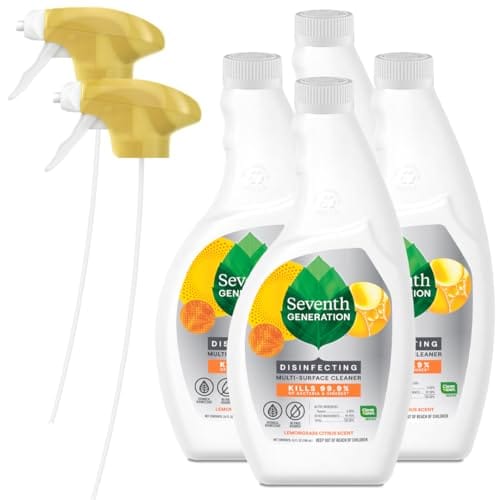
Thymol is the naturally occurring compound extracted from thyme essential oil that the EPA registers as a disinfectant at 0.05% concentration. The Seventh Generation Disinfecting Multi-Surface Cleaner is the most widely available thymol product that fully discloses its chemistry and carries active List N registration.
Every scent compound is named on the label: lemongrass and citrus essential oils. No fragrance catchall. No rinse required on food-contact surfaces. Contact time is 10 minutes, the same as HOCl, and the efficacy claim holds only if the surface stays visibly wet for that duration.
This is a legitimate EPA-registered disinfectant, not a botanical spray with unverified claims. The thymol chemistry does not require tight sealing to remain shelf-stable.
4. Aunt Fannie's All Purpose Cleaning Spray, Fragrance Free: Best fragrance-free
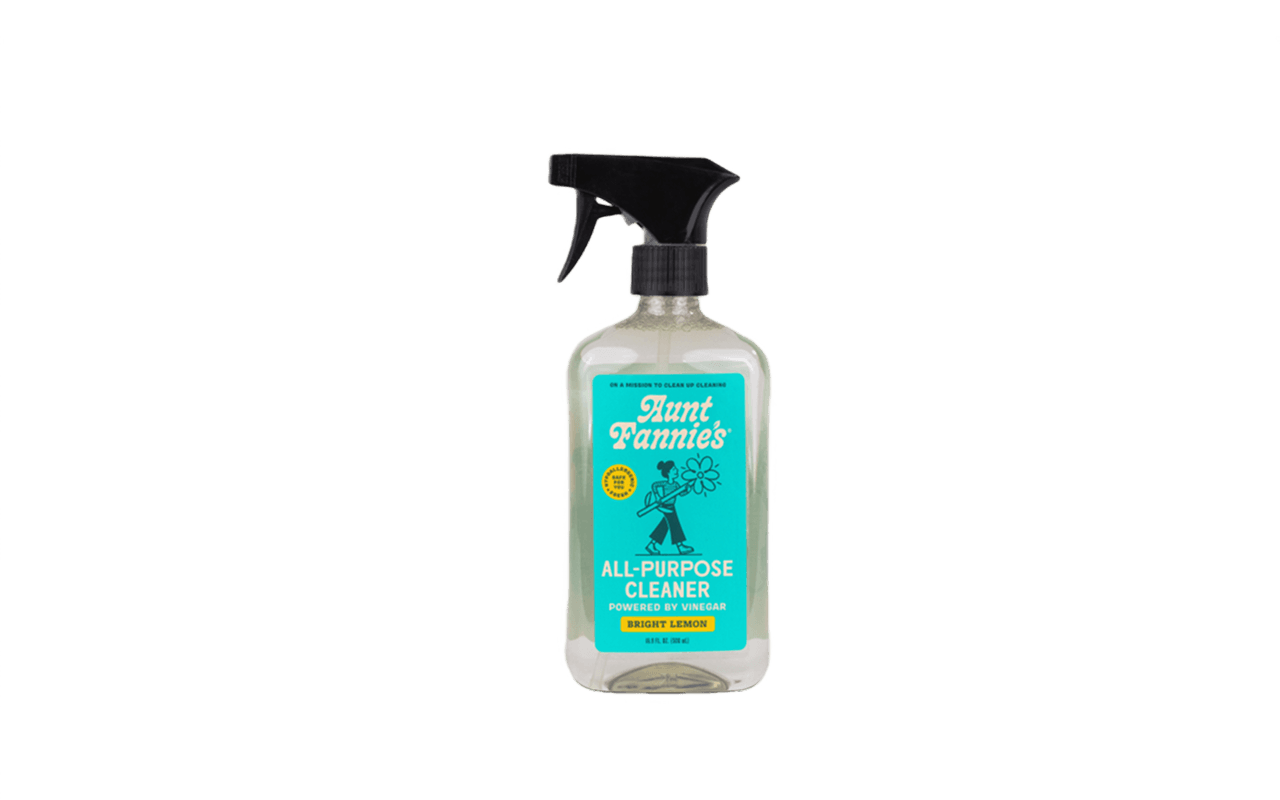
The Aunt Fannie's Fragrance-Free All Purpose Spray uses hydrogen peroxide (2.5%) and white vinegar as co-actives. Hydrogen peroxide degrades to water and oxygen with no residue and no buildup. The fragrance-free formulation omits even the essential oils in the Seventh Generation pick, making it the default recommendation for households with fragrance sensitivities, reactive airways, or infants.
EPA-registered as a disinfectant with a 2 to 4 minute contact time per label. Full ingredient disclosure is available on the brand's product page. No quats, no synthetic fragrance, no dyes, no VOC solvents.
5. Branch Basics Oxygen Boost, 4 lb: Best powder

Sodium percarbonate is hydrogen peroxide in dry form. It releases H2O2 on contact with water, then breaks down to water, oxygen, and sodium carbonate. The Branch Basics Oxygen Boost dissolves in laundry at one teaspoon per load, or in water for surface soaking and pre-treatment.
The powder format offers two real advantages over liquid sprays: it stores indefinitely without potency loss (unlike bottled HOCl or liquid H2O2, which degrade over months), and one 4-pound container replaces substantial liquid disinfectant volume.
It is not EPA-registered as a spray disinfectant; the product category is oxygen whitener. Sodium percarbonate's efficacy against common household pathogens in laundry and on hard surfaces is well-documented in the scientific literature. Full ingredient disclosure: one ingredient.
6. ECOS All Purpose Cleaner, Orange, 22 fl oz: Best everyday cleaner
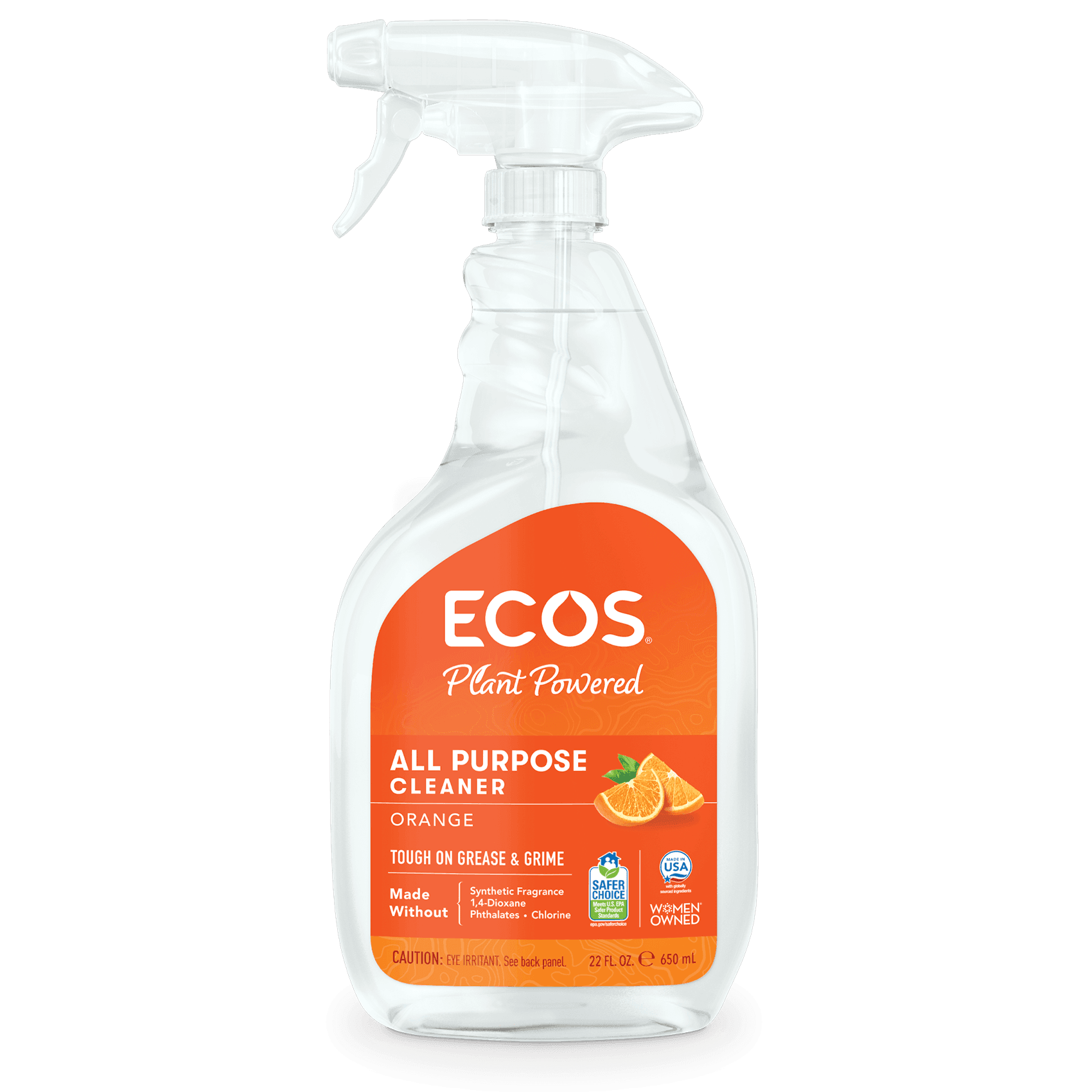
The ECOS All Purpose Cleaner, Orange is not an EPA-registered disinfectant, and we are not listing it as one. It is a plant-derived surfactant cleaner for the routine cleaning that most surfaces actually require: removing soil, grease, and general contamination without quats, synthetic fragrance, optical brighteners, or petroleum-based surfactants.
EPA Safer Choice certified, which requires disclosure of all functional ingredients. Orange oil is the named fragrance compound. Suitable for food-contact surfaces with a quick rinse.
When disinfection is the actual requirement (after raw meat handling, during household illness, or for high-touch surfaces during a respiratory virus season), reach for one of the List N picks above. ECOS does not replace them.
What we passed on
Quat-based sprays. Benzalkonium chloride, DDAC, and related compounds fail the antimicrobial biocide exclusion. This covers the majority of the mainstream disinfectant market, including products marketed as "hospital-grade" or "professional strength."
Botanical sprays without EPA registration. Tea tree oil, oregano oil, and unlicensed thyme oil sprays that make disinfectant claims without List N registration. Botanical origin does not confer efficacy, and these products bypass the federal testing requirement.
Products with undisclosed fragrance. Including several brands marketed specifically as "natural" cleaners that include "fragrance" or "parfum" without constituent detail.
CleanSmart HOCl spray. A solid product in the HOCl category but out of stock across major retailers and the brand's own site at time of writing. We will revisit when availability returns.
Contact time: the variable most guides skip
The EPA efficacy claim on any disinfectant label is conditional on the stated contact time under the tested conditions. A spray wiped off before that threshold has not achieved the tested kill rate, regardless of the active ingredient.
For routine cleaning where disinfection is not the goal, contact time is irrelevant. But when you are sanitizing after raw poultry, managing a norovirus in the household, or working a high-touch surface during flu season, the contact time on the label is a hard minimum. Apply enough product to keep the surface visibly wet for the full duration.
FAQ
Are HOCl-based disinfectants as effective as bleach?
EPA List N registration means HOCl products have been tested and confirmed effective against the same pathogen panel as bleach-based disinfectants, including SARS-CoV-2, staph aureus, and salmonella. The mechanism differs: HOCl disrupts bacterial cell membranes via oxidation without bleach's aggressive alkalinity. Kill rates on hard surfaces at label contact time are comparable. Bleach costs less per liter but requires dilution, loses potency quickly after the bottle is opened, and produces chlorine fumes in enclosed spaces that are a real indoor air quality concern.
What makes quats a problem for indoor air quality?
Quaternary ammonium compounds appear in settled house dust in homes where they are used regularly, are absorbed through skin contact, and have been associated with respiratory sensitization in occupational cleaning settings. Consumer product concentrations are lower than the occupational exposures studied, but daily use in a closed kitchen or bathroom accumulates over time. The European Chemicals Agency initiated restriction proceedings on several common quat compounds in 2023 based on cumulative consumer exposure assessments.
Does every surface in a home need to be disinfected?
No. Disinfection is specifically appropriate after raw meat or fish handling, during or after a household illness involving a highly transmissible pathogen (norovirus, influenza, RSV), or for immunocompromised households. For routine daily cleaning of counters, stovetops, and surfaces with no pathogen exposure, a plant-derived surfactant cleaner removes soil and general contamination without repeated disinfectant chemistry exposure. That is what the ECOS pick is for.
Is hydrogen peroxide safe on food-contact surfaces?
At 2.5%, the concentration in ready-to-use household sprays, hydrogen peroxide is safe on food-contact surfaces and does not require rinsing per the label. It breaks down to water and oxygen. Note: do not combine hydrogen peroxide and vinegar in the same spray bottle; the reaction produces peracetic acid at concentrations that are mucous-membrane irritants. The Aunt Fannie's pick uses both as pre-formulated co-actives at the correct ratio.
Why do HOCl and thymol disinfectants take 10 minutes to work?
The contact time is determined by the kinetics of the active ingredient against the target pathogen and is verified in EPA-required efficacy testing. HOCl and thymol both achieve their rated kill at 10 minutes under the test conditions (defined temperature, surface type, organic load). Hydrogen peroxide at 2.5% achieves rated kill faster: 2 to 4 minutes depending on the pathogen. There is no way to shorten the contact time and maintain the efficacy claim. If the label says 10 minutes, wiping before that point means the surface has not reached the tested kill rate.
Cover image: Ron Lach via Pexels (Pexels License). Source.


