Our picks at a glance
| Pick | Best for | Key certifications | Price | Details |
|---|---|---|---|---|
| Branch Basics The Concentrate | All-purpose | EPA Safer Choice | $$ | View |
| Force of Nature Starter Kit | Disinfecting | EPA registration | $$ | View |
| Meliora Refill Tablets | Zero-waste spray | MADE SAFE, Leaping Bunny | $ | View |
| ECOS Shower & Bathroom Cleaner | Ready-to-use spray | EPA Safer Choice, Leaping Bunny | $ | View |
| Dr. Bronner's Sal Suds | Floors and surfaces | Biodegradable | $$ | View |
| Seventh Generation Tub & Tile Cleaner | Tubs and tile | EPA Safer Choice | $ | View |
| Seventh Generation Toilet Bowl Cleaner | Toilet bowl | EPA Safer Choice | $$ | View |
| Bon Ami Powder Cleanser | Abrasive scrub | 3-ingredient, unscented | $ | View |
The problem with most bathroom cleaners
The most hazardous products under the average bathroom sink are not the ones with skull-and-crossbones labels. They are the everyday sprays that list "fragrance" with no further disclosure, toilet bowl cleaners based on chlorine bleach, and "antibacterial" formulas built on quaternary ammonium compounds (quats). Each of these is a real chemistry problem, not a precautionary one.
"Fragrance" as an ingredient declaration is a legal catchall that can represent hundreds of distinct compounds, including phthalate esters used to extend scent longevity. Phthalates are endocrine disruptors listed on every major regulatory restricted list. Quats are registered pesticides; the concern with routine household use centers on daily indoor exposure and accumulation in household dust. And chlorine bleach reacts with ammonia-based cleaners to produce chloramine gas, which is why "don't mix cleaners" appears on the back of most bathroom bottles.
The case for switching is direct: every cleaning task in a bathroom has a chemistry that works without these three problems. What changes is that the safer formulas make their ingredients legible.
What we screened for
We filtered every candidate against the site's full disqualifier list, with particular attention to the issues that matter for cleaning products.
Surfactant class. The conventional surfactants most associated with 1,4-dioxane contamination are ethoxylates: sodium laureth sulfate (SLES), PEGs, and anything ending in "-eth-." These are synthesized via ethoxylation, a process that leaves variable residuals of 1,4-dioxane, a probable carcinogen. The safer replacements are glucosides (plant sugars), straight soap (potassium or sodium cocoate), and alkyl polyglucosides. We confirmed surfactant class on every product here before inclusion.
No undisclosed fragrance. We required either a fully disclosed ingredient list, unscented formulas, or a certification whose standard explicitly prohibits catchall "fragrance." EPA Safer Choice and MADE SAFE both qualify. Essential oils named individually by species (Melaleuca alternifolia, Lavandula hybrida) are disclosed; "fragrance" as a standalone line is not.
No quats. Benzalkonium chloride (ADBAC), DDAC, and their relatives are biocides. For routine bathroom cleaning where disinfection is not the goal, they add risk without benefit. Force of Nature, our only disinfectant pick, uses hypochlorous acid instead.
No chlorine bleach. No sodium hypochlorite in any pick.
Effective cleaning removes the vast majority of surface pathogens through friction and surfactant action. Disinfection makes sense when someone in the household is immunocompromised or recovering from illness. It is not a daily requirement for most households.
Certifications we treated as meaningful. EPA Safer Choice vets every surfactant, preservative, solvent, and fragrance ingredient in a formula. MADE SAFE screens the full ingredient set against a harm database. Leaping Bunny is a reliable no-animal-testing standard. We listed each certification only when we could verify it in the issuing organization's registry.
Our picks
1. Branch Basics The Concentrate, 33.8 fl oz: Best overall
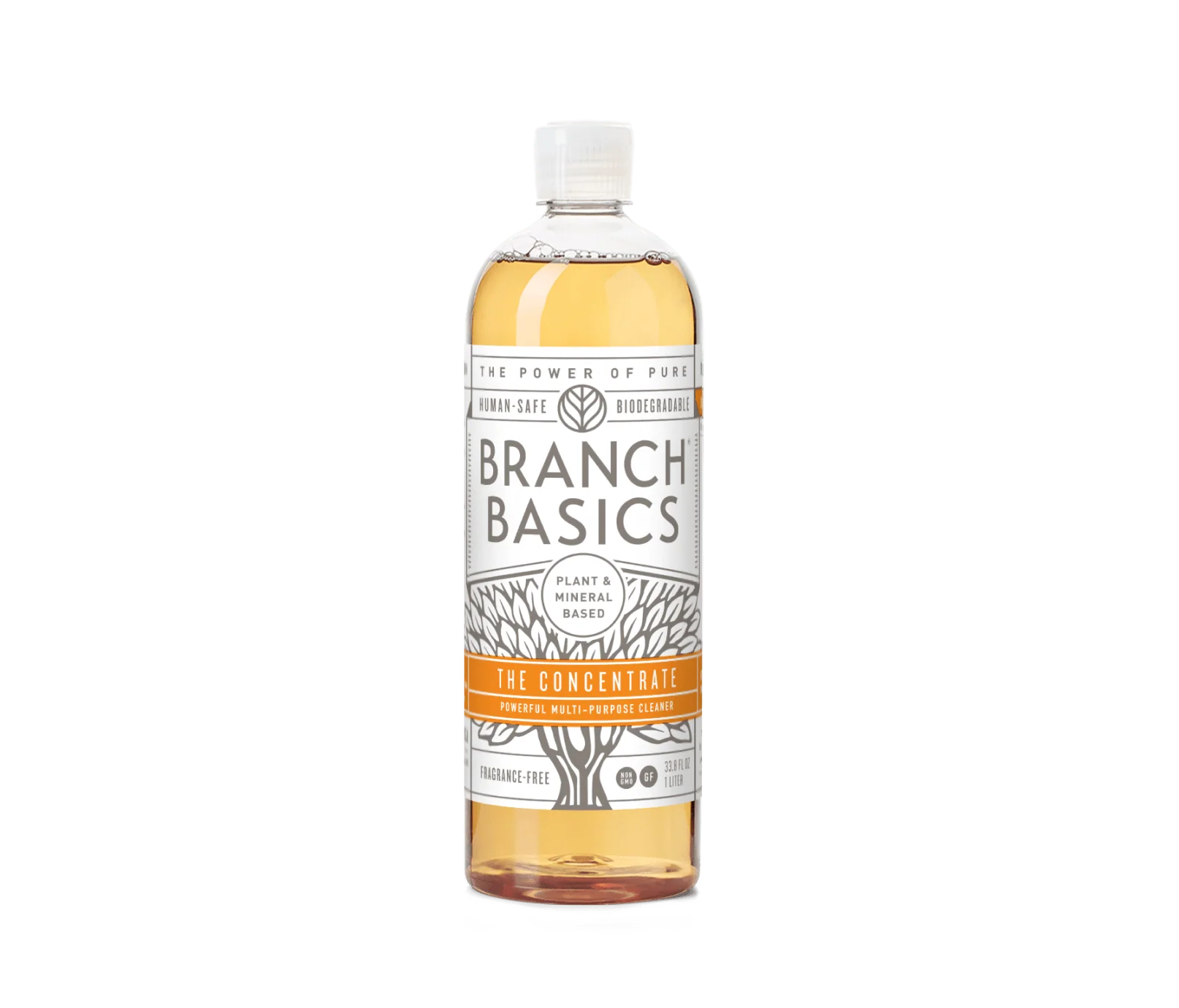
The Branch Basics The Concentrate is the logical starting point for replacing a bathroom's conventional cleaners in one step. A single 33.8 fl oz bottle dilutes into multiple ready-to-use sprays following Branch Basics' printed mixing ratios: all-purpose (lighter dilution), bathroom (stronger dilution for soap scum and mineral deposits), and streak-free glass (for mirrors). The concentrate is built on a glucoside surfactant, contains no quats, no synthetic fragrance, and no chlorine bleach. EPA Safer Choice certification covers the full formula.
The company's ingredient transparency goes further than certification requires: every ingredient is named, its function noted, and its sourcing listed on the website. At $$ tier for the concentrate, the per-spray cost runs well below most ready-to-use alternatives.
Works on: counters, mirrors, sink basins, toilet exteriors, tile, floors (per dilution ratio).
2. Force of Nature Cleaner & Disinfectant Appliance Starter Kit: Best disinfectant
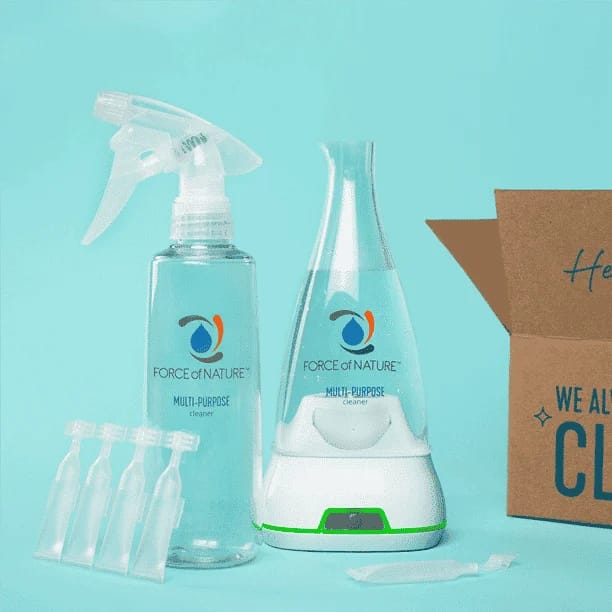
The Force of Nature Starter Kit is the only product on this list that carries an EPA registration as a disinfectant. The appliance runs an electrical current through a small capsule of salt, water, and a trace of vinegar to generate hypochlorous acid (hOCl). Hypochlorous acid is an oxidant the immune system generates to neutralize pathogens; it kills the organisms on the EPA List N and then breaks down to salt water. No quats, no synthetic fragrance, no chlorine bleach.
For most households, daily disinfection of every bathroom surface is not necessary or appropriate. Where Force of Nature makes sense is the high-touch points: toilet seat, flush handle, faucets, doorknob, and sink faucet. The appliance is a one-time purchase; refill capsules are the ongoing cost.
Works on: toilet seats, faucets, doorknobs, high-touch surfaces. EPA registered for disinfection.
3. Meliora All-Purpose Home Cleaner Refill Tablets, Unscented: Best zero-waste option

The Meliora All-Purpose Refill Tablets arrive in a cardboard box: three tablets, each dissolving in 16 fl oz of water to make a spray. The complete ingredient list is four items: potassium cocoate, sodium cocoate (vegetable soap), glycerin, and coconut oil. No preservatives, no fragrance, no surfactants with 1,4-dioxane risk. MADE SAFE certified and Leaping Bunny certified. Made in Chicago.
The plastic-free model means refilling a single glass or aluminum spray bottle each time. For a household committed to eliminating single-use plastic from the bathroom, Meliora closes the cleaning-product gap without a chemistry compromise. The main limitation is surface type: the soap-based formula performs on counters and sinks but leaves residue on glass, so pair it with a streak-free option for mirrors.
Works on: counters, sinks, tile.
4. ECOS Shower & Bathroom Cleaner, Tea Tree, 22 fl oz: Best value ready-to-use
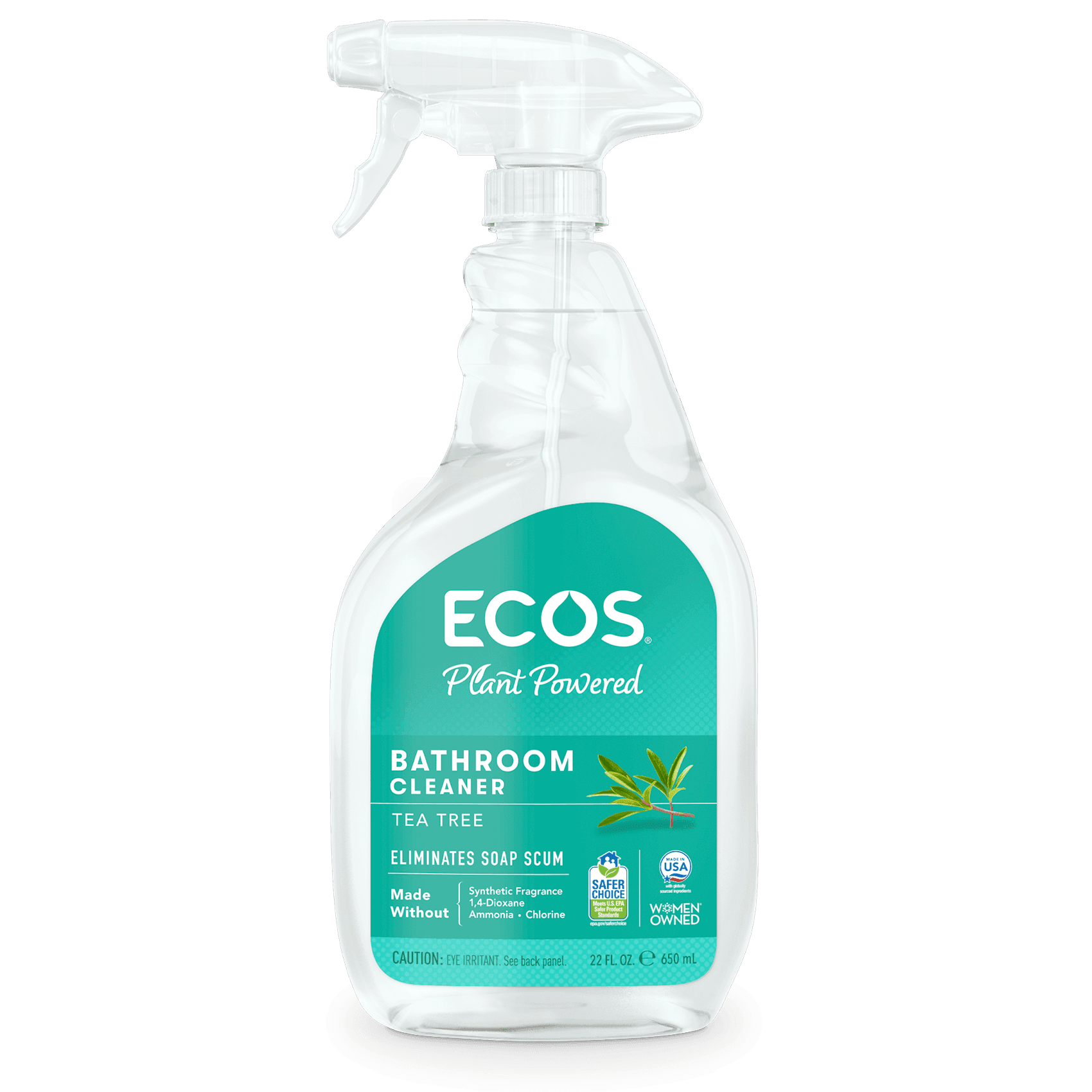
The ECOS Shower & Bathroom Cleaner is the most accessible pick: available in most major grocery stores, Safer Choice certified, and under $10 for a 22 fl oz ready-to-use bottle. The surfactant is a glucoside (plant-derived, not ethoxylated), the preservative is potassium sorbate, and the scent comes from named tea tree and lavender essential oils only. No synthetic fragrance, no ammonia, no quats. ECOS manufactures with 100% renewable energy and publishes the full ingredient list on its website.
For a household that wants a single bathroom spray without concentrates or tablet systems, this is the direct, no-math replacement.
Works on: showers, bathtubs, sinks, toilets.
5. Dr. Bronner's Sal Suds Biodegradable Cleaner, 32 oz: Best for floors and large surfaces

The Dr. Bronner's Sal Suds is a concentrated hard-surface cleaner built on sodium lauryl sulfate (not sodium laureth sulfate, the ethoxylated variant) and coco-betaine, with Siberian fir needle oil for scent. Every ingredient is disclosed; the formula is biodegradable.
Sal Suds dilutes at roughly one tablespoon per quart of water for general cleaning. The 32 oz bottle covers a large volume of use, which is why the $$ price is better represented on a per-use basis than on shelf. For bathroom floors and larger surface areas, it cleans without leaving a soapy residue when rinsed properly. It is not a disinfectant, which is the accurate framing for a daily cleaning routine.
Works on: floors, bathtub surrounds, sinks. Dilute before use.
6. Seventh Generation Tub & Tile Cleaner, Emerald Cypress & Fir, 26 oz: Best for tubs and tile
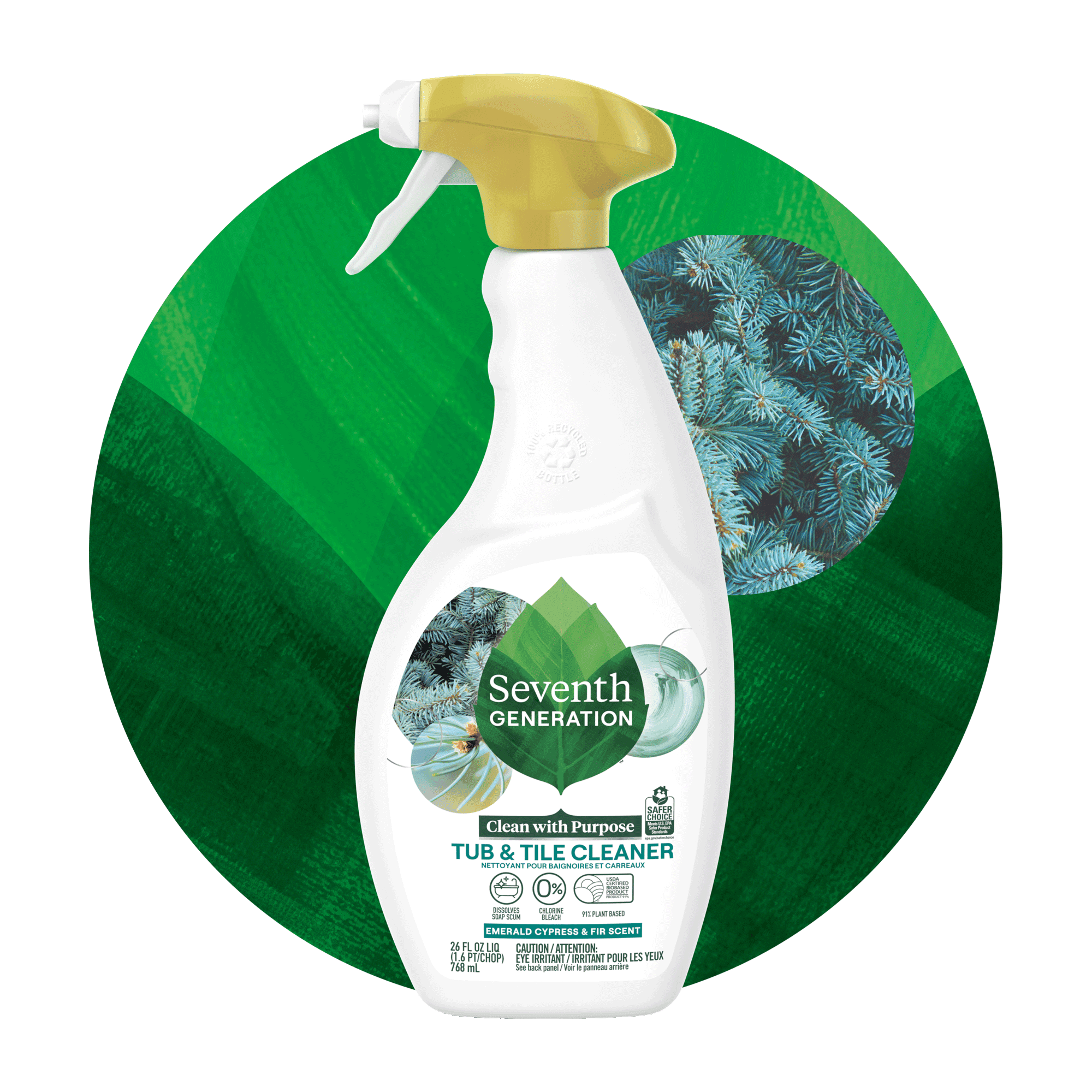
The Seventh Generation Tub & Tile Cleaner is a Safer Choice-certified spray that handles the scrubbing tasks a general all-purpose spray is not formulated for. The formula uses citric acid to address mineral deposits on tile and grout, and cypress and fir essential oils for scent. No chlorine bleach, no ammonia, no synthetic fragrance. The full ingredient list is on the Seventh Generation website.
At $, it lands in the same range as conventional tub cleaners. It is a purpose-built product for a specific task, which means it fits into an existing cleaning routine without dilution math.
Works on: bathtubs, shower tile, grout.
7. Seventh Generation Toilet Bowl Cleaner, Fresh Mint, 24 oz (4-Pack): Best for toilet bowl
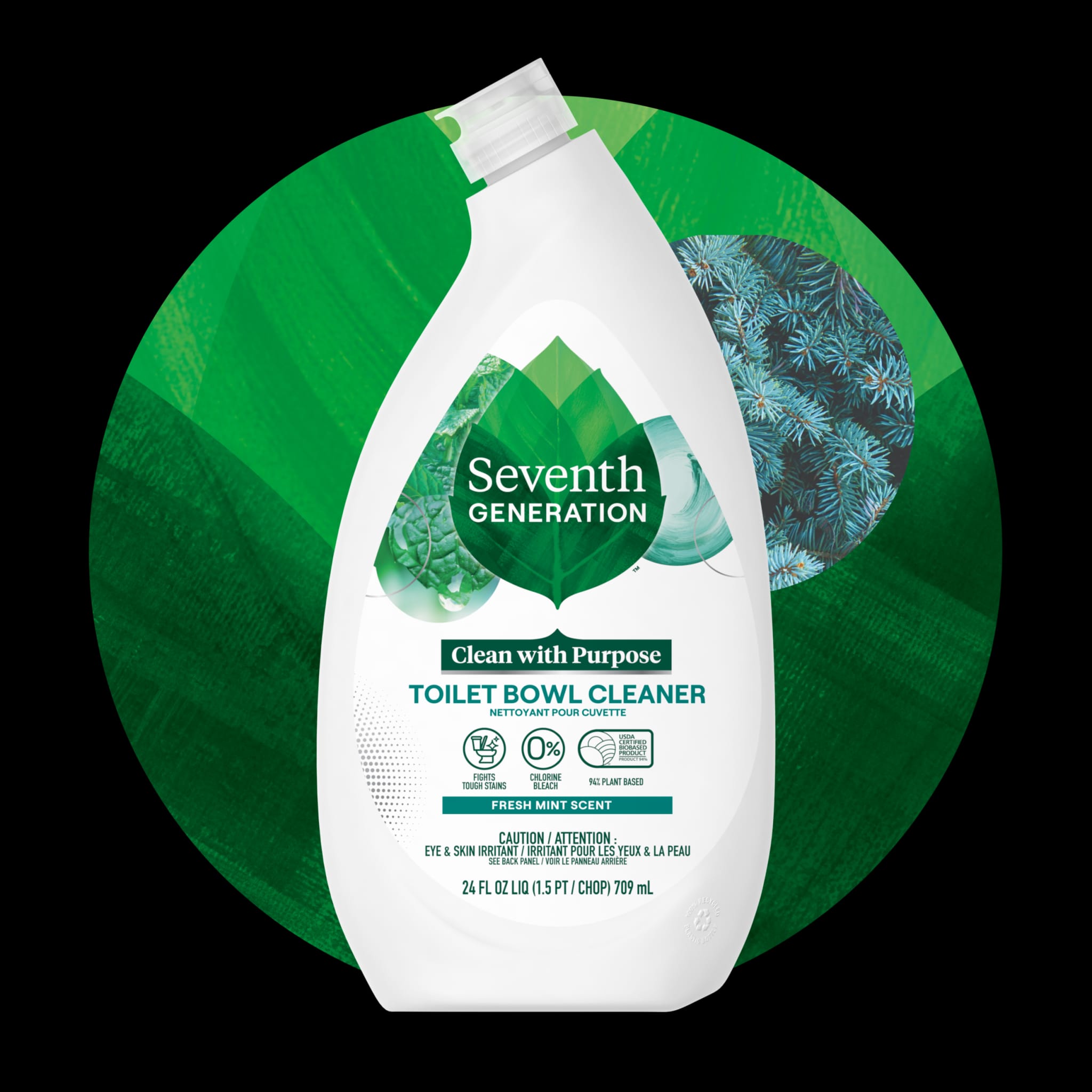
The Seventh Generation Toilet Bowl Cleaner is EPA Safer Choice certified, made without chlorine bleach, and scented with spearmint and wintergreen essential oils in place of synthetic fragrance. It is the single-task pick on the list: angled-neck bottle, gel consistency, designed for under the rim.
Buying the 4-pack reduces the per-bottle cost to under $5. The mint scent is fully disclosed; there is no catchall "fragrance" line in the ingredient list.
Works on: toilet bowl.
8. Bon Ami Powder Cleanser (2-Pack): Best abrasive scrub
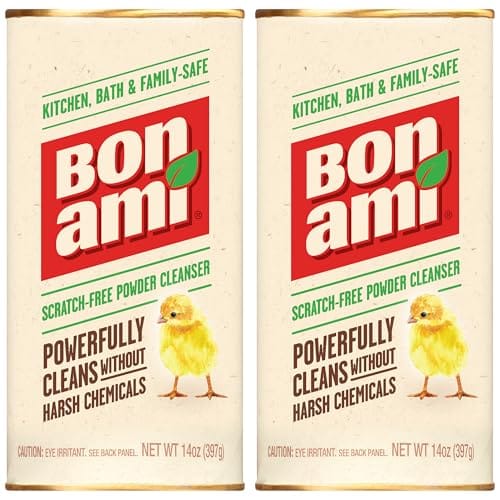
The Bon Ami Powder Cleanser has three ingredients: feldspar, calcium carbonate, and soda ash. No fragrance, no chlorine bleach, no dyes, no surfactants of any kind. It is one of the oldest powder cleansers still sold, and it has not reformulated in the direction most "classic" cleaning brands have.
For soap scum and mineral deposits that need mechanical abrasion, powder outperforms sprays. Feldspar is a softer abrasive that does not scratch enamel or ceramic tile the way silica-based cleansers can. The 2-pack brings the per-can cost below single-can retail.
Works on: sinks, bathtubs, ceramic tile. Rinse thoroughly after use.
What we passed on
Seventh Generation Disinfecting Bathroom Cleaner. Seventh Generation makes a Safer Choice-certified disinfecting spray, but the disinfectant active is a quat (benzalkonium chloride). For routine bathroom cleaning where disinfection is not needed, quats add unnecessary biocide exposure.
Method Bathroom Cleaner. Method has acceptable packaging and pricing but lists "fragrance" on the label without disclosing constituent compounds. We cannot verify the blend is free of phthalates.
Lysol bathroom products. The disinfection chemistry across most Lysol bathroom products is quat-based and the fragrance is undisclosed. Their Safer Choice versions are limited and inconsistently available.
FAQ
Do I need a disinfectant for regular bathroom cleaning?
No. Routine cleaning with a surfactant and mechanical friction removes the vast majority of surface pathogens without disinfection chemistry. The EPA distinguishes between cleaning and disinfecting for exactly this reason. Disinfection adds value when someone in the household is immunocompromised, recovering from a contagious illness, or the space is shared commercially. For daily household maintenance, a good cleaner and a scrub brush are sufficient.
What are quats and why do they appear in bathroom cleaners?
Quaternary ammonium compounds (quats) are registered pesticides used as antimicrobial biocides. They are effective disinfectants, which is why they appear in products marketed for bathroom and kitchen use. The concern with routine household use is accumulation: quats persist on surfaces, settle into household dust, and have shown reproductive toxicity in animal studies at chronic exposure levels. For daily cleaning where disinfection is not the goal, they are unnecessary. Force of Nature uses hypochlorous acid as its active ingredient rather than quats.
Is "fragrance-free" the same as "unscented"?
No. "Unscented" means no detectable scent, but the formula may still contain masking fragrance compounds added to neutralize other odors. "Fragrance-free" means no fragrance compounds, masking or otherwise, were added. For the disqualifier that matters most here (phthalates as fragrance carriers), look for products with fully disclosed ingredient lists or certifications that prohibit fragrance as a catchall declaration.
Can Branch Basics concentrate handle all bathroom surfaces?
Branch Basics publishes specific dilution ratios for different tasks: all-purpose (lighter dilution for everyday surfaces), bathroom (stronger dilution for soap scum and mineral deposits), and streak-free glass (for mirrors). The company's mixing card ships with each order and is available on their website. Each dilution uses the same concentrate, so one bottle covers the full room.
Why is chlorine bleach a concern for bathroom use?
Sodium hypochlorite reacts with ammonia (present in many glass and floor cleaners) to form chloramine gas, and with acids (present in many tile and toilet cleaners) to release chlorine gas. In a closed bathroom, mixing products containing these chemicals is a genuine inhalation hazard; the warning appears on most bleach-based labels for this reason. Separately from the mixing risk, bleach leaves chlorinated byproduct residues on surfaces and in indoor air. None of the picks on this list contain chlorine bleach.
Cover image: Kayley via Pexels (Pexels License). Source.