Our picks at a glance
The cookware that comes in direct contact with your food at heat is not a minor variable. PFAS — the fluoropolymer family that includes every non-stick coating in mass-market cookware — now have no safe established exposure level for drinking water per the EPA's April 2024 ruling. The argument for non-stick convenience ends when the question is what that coating is releasing and at what temperature.
The good news: the alternatives perform better than non-stick in most applications. A properly seasoned cast iron pan doesn't stick. Stainless steel handles acidic dishes without flavor transfer or surface degradation. Enameled cast iron braises without seasoning maintenance. None of these require a fluoropolymer coating, and none of them degrade into your food.
This guide covers 14 pans across 5 material categories — every pick passes the three disqualifiers this site applies to the entire catalog: no PFAS, no plastics as primary food-contact materials, no chemical flame retardants.
VerifiedContents
- What we look for
- Cast iron: Lodge Cast Iron · Field Company No. 8 · Smithey No. 10 · FINEX 10"
- Carbon steel: Matfer Bourgeat · Made In Carbon Steel · de Buyer Mineral B PRO
- Stainless steel: Tramontina Tri-Ply · All-Clad D3 · Made In Stainless
- Enameled cast iron: Le Creuset Signature · Staub 12" · Caraway 10.5"
- Pure ceramic: Xtrema Signature
- How to choose · What we passed on
What we look for
Three questions determine cookware safety: what is the food-contact surface, how does it behave under heat, and what does the brand actually disclose?
Food-contact surface. The materials inert at cooking temperatures are cast iron, carbon steel, stainless steel (18/10 or grade 304), vitreous enamel fused to cast iron at high temperature, and 100% fired ceramic. All five are represented on this list. All five are safe.
Thermal behavior. Bare aluminum becomes reactive with acidic foods — tomatoes, citrus, wine — under prolonged exposure. Multi-clad pans with an aluminum core and stainless steel on all food-contact surfaces are fine; the issue is the unprotected aluminum surface, not aluminum in a layered construction. A pan labeled "aluminum" with no further specification means the food-contact surface is bare aluminum.
Brand disclosure. A brand that says "non-toxic" or "clean" without specifying the coating chemistry is not making a verifiable claim. The material specification is the document that matters. Every brand on this list names its food-contact surface in writing with a verifiable source URL.
There is no level of PFOA or PFOS in drinking water that is without risk.
Cast iron
Cast iron is the original non-stick cookware. A well-seasoned cast iron pan has a layer of polymerized fat bonded directly to the iron surface — no fluoropolymers involved. It retains heat longer than any other metal on this list, which makes it the default for high-heat searing and tasks that require consistent pan temperature.
The tradeoff: cast iron pans weigh 5–8 lb, require hand-washing and light re-oiling after each use, and aren't the right choice for long-cook acidic dishes (a tomato sauce braised in cast iron will strip the seasoning and pick up iron flavor over time — use stainless for that).
1. Lodge Cast Iron Skillet, 10.25 inch — Best value

Lodge has made cast iron in South Pittsburg, Tennessee since 1896. The 10.25" skillet is the foundational recommendation — not because it's a compromise, but because it covers every use case a first-time cast iron owner needs and costs $20.92 on Amazon. The seasoning layer is plant-oil-based (Lodge uses soy oil), applied in their foundry before the pan ships. No PFAS, no coatings beyond polymerized fat.
The surface is rougher than machined-smooth skillets from smaller American brands; that texture fills in with use and seasoning over the first few months of cooking. For a pan that will outlast most things in your kitchen, the price is irrelevant.
2. Field Company No. 8 Cast Iron Skillet — Lightest cast iron

Field Company re-machines their raw castings to remove the rough surface texture and reduce wall thickness — the result is a 4.3 lb skillet versus Lodge's 5.3 lb. That 1 lb difference is noticeable in daily cooking, especially for wrist-intensive tasks like tossing or flipping. The food-contact surface is still bare iron with a plant-oil seasoning applied before shipping. Field Company discloses their manufacturing process and confirms no non-stick coatings of any kind.
The No. 8 is made in the USA. It costs $175 — about 4× the Lodge — which buys the weight reduction, the machined-smooth surface, and the slightly faster heat response from thinner walls.
3. Smithey No. 10 Cast Iron Skillet — Best hand-polished

Smithey machines their skillets by hand in Charleston, South Carolina, producing a cooking surface polished to a near-mirror finish. This reduces the initial seasoning time versus a typical rough-cast skillet and produces a more consistent seasoning bond from the first use. The No. 10 weighs 5.2 lb — comparable to Lodge — but the polished surface and refined handle geometry justify the step up from budget cast iron for daily use.
Smithey discloses their seasoning as flaxseed oil — cold-pressed, no synthetic additions. At $200, it occupies the mid-tier between Field Company's lighter design and FINEX's premium build.
4. FINEX 10-Inch Cast Iron Skillet — Best geometry

FINEX cast iron has an eight-sided cooking surface instead of round — a functional difference that makes controlled pouring easier (no circular drip pattern), distributes heat slightly differently across the base, and distinguishes the pan visually in a way that matters when you're choosing the right tool for a task. The stainless steel coil handle stays cooler during stovetop use than a solid iron handle.
Made in Portland, Oregon, with a polished cooking surface and a plant-oil seasoning. At $200–250, FINEX is the premium US-made option. If the octagon geometry and coil handle appeal to the way you cook, it's the right choice.
Carbon steel
Carbon steel is cast iron's lighter-weight sibling: the same iron-based material chemistry, thinner gauge, 1–2 lb lighter per pan, and faster to heat and cool. It responds more quickly to stovetop temperature changes and is the standard daily-use pan in professional kitchens.
Like cast iron, it requires seasoning and hand-washing, and it isn't the right pan for long-cook acidic dishes. Unlike cast iron, it's available in shapes better suited to omelets and sautéing where the pan needs to be moved frequently.
5. Matfer Bourgeat Black Carbon Steel Frying Pan, 10.25 inch — Professional standard
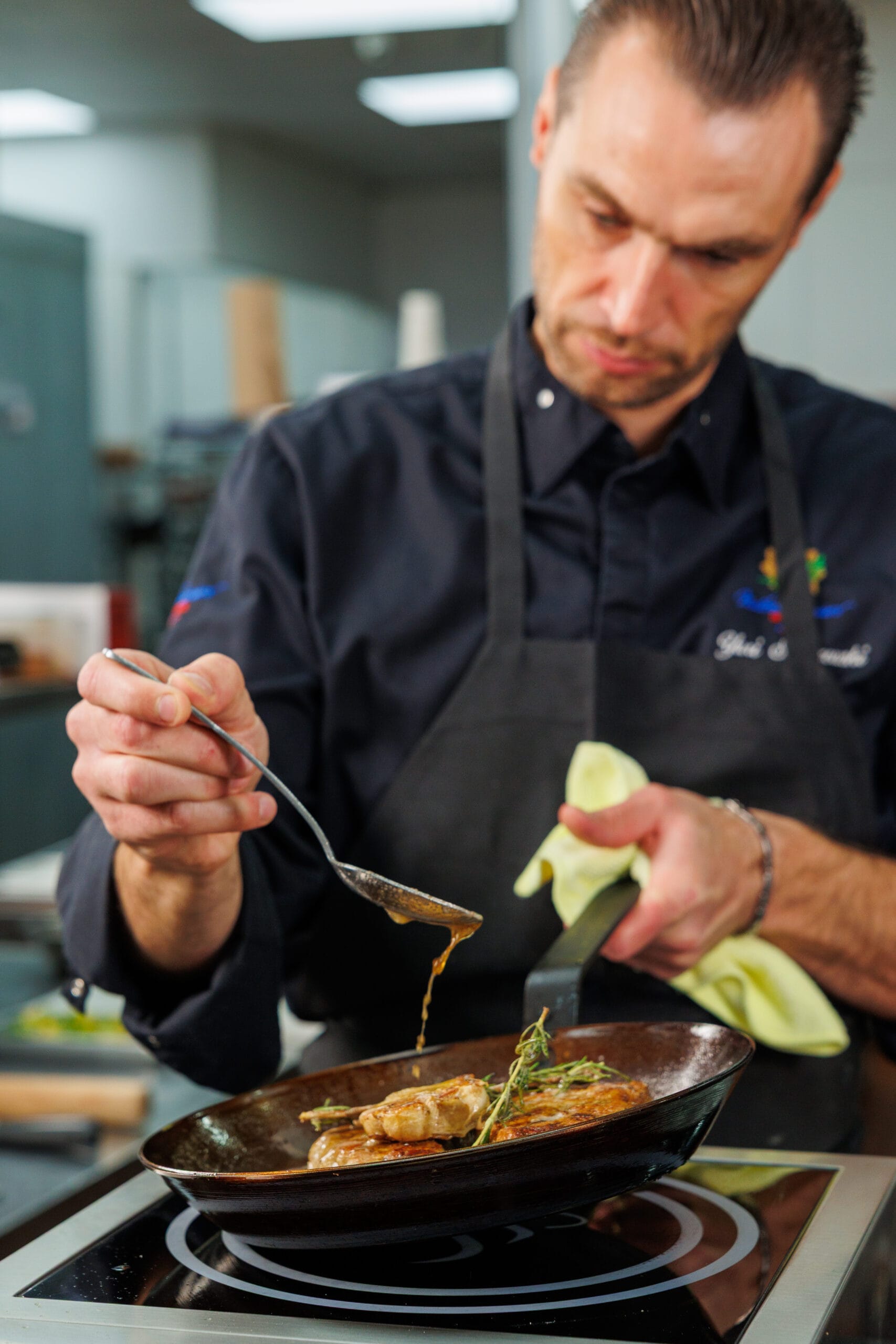
Matfer Bourgeat is a French kitchen equipment manufacturer whose Black Steel carbon steel pans are in restaurant kitchens worldwide. The line is 2mm carbon steel — no coating, no factory seasoning (you season it yourself before first use, which burns off the beeswax rust-protection coating applied before shipping). The handles are welded steel.
The price-to-durability ratio is why Matfer ends up in professional kitchens: competitively priced for a pan that lasts indefinitely with correct care. Matfer publishes the material as 99% iron, 1% carbon, no additional treatment.
6. Made In Blue Carbon Steel Frying Pan, 10 inch — Best DTC carbon
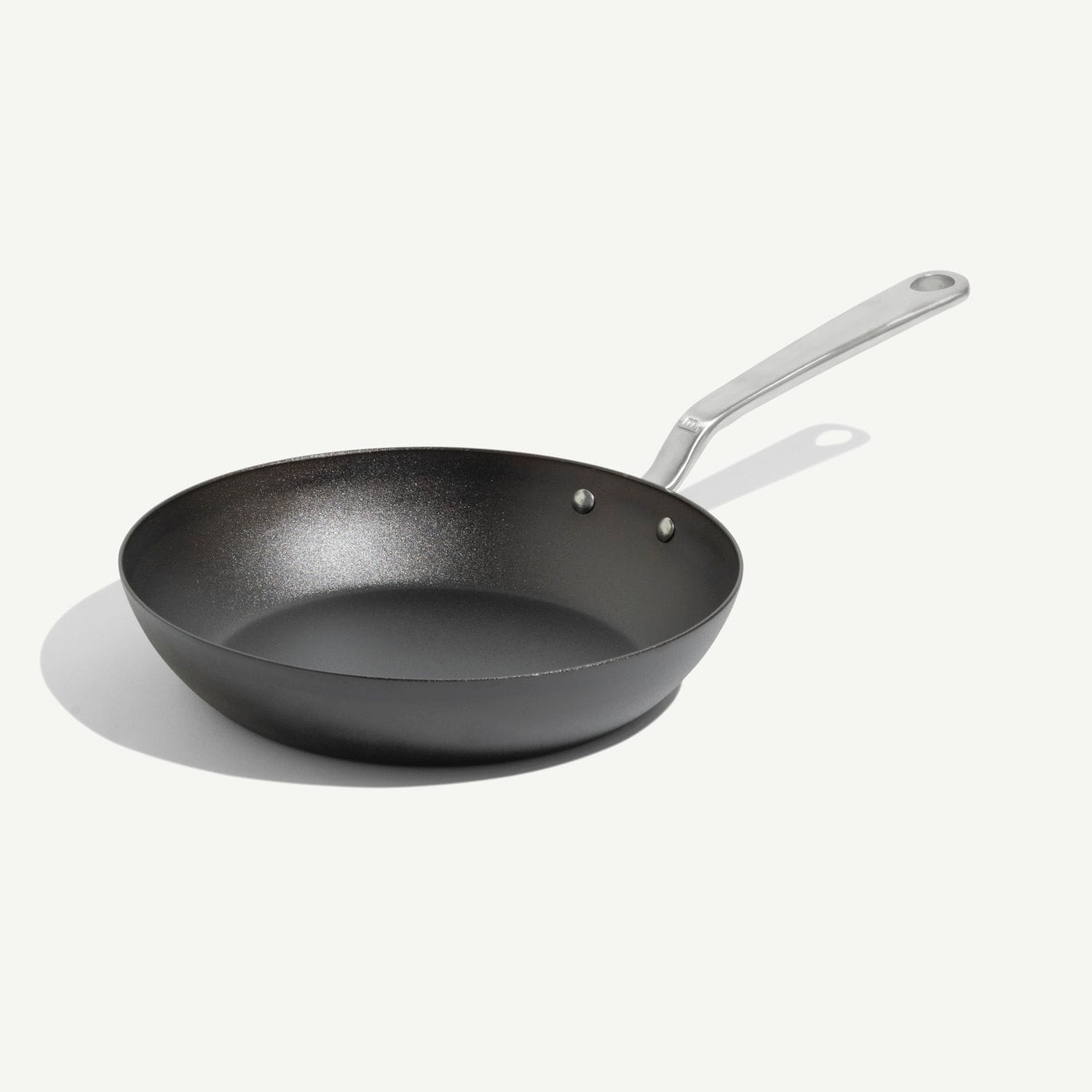
Made In's carbon steel pan comes pre-seasoned from the factory using their "Blue Steel" process and is sourced from the same French manufacturer that supplies professional kitchens. The 10" frying pan handles omelets, crepes, and high-heat searing. Made In publishes their manufacturing relationships and material specifications directly on their site, and sources their steel from a French steel mill.
At $119, it's priced between the budget Matfer and the premium de Buyer, and the factory seasoning makes it easier to use on day one.
7. de Buyer Mineral B PRO Carbon Steel Frying Pan, 9.5" — Best French carbon

de Buyer has manufactured carbon steel pans in Thiers, France — a town with a 600-year metalworking tradition — since 1830. The Mineral B PRO is 99% iron carbon steel, no coatings, with a stainless steel handle that stays oven-safe to 600°F, an upgrade over the original Mineral B's iron handle. The beeswax-based rust-protection applied before shipping burns off during the initial seasoning.
de Buyer explicitly publishes their material specification: 99% iron, 1% carbon, beeswax protective coating applied before shipping. At $185 for the 9.5" pan, it's the best value among French-made carbon steel.
Stainless steel
Stainless steel (18/10 or grade 304) is the right material for dishes where acid interaction matters: tomato sauce, wine reductions, lemon butter, citrus marinades, vinegar-based pan sauces. Cast iron and carbon steel would strip seasoning and transfer iron flavor in these applications; stainless handles them without issue.
It's also dishwasher-safe, doesn't require re-oiling, and handles a broader range of tasks without special maintenance. The tradeoff: stainless doesn't develop a non-stick surface on its own. Proper preheating and adequate fat prevent sticking; once you know the technique, it's reliable.
8. Tramontina Signature Tri-Ply Clad Stainless Steel Fry Pan, 10 inch — Best value stainless

Tramontina's tri-ply stainless pan is the standard budget recommendation in professional kitchenware circles. Three-layer construction: 18/10 stainless food-contact surface, aluminum core for heat distribution, 18/10 stainless exterior. The food-contact surface is fully stainless; the aluminum core is fully sealed. Made in Brazil.
At $39.95–65 depending on retailer, it competes directly with pans that cost 3× more. The limitations versus All-Clad: slightly lighter gauge aluminum core, base-clad (not fully-clad) construction on some versions. For most households, neither is a meaningful limitation.
9. All-Clad D3 Stainless 3-Ply Fry Pan, 10 inch — Industry benchmark
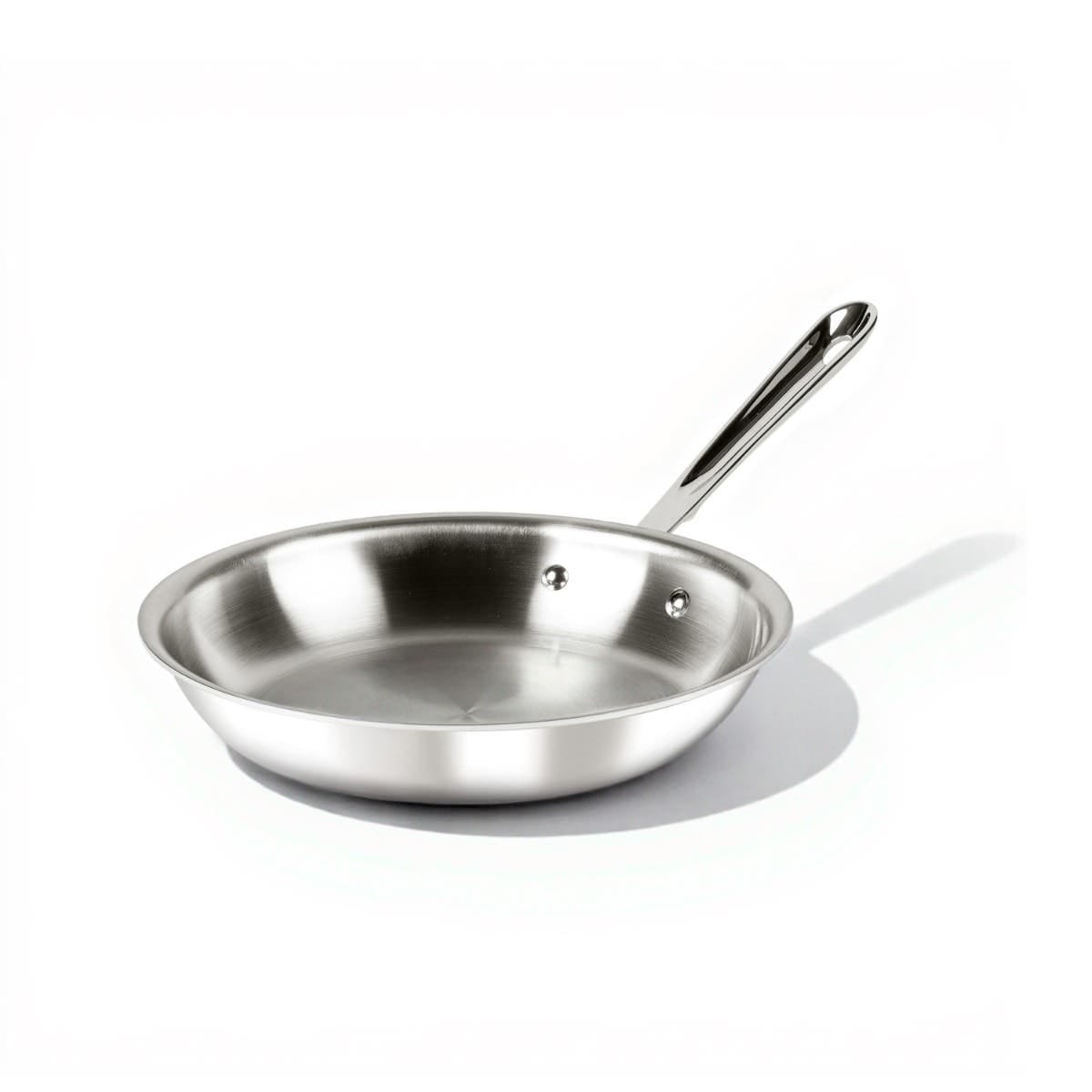
All-Clad pioneered the fully-clad stainless construction that every brand in this category copies: an aluminum core bonded between two layers of 18/10 stainless, running from the cooking surface through the walls (not just the base). The D3 series has been the reference in home kitchens for three decades. Made in Canonsburg, Pennsylvania.
The D3's edge over budget tri-ply: fully-clad wall construction for more even heat distribution up the sides, not just across the base. At $160–200, it sets the benchmark for what clad-stainless performs like at full quality. If you're choosing between Tramontina and All-Clad and cook frequently, the All-Clad is the better 20-year purchase.
10. Made In Stainless Clad Frying Pan, 10 inch — Best DTC stainless
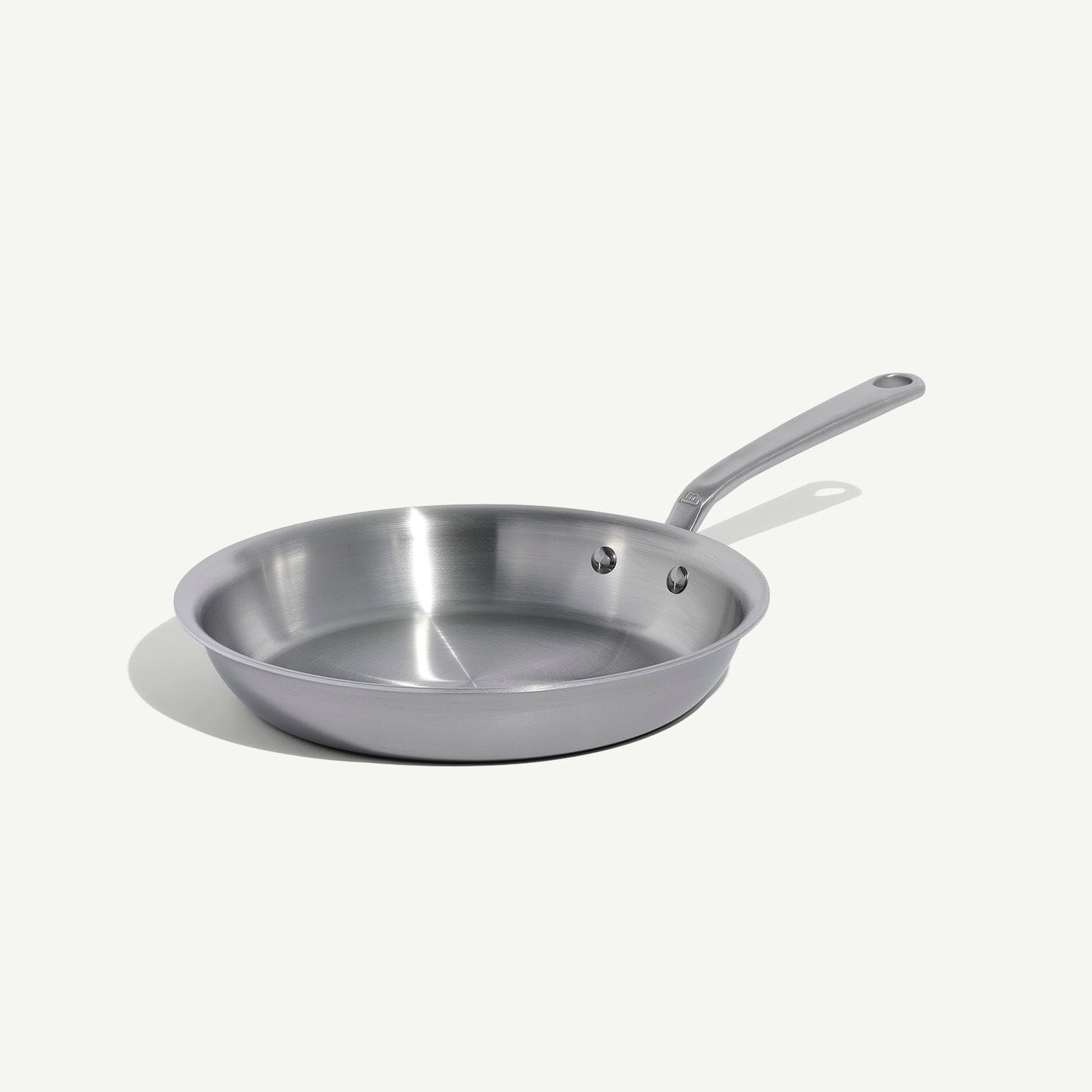
Made In's 5-ply stainless fry pan adds an extra aluminum layer versus standard tri-ply — a 5-layer construction with 18/10 stainless on the food-contact surface and a thicker aluminum core. The extra layer increases heat retention and temperature stability during cooking. Made In sources their steel from French mills and publishes their manufacturing relationships.
At $129, Made In sits between Tramontina and All-Clad and largely delivers on that positioning. The 5-ply construction is a genuine performance claim: more mass means better temperature stability than 3-layer alternatives.
Enameled cast iron
Enameled cast iron eliminates the seasoning requirement and handles acidic foods without issue — the vitreous enamel layer is an inert glass fused to the iron at high temperature. No PFAS, no fluoropolymers, no reactive surface. The tradeoff is that the enamel can chip if dropped or subjected to sudden thermal shock, and the pans weigh as much as bare cast iron.
These are the pieces for braises, stews, and long-cook dishes where even heat distribution matters and you don't want to worry about acid interaction.
11. Le Creuset Signature Enameled Cast Iron Skillet, 10.25" — Reference standard

Le Creuset has manufactured enameled cast iron in Fresnoy-le-Grand, France since 1925. The Signature Skillet is the frying-pan format of their cookware line: 10.25" cast iron base, sand-colored matte enamel interior, colored glossy exterior enamel. The enamel composition follows EU regulations on heavy metal content, which are stricter than US requirements. Oven-safe to 500°F, no seasoning required.
The Signature series adds a 45% larger handle versus the Classic line — a meaningful ergonomic improvement for a pan you'll use for decades. It's a one-time purchase. Le Creuset is the reference point that all other enameled cast iron is measured against because they've maintained the same manufacturing process and material standards since 1925.
12. Staub Cast Iron Fry Pan, 12" — Best large-format

Staub's interior is a matte black enamel — not bare iron, not PFAS — with a slightly rough texture that retains micro-droplets of fat as a cooking patina builds over time. In practice, food releases more easily from the Staub interior than from smooth-enamel alternatives without any non-stick coating chemistry. Made in Alsace, France, under the same EU enamel regulations as Le Creuset.
The 12" format is the largest pan on this list and handles family-scale meals and larger proteins without crowding the cooking surface. At $259.95, it's the right choice when size matters more than weight, and the matte enamel interior is preferred by anyone who cooks proteins at high heat regularly.
13. Caraway 10.5 in. Enameled Cast Iron Skillet: Best verified enameled

Caraway's Enameled Cast Iron Skillet is independently tested against 600+ PFAS compounds across multiple external labs, making it the most explicitly documented option in the enameled cast iron category. The interior is a cream vitreous enamel fused to the cast iron substrate: no PTFE, no sol-gel coating, no binders, no seasoning required. Oven-safe to 500°F. Enamel-over-iron construction is the same category as Le Creuset and Staub; Caraway's differentiator is a published third-party PFAS testing panel.
The tradeoff versus the French brands is manufacturing heritage. Caraway entered cast iron recently, without the century-long record that gives Le Creuset and Staub their authority. If the primary criterion is a documented PFAS panel rather than brand longevity, the Caraway is the most explicitly verified pick in the enameled cast iron category.
Pure ceramic
Pure ceramic cookware — 100% fired clay from outer surface to inner core, with no metal base — is the most inert food-contact material on this list. No metal to react with food, no coating to degrade, no PFAS by definition. The tradeoffs are weight (ceramics are dense), fragility, and slower heat-up compared to metal pans.
14. Xtrema Signature Series Ceramic Skillet, 9" — Zero metal

Xtrema makes 100% ceramic cookware — not ceramic-coated metal, but a single piece of fired ceramic from outer surface to inner core. No binders, no metal, no PFAS. MADE SAFE certified. The Signature Series is the current production line, with a wider base and improved ergonomics versus the original Versa series. Made in the USA.
At $128 for the 9" pan, it's priced comparably to premium metal options. The functional reason to choose pure ceramic over everything else on this list: if eliminating all possible metal-to-food contact is the goal — for medical or personal reasons — this is the only option. For general cooking, cast iron or stainless performs comparably without the fragility limitation. Avoid sudden thermal changes; let the pan cool before washing.
How to choose
Start with one cast iron pan. If you own one piece of cookware, it's a Lodge 10.25" skillet. It handles searing, frying, baking, and stovetop-to-oven cooking. It costs $20.92 on Amazon. Add a stainless saucepan for acidic dishes.
Add stainless steel for acid. Tomato sauce, wine reductions, citrus, vinegar-based sauces — long-cook acidic dishes go in stainless. The Tramontina tri-ply handles this for under $65.
Choose carbon steel if weight matters. A 10" carbon steel pan weighs 1–2 lb less than the same-diameter cast iron and heats faster. The tradeoff is more active seasoning maintenance. Matfer Bourgeat is the professional standard; Made In is the easier daily-use option.
Use enameled cast iron for braises and slow-cook dishes. Le Creuset or Staub is the answer when you want cast iron's heat retention without the seasoning requirement or acid reactivity constraint.
Pure ceramic only if metal-elimination is the goal. The Xtrema is the right choice for zero-metal contact. For general cooking, the other four material categories perform comparably or better, without the fragility tradeoff.
What we passed on
PTFE ("Teflon") and all fluoropolymer non-stick coatings. Every non-stick pan marked "PFAS-free" that still relies on a slippery fluoropolymer coating is using a shorter-chain replacement (GenX, PFBS, HFPO-DA, marketed under trade names like Capstone or GenX). The long-term exposure data for these replacements doesn't exist at the level it does for PFOA/PFOS. We didn't evaluate any fluoropolymer-coated pans.
"Ceramic non-stick" cookware. "Ceramic" is not a regulated term on cookware. Products marketed as "ceramic non-stick" typically use a sol-gel silica coating applied over an aluminum core — the sol-gel provides temporary non-stick properties that degrade in 1–3 years under normal use. More critically, these coatings use organic binders that brands decline to name. We requested material specifications from GreenPan, Caraway (ceramic non-stick line), and Our Place; none provided binder chemistry. We passed on all three ceramic non-stick pans. Caraway's enameled cast iron is a different material category with no coating chemistry and appears in this guide as pick 13.
Bare aluminum. Reactive with acidic foods over prolonged exposure. There is no reason to use bare aluminum when stainless-clad aluminum exists at the same price point and is verifiably inert on the food-contact surface.
Hard-anodized aluminum. The anodization seals the aluminum surface and reduces its reactivity, but the long-term stability of the anodized layer under repeated mechanical and thermal cycling is not characterized with the same depth as stainless steel or cast iron. At equal price points, stainless-clad is the more defensible choice.
FAQ
Is non-stick cookware safe?
Most non-stick pans use PTFE, a fluoropolymer in the PFAS chemical family. The EPA's April 2024 PFAS ruling established there is no safe exposure level for PFOA or PFOS in drinking water. Brands replacing PFOA with newer short-chain PFAS (GenX, PFBS, HFPO-DA) do not resolve the underlying issue: long-term exposure data for these replacements does not exist at the level it does for PFOA. No pan with a fluoropolymer coating is in this guide.
What does "PFAS-free" mean on a cookware label?
"PFAS-free" is not a regulated term. It is often applied by brands that have switched from older long-chain PFAS to shorter-chain replacements that are still in the PFAS family. The more reliable indicator is knowing what the food-contact surface actually is: bare iron, carbon steel, stainless steel, vitreous enamel, or fired ceramic. Each is chemically inert without needing a "PFAS-free" claim.
Can I cook acidic dishes like tomato sauce in a cast iron pan?
Not for long-cook applications. Cast iron's seasoning strips under sustained acid exposure and the pan will impart iron flavor to the dish over time. For tomato sauce, wine reductions, and citrus- or vinegar-based sauces, use a stainless steel pan. Enameled cast iron (Le Creuset, Staub) handles acidic dishes without issue: the vitreous enamel layer is inert glass with no acid reactivity.
What is the difference between cast iron and carbon steel?
Both are iron-based materials that require seasoning and hand-washing. Carbon steel is thinner and typically 1 to 2 pounds lighter per pan than the equivalent cast iron. It responds more quickly to stovetop temperature changes, making it the professional kitchen standard for daily use. Cast iron retains heat longer and is better suited for high-heat searing and stovetop-to-oven tasks. Choose carbon steel for frequent daily use; choose cast iron when sustained high temperature matters most.
Is "ceramic non-stick" cookware safe?
"Ceramic" is not a regulated term on cookware. Products marketed as ceramic non-stick typically use a sol-gel silica coating applied over an aluminum core. The coating provides temporary non-stick properties that degrade in 1 to 3 years under normal use, and the organic binders in the sol-gel process are not publicly disclosed by major brands. This guide does not include sol-gel ceramic non-stick pans. The Xtrema pick in this guide is 100% fired ceramic from outer surface to inner core, a materially different category.
What is the safest cookware material overall?
The materials inert at cooking temperatures and well-characterized in the scientific literature are cast iron, carbon steel, 18/10 stainless steel, vitreous enamel, and 100% fired ceramic. All five appear in this guide. The best choice depends on the task: stainless handles acidic dishes without issue, cast iron handles high-heat searing without coating chemistry, enameled cast iron is right for braises. No single material is optimal for every application.
Cover image: Shixart1985 via Wikimedia Commons (CC BY 2.0) — source.