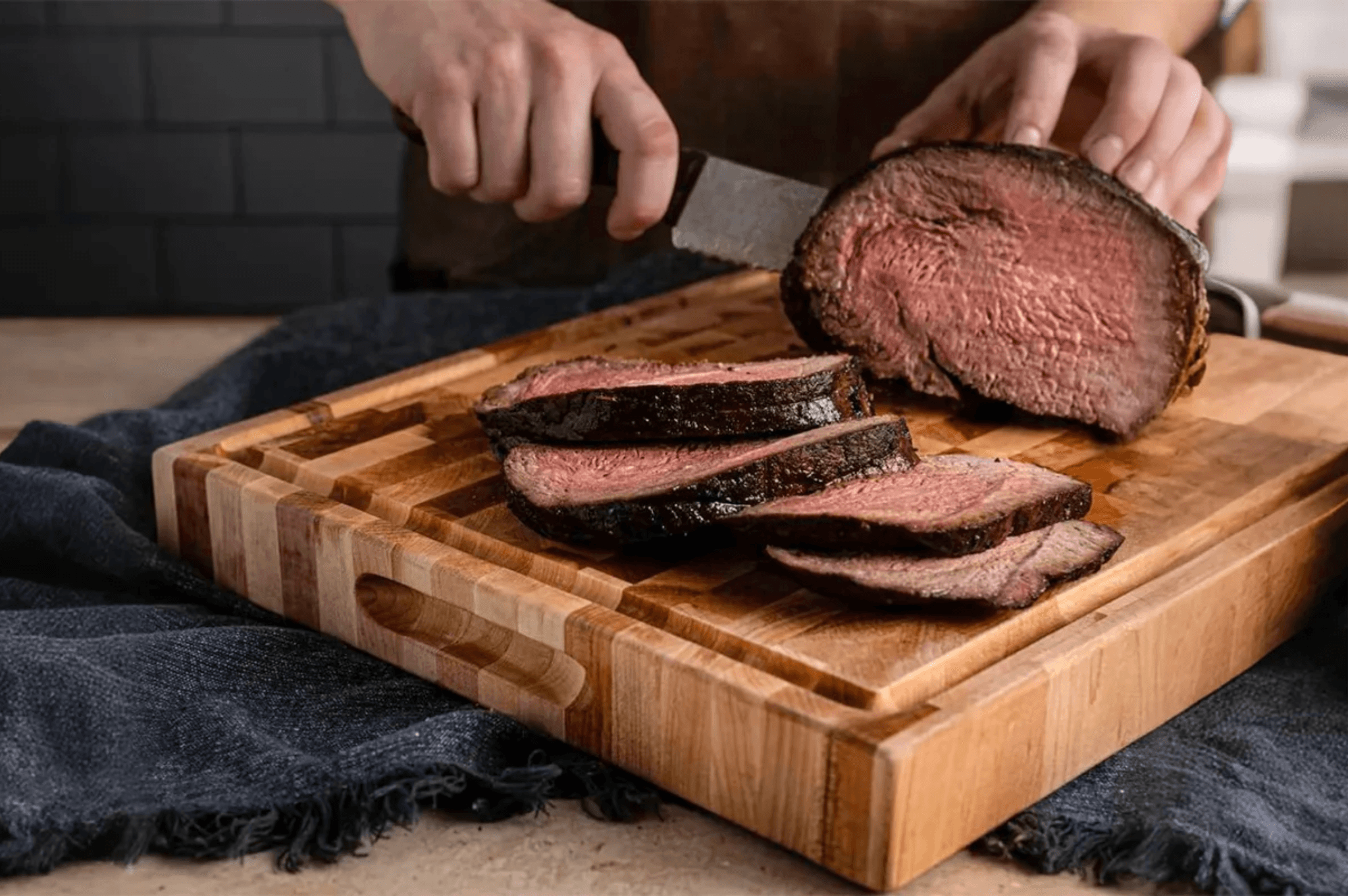
A peer-reviewed synthesis published in 2026 found that chopping food on a standard plastic cutting board sheds between 7 and 50 grams of microplastic particles into meals over the course of a year. The source material is polypropylene and polyethylene, the two plastics in the vast majority of cutting boards sold in the U.S. and Europe. The kitchen counter, not the factory or the landfill, is the center of this exposure. Study published
The source
"Hidden danger in everyday cooking: microplastic release from plastic cutting boards and impact on health and the environment," Khorsandi et al., Toxicology and Environmental Health Sciences (Springer), 2026. The paper synthesizes findings from 98 prior studies. Read the paper.
7–50g
per year
microplastics shed into food from a plastic cutting board
98
studies synthesized
in the Khorsandi analysis
PP + PE
the two plastics
in most cutting boards sold in the U.S. and Europe
What it actually means
Every meal prepared on a plastic cutting board is a direct exposure event.
The 7–50 gram range reflects actual kitchen behavior: harder boards, older boards, sharper knives, and more frequent use all increase shedding. These are fragments and fibers shed directly from the board surface during cutting — not particles migrating slowly from packaging. Research on dose-response effects of dietary microplastics in humans is still developing; what this synthesis establishes is that the exposure is measurable, ongoing, and kitchen-sourced.
In the home
The cutting board is the single highest-volume contact point in most kitchens — used multiple times daily, with particles released directly into food during every session. A separate scoping review of 350 studies, reported by the Food Packaging Forum in April 2026, identified cutting boards as one of the top kitchen microplastic exposure routes.
The exposure scales with use. Harder boards, older boards with established knife grooves, and more frequent prep sessions all increase particle shedding. Every type of knife work — chopping vegetables, slicing meat, breaking down herbs — removes material from the board surface and deposits it in the food.
What to do
The swap is low-cost and permanent. A wood or bamboo cutting board does not shed polymer particles under knife use — the knife scores the grain rather than removing microplastic fragments. If you're shopping right now, the product directory is filtered against the criteria this study calls out.
Cover image: via Unsplash (Unsplash License) — source.