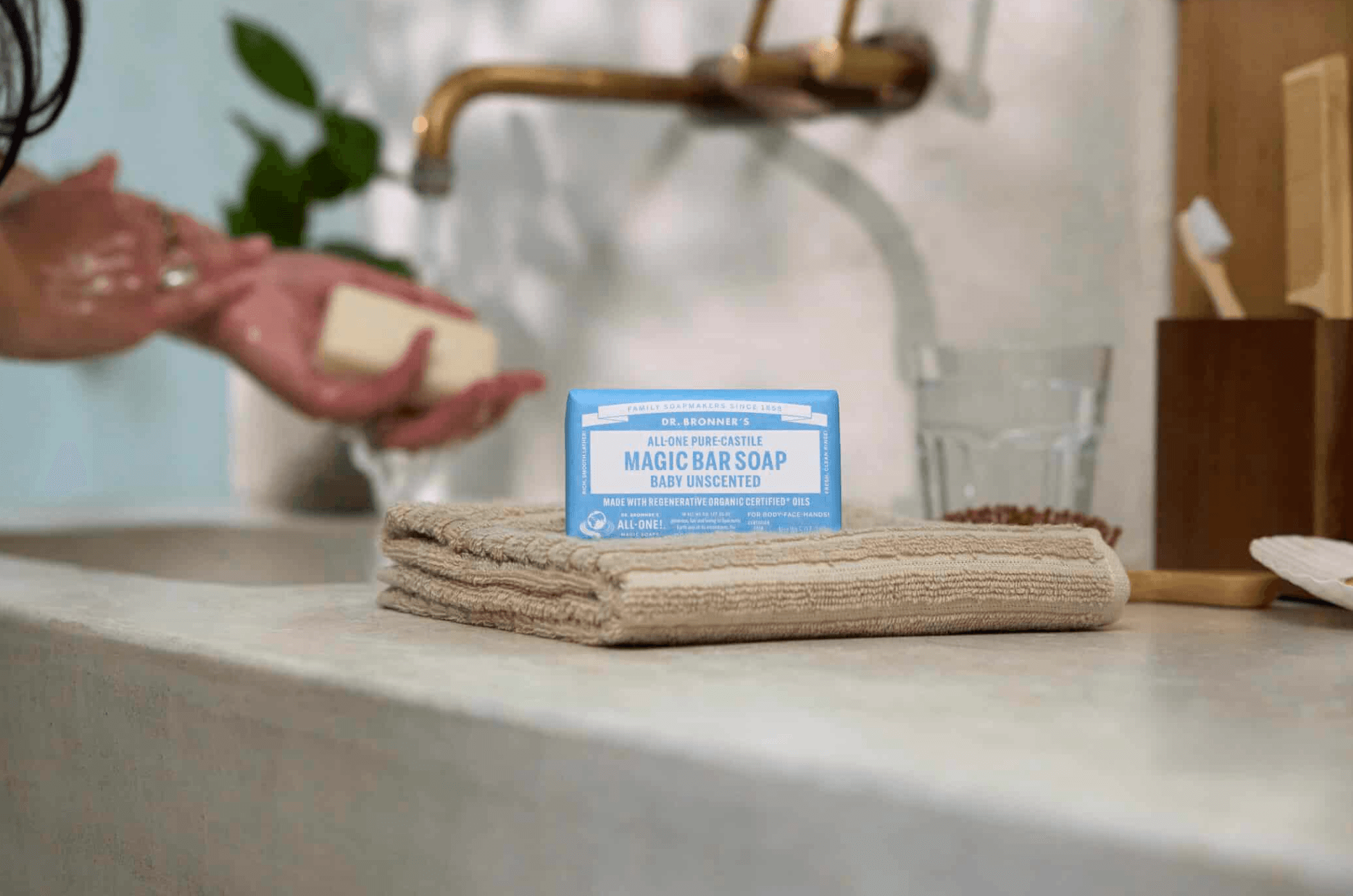
The words "fragrance-free" and "unscented" appear within inches of each other on the same shelf. They look like synonyms. Under FDA labeling rules, they aren't — and for sensitive skin and baby products, the difference matters enough to change what you buy.
What each term actually means
Fragrance-free means no fragrant ingredients were added. The product contains no scent chemicals — not to create a scent, and not to mask the smell of its raw ingredients.
Unscented means the product has no perceptible odor. It may still contain masking fragrances: chemicals whose job is to neutralize the base smell of ingredients. The product smells like nothing. The masking fragrance is there anyway — it just isn't detectable.
The distinction is regulatory. "Fragrance-free" makes a compositional claim. "Unscented" makes a sensory claim. A product can satisfy the second without satisfying the first.
The disclosure gap
Under FDA cosmetics labeling rules (21 CFR 701.3), fragrance ingredients do not need to be individually listed. A manufacturer can include a blend of hundreds of distinct compounds and write "fragrance" or "parfum" as a single ingredient entry. This is a legally protected trade-secret provision — fragrance formulas are treated as proprietary intellectual property.
Masking fragrances fall under this same umbrella. If they contain any fragrant chemicals, they can be grouped under "fragrance" on the label — or, in some formulations, aren't listed at all.
"Natural fragrance" is still fragrance
Essential oils and plant-derived aromatic compounds are often positioned as a safer alternative to synthetic fragrance. The sensitization pathway is the same: skin-reactive chemicals trigger an immune response regardless of whether they were synthesized in a lab or distilled from a plant.
Lavender oil is the most common example. Linalool — a major component of lavender essential oil — is a known contact allergen. At room temperature, linalool is relatively stable, but upon oxidation (which happens as a product ages or is exposed to air), it generates hydroperoxides that are potent sensitizers. The EU classifies oxidized linalool as a fragrance allergen requiring disclosure; the FDA does not.
Other common essential oil allergens: linalyl acetate (lavender, bergamot), geraniol (rose, palmarosa), limonene (citrus peel), eugenol (clove, cinnamon). Terms like "botanical fragrance," "natural aroma," and "essential oil blend" carry the same practical risk as "fragrance" for anyone with sensitive skin or chemical sensitivities.
How to read a label
For a genuinely fragrance-free product, check the full ingredient list — not just the front-panel claim — for any of these terms and reject any product that includes them:
fragrance/parfum/aromafragrance blend/natural fragrance/botanical fragrance- Any named essential oil or aromatic extract: lavender oil, eucalyptus oil, bergamot, tea tree oil, rose extract, citrus peel oil
A product legally labeled "unscented" can still list "fragrance" in its ingredients. A product labeled "natural" can still contain linalool and geraniol. The only label claim that rules out fragrance chemicals is fragrance-free — and only if the ingredient list backs it up.
One additional signal: brands that decline to publish a complete INCI ingredient list are a reason to pause. Full ingredient disclosure is standard practice for any brand that has made a genuine commitment to ingredient transparency.
Who needs to know
For most adults with non-reactive skin, the unscented/fragrance-free distinction is low stakes. For these groups, it isn't:
Infants. Baby skin has a thinner stratum corneum, higher surface-area-to-weight ratio, and a less mature microbiome than adult skin. Systemic absorption of topically applied substances is elevated. Fragrance sensitization established in infancy can persist for life. The picks in The Best Non-Toxic Baby Lotion (2026) and The Best Non-Toxic Baby Shampoo and Wash (2026) are all vetted as genuinely fragrance-free.
People with contact dermatitis. Fragrance is the most common cause of cosmetic contact allergy documented in dermatology practice.
People with asthma or multiple chemical sensitivities. Volatile organic compounds from fragrance ingredients are airborne irritants. An unscented product still offgasses fragrance chemicals into the room.
Anyone with broken or compromised skin. Absorption rates are elevated through damaged skin barriers, accelerating sensitization timelines.
If you're buying for any of these groups, fragrance-free is the correct specification. Unscented is not a substitute.
Photo by Aleksandrs Karevs via Unsplash (Unsplash License) — source.