

Our picks at a glance
| Pick | Best for | Key certifications | Price | Details |
|---|---|---|---|---|
| Klean Kanteen 10oz Kids Cup with Straw | Everyday use, toddlers 12 months+ | NSF/ANSI 61 | $ | Full review |
| Elk & Friends 10oz Stainless, 4-Pack | Families rotating multiple cups | None listed | $ | Full review |
| Comotomo Toddler Tumbler 8oz | Bottle-to-cup transition, 12-18 months | None listed | $ | Full review |
| Pura Sport Mini 11oz | Full ingredient verification | MADE SAFE | $ | Full review |
Why the "BPA-free" label stopped being enough
In 2021, Health Canada published migration data showing that BPS, the bisphenol that replaced BPA in most "BPA-free" children's drinkware, migrated into liquids at rates comparable to BPA itself. The chemical had changed; the behavior had not.
BPA was phased out starting around 2008 after studies linked it to hormonal disruption in infant and animal models. Manufacturers replaced it with BPS, BPF, and other bisphenol analogs. These passed pre-market review because they hadn't yet accumulated the same research record as BPA. Not because they were proven safe. The Health Canada data was among the first systematic studies to measure migration from the replacement chemicals at comparable exposure conditions.
California's SB 1266, signed in 2023, closed this loop at the regulatory level. Rather than banning one bisphenol at a time, it extended the restriction to the entire class in food and beverage containers intended for children. The law is a signal that regulators have caught up to what the research showed in 2021.
The cups on this list avoid the problem entirely. They're made from stainless steel, glass, or food-grade silicone: materials that don't rely on bisphenol chemistry at any point in the liquid contact path.
What we look for
No plastic in the liquid contact path. For a cup, this means the vessel body, straw, and any spout or valve that touches liquid must be stainless steel, borosilicate glass, or disclosed food-grade silicone. Polypropylene, Tritan copolyester, ABS, and any unnamed "BPA-free plastic" don't qualify. Not because they're definitively dangerous, but because the migration data doesn't support the same level of confidence that stainless and glass carry.
Food-grade silicone, explicitly disclosed. Silicone isn't disqualified outright. Food-grade, platinum-cured silicone with no fillers or dyes is chemically inert at typical use temperatures and carries FDA and NSF compliance histories. The standard to look for is explicit grade disclosure from the brand, not just "BPA-free silicone," which tells you what's absent but not what the grade actually is.
No PFAS in lid components. "Stain-resistant" or "easy-clean" coatings on lid rings and gasket seals are where PFAS sometimes appear in drinkware that's otherwise clean. None of the cups on this list carry these finishes.
Insulation solder composition. Double-wall vacuum-insulated cups seal the inner and outer walls with a solder joint. Lead-free solder is industry standard for food-contact manufacturing, but "industry standard" isn't a disclosure. For the one cup on this list where we couldn't confirm the solder formulation explicitly, we note it in the pick.
23
candidates researched
across major retailers and non-toxic curated marketplaces
4
cleared the disqualifier gate
stainless, glass, or disclosed food-grade silicone
Our picks
1. Klean Kanteen 10oz Kids Cup with Straw: Best overall

The Klean Kanteen 10oz Kids Cup with Straw is the clearest recommendation on this list because the brand publishes material specifications that most competitors leave vague. The vessel is 18/8 (304) food-grade stainless steel, unlined. The straw is food-grade silicone, with the silicone grade disclosed on Klean Kanteen's materials page. The wide-grip lid body is polypropylene, but it doesn't contact liquid. The food-contact components in this system are stainless steel and silicone only.
Klean Kanteen holds NSF/ANSI 61 certification for drinking water contact components. This standard covers the full liquid contact path and requires independent third-party verification: it's not a brand self-declaration. The California Prop 65 compliance statement covers both lead and bisphenols.
The 10oz size works for water, milk, and juice for toddlers 12 months and older. The straw lid has a leak-resistant seal without a valve that contacts liquid directly. Dishwasher safe on the top rack.
Who it's for: Everyday use for toddlers 12 months and up. The broadest availability, the most documented materials, and the most accessible price point on this list.
2. Elk & Friends 10oz Stainless Cups, 4-Pack: Best value
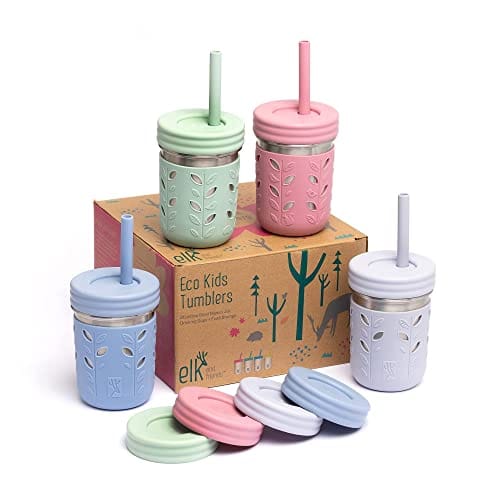
The Elk & Friends 10oz 4-pack addresses the practical problem with non-toxic toddler cups: you need several, and each individually priced option adds up fast. The set puts per-cup cost below any other option on this list.
The vessel is 18/8 stainless steel, unlined. Lid material is pending direct confirmation from the brand; we sent an inquiry in September 2026 after being unable to verify the composition from public documentation. Until confirmed, we are not stating the lid as silicone. The vessel chemistry is sound: stainless body, silicone sleeve. Lids are interchangeable across all four cups in the set, which matters when one goes missing.
These are not insulated. Contents reach ambient temperature. For water, that's practical. For milk or juice that needs to stay cold through a long daycare morning, the insulated options in this guide are better suited.
Who it's for: Families that need multiple cups in rotation at home. The per-cup economics make this the easiest way to equip a toddler's cup drawer without choosing between non-toxic materials and budget.
3. Comotomo Toddler Tumbler 8oz: Best for transitioning from a bottle

The Comotomo Toddler Tumbler takes a different material approach: the vessel itself is food-grade silicone, not stainless or glass. Comotomo has used the same medical-grade silicone formulation since the company launched its original infant bottle: FDA-compliant, BPA/BPS/phthalate-free, without fillers. The entire cup, including the soft spout, is this silicone.
The soft spout is what makes this the best choice for toddlers still weaning from a silicone bottle nipple. The texture and give are familiar. There are no hard edges, no exposed straw to navigate. For 12–18 month olds still adapting to cup drinking, this reduces the friction of the transition significantly.
A note on insulation: Comotomo doesn't publish the solder composition of the double-wall vacuum seal on this tumbler. Lead-free soldering is standard practice in food-contact manufacturing, but we weren't able to confirm Comotomo's specific formulation from available documentation. If this disclosure matters to you, picks 1 and 2 have more complete published materials records. The solder sits in the insulation layer, not in the liquid path; the silicone body, spout, and seals are fully documented and pass our criteria.
Who it's for: Toddlers 12–18 months still transitioning from soft silicone bottle nipples. Parents who want the most gentle material transition available.
4. Pura Sport Mini 11oz Stainless Bottle: Best MADE SAFE pick
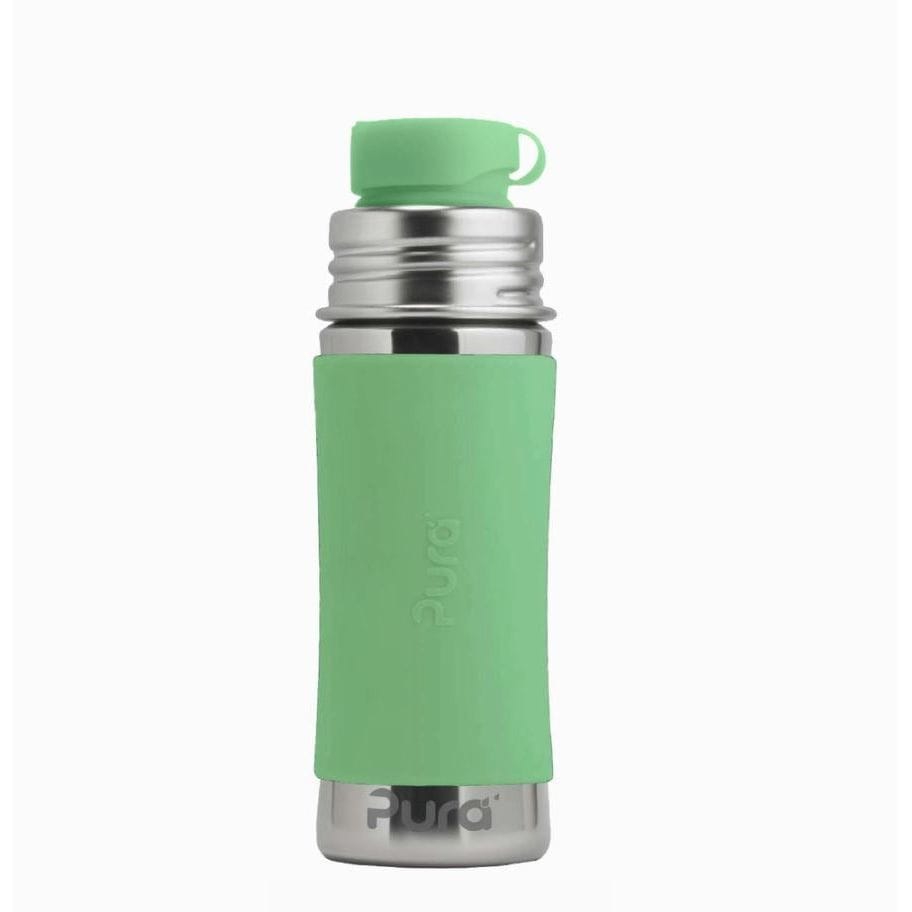
The Pura Sport Mini 11oz Stainless Bottle is the only cup on this list holding a MADE SAFE certification, which requires full ingredient disclosure for every component in the product. The vessel is 18/8 stainless steel. The sport top and sleeve are 100% medical-grade silicone. There is no plastic in the liquid contact path or in the external components.
The cap system is interchangeable: Pura makes silicone straw and sippy caps that fit the same bottle, so the vessel follows a child from infant to toddler stages without replacing the stainless body. At $28.99, it is the most accessible entry on this list on a per-bottle basis.
Who it is for: Toddlers at any developmental stage. Parents who want third-party verified ingredient disclosure across the entire product, not just the liquid contact path.
What we passed on
Munchkin Miracle 360 Trainer Cup: the 360-degree drinking ring is a plastic mechanism that contacts liquid directly, even in the stainless body variant.
NUK Learner Cup: polypropylene vessel. The "BPA-free" label is accurate but doesn't name what replaced BPA.
Skip Hop Straw Bottle: the vessel is Tritan copolyester. Tritan is designed to be bisphenol-free by formulation, but it's still a plastic that migrates plasticizers under heat cycling. We don't consider Tritan a clean substitute for stainless or glass.
Contigo Autospout Kids Stainless: the stainless body is clean, but the autospout mechanism includes a polypropylene valve body that contacts the liquid path directly.
Lifefactory Glass Bottle with Pivot Straw Cap: the borosilicate glass and silicone pivot straw configuration that appeared in earlier versions of this guide is no longer available through reliable US channels. The flat-cap Lifefactory bottle remains in production, but without a straw option for toddlers it does not fit this guide. If the pivot straw cap returns to availability, it will rejoin the list.
Of the 23 candidates we researched across major retailers and non-toxic curated marketplaces, four cleared the disqualifier gate. The non-toxic sippy and straw cup market remains largely polypropylene and Tritan. The four picks above are the current verified field.
FAQ
Is "BPA-free" enough for toddler cups?
No. BPA-free means one bisphenol was removed, but the label says nothing about the replacement chemistry. Most BPA-free cups use BPS or BPF as substitutes. Health Canada published migration data in 2021 showing BPS moves into liquids at rates comparable to BPA. California extended its restriction to the entire bisphenol class in 2023. The cups on this list sidestep the issue by using stainless steel and disclosed food-grade silicone instead of any bisphenol-based plastic.
Is silicone safe for toddler cups?
Food-grade, platinum-cured silicone with no fillers or dyes is chemically inert under normal use conditions and has an established FDA and NSF compliance history. The key is the grade disclosure: "BPA-free silicone" tells you what is absent but not the actual grade. All silicone components in the cups on this list carry explicit food-grade disclosure from the brand.
What does NSF/ANSI 61 mean for a kids' cup?
NSF/ANSI 61 is an independent third-party standard for drinking water system components. It covers the full liquid contact path and requires testing by an accredited certifier rather than a brand self-declaration. Klean Kanteen is the only kids' cup brand in our research to hold this certification for a straw cup product.
Can I use these cups for milk or juice?
Yes. All four cups on this list are suitable for water, milk, and juice. The insulated picks (Klean Kanteen and Comotomo) keep contents cooler through a longer daycare morning. The Elk & Friends set is not insulated: contents reach ambient temperature, which works for water at home but is less practical for cold milk over several hours.
What is the difference between a sippy cup and a straw cup for toddler development?
Straw cups encourage a forward tongue position and are generally recommended over spout-based sippy cups for most toddlers past 12 months. Spout cups can reinforce the same tongue thrust pattern as a bottle. The Comotomo pick uses a soft silicone spout suited to the 12 to 18 month transition window; the Klean Kanteen uses a straw for everyday use from 12 months on.
Cover image: Vanessa Loring via Pexels (Pexels License). Source.