

Our picks at a glance
| Pick | Best for | Key certifications | Price | Details |
|---|---|---|---|---|
| Pura Kiki Stainless Steel Baby Bottle | Overall: stainless body, modular system | Uncoated 18/8 stainless, platinum silicone | $$ | Full review |
| Lifefactory 9oz Glass Baby Bottle with Silicone Sleeve | Glass, wide-neck | Borosilicate glass | $$ | Full review |
| Philips Avent Natural Response Glass Baby Bottle, 4oz | Breastfed babies | Borosilicate glass | $ | Full review |
| Dr. Brown's Options+ Anti-Colic Glass Baby Bottle, 8oz | Colic | Borosilicate glass | $ | Full review |
| Comotomo Natural Feel Baby Bottle, 5oz | Silicone, breast-to-bottle transition | Platinum-cured food-grade silicone | $$ | Full review |
| Nanobebe Flexy Silicone Baby Bottle, 5oz | Fast warming from refrigerated or frozen | Food-grade silicone | $$ | Full review |
A 2020 study from Trinity College Dublin put numbers to what many parents had long suspected. Researchers prepared infant formula in standard polypropylene baby bottles — the kind in most hospital starter kits — following routine sterilization and preparation guidelines. At 70°C, a single polypropylene bottle released an average of 4.22 million microplastic particles per litre into the prepared formula. The range across bottles tested: 1 million to 16 million particles per litre, depending on sterilization method and brand.
Polypropylene is BPA-free. That label tells you only that the bottle doesn't contain bisphenol A — it says nothing about microplastic shedding under heat, other bisphenols (BPS, BPF), or what happens when plastic is sterilized daily for months. The "BPA-free" framing addresses one specific molecule while leaving the underlying issue — plastic in the liquid path at high temperature — unresolved.
Preparing formula in a polypropylene bottle released an average of 4.22 million microplastic particles per litre.
What we look for
The primary food-contact material is everything. The first question for any bottle: what does the milk actually touch? Acceptable answers for this list are three.
Glass — borosilicate glass handles thermal shock well (rapid temperature cycling through bottle warmers, dishwashers, and refrigerator storage) without stress-cracking. Soda-lime glass is less thermally stable and should be warmed gradually, but it's acceptable for standard warmer use. Neither has a liner, coating, or treatment. The milk contacts glass only.
Stainless steel — 304/18-8 food-grade grade, uncoated on the interior. This is the material used in food-contact cookware and water infrastructure. At feeding temperatures, it doesn't leach and doesn't degrade. The critical check: no internal coating. A few stainless bottles are marketed with an interior coating for "leachproof" performance — those re-introduce the problem.
Food-grade silicone — platinum-cured silicone (not peroxide-cured) with a purity rating equivalent to USP Class VI. Platinum-cured silicone leaves no catalyst residue; peroxide-cured can. Silicone is inert across sterilization temperatures and doesn't degrade under repeated cycling. One constraint: the silicone must extend to the entire liquid-contact surface. Several bottles use a polypropylene shell with a thin silicone interior insert — those fail on the same grounds as a standard plastic bottle.
Anti-colic systems matter, but placement matters more. Many internal vent systems sit inside the liquid column and are made of polypropylene. When the vent touches the milk, the glass or stainless body doesn't help. We favored bottles where the vent routes air through the collar (outside the liquid), uses a fully silicone or glass pathway, or is entirely removable once the colic phase ends.
4.22M
microplastic particles
per litre avg — standard PP bottle at 70°C
3
safe primary materials
glass · stainless steel · food-grade silicone
0
'BPA-free' plastic bottles
included here — BPA-free doesn't mean plastic-free
Our picks
1. Pura Kiki Stainless Steel Baby Bottle — Best overall

The Pura Kiki Stainless Steel Baby Bottle is the best starting point for most families. The body is 18/8 food-grade stainless steel with no internal coating — verified on Pura's spec page. The nipple and sleeve are platinum-cured food-grade silicone. The stainless body fits sippy caps, straw caps, and sport lids from the same product line, so the body carries from newborn through toddler without replacement.
The trade-off: you can't see the fill level through the stainless body, so measuring requires the silicone sleeve markings or a separate measure before transfer. For most feeding workflows this is a minor inconvenience.
2. Lifefactory 9oz Glass Baby Bottle with Silicone Sleeve — Best glass, wide-neck

The Lifefactory 9oz Glass Baby Bottle with Silicone Sleeve uses a borosilicate glass body — more thermally stable than soda-lime glass, handles bottle warmers and dishwashers without stress. The silicone sleeve never contacts the milk; its job is drop protection and grip. Wide-neck opening makes it easy to fill directly from a pump or storage bag.
The sleeve's graduated markings serve as a fill indicator and the grippy texture is parent-friendly for tired nighttime feeds.
3. Philips Avent Natural Response Glass Baby Bottle, 4oz — Best for breastfed babies
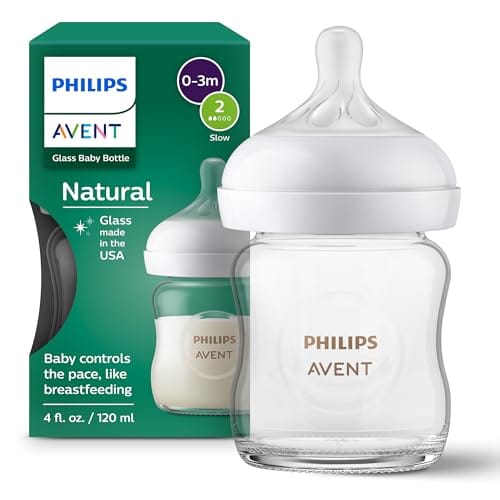
The Philips Avent Natural Response Glass Baby Bottle is the most widely available glass bottle in the US and one of the few designed around the feeding patterns of breastfed babies. The Natural Response nipple flexes only when the baby actively draws — it doesn't free-flow — which prevents the fast-flow habits that can make babies reluctant to return to breast. The body is borosilicate glass; wide-neck, dishwasher-safe. The 4oz size is right for the newborn phase; Avent makes an 8oz variant with the same glass body.
4. Dr. Brown's Options+ Anti-Colic Glass Baby Bottle, 8oz — Best for colic

The Dr. Brown's Options+ Anti-Colic Glass Baby Bottle is the most-cited bottle for gassy or colicky infants, and the internal vent system is the most-studied mechanism in the category. The body is glass with no liner or coating.
The polypropylene vent insert routes air through the liquid column — that's the tradeoff for its anti-colic effectiveness. Dr. Brown's built the Options+ specifically to run vent-free: once the colic phase passes, the insert removes entirely, and the bottle operates as a glass-only liquid-contact vessel for the rest of its life. If colic is your primary concern, this is the pick; remove the vent as soon as the baby's feeding stabilizes.
5. Comotomo Natural Feel Baby Bottle, 5oz — Best silicone

The Comotomo Natural Feel Baby Bottle is the reference silicone bottle. The entire body — mound, dual anti-colic vents, and nipple — is platinum-cured food-grade silicone. No polypropylene shell, no liner. Silicone is inert at feeding temperatures and passes through boiling, steam, and microwave sterilization without degrading. The wide base and soft squeeze response make it the easiest bottle for babies who resist switching from breast to bottle.
6. Nanobebe Flexy Silicone Baby Bottle, 5oz — Best for warming

The Nanobebe Flexy Silicone Baby Bottle body, collar, and breast-shaped dome are 100% food-grade silicone — no plastic shell in the liquid path. The dome geometry increases surface area relative to a cylindrical bottle of equivalent volume, which speeds warming from refrigerated or frozen storage. Useful for middle-of-the-night feeds. The squeeze-flex sides compress slightly under suction, which helps some babies pace their feeding. Runs about twice as fast to warm as an equivalent glass cylinder.
What we passed on
Standard polypropylene bottles — including most hospital starter kits — fail on the primary-material criterion regardless of BPA status. Tritan plastic, marketed as a safer BPA-free alternative by several brands, is still a plastic and still subject to microplastic shedding research. Several bamboo-composite bottles currently on the market use an undisclosed resin binder and couldn't be cleared against the disqualifiers. A handful of bottles with silicone-insert designs (polypropylene shell with silicone interior) appear non-plastic at first glance but fail because the shell contacts the liquid along the seam.
FAQ
Why isn't a BPA-free plastic bottle good enough?
The "BPA-free" label addresses one specific molecule: bisphenol A. It says nothing about the bottle's behavior under repeated sterilization at high temperature. A 2020 study from Trinity College Dublin found that standard polypropylene baby bottles released an average of 4.22 million microplastic particles per litre into formula prepared at 70 degrees C. Polypropylene is BPA-free. The problem is plastic in the liquid path under heat, not one specific bisphenol compound.
Is glass or stainless steel safer for a baby bottle?
Both are equally safe at the liquid-contact level: neither leaches at feeding temperatures and neither degrades under repeated sterilization. The practical differences are real. Glass lets you see the fill level clearly and is transparent through a bottle warmer; stainless steel is unbreakable and converts to a sippy or sport lid in modular systems. Neither is a wrong choice. Both eliminate plastic from the liquid path entirely.
What makes a silicone baby bottle actually safe?
Two conditions must hold. First, the silicone must be platinum-cured rather than peroxide-cured. Platinum-cured silicone leaves no catalyst residue; peroxide-cured can. Second, the silicone must cover the entire liquid-contact surface. Several bottles use a polypropylene shell with a thin silicone interior insert; that construction fails because the plastic shell contacts the milk along the seam. The Comotomo and Nanobebe in this guide use full-body silicone construction throughout.
Does the Dr. Brown's vent system put plastic in the milk path?
The internal vent routes air through the liquid column and the insert is polypropylene. That is the material tradeoff for its anti-colic effectiveness. The Options+ model was designed to run without the vent: the insert removes entirely once the colic phase ends, leaving a glass-only liquid-contact vessel. If you purchase this bottle for colic, remove the vent as soon as the baby's feeding stabilizes.
Can I sterilize glass and stainless bottles the same way I would plastic ones?
Glass and stainless steel tolerate boiling, steam sterilizers, and dishwasher cycles without degrading. Silicone passes through all sterilization methods at the same temperatures without releasing compounds. None of these materials degrade under the repeated thermal cycling that the Trinity College Dublin research identified as the primary microplastic shedding mechanism in polypropylene.
What is the anti-colic vent tradeoff in baby bottles?
Anti-colic vent systems reduce air ingestion during feeding by routing air through the bottle separately from the milk. The most common designs route that air through an insert sitting in the liquid column; others route air through the collar, entirely outside the liquid path. For the bottles on this list, we favored designs where the vent routes through the collar or is fully removable. The Dr. Brown's Options+ is the exception: its vent contacts the liquid but removes entirely once the colic phase ends.
Cover image: Luis Quintero via Unsplash (Unsplash License) — source.

