
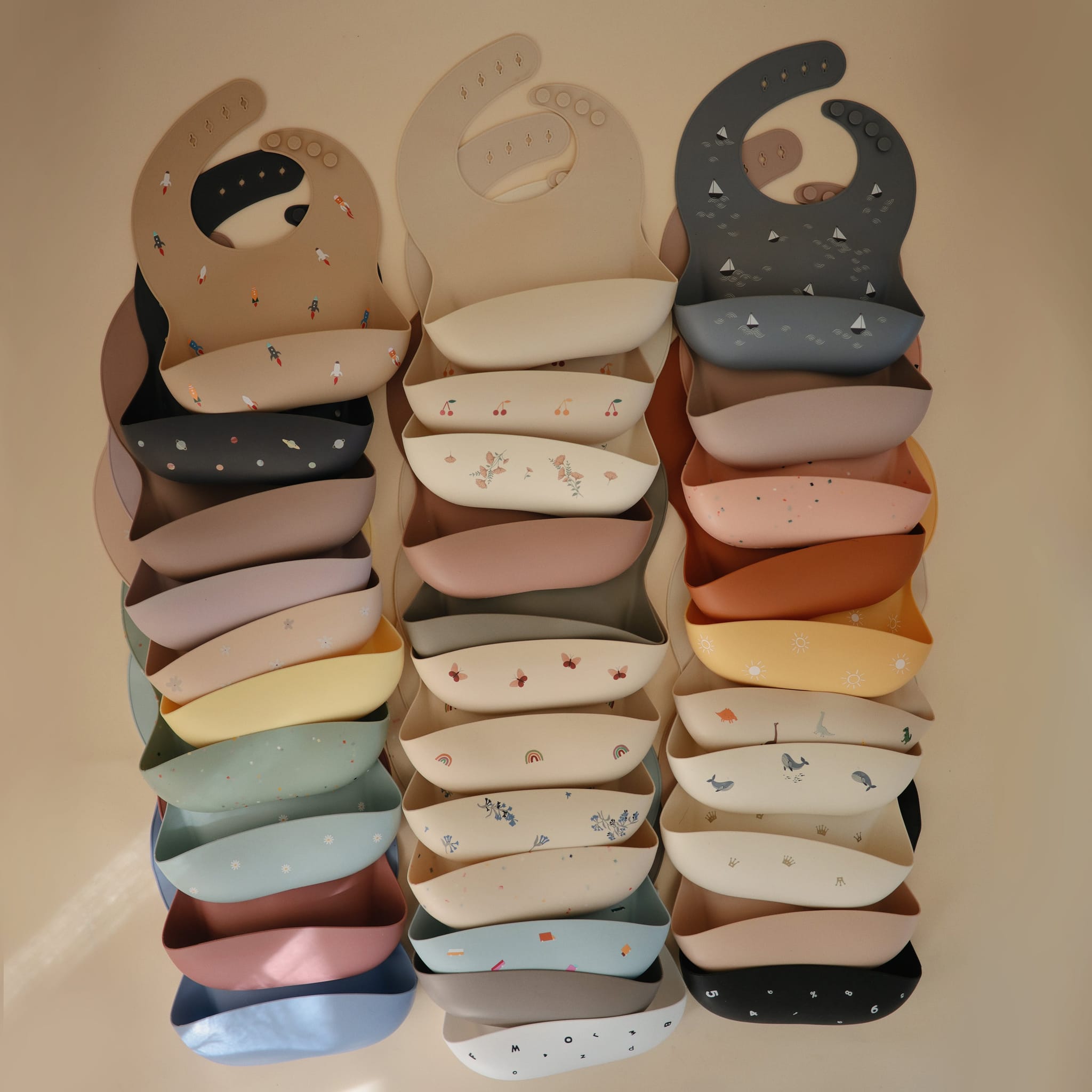
Quick answer
The best non-toxic baby bib is the Mushie Silicone Baby Bib, which holds OEKO-TEX Standard 100 certification (cert SH&GO 132093) on the finished bib, not just the raw compound. It suits infants from drool stage through early solid feeding and wipes clean or goes through the dishwasher. For parents who prefer fabric, the Burt's Bees Baby Organic Cotton Drool Bibs 4-Pack is the most accessible GOTS-certified option.
Our picks at a glance
| Pick | Best for | Key certifications | Price | Details |
|---|---|---|---|---|
| Mushie Silicone Baby Bib | Best overall | Oeko-Tex Standard 100 (cert SH&GO 132093) | $ | Full review |
| Burt's Bees Baby Organic Cotton Drool Bibs 4-Pack | Best fabric drool bib | GOTS Certified (cert CU 831717) | $ | Full review |
| Under the Nile Sherpa Drool Bibs 2-Pack | Best absorbency | GOTS Certified, Fair Trade Certified | $ | Full review |
| green sprouts Organic Muslin Bibs 5-Pack | Best value pack | Oeko-Tex Standard 100 (cert SH020 194118 TESTEX) | $ | Full review |
Why baby bibs need more than a "BPA-free" claim
The standard bib market is built around convenience, not materials. Most commercial bibs rely on one of three shortcuts: a polyester or PVC backing to waterproof a fabric bib, silicone-coated fabric made with undisclosed chemistry, or nickel-plated snaps that carry no materials disclosure. The "BPA-free" claim that appears on most bib packaging is a minimal floor, not a materials story. A bib can be BPA-free and still contain phthalates, antimony, or undisclosed processing chemicals in the fabric treatment. For a product that spends hours per day against a baby's neck, chin, and hands — and often goes directly into the mouth — the full chemistry matters.
We applied the same disqualifier list we use across the catalog: no PFAS in any form (including water-resistance and stain-repellent treatments), no polyester or PVC as the primary material (which rules out all PVC-backed fabric bibs and most "waterproof" options), and no chemical flame retardants. For this category specifically, we added two further criteria: no nickel in snap hardware, and silicone must be food-grade with OEKO-TEX Standard 100 certification on the finished bib — not just a "food-grade silicone" claim on the packaging.
What we look for
2
material families
that pass all gates: food-grade silicone and certified organic cotton
0
PVC-backed bibs
made the shortlist
4
brands
with verified third-party certification on the finished bib
We evaluated candidates across two material families: food-grade silicone and certified organic cotton. Every pick below holds a third-party certification — OEKO-TEX Standard 100, GOTS, or both — covering the finished product in the form you actually buy, not just the raw fiber or base compound.
For silicone picks, food-grade means OEKO-TEX Standard 100 certification on the finished bib. That certification tests for plasticizer residues, heavy metals, and formaldehyde in the cured silicone — not just the raw base compound. A "food-grade silicone" claim on packaging without a cert number is not sufficient.
For cotton picks, we required GOTS certification (covering the full processing chain including dyes, finishes, and accessories) or OEKO-TEX Standard 100 on the finished fabric. Both certification standards include testing or restrictions on nickel content in snap hardware, so nickel-snap concerns are addressed for certified products.
We excluded: any bib with a PVC or polyurethane waterproof coating, any bib made from a polyester-blended fabric, and any silicone bib without a food-grade certification number on the finished product.
Our picks
1. Mushie Silicone Baby Bib — Best overall
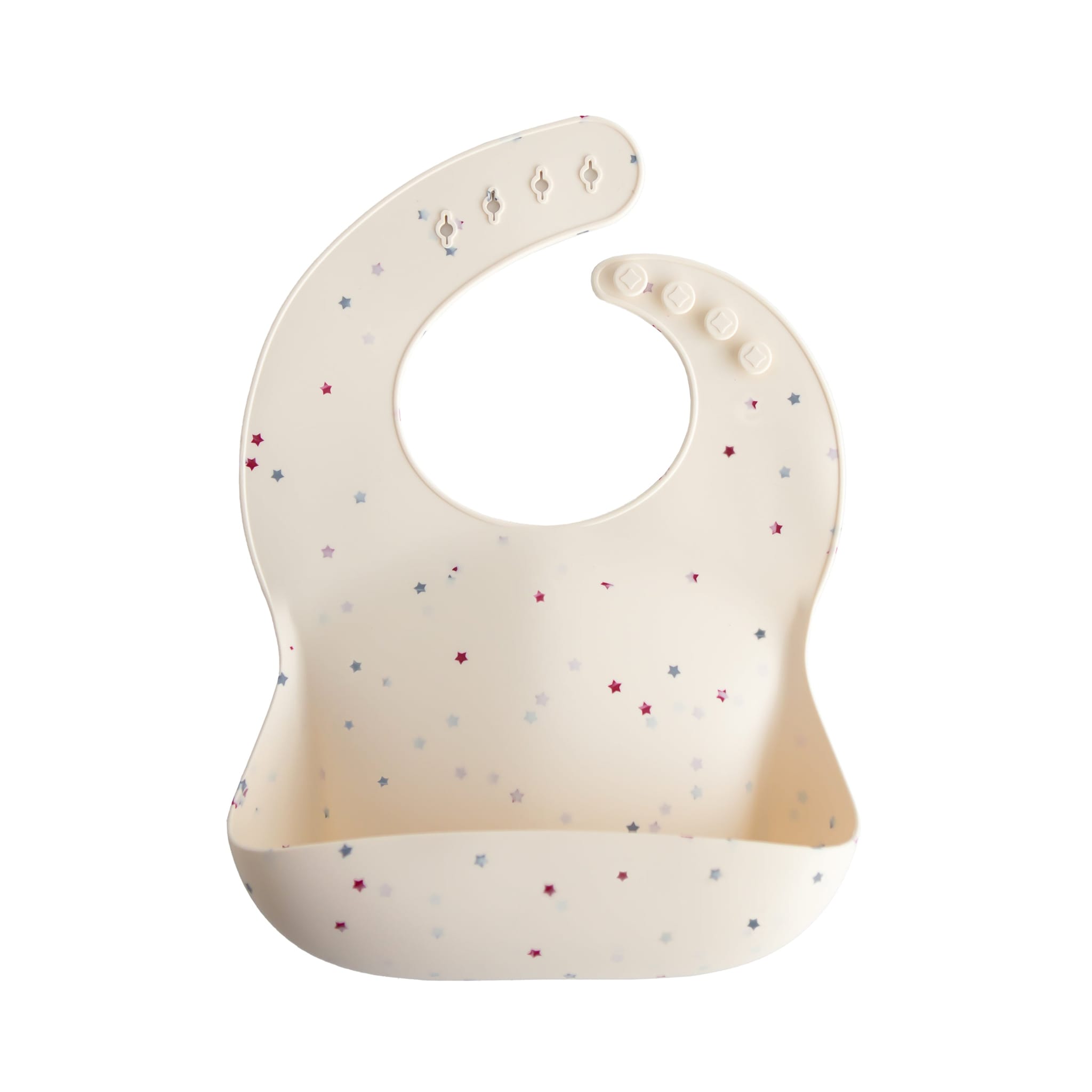
The Mushie Silicone Baby Bib earns the top spot because the certification is on the finished product. OEKO-TEX Standard 100 testing (cert SH&GO 132093) covers plasticizer residues, heavy metals, and formaldehyde in the cured bib itself — it's not a raw-material cert transferred to the final product. The one-piece construction eliminates seams or welds where different materials could bond with undisclosed adhesives. No BPA, no PVC, no filler pigments.
The pocket design runs deep enough to catch most solid food during early feeding. The bib wipes clean with a damp cloth or goes through the dishwasher (top rack). Soft enough for newborn-stage drool; rigid enough to function as a food-catcher during solid feeding. Available in multiple patterns.
Price: ~$14 each
2. Burt's Bees Baby Organic Cotton Drool Bibs 4-Pack — Best fabric drool bib
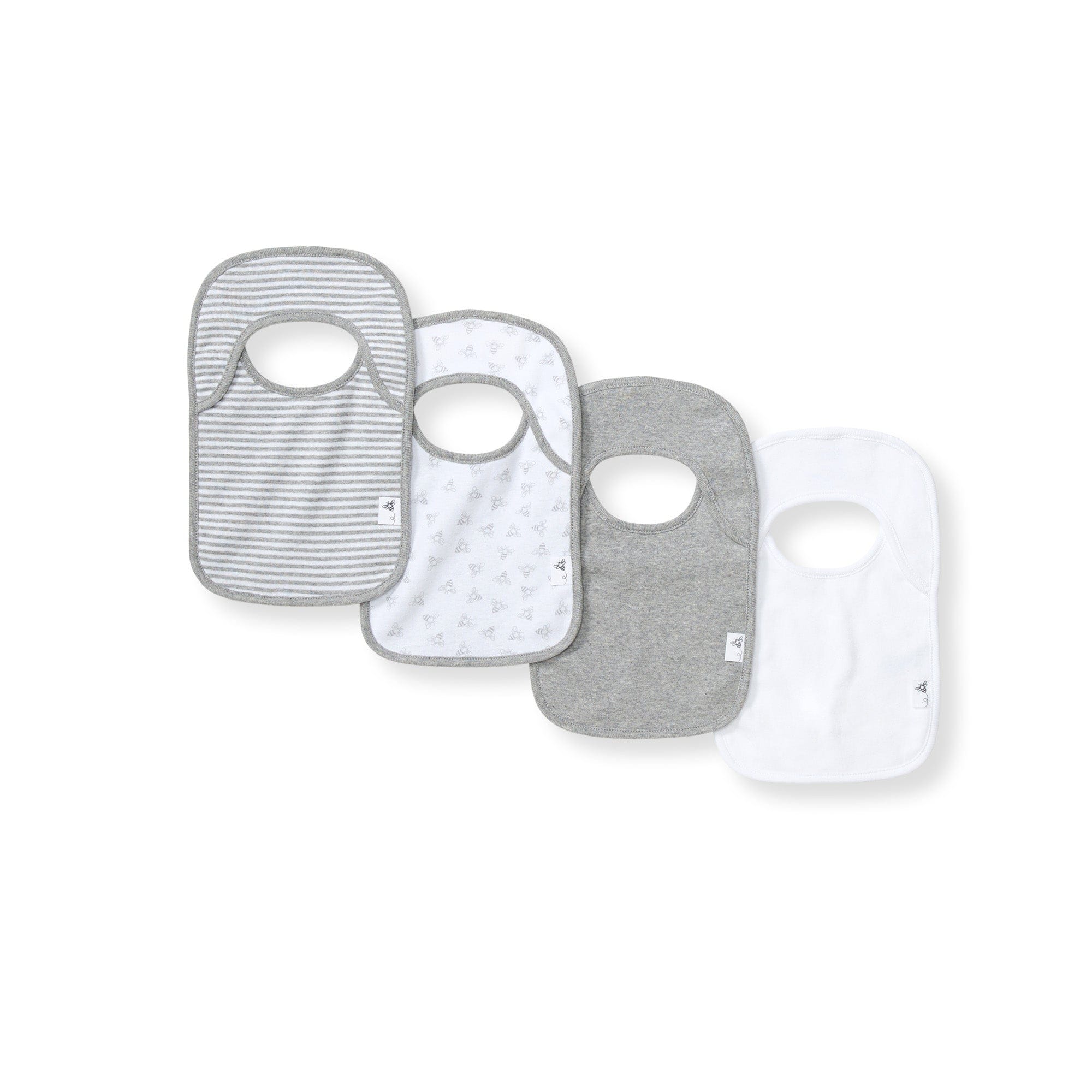
The Burt's Bees Baby Organic Cotton Drool Bibs 4-Pack is the most accessible GOTS-certified pick on this list. GOTS cert CU 831717 covers the full processing chain: cotton farming (no synthetic pesticides), processing (no azo dyes, formaldehyde, or heavy metal treatments), and accessories — GOTS standard Section 2.4.5 prohibits nickel above trace limits in snap closures. That's the nickel-hardware concern addressed at the certification level, not through a separate claim.
Three layers of organic cotton give real absorbency for drool-stage use. No waterproof backing — the back layer is organic cotton, not coated. The four-pack means you're cycling through several bibs before a wash run, which matters during the early teething months.
Price: ~$16.22 for the 4-pack
3. Under the Nile Sherpa Drool Bibs 2-Pack — Best absorbency
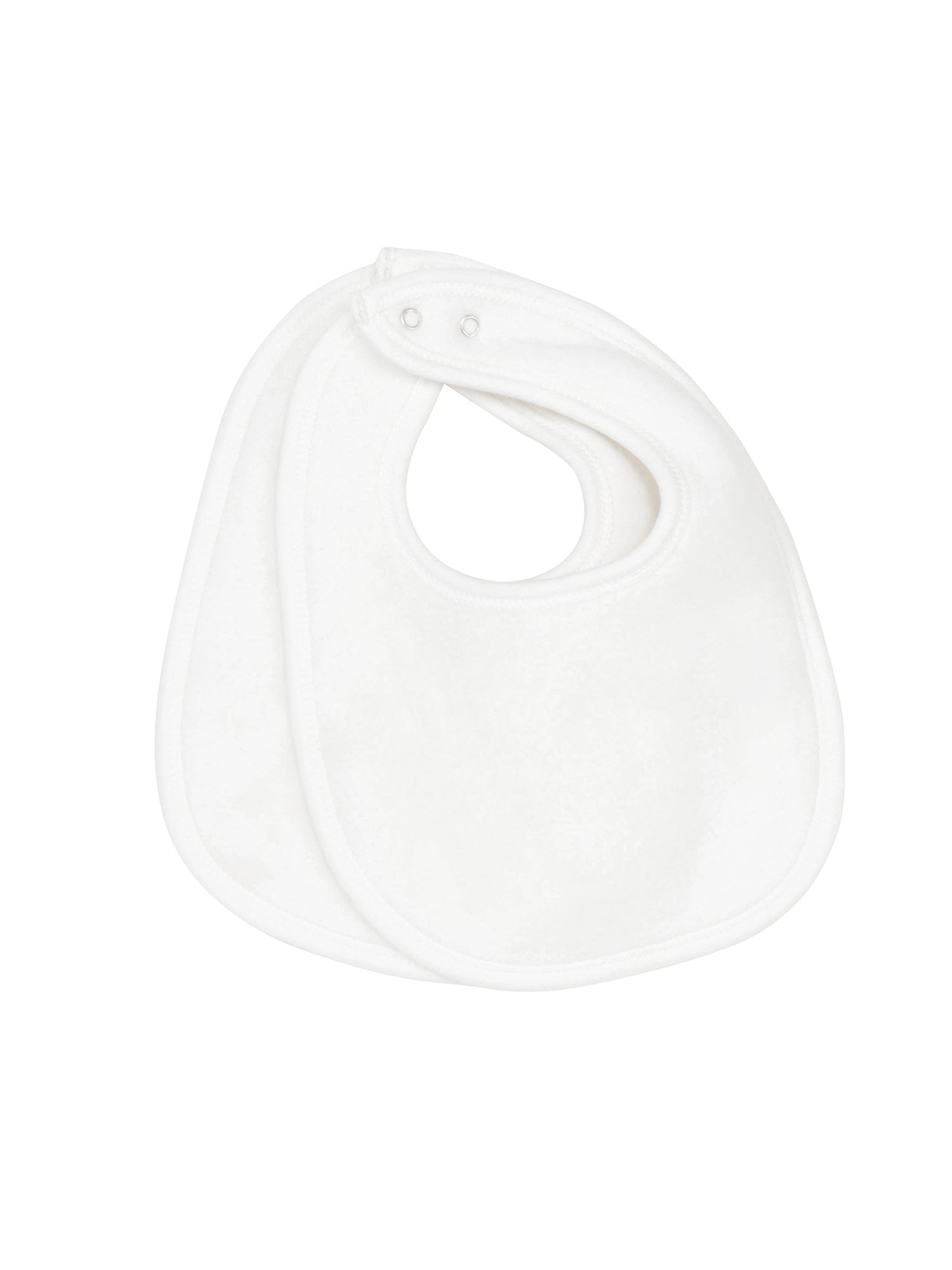
The Under the Nile Sherpa Drool Bibs 2-Pack handles heavier drool volume than any other fabric option here. The sherpa loop backing adds absorbent surface area without synthetic fiber fill — both the terry face and the sherpa back are 100% GOTS-certified organic Egyptian cotton. Under the Nile holds Fair Trade certification extending into the farm supply chain, which is a deeper material disclosure than most organic-cotton brands provide.
Best suited for the teething months when drool output exceeds what standard layered bibs can handle. Available in natural white; Under the Nile's color palette stays within low-impact dye chemistry consistent with GOTS requirements.
Price: ~$21 for the 2-pack
4. green sprouts Organic Muslin Bibs 5-Pack — Best value pack

The green sprouts Organic Muslin Bibs 5-Pack is the highest-count certified pack on this list. OEKO-TEX Standard 100 (cert SH020 194118 TESTEX) tests for harmful substances in the finished fabric including azo dyes, formaldehyde, heavy metals, and nickel content on snap hardware. Triple-layer muslin becomes more absorbent and softer with washing — unlike woven terry bibs that can stiffen over time.
Five bibs at around $23 gives the lowest per-bib cost of any certified option here. Practical for the early months when you need enough rotation to avoid washing every day.
Price: ~$23 for the 5-pack
What we passed on
Bumkins Waterproof Cloth Bib: the waterproofing chemistry uses a polymer coating we couldn't verify against our no-PVC and no-PFAS criteria. The brand's FAQ describes the backing as "waterproof" but doesn't name the coating material.
OXO Tot Roll-Up Bib: food-grade silicone claimed, but no OEKO-TEX certification number listed for the finished bib. OXO has not published a cert number for this product.
Lou Lou Lollipop Bibs: organic cotton claimed, but no verifiable GOTS or OEKO-TEX cert number on the brand's site or in their FAQ.
Care
Silicone bibs (Mushie): Top-rack dishwasher safe. For stubborn staining from orange or red foods, soak in warm water with a small amount of dish soap before running. Repeated high-heat dry cycles may cause slight distortion over time — air-dry is an option.
Organic cotton bibs (Burt's Bees, Under the Nile, green sprouts): Machine wash cold, tumble dry low. GOTS-certified dyes are color-set, but washing like colors separately the first few times is still good practice. Muslin (green sprouts) becomes more absorbent and softer after several washes as the weave opens up.
FAQ
Is silicone safe in baby bibs?
Food-grade platinum-cured silicone is generally considered safe for direct skin and mouth contact. The distinction this guide draws is between a "food-grade silicone" claim on packaging and a third-party certification on the finished bib. OEKO-TEX Standard 100 testing covers plasticizer residues, heavy metals, and formaldehyde in the cured product, not just the raw base compound. Mushie holds cert SH&GO 132093 on the finished bib.
Why is "BPA-free" not enough?
"BPA-free" means the product does not contain bisphenol A. It says nothing about phthalates, antimony, PFAS, or other chemical treatments in the fabric or coating. Many BPA-free bibs use PVC backing or polyester blends that carry their own undisclosed chemistry. GOTS and OEKO-TEX Standard 100 require testing across a broader panel of restricted substances than any single ingredient claim can cover.
Why do PVC-backed waterproof bibs fail your criteria?
PVC (polyvinyl chloride) is disqualified across this catalog because of its plasticizers and the stabilizers used in its production. Most waterproof fabric bibs achieve water resistance through a PVC or polyurethane coating on an otherwise acceptable fabric. "Waterproof" on a bib almost always signals a coating that will not be named on the label; this guide excluded every product in that category.
What does GOTS certification cover for a fabric bib?
GOTS (Global Organic Textile Standard) covers the full processing chain from farm to finished product: the organic origin of the fiber, the dyes and finishes applied during manufacturing, and the accessories. Section 2.4.5 of GOTS Version 6.0 restricts nickel content in metal accessories including snaps, which is the specific hardware concern for bibs. A GOTS cert number on the finished product is required; a claim on raw fiber alone is not sufficient.
How do I verify a bib's certification is real?
GOTS certifications carry a certificate number such as CU 831717, which can be searched at global-standards.org to confirm it is active and covers the relevant product category. OEKO-TEX Standard 100 certifications similarly carry a numbered cert verifiable at oeko-tex.com. If a brand claims certification but cannot provide a cert number that resolves in those databases, the claim is unverified.
Cover image: via Pexels (Pexels License) — source.