
Nursing pads are one of those postpartum things you usually buy in a rush — based on a recommendation in a group chat or whatever was in the hospital gift bag. Most of what's on the market, including most of the “reusable” options, is polyester microfiber or rayon against a polyethylene or polypropylene film. That plastic film is what makes them “waterproof”. It also sits against skin that may already be sore, cracked, or producing milk around the clock.
The alternative approach is simpler in theory: materials that manage moisture without a synthetic backing. Wool does this because lanolin is naturally present in merino fiber — it creates mild water resistance without any coating, breathes against skin, and stays soft against broken tissue. Silk facing wicks moisture away from the surface and feels gentler than any synthetic next to healing skin. Organic cotton without a polyurethane interlining is the simplest version: absorbent, machine-washable, nothing complicated.
The tradeoffs are honest ones. Wool pads need hand-washing and occasional re-lanolizing — a real step, covered in the care section below. Cotton without a waterproof layer isn't going to handle a heavy letdown without leaking through. Silver cups are a different tool entirely: they go between feeds to help healing, not during letdown to absorb. Knowing which situation calls for what makes the picks easier to use.
What we checked for in every pick: fiber composition listed by percentage on the product page, certifications verifiable through a direct link to the cert registry (GOTS, IVN BEST, or Fair Trade), and no synthetic waterproof backer or stain-resistant treatment without a named chemistry. Most of the market doesn't clear those gates.
4
picks
all with verifiable certifications or FDA registration
0
synthetic backings
across all four picks
3
certification standards
GOTS, IVN BEST, and Fair Trade
Our picks
1. LANACare Organic Merino Wool Nursing Pads — Best overall
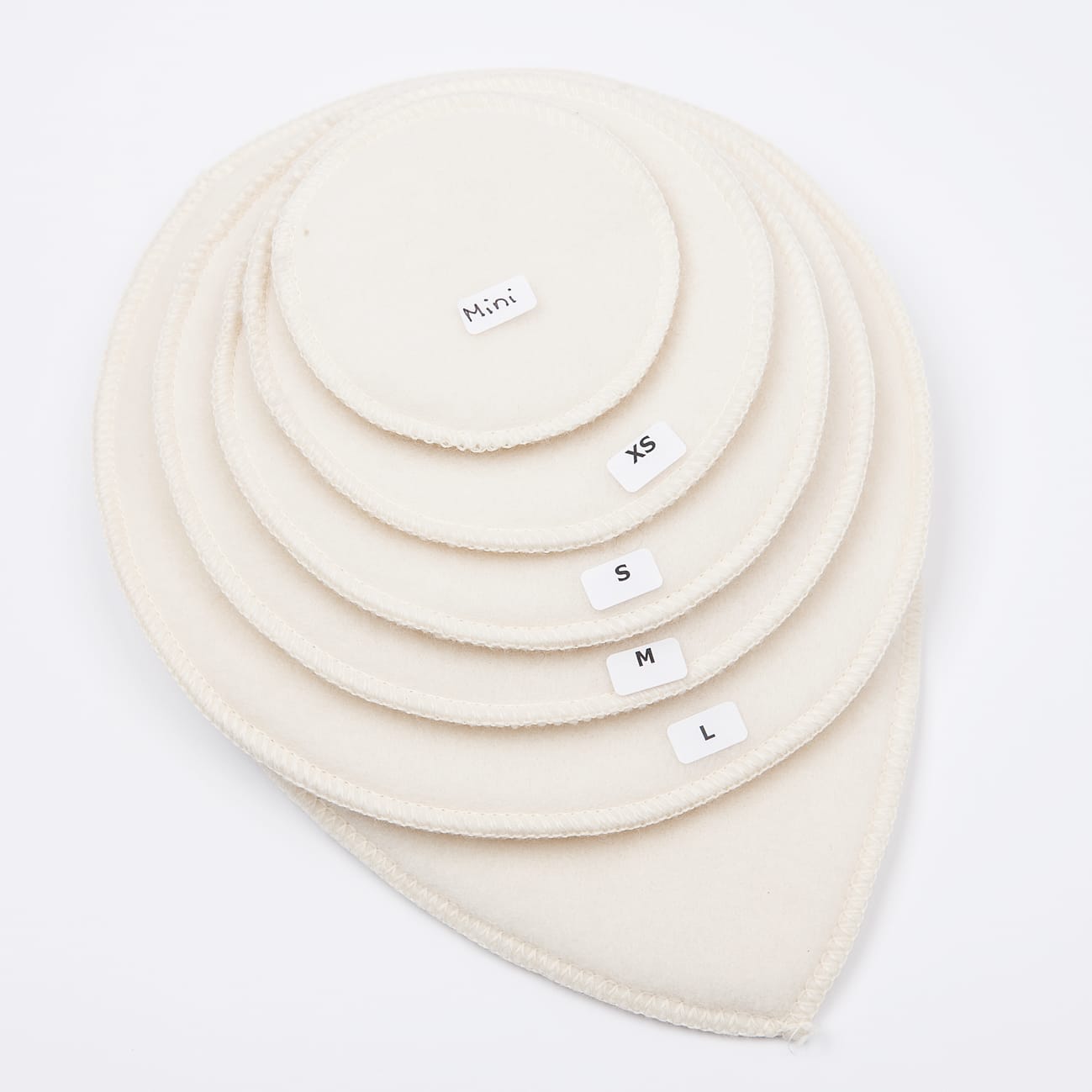
The LANACare Organic Merino Wool Nursing Pads are the reference for this category. The brand has been making these in Denmark since the early 1980s, and the design hasn't changed because there's no reason to change it: undyed organic merino knitted to five sizes, no coatings, no treatments.
The lanolin naturally present in merino wool creates mild water resistance — not enough to block overnight leakage, but enough for day-to-day use without any added layer. When the lanolin depletes with washing, you re-lanolize: dissolve a small amount of wool wash in warm water and soak the pads for 20 minutes. This takes months to become necessary.
Double-certified: GOTS for the fiber sourcing and processing, IVN BEST KBT (the German organic textile standard, stricter than GOTS) for factory conditions. Five sizes let nursing parents choose the diameter that fits without folding or bunching. The mini (9cm) is compact enough for light days; the large (22cm) covers more surface for the early weeks of heavy letdown.
2. Disana Nursing Pads, Bourette Silk & Wool — Best two-layer construction

The Disana Nursing Pads use a specific two-material design: bourette silk on the inside (the rough outer casing of the silk cocoon — more textured and more absorbent than finished silk), organic merino wool on the outside. The absorbent layer faces the skin; the wool outer provides body and mild water resistance.
Disana is a German brand with decades in certified organic children's clothing. Their nursing pads hold both GOTS and IVN BEST — the same strictest-in-Germany standard as the LANACare pick above. Available in the US via Green Mountain Diapers.
Hand-wash in cool water. Bourette silk is more heat-sensitive than finished silk; avoid hot water. Lay flat to dry. Hand-washing also preserves the merino lanolin longer than machine washing.
3. Under the Nile Organic Egyptian Cotton Nursing Pads — Best cotton option

The Under the Nile Organic Egyptian Cotton Nursing Pads are the straightforward all-cotton pick: 100% organic Egyptian cotton (velour face against the skin, terry backing for absorption), GOTS certified, Fair Trade certified. No wool, no silk, no lanolin management required.
Egyptian cotton has a longer staple fiber than standard cotton, which makes the terry layer more absorbent per unit thickness. Under the Nile sources from Egypt and has carried GOTS and Fair Trade certifications since the brand's founding — the organic claim covers the full supply chain. Available in the US via Our Green House.
The trade-off is that cotton without a synthetic backer doesn't have the lanolin-based water resistance of the wool picks above. For nursing parents who prefer cotton to wool, have wool sensitivities, or want the simplest care routine (machine wash warm, tumble dry low), this is the pick.
4. Silverette Nursing Cups — Best for nipple healing

The Silverette Nursing Cups are 925 sterling silver cups worn between feeds, shaped to cover and protect sore or cracked nipples. Where the picks above absorb, Silverette heals: silver ions inhibit bacterial colonization of damaged tissue without any topical chemicals, coatings, or plastics.
Two randomized controlled trials have compared Silverette cups to lanolin cream in postpartum nipple pain management. Both found faster pain reduction and comparable or better healing outcomes in the silver-cup groups. The mechanism is direct contact between the silver surface and healing tissue.
No plastics, no coatings, no chemical treatments — 925 sterling silver only, stamped with the 925 hallmark. FDA-registered as a medical device. One set lasts indefinitely. Rinse with clean water between feeds; sterilize in boiling water when needed.
What we passed on
GladRags Padded Nursing Pads use 100% organic cotton and are widely sold in natural baby stores, but we could not find GOTS certification documentation at the product level — the brand holds GOTS for some products but didn't have per-product cert links for the nursing pads at the time of this review. We dropped them pending clearer documentation.
Bamboobies nursing pads are among the most recommended reusable options in mainstream baby retail. The inner layer is bamboo velour (rayon from bamboo), the outer is polyester fleece. Polyester outer layer is a synthetic backer — outside our materials criteria.
Medela reusable nursing pads are polyester. Same issue.
Livella silver nursing cups (German, 999 fine silver, TÜV certified) are a credible second metal option, but their US purchase path was unverifiable at time of publication. If you're ordering from Europe, they're worth researching.
Care notes
All wool and silk pads benefit from hand-washing. Hot water degrades lanolin and can felt merino fibers permanently. Cool water, gentle wool-safe detergent, lay flat to dry.
Wool pads may need re-lanolizing after several weeks of washing. The process: dissolve a small amount of pure lanolin or lanolin-containing wool wash in warm water, soak pads for 15–20 minutes, gently squeeze out without wringing, lay flat to dry.
Under the Nile cotton pads machine wash warm and tumble dry low. No lanolin considerations.
Silverette cups rinse with clean water between feeds. Sterilize in boiling water periodically.
Product image: LANACare Organic Merino Wool Nursing Pads, all sizes — lanacare.com.