
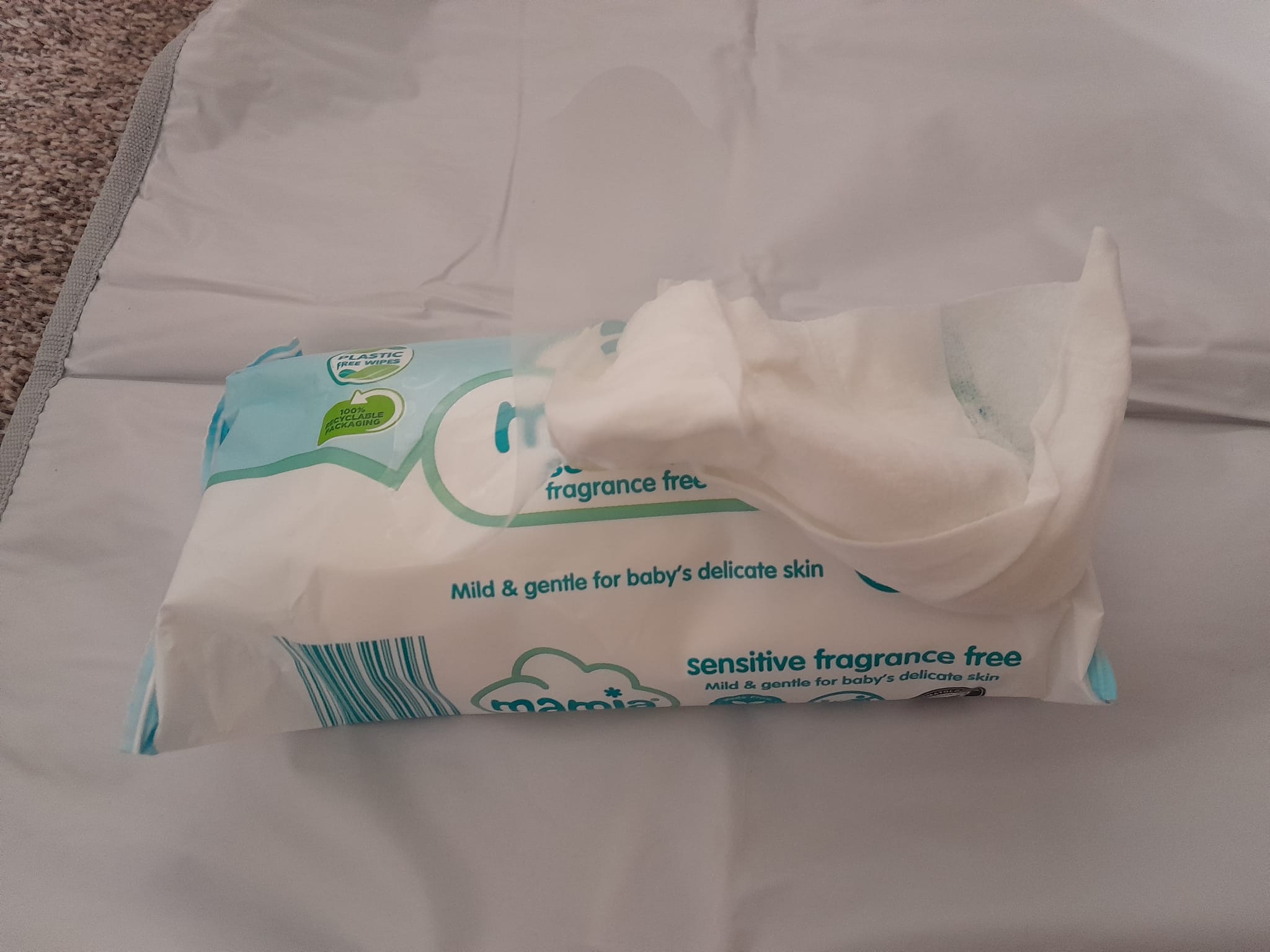
Baby wipes touch infant skin dozens of times a day, from the first weeks of life through toddlerhood. The marketing is almost always some version of "gentle" and "pure." The ingredient list tells a more complicated story.
The substrate: what OEKO-TEX covers
The wipe itself is a nonwoven fabric. Most are made from polypropylene (PP), polyethylene (PE), viscose (rayon), or a blend. Some brands use bamboo-derived viscose or cotton. The substrate determines texture, wet strength, and how the wipe releases the saturating liquid.
OEKO-TEX Standard 100 Class I is the certification brands most commonly cite. It tests the dry fabric against more than 100 restricted substances, including heavy metals, formaldehyde, pesticide residues, and certain dyes. Class I is the strictest tier in the OEKO-TEX family and is specifically required for products intended for contact with babies.
"99% water" and what the remaining 1% contains
Many wipes advertise "99% water" or "98% water." Those figures are accurate: water is the dominant ingredient by weight. But the remaining 1% to 2% contains a formulation of preservatives, humectants, pH adjusters, surfactants, and sometimes fragrance, each at concentrations between 0.01% and 1%.
Small fractions do not mean small impact, especially on skin that has not yet fully matured its barrier function.
Preservatives
Water-based products require preservation. The question is which system the brand chose.
Phenoxyethanol is the most common modern preservative in baby wipes. The EU permits it at up to 1% in cosmetics; at conventional concentrations it is broadly considered safe and is not on our disqualifier list. The EWG assigns it a moderate-concern rating, citing its role as a skin and eye irritant at elevated concentrations.
Methylisothiazolinone (MI) is a different matter. The EU restricted it in leave-on products in 2013 following a documented contact allergy outbreak. By 2017 the restriction extended to rinse-off products, setting a limit of 0.0015%. The US imposes no equivalent restriction. Some wipes sold here still contain MI at concentrations legal domestically but prohibited in Europe. MI is not on our universal disqualifier list, but its presence is worth recognizing when you see it on a label.
Parabens are a clear line. Methylparaben, ethylparaben, propylparaben, and butylparaben are endocrine-disrupting compounds that absorb through the skin and have been detected in human tissue. They are on our disqualifier list: a wipe containing any paraben fails our screen, regardless of what else it gets right.
Fragrance
"Fragrance" and "parfum" on a label are umbrella terms that can represent dozens to hundreds of undisclosed compounds, including sensitizers, allergens, and synthetic musks. On a product applied to a baby's skin multiple times daily, an undisclosed fragrance ingredient list is a disqualifier on this site. Named essential oils (lavender essential oil, for example) and named aroma compounds are a different matter. The concern is the catchall, not scent itself.
Humectants and penetration enhancers
Propylene glycol appears in many formulas as a humectant (it holds water in the skin) and a solvent. It also functions as a penetration enhancer, meaning it can increase how readily other compounds move through the skin barrier. That effect is generally low at cosmetic concentrations, but it is worth noting alongside the rest of the formula.
Glycerin is also commonly used as a humectant and is not a concern.
Surfactants
Some wipes include a mild surfactant for cleaning performance. The category to watch: ethoxylated surfactants such as sodium laureth sulfate (SLES) or any ingredient with "-eth-" in the INCI name. These can carry 1,4-dioxane as a manufacturing byproduct. 1,4-dioxane is a probable human carcinogen; it does not appear on ingredient labels because it is a contaminant, not an intentional ingredient. The FDA has published guidance on its reduction in cosmetics. Unless a brand discloses residual 1,4-dioxane testing and its results, ethoxylated surfactants are a disqualifying concern on this site.
Why baby skin makes this matter more
Infant skin is not simply smaller adult skin. At birth, the outermost layer (the stratum corneum) is thinner and its barrier function is still developing, particularly in premature infants. Percutaneous absorption of applied compounds is proportionally higher during this period. Infants also have a higher skin-surface-area-to-body-weight ratio than adults, meaning a given topical application represents a larger systemic exposure per kilogram of body weight.
That physiology is why criteria for anything applied to baby skin should be stricter, not more lenient.
What a cleaner label looks like
A wipe that clears our criteria has:
- A named nonwoven substrate: cotton, bamboo-derived viscose, or a PP/viscose blend with OEKO-TEX 100 Class I on the fabric
- A preservation system with individually named ingredients: phenoxyethanol (if present), ethylhexylglycerin, or sodium benzoate plus potassium sorbate
- No "fragrance" or "parfum" catchall; any scent ingredient named individually
- No parabens in any form
- No MI or MCI (methylchloroisothiazolinone)
- No ethoxylated surfactants, or a brand disclosure of residual 1,4-dioxane testing
- No "antibacterial" claim, which typically signals a biocide treatment such as nanosilver or a silver-ion odor finish, both on our disqualifier list
Most wipes on the shelf do not meet all of these criteria. The product directory lists those that do, screened individually against the criteria this article describes.
Cover image: Headlock0225 via Wikimedia Commons (CC BY 4.0), source.

