Our picks at a glance
| Pick | Best for | Key certifications | Price | Details |
|---|---|---|---|---|
| Natracare Organic Baby Wipes | Highest certification bar | EWG Verified, Soil Association Organic | $$$ | Review |
| Coterie The Wipe | Three-cert, plastic-free substrate | EWG Verified, OEKO-TEX Standard 100, NEA Seal | $$ | Review |
| HealthyBaby Our Wet Wipes | MADE SAFE + EWG at best value | EWG Verified, MADE SAFE, FSC Certified | $$ | Review |
| Caboo Bamboo Baby Wipes | Lowest-cost MADE SAFE option | MADE SAFE | $ | Review |
| Pipette Baby Wipes | Most accessible EWG Verified pick | EWG Verified, FSC Certified | $ | Review |
| WaterWipes Sensitive+ | Minimal formula, sensitive skin | NEA Seal | $ | Review |
| Jackson Reece Kinder by Nature | EU plastic-free certified, budget | EU plastic-free certified | $ | Review |
| Honest Company Sensitive Wipes | EWG Verified, reformulated formula | EWG Verified | $ | Review |
The wipe touching your baby's skin all day, every day — dozens of times across diaper changes, mealtimes, and cleanup — may be made of plastic. Not trace amounts of plastic. The substrate itself.
A 2019 study in the Journal of Dermatitis found that 24% of sampled baby wipes released formaldehyde during use without disclosing it on the label. That finding made headlines. What got less attention was the other side of the study: the material doing the wiping. Pampers Aqua Pure, Seventh Generation, and Babyganics — brands parents reach for specifically as "cleaner" alternatives — all use polyester or polyethylene fiber as their base. That's the same family of petroleum-derived plastic found in synthetic fleece, just pressed into a thin sheet.
Formaldehyde matters. Plastic substrate matters more, because it touches skin at every change.
What to look for
Substrate first. The material contacting skin should be plant-derived: 100% organic cotton, lyocell (wood-derived), or wood pulp. Reject any wipe whose ingredient list describes "polyethylene," "polypropylene," "polyester," or uses the vague term "nonwoven fabric" without specifying the fiber.
Full ingredient disclosure. Every ingredient — including preservatives, emollients, and the water source — should be listed publicly, not hidden behind "gentle formula" or "plant-based blend." If a brand won't say what's in it, assume it's the same as conventional.
Fragrance-free, actually. "Fragrance" and "parfum" are blanket terms that can cover hundreds of unlisted chemicals, including known allergens. EWG Verified and MADE SAFE both screen for this explicitly.
Certification as verification, not marketing. EWG Verified means every ingredient was individually assessed by EWG's scientists against their database of 96,000+ ingredients. MADE SAFE screens against a broader bioaccumulation and carcinogenicity database. OEKO-TEX Standard 100 means the finished textile was tested for 100+ harmful substances. These are not self-declared; they require third-party audit.
24% of wipes sampled released formaldehyde during use. None disclosed it on the label.
If you're starting to audit the rest of your baby's products, the baby collection and this overview of non-toxic baby essentials cover the broader picture.
Our picks
1. Natracare Organic Baby Wipes — Best certification story
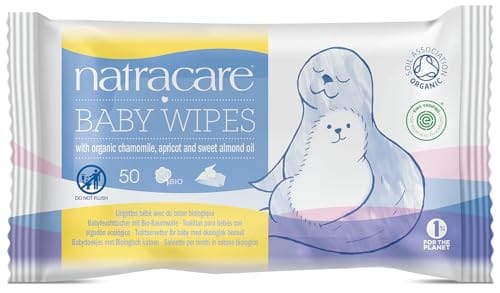
The Natracare Organic Baby Wipes lead this list because the substrate is 100% certified organic cotton — not a blend, not a cotton-lyocell mix, not wood pulp. The Soil Association verifies the raw material chain from field to finished product; EWG Verified screens the formula for concerning ingredients. Every ingredient is listed on-pack. They are the most expensive option here, which reflects the organic cotton sourcing cost.
2. Coterie The Wipe — Three certifications, plastic-free

The Coterie The Wipe uses VEOCEL Lyocell — wood-derived, completely plastic-free — certified by OEKO-TEX Standard 100, which tests the finished textile against 100+ harmful substances. EWG Verified covers the formula. The NEA Seal (National Eczema Association) adds a skin-sensitivity layer with clinical testing. Three independent bodies on one product. It sits at the premium tier without the full organic cotton sourcing premium.
3. HealthyBaby Our Wet Wipes — MADE SAFE + EWG at the best value

The HealthyBaby Our Wet Wipes are the value leader among dual-certified options. FSC-certified wood pulp substrate — the forest sourcing is traceable. MADE SAFE certification screens every ingredient for bioaccumulation, carcinogenicity, and endocrine disruption; EWG Verified adds a second pass. At $0.11 per wipe, this is the lowest price point with two independent screens.
4. Caboo Tree-Free Bamboo Baby Wipes — MADE SAFE certified, tree-free substrate

The Caboo Tree-Free Bamboo Baby Wipes use a 100% bamboo viscose substrate — plant-derived, no synthetic fiber shedding, no petroleum in production. MADE SAFE certification screens every ingredient for bioaccumulation, carcinogenicity, and endocrine disruption — the same independent standard as HealthyBaby above. At $0.07 per wipe (432-count pack), this is the lowest-cost MADE SAFE option on this list. Fragrance-free, full ingredient disclosure on-pack.
5. Pipette Baby Wipes — Most accessible EWG Verified option

The Pipette Baby Wipes use FSC-certified plant-derived fiber — not polyester — with a plant-derived moisturizer (squalane). EWG Verified confirms the formula. At $0.07 per wipe, this is the most affordable EWG Verified option on this list. For families going through 70+ wipes per week, that difference compounds significantly.
6. WaterWipes Sensitive+ Newborn & Baby Wipes — Two ingredients, plant-based viscose
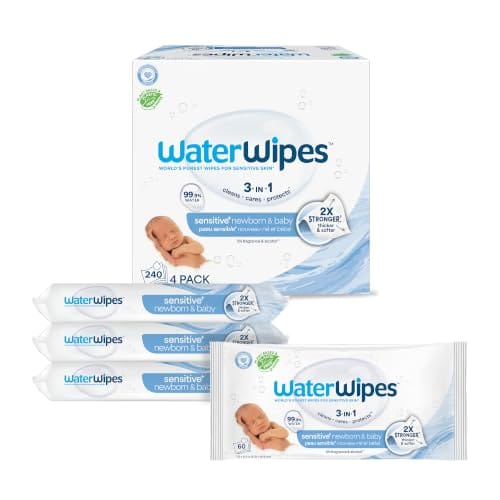
The WaterWipes Sensitive+ Wipes have the shortest ingredient list of any product here: purified water and grapefruit seed extract. The substrate is 100% plant-based viscose, not polyethylene. The NEA Seal confirms clinical testing for atopic and sensitive skin. At $0.06 per wipe they're the most affordable option on this list, and the minimalism of the formula is a legitimate feature for parents managing skin reactions.
7. Jackson Reece Kinder by Nature Water-Based Baby Wipes — EU plastic-free certified, budget-tier
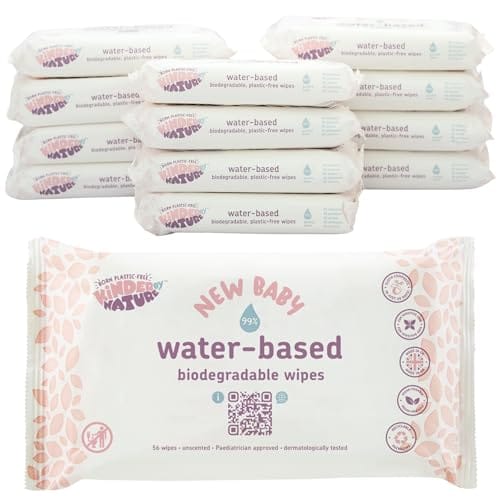
The Jackson Reece Kinder by Nature Wipes use a wood pulp substrate with EU plastic-free certification and third-party sustainable sourcing verification. The formula is water-based with no fragrance. They sit alongside Pipette at the budget tier while disclosing the full substrate composition.
8. The Honest Company Sensitive Wipes, Unscented — EWG Verified, with a disclosure

The Honest Company Sensitive Wipes are EWG Verified on the current formula. Full disclosure: a 2019 Journal of Dermatitis study detected formaldehyde in the then-formula without label disclosure. The brand reformulated and subsequently earned EWG Verified status, which independently confirms the current formulation does not contain it. Plant-based substrate, no fragrance, $0.08 per wipe. The reformulation story is the reason they are listed last rather than higher.
What we passed on
Seventh Generation Free & Clear: polyethylene substrate despite the "natural" branding. The wipe material is a petroleum-derived plastic.
Hello Bello Fragrance-Free: contains PHMB (polyhexamethylene biguanide), a preservative banned in rinse-off products in the EU due to carcinogenicity concerns.
Pampers Aqua Pure: polyester substrate — the same fiber in synthetic athletic wear. The "99% pure water" claim refers only to the solution, not the material doing the wiping.
Babyganics Fragrance-Free: polyester substrate, same issue as Aqua Pure.
FAQ
Are most baby wipes made of plastic?
Many popular wipes, including some marketed as "natural" or "cleaner" alternatives, use polyethylene, polypropylene, or polyester as the wipe substrate. That is the same family of petroleum-derived plastic found in synthetic fabrics, pressed into a thin sheet. A 2019 study in the Journal of Dermatitis found several "eco" branded wipes contained formaldehyde without label disclosure, and many used synthetic fiber substrates. A wipe with a plant-derived substrate (certified organic cotton, lyocell, or FSC-certified wood pulp) avoids both issues.
What does EWG Verified mean on baby wipes?
EWG Verified means every ingredient was individually assessed by Environmental Working Group scientists against their database of over 96,000 ingredients. It screens for carcinogens, developmental toxins, endocrine disruptors, and allergens. It is not a self-declared claim: the brand submits ingredient documentation and EWG publishes each verified product's full formula.
Is "fragrance-free" enough, or does the substrate also matter?
Both matter, but for different reasons. "Fragrance-free" addresses the solution used to wet the wipe: the term "fragrance" on an ingredient list can cover hundreds of unlisted chemicals including known allergens. The substrate matters because it contacts skin at every change. A fragrance-free wipe on a polyethylene substrate still introduces a synthetic petroleum plastic to newborn skin dozens of times per day.
What is MADE SAFE certification, and how does it differ from EWG Verified?
MADE SAFE screens against a database of known and suspected harmful substances including bioaccumulants, carcinogens, and endocrine disruptors. Both certifications require third-party review and neither accepts self-declaration. Some picks on this list carry MADE SAFE (HealthyBaby, Caboo); others carry EWG Verified (Natracare, Coterie, Pipette). Products with both have been audited by two separate methodologies.
Why is The Honest Company listed last if it is EWG Verified?
A 2019 Journal of Dermatitis study detected formaldehyde in the then-current Honest Company formula without label disclosure. The brand reformulated and subsequently earned EWG Verified status, which independently confirms the current formulation does not contain it. The placement reflects the reformulation history: the current formula passes our screen, and transparency about that history is part of how readers can make informed decisions.
What is the WaterWipes formula?
WaterWipes Sensitive+ contains purified water and grapefruit seed extract. That is the complete ingredient list. The substrate is 100% plant-based viscose. For infants with very sensitive or reactive skin, the minimalism of the formula is a real feature rather than a marketing claim.
Cover image: Jake Bravo via Unsplash (Unsplash License) — source.