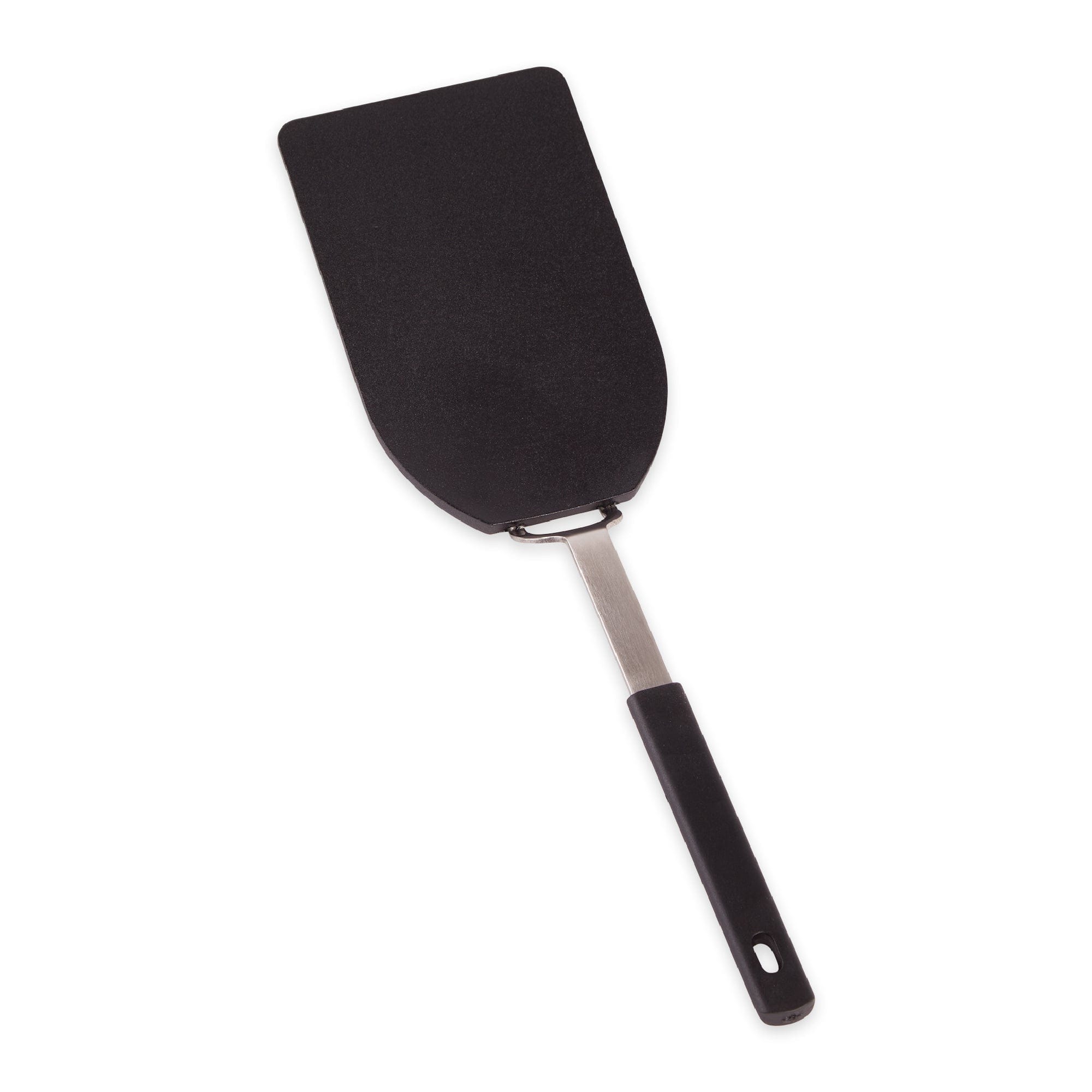
Our picks at a glance
| Pick | Best for | Key certifications | Price | Details |
|---|---|---|---|---|
| All-Clad 5-Piece Set | Best overall set | None | $$$ | Full review |
| de Buyer Straight Spatula | Best single spatula | None | $$$ | Full review |
| Rosle Basting Spoon | Best basting spoon | None | $$$ | Full review |
| Vollrath Ladle | Best ladle | NSF/ANSI 2 | $ | Full review |
| Winco Basting Spoon | Best value spoon | None | $ | Full review |
| Earlywood Jatoba Utensil | Best solid wood | None | $$ | Full review |
| FAAY Teak Spatulas | Best wood set | None | $$ | Full review |
| Bambu Bamboo Set | Best bamboo set | USDA BioPreferred | $$ | Full review |
| OXO Wooden Set | Best widely available | None | $$ | Full review |
| Rosle Locking Tongs | Best premium tongs | None | $$$ | Full review |
| Winco Utility Tongs | Best budget tongs | None | $ | Full review |
| Rosle Balloon Whisk | Best whisk | None | $$ | Full review |
| Vollrath Slotted Turner | Best slotted turner | NSF/ANSI 2 | $ | Full review |
Why the spatula in your hand matters
A 2024 study in Chemosphere tested 203 kitchen utensils and found brominated flame retardants (BFRs) in black plastic items at concentrations high enough to warrant concern. The contamination pathway is direct: a spatula scraping a hot pan sheds particles into the food below. These are not trace contaminants from manufacturing. They are the utensil itself, one scrape at a time.
The finding reframed a question most people haven't thought to ask: what are my utensils made of, exactly? The answer is often "we don't know." Most brands don't disclose the polymer chemistry behind the handle or the functional material in a silicone tip. This guide is for the people who want to know.
What we look for
The two materials we recommend: stainless steel and solid wood. Both have long cooking histories, both are fully disclosable (there is no proprietary blend of stainless steel), and both pass every disqualifier on our list.
Black plastic: the headline concern. Recycled plastic is often mixed with unknown material streams. The flame retardants used in electronics (PBDEs and their successors) end up in the recycled plastic that becomes kitchen utensils. A meta-analysis in Chemosphere identified this as a credible and underappreciated exposure route. The color is not cosmetic: carbon black is used to mask the inconsistent coloration of mixed recycled polymers. If your spatula is black and plastic, that is the tell.
Silicone is not a simple pass. Food-grade, platinum-cured silicone with no fillers is chemically inert and generally accepted. The problem is that most silicone utensils are not just silicone. A Mamavation survey found that 82% of silicone baking products tested positive for fluorine compounds, suggesting PFAS contamination from either the raw material or the curing process. Beyond PFAS, most silicone utensils have an internal core for rigidity. A nylon core is a plastic core; it heats up and contacts food at joints and tips. GIR (Get It Right), one of the most-recommended silicone brands, uses a nylon rod as its handle core. We excluded silicone picks from this guide for that reason. See "What about silicone?" below.
Nylon and other plastics: Nylon, polypropylene, ABS, and similar polymers are plastics. They may be BPA-free; that does not make them inert at heat. We do not list products with plastic cores or functional cooking surfaces where plastic is the food-contact interface.
Wood: what to verify. Solid hardwood is fine. The finish matters more than the wood species. We require unsealed wood or wood finished with food-grade mineral oil only. Polyurethane, lacquer, and "proprietary finish" utensils do not make the cut. Bamboo is botanically a grass and is often bonded with adhesives. We include bamboo only when the brand discloses the adhesive chemistry and it clears the formaldehyde exclusion.
Certifications: There is no definitive certification for cooking utensils the way GOTS covers textiles or NSF/ANSI 61 covers water contact. We instead require full material disclosure on the brand's product page, with a traceable source.
Our picks
1. All-Clad 5-Piece Stainless Steel Kitchen Utensil Set - Best overall set

The All-Clad 5-Piece Stainless Steel Kitchen Utensil Set is the safest bet for someone who wants to replace the entire utensil drawer in one step. Five tools: a slotted spoon, solid spoon, ladle, slotted spatula, and serving spoon. All are 18/10 stainless, handle to tip, with no nonstick coating, no silicone functional surfaces, and no plastic anywhere in the construction. All-Clad publishes material specs on its product pages; the 18/10 designation is verifiable and carries no ambiguity.
The tradeoff: stainless is unforgiving on nonstick pans. For stainless, cast iron, carbon steel, or any uncoated surface, this set is the right tool.
2. de Buyer FKOfficium Straight Spatula, 25cm - Best single spatula

The de Buyer FKOfficium Straight Spatula is a professional-kitchen tool from the French manufacturer known for its carbon steel pans. The blade and handle are 18/10 stainless with a polished finish and a slight flex to the blade that is useful for lifting delicate proteins. Materials are disclosed on de Buyer's product pages: 18/10 stainless throughout, no coating.
De Buyer's FKOfficium line was developed for professional kitchen use, which tends to mean simpler, more durable materials. Commercial kitchens have no appetite for utensils that degrade under daily high-heat use.
3. Rosle Stainless Steel Basting Spoon, 12.4 inch - Best basting spoon
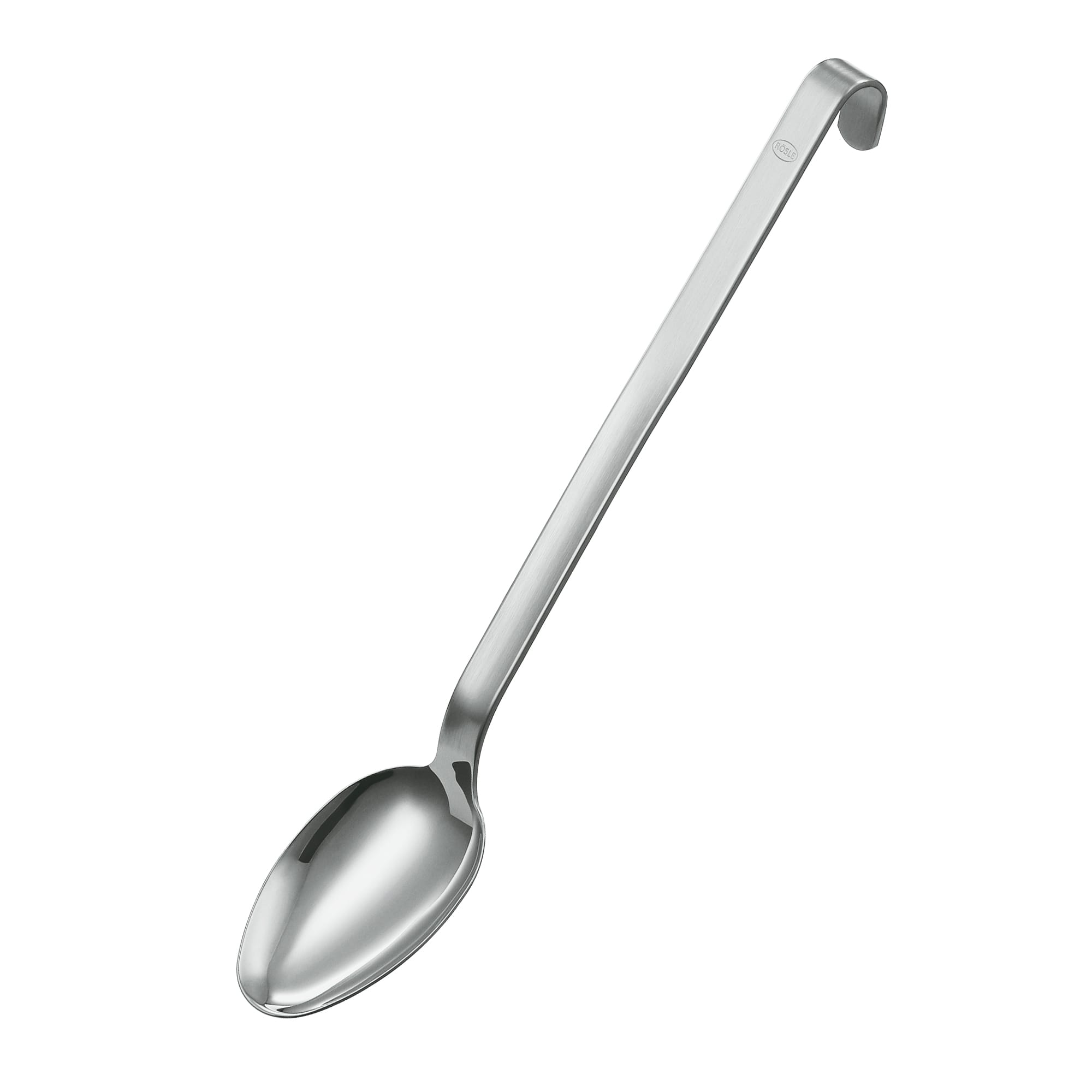
The Rosle Stainless Steel Basting Spoon represents the German approach to kitchen tools: slightly overbuilt, fully disclosed, long service life. Rosle uses 18/10 stainless across its cooking utensil line and publishes material specs on its website. The hook handle is an ergonomic design unchanged for decades because it works; it rests cleanly on a pot rim without slipping.
At 12.4 inches, this is a purpose-built basting tool. For high-volume basting (roasting, poaching, or anything where liquid cycles back over protein), the deep bowl and long handle keep hands clear of heat.
4. Vollrath 8oz Stainless Steel Solid Ladle - Best ladle
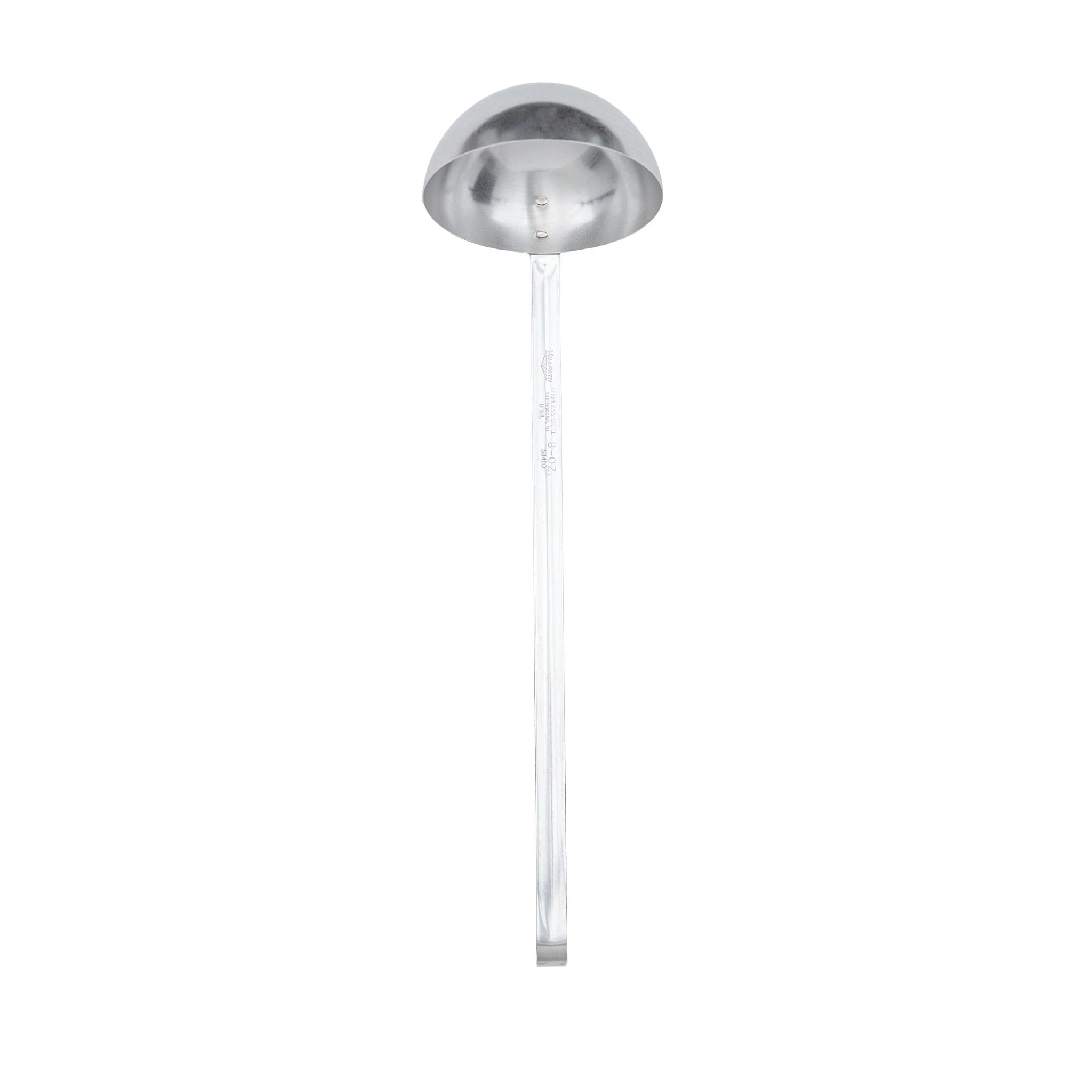
Vollrath is a foodservice equipment manufacturer, not a consumer brand. That is the point. The Vollrath 8oz Stainless Steel Solid Ladle is the same ladle used in commercial kitchens: one-piece 18/8 stainless, no joints, no handle inserts, no coating. There is nothing to degrade, nothing to harbor bacteria, nothing to come off into your soup.
The 8oz bowl is the most useful size for soups and sauces. The handle has a hook for pot-rim resting. Vollrath's foodservice provenance means the material disclosure is embedded in NSF/ANSI 2 certification for food equipment; this ladle is built to pass health department inspection.
5. Winco Stainless Steel Basting Spoon, 13 inch - Best value
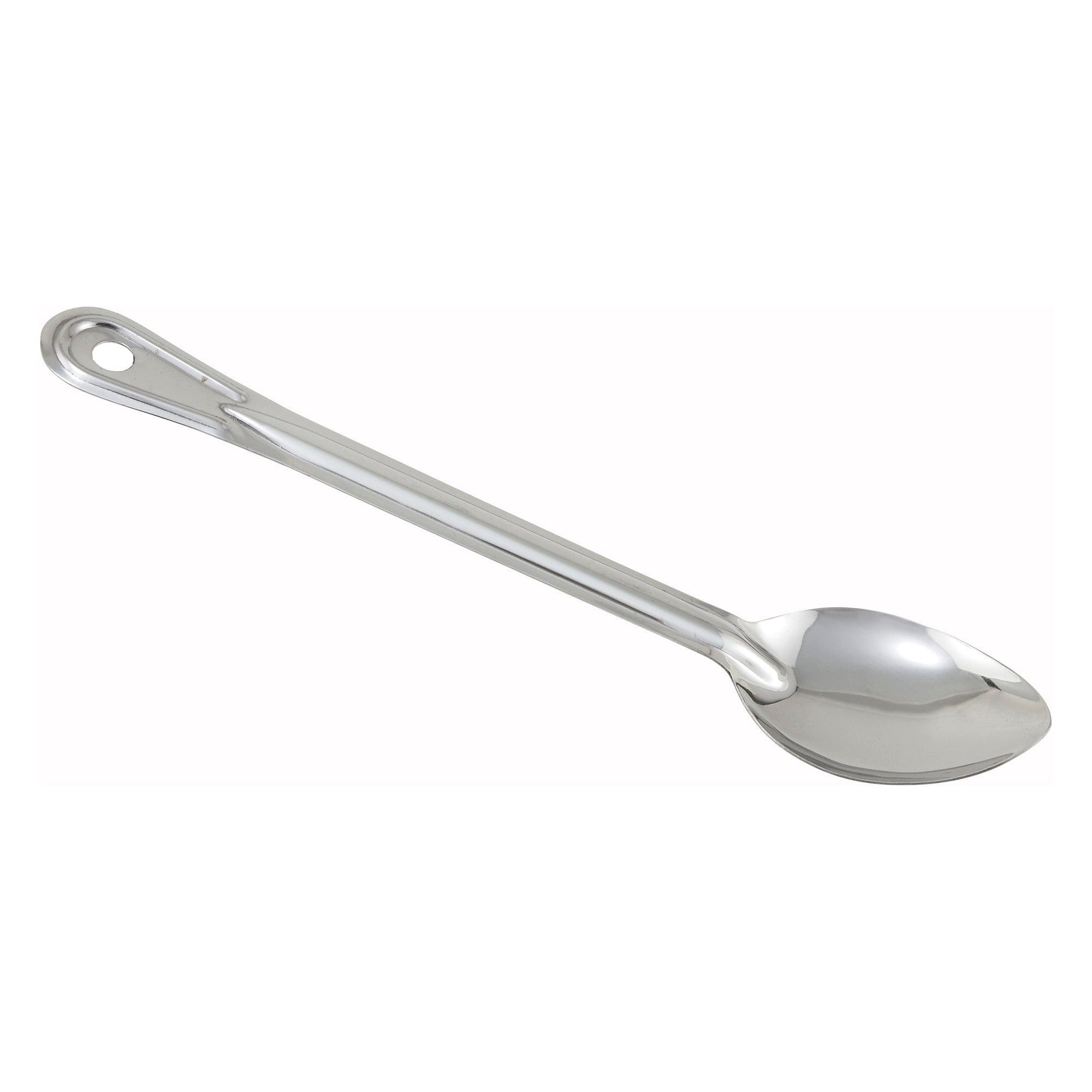
Winco is another foodservice brand. The Winco Stainless Steel Basting Spoon is the one to buy if you want a second basting spoon for a fraction of the cost, or a spare set of stainless utensils for a secondary kitchen. One-piece stainless, mirror finish, 13 inches. No frills, no coating. Under $6.
The material pedigree is the same as Vollrath and Rosle. Stainless used in professional kitchens has to be cleanable to a regulatory standard. Winco operates at a lower price point by cutting everything except the core function.
6. Earlywood 13 inch Wood Cooking Utensil in Jatoba - Best single wood utensil

The Earlywood 13 inch Wood Cooking Utensil in Jatoba is a handmade piece from an Idaho studio that does one thing: make cooking utensils from dense hardwoods with no finish. Jatoba (Brazilian cherry) is a naturally oily, dense tropical hardwood in the same hardness range as end-grain maple. Earlywood discloses the wood species and confirms the utensils are unsealed; the natural oil in the wood plus periodic mineral oil conditioning is the entire maintenance plan.
The form is a turner/scraper hybrid with a beveled edge on a wide paddle, useful for deglazing, flipping, and scraping fond. Reddit's BuyItForLife community has cited Earlywood in multiple threads on unfinished wood kitchen tools, with reports of multi-year durability.
7. FAAY 3-in-1 Teak Wood Cooking Spatulas - Best wood set
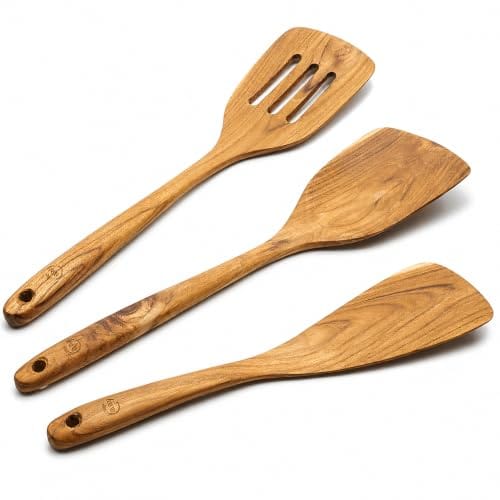
Teak is naturally resistant to moisture and warping, which makes it a better long-term kitchen wood than softer species. The FAAY 3-in-1 Teak Wood Cooking Spatulas set includes three different tool shapes from solid teak with no adhesive joints, no paint, and no coating. FAAY discloses teak as the single material and describes the finish as food-safe oil only.
Three shapes in one set cover more cooking scenarios than a single utensil: a flat spatula, a corner spatula for getting into pan edges, and a spoon spatula for scooping and stirring. Teak's natural oils mean less conditioning maintenance than drier species like maple.
8. Bambu Kitchen Basics 3-Piece Bamboo Utensil Set - Best bamboo set

Bamboo is the category where adhesive chemistry matters most, and Bambu (the brand) is the one that gets it right. The Bambu Kitchen Basics 3-Piece Bamboo Utensil Set uses organically certified bamboo with a water-based adhesive that clears the formaldehyde exclusion. Bambu publishes its materials documentation and is certified under the USDA BioPreferred program.
The three-piece set covers the basics: a spoon, a slotted spoon, and a spatula. Bambu's distinctive handle geometry is easier to grip wet than the cylindrical profiles on most wood utensils. The brand has been in the bamboo kitchen category long enough to have a verified materials track record.
9. OXO Good Grips 3-Piece Wooden Utensil Set - Best widely available
OXO is the only mass-market brand on this list. Most OXO utensils fail our screen because of the soft-touch grip material: polypropylene. The wooden utensil line is different. Beechwood runs through the entire tool with no polymer grip layer, finished with a food-safe oil. The OXO Good Grips 3-Piece Wooden Utensil Set is the set to buy when you need it today and want to pick it up at a major retailer.
OXO discloses beechwood as the material on its product pages, which is verifiable. The ergonomic handle geometry reflects OXO's accessible-design background and is useful for people who find traditional spoon handles tiring to grip.
10. Rosle Stainless Steel One-Handed Locking Tongs, 12 in. - Best premium tongs

The Rosle Stainless Steel One-Handed Locking Tongs use 18/10 premium stainless throughout, confirmed in the product specification, including the ring mechanism at the top of the handle that locks and releases with one hand. Most tongs sold as stainless still use plastic or coated components in the locking joint; the Rosle uses a stainless ring instead.
The scalloped gripping head bites food evenly without piercing it, which matters for delicate proteins and vegetables where tong marks are a concern. Made in Germany. This is the buy-once option if you want a single pair of kitchen tongs.
11. Winco Stainless Steel Utility Tongs, 12 in. - Best budget tongs
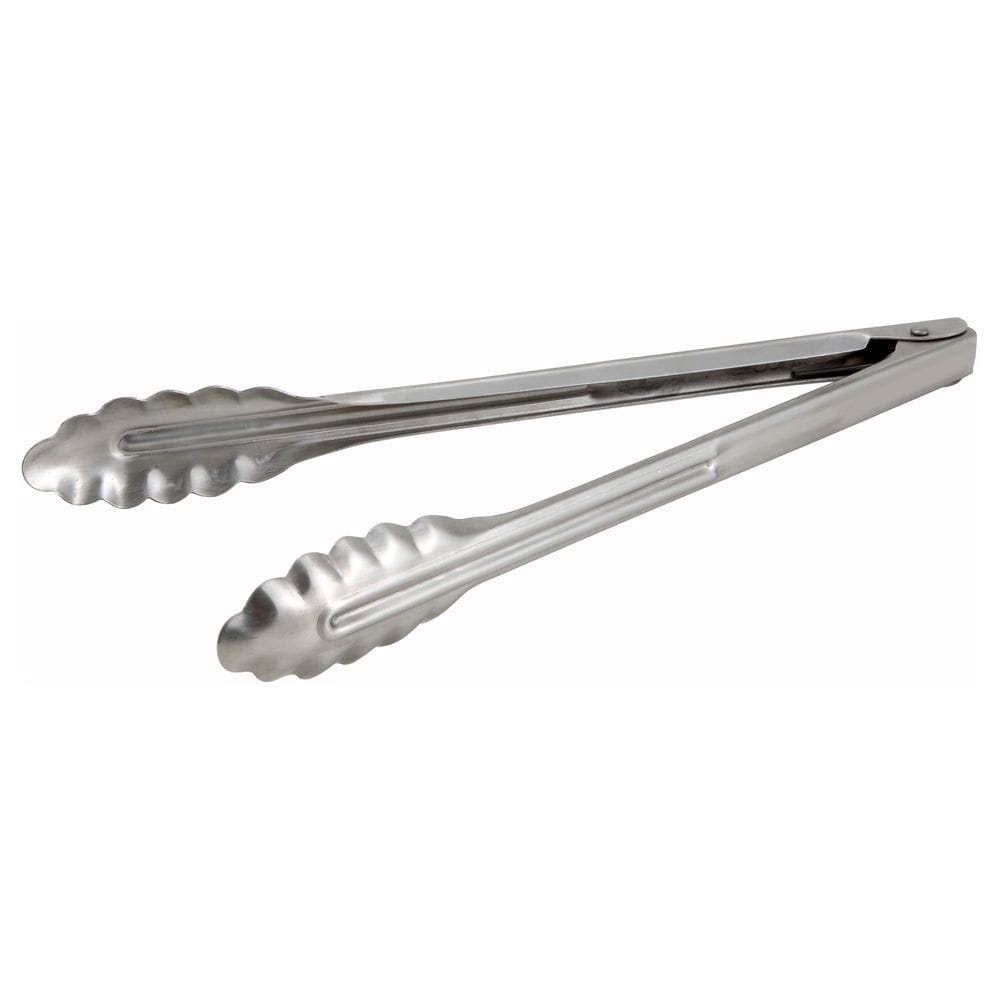
The Winco Stainless Steel Utility Tongs are commercial-grade .9mm stainless steel from handle to tip. The coiled spring is the only moving part; there is no separate locking mechanism and nothing that is not metal. Scalloped edges grip a wide range of food, which is the form factor from salad bar and buffet service where the same pair handles different foods across a shift.
Dishwasher-safe. At under $7, these are the cleanest-material tongs in the category at the lowest price. The professional kitchen specification means the material selection is stable; Winco does not reformulate consumer products.
12. Rosle Stainless Steel Balloon Egg Whisk, 10.6 in. - Best whisk
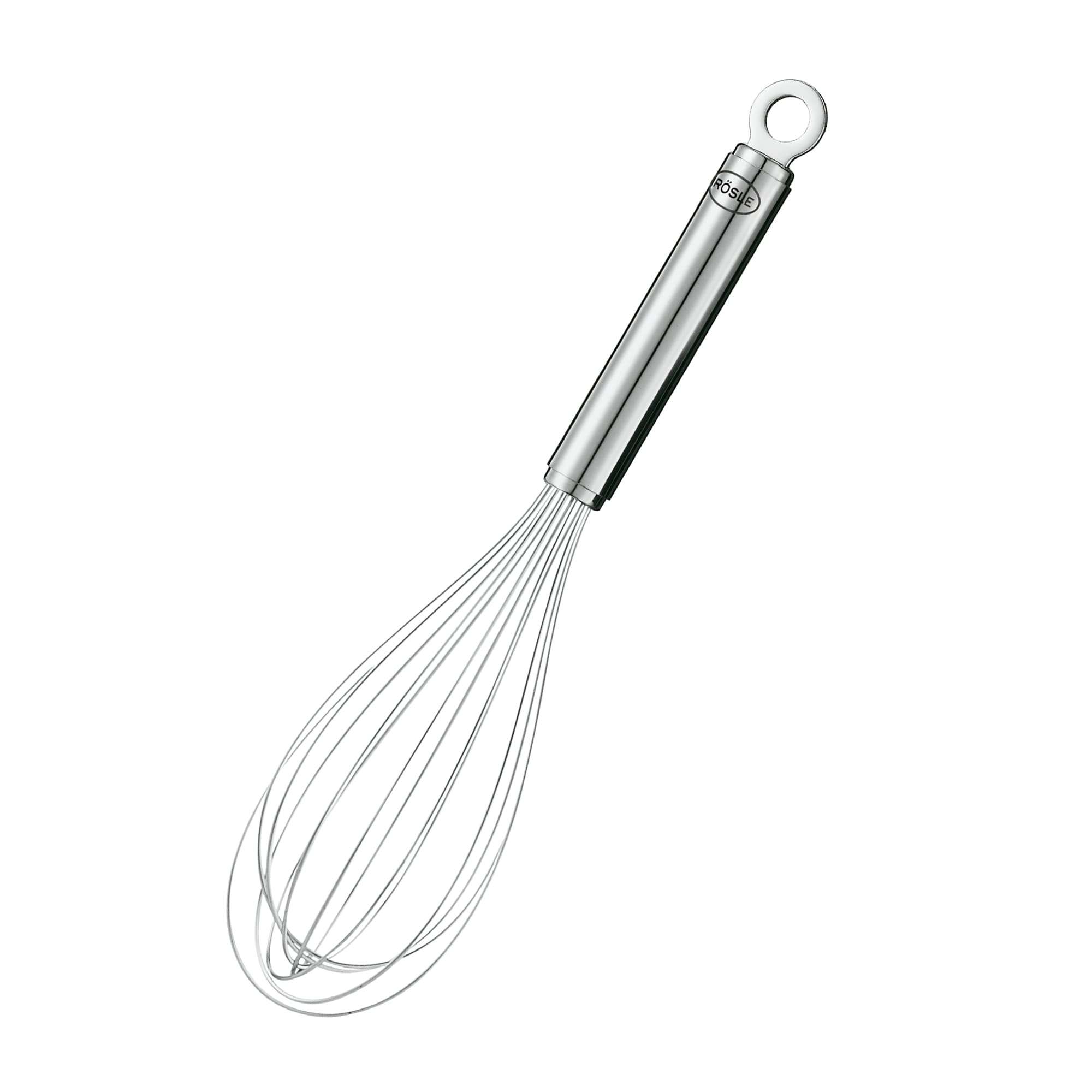
The Rosle Stainless Steel Balloon Egg Whisk has 14 wires in 18/10 stainless steel construction, confirmed on the product listing. The balloon shape produces the surface area needed to aerate cream and emulsify dressings without overworking. Where cheaper balloon whisks use chrome-plated wire that corrodes at the weld points over time, the Rosle uses the same alloy grade throughout.
Dishwasher-safe; made in Germany. The 10.6-inch length works for both bowl work and saucing in a skillet, longer than most compact whisks but not unwieldy for hand whisking.
13. Vollrath Flexible Slotted Turner, 13-1/4 in. - Best slotted turner
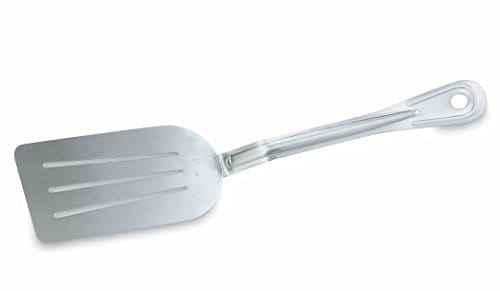
The Vollrath Flexible Slotted Turner is one continuous piece of welded stainless steel with a 3 x 6-inch slotted blade that drains liquid as it lifts. No polymer, no composite handle, no coating. The blade is flexible enough to work under pancakes and fish without prying from the edges.
Vollrath is a commercial foodservice brand: the same reason their ladle is pick 4 on this list. The professional kitchen specification means the material selection is fixed and not subject to cost-cutting. Under $12.
What we passed on
GIR (Get It Right) silicone utensils: The most frequently recommended silicone brand. The problem is the nylon core. GIR's tools use a nylon rod as the structural handle inside the silicone overmold. Nylon is a plastic and it is present at the join between handle and tip where flexing occurs. GIR passes on PFAS disclosure (the silicone itself is platinum-cured) but the nylon core is a hard stop under our plastics disqualifier.
Any black plastic utensil: The 2024 Chemosphere study covered this category thoroughly. The problem is the material, not any specific brand. If your spatula is black and plastic, the risk is the same whether it carries a major label or a private-label store brand.
Silicone-on-plastic hybrid tools: Most silicone utensils in the consumer market pair silicone tips with polypropylene or nylon handles. The silicone tip may be food-grade; the handle is heat-contact, and the joint between tip and handle is a flex point with unknown long-term integrity.
Bamboo sets with undisclosed adhesives: Several popular bamboo utensil sets do not name the adhesive chemistry. Bamboo's natural structure requires binding between layers; the binding agent is the variable. We contacted brands in two cases where materials were not publicly disclosed; neither responded within our review window.
What about silicone?
Silicone's story is complicated enough to deserve its own section.
The case for food-grade silicone is real: platinum-cured silicone without fillers is chemically inert, heat-stable to above 400°F, and non-reactive with food. If you could guarantee that's what was in your silicone spatula, it would pass our list.
The problem is guaranteeing it. A 2023 Mamavation survey found that 82% of silicone baking products tested showed fluorine compounds above background, a common proxy marker for PFAS contamination. The PFAS can arrive from raw materials, from the curing environment, or from post-manufacturing treatments. Most brands don't publish silicone testing data because they are not required to, and "platinum-cured" appears on product pages as a claim without a verification pathway.
Then there is the structural issue. Most silicone cooking utensils have an internal core for rigidity. A stainless steel core is fine. A nylon core is a plastic core, and that is what most consumer silicone utensils use, including GIR at the premium end of the category.
Our read: if you have silicone utensils you trust and they are performing well, the risk calculus is yours to make. We chose not to include silicone picks in this guide because we could not find a silicone product that cleared both the PFAS concern (via published testing) and the structural core concern (stainless core, no nylon). When one exists with that documentation, it belongs on this list.
FAQ
Are all stainless steel cooking utensils non-toxic?
Stainless steel is one of the most chemically stable materials used in cooking. The alloy does not react with acidic foods, does not require coatings, and is stable at cooking temperatures. Grade matters: 18/10 (304) stainless is standard for cookware and utensils; 18/0 (430) is cheaper and more prone to surface corrosion over time. None of the picks on this list use coatings that can degrade.
Can I use stainless steel utensils on nonstick or ceramic-coated pans?
Stainless steel utensils will scratch nonstick and ceramic coatings. That is a practical limitation, not a toxicity concern. If you cook primarily in nonstick pans, the wood picks on this list are safer for the pan surface. Stainless picks are best matched with stainless, cast iron, carbon steel, or enameled surfaces.
What makes black plastic utensils a concern?
A 2024 Chemosphere study tested 203 kitchen utensils and found brominated flame retardants (BFRs) in black plastic tools. The issue is structural: black plastic in consumer goods often contains recycled electronics-grade material, which carries persistent flame-retardant compounds from its original use. The risk is the material category, not any specific brand.
Is silicone a safe alternative to plastic?
Food-grade, platinum-cured silicone with no fillers is chemically stable at cooking temperatures. The practical challenge is that most silicone utensils use a nylon or plastic structural core, and most brands do not publish silicone testing data. The full breakdown is in the "What about silicone?" section above.
Cover image: Good Days Digital via Unsplash (Unsplash License) - source.