Our picks at a glance
| Pick | Best for | Key certifications | Price | Details |
|---|---|---|---|---|
| Big Dipper Beeswax Aromatherapy Candle, Awaken | Cleanest formula | US beeswax, essential-oil fragrance | $ | Full review |
| GoodLight Noble Fir Flora Lumina Tumbler | Plant-based wax, reusable vessel | Coconut oil wax, essential-oil fragrance | $ | Full review |
| Grow Fragrance Woodland Sage Candle | Ingredient transparency | Coconut-beeswax blend, full ingredient list | $ | Full review |
| Way Out Wax Cozy Home Candle, Clear Glass Tumbler | Organic wax, Vermont-made | Organic coconut oil wax, essential-oil fragrance | $ | Full review |
| Pure Plant Home Mandarin Orange and Lemongrass Jar Candle, 7 oz | Accessible, also on Amazon | Coconut wax, essential-oil fragrance | $ | Full review |
| Slow North Lavender and Cedar Signature Candle | Design, hand-poured in Austin | Coconut wax, essential-oil fragrance | $ | Full review |
| Bluecorn Candles Botanica Beeswax Scented Candle, 3-Wick | Even burn, larger spaces | US beeswax, essential-oil fragrance | $ | Full review |
| Branch Basics Beeswax Candle | Full-disclosure brand | Coconut-beeswax blend, essential-oil fragrance | $$ | Full review |
Conventional candles are a meaningful indoor air quality problem. A 2009 study published in Environmental Science and Technology found that paraffin candles release volatile organic compounds including benzene and toluene at concentrations that, in an enclosed room, can exceed outdoor air quality thresholds. The fragrance picture is no cleaner: "fragrance" and "parfum" as catch-all label terms can represent hundreds of undisclosed synthetic compounds, including known phthalate carriers.
The alternatives work. Beeswax and coconut oil wax burn at substantially lower VOC outputs than paraffin. Essential oil fragrance lists every component by name. The eight candles here pass our disqualifiers and disclose every ingredient on the product page.
What we look for
Wax base is the baseline. Paraffin is a petroleum derivative. Controlled burn studies have consistently found paraffin candles releasing benzene, toluene, and particulate matter at elevated levels compared to plant-based waxes. Beeswax and coconut oil wax are the two alternatives with the cleanest published emission profiles. We accept soy wax only when USDA Organic certified and the brand discloses the soy source, because the standard solvent-extraction process uses hexane and the crop provenance matters; plain "soy wax" on a label does not satisfy this.
Named fragrance, every component. "Fragrance" and "parfum" on a candle label are auto-fail. They are protected trade secret terms that allow brands to omit the constituent compounds, including synthetic musks, terpene oxidation products, and phthalate carriers that show up in fragrance analysis repeatedly. Every candle on this list uses named essential oils. The brand must list each oil, not group them as "a blend of essential oils."
If the fragrance component is not named, it doesn't go on the site.
Wick composition. Lead-core wicks were banned in the US in 2003 by the Consumer Product Safety Commission. Cotton is now the baseline. We confirm this explicitly and reject zinc-core wicks (still legal, used to keep pillar candles rigid) and any wick with undisclosed composition.
Full disclosure precondition. A brand that uses "natural wax blend" or "essential oils and fragrance" without naming constituents fails before any chemistry check. The information has to be on the product page, not in a PDF requested from customer support.
No paraffin blending. Some marketed "natural" candles use a base that is 80 to 90 percent paraffin with a small fraction of plant wax added for the label claim. We check the full ingredient list, not the front-of-label summary.
Glass or metal vessel only. Heat conduction from a candle flame to a plastic vessel is enough to off-gas the container material into the room. Every pick here uses glass or bare metal.
Our picks
1. Big Dipper Wax Works Beeswax Aromatherapy Candle, Awaken - Best overall

The Big Dipper Beeswax Aromatherapy Candle in Awaken earns the top spot because it has the longest track record of verified ingredient disclosure in this category. The wax is 100% US beeswax with a published source. The Awaken scent uses grapefruit, spruce, and spearmint essential oils: each named, no catch-all. Lead-free cotton wick.
Beeswax burns at a higher temperature than paraffin, which produces a distinctive longer burn at the trade-off of a slightly stronger natural honey note. The Awaken blend balances that with the brighter top notes of grapefruit and spruce. In a standard-size bedroom or living room the scent is noticeable without being heavy.
Who it's for: Anyone who wants the most verified ingredient disclosure at this price point, and who doesn't mind the characteristic beeswax base note.
2. GoodLight Noble Fir Flora Lumina Tumbler - Best coconut wax option
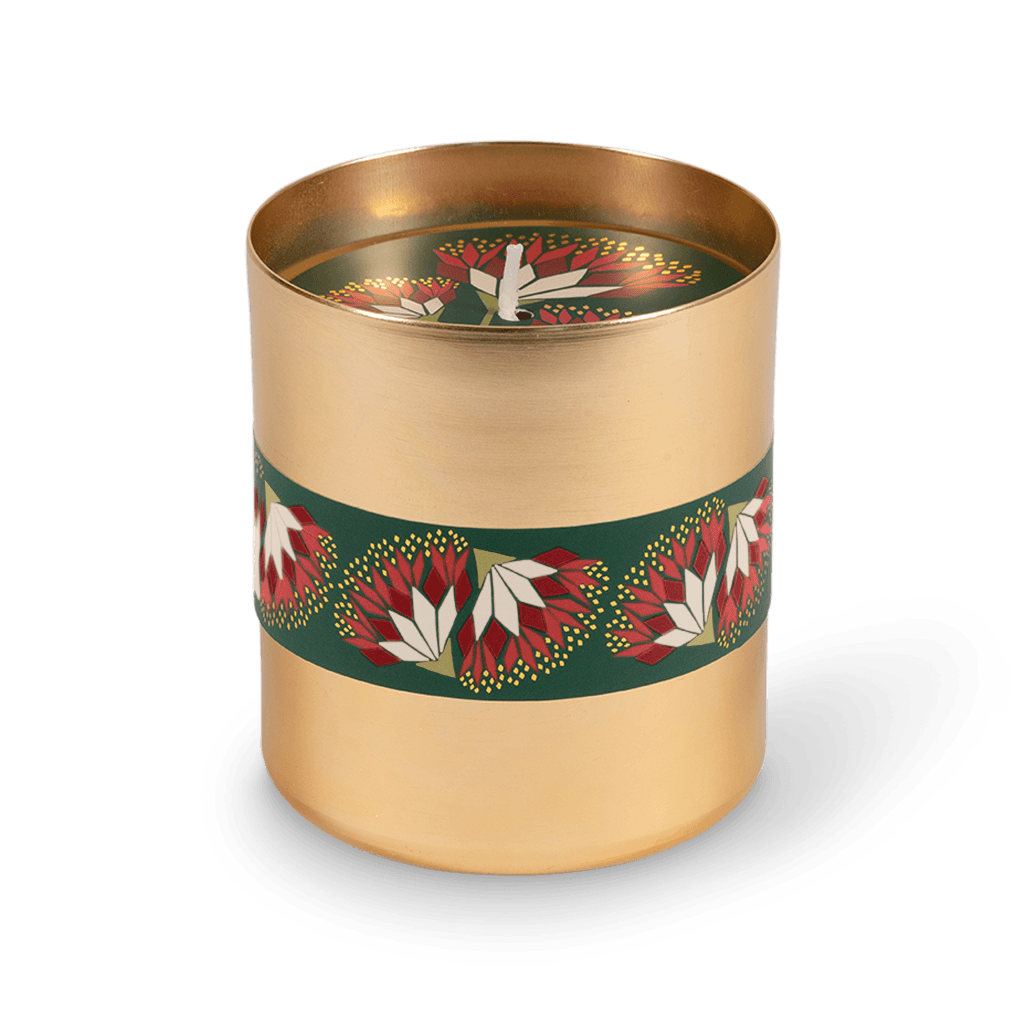
The GoodLight Noble Fir Flora Lumina Tumbler uses a straight coconut oil wax base with no paraffin filler. The fragrance is hinoki and noble fir essential oils, listed individually. GoodLight publishes full ingredients on every product page in a format that makes comparison straightforward.
At $19.99 it's the most affordable pick on this list with a complete verified ingredient list. The clear glass tumbler is designed for reuse: GoodLight offers cleaning guidance and the vessel holds up after the wax is spent.
Who it's for: Readers who prefer plant-based wax over beeswax, or who want the lowest price point with full ingredient transparency. A strong starting point if you're new to this category.
3. Grow Fragrance Woodland Sage Candle - Best ingredient transparency

The Grow Fragrance Woodland Sage Candle publishes every ingredient by common name on the product page: coconut and beeswax blend, white sage essential oil, cedarwood essential oil, bergamot essential oil, cotton wick. That is the complete list. No "fragrance," no "essential oils," no "natural blend" placeholder.
Grow Fragrance formats its ingredient disclosure for comparison rather than burying it in an FAQ. The coconut-beeswax blend sits between straight coconut oil (slightly lower VOC output) and straight beeswax (characteristic honey base note) in both emission profile and scent character.
Who it's for: Ingredient-first shoppers who want to read a complete list in under 30 seconds, and the Woodland Sage scent direction: sage, cedar, bergamot.
4. Way Out Wax Cozy Home Candle, Clear Glass Tumbler - Best organic wax

The Way Out Wax Cozy Home Candle uses certified-organic coconut oil as the wax base, which narrows it to a subset of clean candles: not just paraffin-free, but using an organically grown and processed base. Way Out Wax has been making candles in Brattleboro, Vermont since 2004.
The Cozy Home scent is cinnamon, clove, and orange essential oils, each named in the product description. The unbleached cotton wick is standard across the brand's line. The clear glass tumbler is reusable.
Who it's for: Shoppers who want organic certification on the wax base specifically, or a warm spice scent that works in cooler months without veering into synthetic-adjacent territory.
5. Pure Plant Home Mandarin Orange and Lemongrass Coconut Wax Jar Candle, 7 oz - Most accessible

The Pure Plant Home Mandarin Orange and Lemongrass Jar Candle is available at the brand site and on Amazon, making it the easiest pick to source for readers who prefer Prime shipping. Coconut wax base, mandarin orange and lemongrass essential oils (named), cotton wick. Full ingredient list on the product page.
The amber glass jar is practical: dark glass reduces light exposure and keeps essential oil fragrance compounds more stable in storage. Pure Plant Home is one of the few brands in this category with a consistent Amazon presence and a complete ingredient list.
Who it's for: Prime shoppers, or anyone who wants a clean candle from the most widely available retail channel.
6. Slow North Lavender and Cedar Signature Candle - Best design
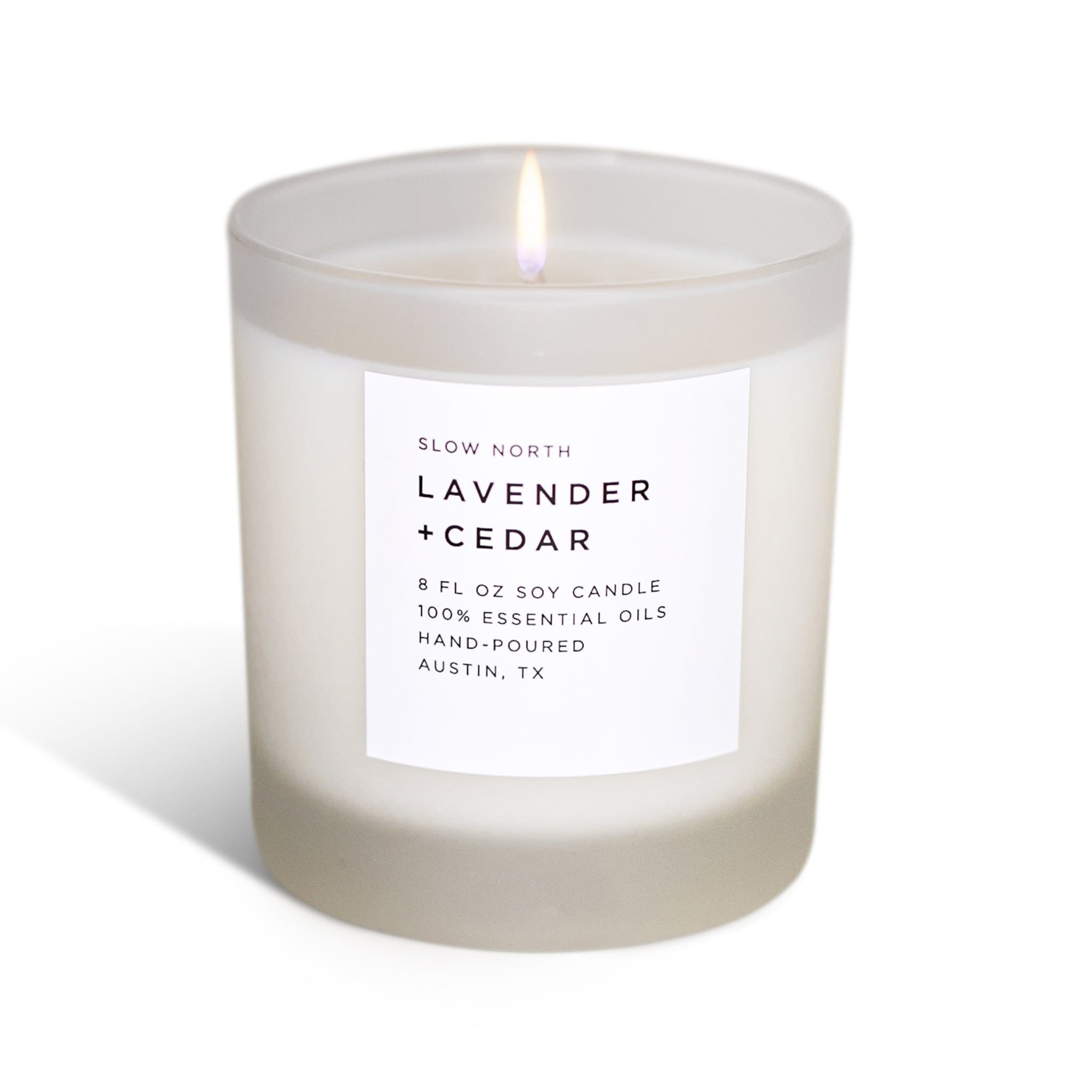
The Slow North Lavender and Cedar Signature Candle is hand-poured in Austin, Texas, using coconut wax with lavender and cedarwood essential oils. Slow North publishes a full ingredient list on every product page: coconut wax, lavender essential oil, cedarwood essential oil, cotton wick.
The frosted glass jar is one of the better-looking vessels on this list and is designed to be repurposed after the wax runs out. The lavender-cedar combination is restrained: it reads in a room without being heavy, and the cedar keeps it from leaning too floral.
Who it's for: Shoppers who want a candle that performs in the space aesthetically, not just chemically. The frosted jar looks good empty.
7. Bluecorn Candles Botanica Beeswax Scented Candle, 3-Wick - Best burn evenness

The Bluecorn Botanica Beeswax Scented Candle is a 3-wick beeswax candle made in Ridgway, Colorado, scented with lavender essential oil. Bluecorn uses 100% pure beeswax from US apiaries with no paraffin blending in the Botanica line.
The 3-wick format addresses a specific beeswax burn problem: because beeswax has a higher melting point than paraffin or coconut oil, a single wick can tunnel down the center and leave a ring of wax against the vessel wall. Three wicks distribute heat across the surface and burn the wax flat. For a larger vessel or room, the 3-wick configuration also throws scent more evenly.
Who it's for: Anyone who has burned a beeswax candle that tunneled, or who is burning in a living room or open-plan space where a single wick doesn't carry enough.
8. Branch Basics Beeswax Candle - Best for full-disclosure brand customers

The Branch Basics Beeswax Candle uses a coconut and beeswax blend with bergamot, eucalyptus, and ylang ylang essential oils. Branch Basics publishes every ingredient including the exact wax composition and wick certification, which is the same full-disclosure standard the brand applies to its cleaning concentrates.
At $49 it is the highest price on this list. For readers already inside the Branch Basics ecosystem who want a candle that holds to the same ingredient standard, the reasoning is straightforward.
Who it's for: Branch Basics households, and anyone who wants the bergamot-eucalyptus-ylang ylang scent combination from a brand with a documented full-disclosure track record.
What we passed on
Several popular "natural" candles didn't clear the bar. Paddywax uses a soy-paraffin blend in most of its lines and lists "fragrance" as a catch-all term without named components. Votivo lists "fragrance" on most product pages with no constituent disclosure. Mrs. Meyer's Clean Day candles use "fragrance" (undisclosed) and paraffin, despite the brand's positioning. These are not minor omissions: "fragrance" as a category is a primary carrier of undisclosed phthalates in consumer products, and a paraffin base produces a materially different emission profile than the alternatives on this list. Several Etsy and small-batch candle makers also had coconut wax and essential oil formulas but listed fragrance components inconsistently across SKUs, which fails the full-disclosure precondition.
FAQ
Are beeswax candles actually less toxic than paraffin?
Yes, in a meaningful and measurable way. Paraffin is a petroleum byproduct. Controlled burn studies have found paraffin candles releasing benzene and toluene at concentrations that in a closed small room can exceed outdoor air quality standards. Beeswax burns at a lower VOC output and the particulate profile is different. The gap is most significant in low-ventilation rooms, which is where candles are typically burned.
What does "fragrance" on a candle label mean?
Under US labeling law, "fragrance" and "parfum" are protected trade secret terms: a brand may list them as a single ingredient without disclosing any of the compounds inside. Peer-reviewed analysis of consumer fragrance products has found phthalates, musks, benzaldehyde, and other compounds of concern regularly present in products labeled simply "fragrance." Every candle on this list uses named essential oils instead.
Can burning candles affect indoor air quality?
Yes. A 2009 study in Environmental Science and Technology found paraffin candles releasing VOCs including benzene and toluene at concentrations that in a closed room can exceed outdoor thresholds. Burning any candle in a small bathroom or bedroom creates more concentrated exposure than burning one in a large ventilated space. The candles here reduce but do not eliminate VOC exposure: all combustion produces some particulate matter. For a complementary approach, see our guide to non-toxic air purifiers.
Is soy wax a safe alternative?
Sometimes, with conditions. Soy wax is plant-derived and cleaner-burning than paraffin. The two concerns are the extraction process (typically hexane, a petroleum solvent) and crop sourcing (most US commercial soy is conventionally farmed). USDA-certified organic soy from a disclosed source addresses both. Straight coconut oil wax or beeswax is simpler to verify, which is why most picks here use one of those two.
Do these candles have lead wicks?
No. The US Consumer Product Safety Commission banned lead-core candle wicks in 2003. All eight picks here use cotton wicks. Some pillar-style candles still use zinc-core wicks (legal) to maintain rigidity, but none of the picks here do.
What makes a candle "non-toxic"?
The phrase has no regulatory definition. On this site it means: paraffin-free wax with a disclosed source, named essential oil fragrance with every component listed, cotton wick, glass or metal vessel, and no paraffin blending. "Non-toxic" and "clean-burning" as brand claims require none of those disclosures. The picks here earn the label by what they disclose, not by what they market.
Cover image: Donald Olszewski via Wikimedia Commons (CC BY 4.0). Source.