Our picks at a glance
| Pick | Best for | Key certifications | Price | Details |
|---|---|---|---|---|
| Grow Fragrance Woodland Sage Candle | Full ingredient transparency | USDA Certified Biobased, Leaping Bunny | $ | Full review |
| Bluecorn Botanica Beeswax Scented Candle, 3-Wick | Pure US beeswax | None listed | $ | Full review |
| Big Dipper Wax Works Beeswax Aromatherapy Candle, Awaken | Aromatherapy beeswax | None listed | $ | Full review |
| Pure Plant Home Mandarin Orange and Lemongrass Coconut Wax Jar Candle, 7 oz | Coconut wax, third-party aroma cert | Certificate of Naturalness | $ | Full review |
| Slow North Lavender and Cedar Signature Candle | Coconut wax in a reusable frosted jar | None listed | $ | Full review |
| Way Out Wax Cozy Home Candle, Clear Glass Tumbler | Certified-organic coconut oil wax | None listed | $ | Full review |
| GoodLight Noble Fir Flora Lumina Tumbler | Best budget | None listed | $ | Full review |
| Branch Basics Beeswax Candle | Best ingredient disclosure, premium | None listed | $$ | Full review |
Why most candles fail the ingredient test
Candles burn directly into the air you breathe. A paraffin candle, which makes up the majority of the mass-market category, is a petroleum byproduct that releases benzene and toluene as it combusts at higher temperatures. The "fragrance" line on a label is legally permitted to conceal hundreds of individual compounds, including phthalate carriers, synthetic musks, and formaldehyde-releasing aldehydes. Brands like Yankee Candle and Bath and Body Works use synthetic fragrance oils across their product lines. Neither publishes a per-ingredient fragrance list. Yankee Candle uses paraffin wax in most products; Bath and Body Works uses a soy blend with synthetic fragrance oils. Neither meets the disclosure standard in this guide.
That is the gap this guide is designed to close.
What we look for
No paraffin. Every candle here uses a plant-based or natural wax: soy, beeswax, or coconut oil. Paraffin burns at higher temperatures and releases petroleum-derived VOCs.
No synthetic fragrance. The word "fragrance" on a candle label is a legal trade-secret exemption. Every brand here either uses essential oils exclusively or, in the case of Grow Fragrance, discloses every named aroma compound individually. What is not acceptable: the single word "fragrance," "parfum," or "natural fragrance" as a catchall without naming individual components.
No lead wick. Lead-core wicks were banned in the US in 2003, but zinc and tin core wicks are still legal and produce metallic particulates. Every pick here uses a cotton, cotton-paper, or hemp wick with no metal core.
Full materials disclosure. If a brand will not name every ingredient on the product page, it is not included. "Clean" and "non-toxic" are marketing claims without legal definitions. Source documentation is what matters.
Fragrance phthalates. Synthetic fragrance oils are frequently diluted in phthalate carriers, particularly DEHP and DEP. Full fragrance disclosure is the only way to rule these out.
Our picks
1. Grow Fragrance Woodland Sage Candle: Best overall

The Grow Fragrance Woodland Sage Candle is the most transparent candle in this guide. The Woodland Sage product page lists every ingredient by name: Salvia Sclarea Oil, Bergamot Oil, Longifolene, Ambroxan, Damascenone, Cistus Labdanum Extract, Eucalyptol, Geranyl Acetate, Linalool, and Geraniol. There is no "fragrance" catchall anywhere on the page. The brand holds USDA Certified Biobased status and Leaping Bunny certification for cruelty-free production. The cotton wick is unbleached and made in Germany. This level of fragrance disclosure is the exception in the candle category, not the rule.
2. Bluecorn Candles Botanica Beeswax Scented Candle, 3-Wick: Best beeswax

The Bluecorn Candles Botanica Beeswax Scented Candle, 3-Wick uses 100% pure beeswax sourced from US apiaries with no paraffin blending. The Botanica line uses only essential oil fragrance. Important: Bluecorn also makes an Aromatic line that uses synthetic fragrances. That line does not qualify here. Only the Botanica products pass.
Three wicks burn the surface flat across a wide vessel, avoiding the hot-pool tunneling problem common in single-wick beeswax candles. Made in Ridgway, Colorado. Beeswax has the highest melting point of any natural wax and produces a slower, cleaner burn with lower VOC output than paraffin.
3. Big Dipper Wax Works Beeswax Aromatherapy Candle, Awaken: Best aromatherapy

The Big Dipper Wax Works Beeswax Aromatherapy Candle, Awaken comes from a Washington State producer that has been making pure beeswax products since 1993. The Awaken blend uses grapefruit, spruce, and spearmint essential oils in a 3.2 oz glass vessel with a lead-free cotton wick. At under $30, it is the most accessible beeswax aromatherapy option in this guide. No synthetic fragrance, no paraffin filler, no dye.
Big Dipper publishes its wax sourcing and has a three-decade manufacturing record that places it among the more established beeswax candle producers in the US.
4. Pure Plant Home Mandarin Orange and Lemongrass Coconut Wax Jar Candle, 7 oz: Best coconut wax

The Pure Plant Home Mandarin Orange and Lemongrass Coconut Wax Jar Candle is the only pick in this guide where the fragrance blend carries a third-party Certificate of Naturalness. Pure Plant Home screens each aroma for phthalates, synthetic fragrance compounds, and petrochemical ingredients before production. The wax base is coconut oil. Cotton wick. Full ingredient disclosure on the product page. The brand has been making plant-based home products in California since 1995 and is woman-owned.
Coconut oil wax burns more slowly than soy and is free of the GMO concerns associated with most US soy crops.
5. Slow North Lavender and Cedar Signature Candle: Best for reusable glass
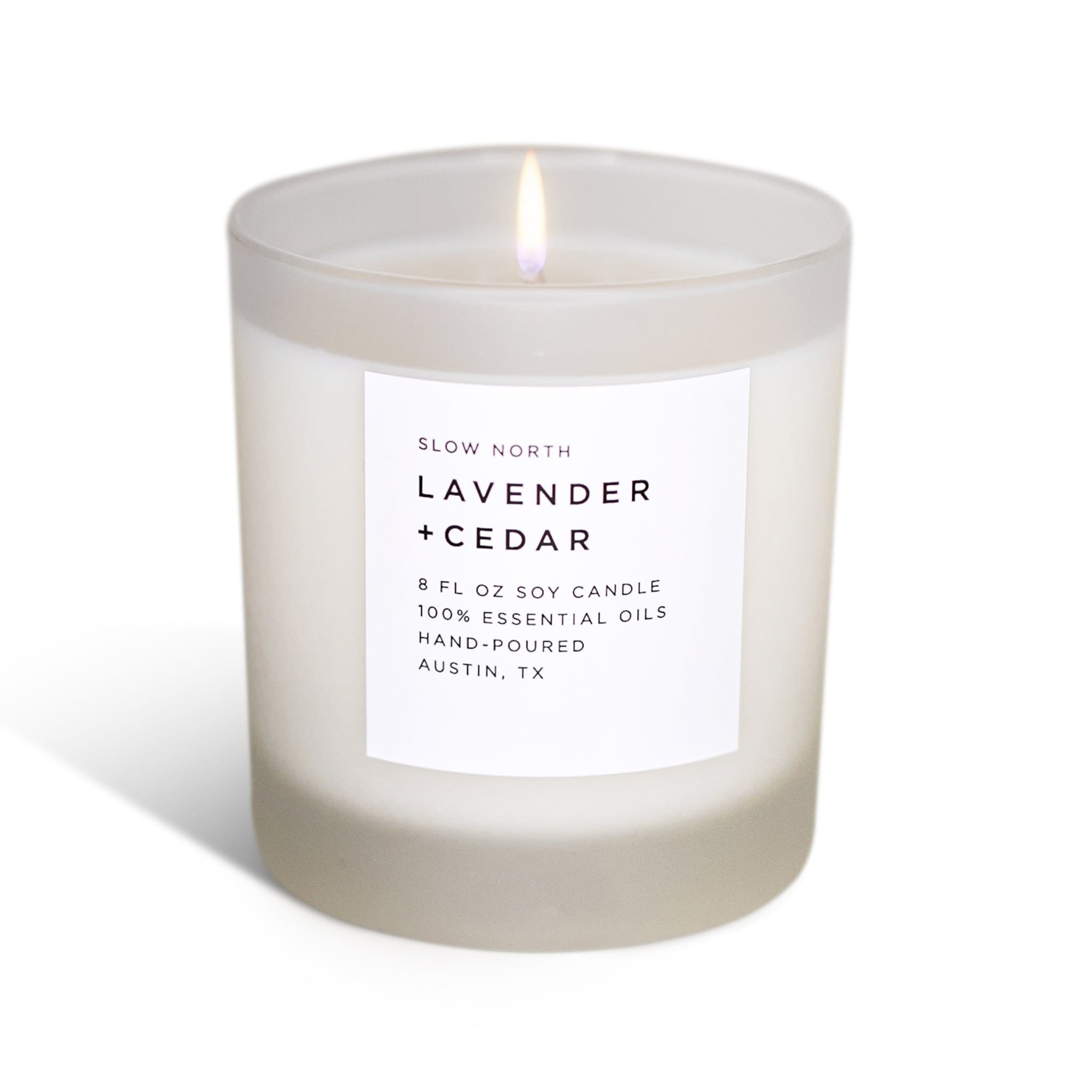
The Slow North Lavender and Cedar Signature Candle publishes a complete ingredient list on every product page: coconut wax, lavender essential oil, cedar essential oil, and a cotton wick. No paraffin, no synthetic fragrance, no fragrance phthalates. The 8 oz frosted glass jar is designed for reuse after the wax is gone. Hand-poured in Austin, Texas.
Lavender and cedar is one of the simplest scent combinations in terms of ingredient count: two named essential oils with no blending agents or synthetic fixatives.
6. Way Out Wax Cozy Home Candle, Clear Glass Tumbler: Best organic wax

The Way Out Wax Cozy Home Candle, Clear Glass Tumbler uses certified-organic coconut oil as its wax base. Every fragrance component is named: cinnamon, clove, and orange essential oils. No paraffin, no synthetic fragrance. Made in Brattleboro, Vermont since 2004. The clear glass tumbler is reusable. Way Out Wax publishes no "fragrance" catchall anywhere in its product descriptions.
"Certified-organic" on the wax means the source coconut oil was produced without synthetic pesticides or fertilizers. It is a stricter standard than non-GMO alone.
7. GoodLight Noble Fir Flora Lumina Tumbler: Best budget
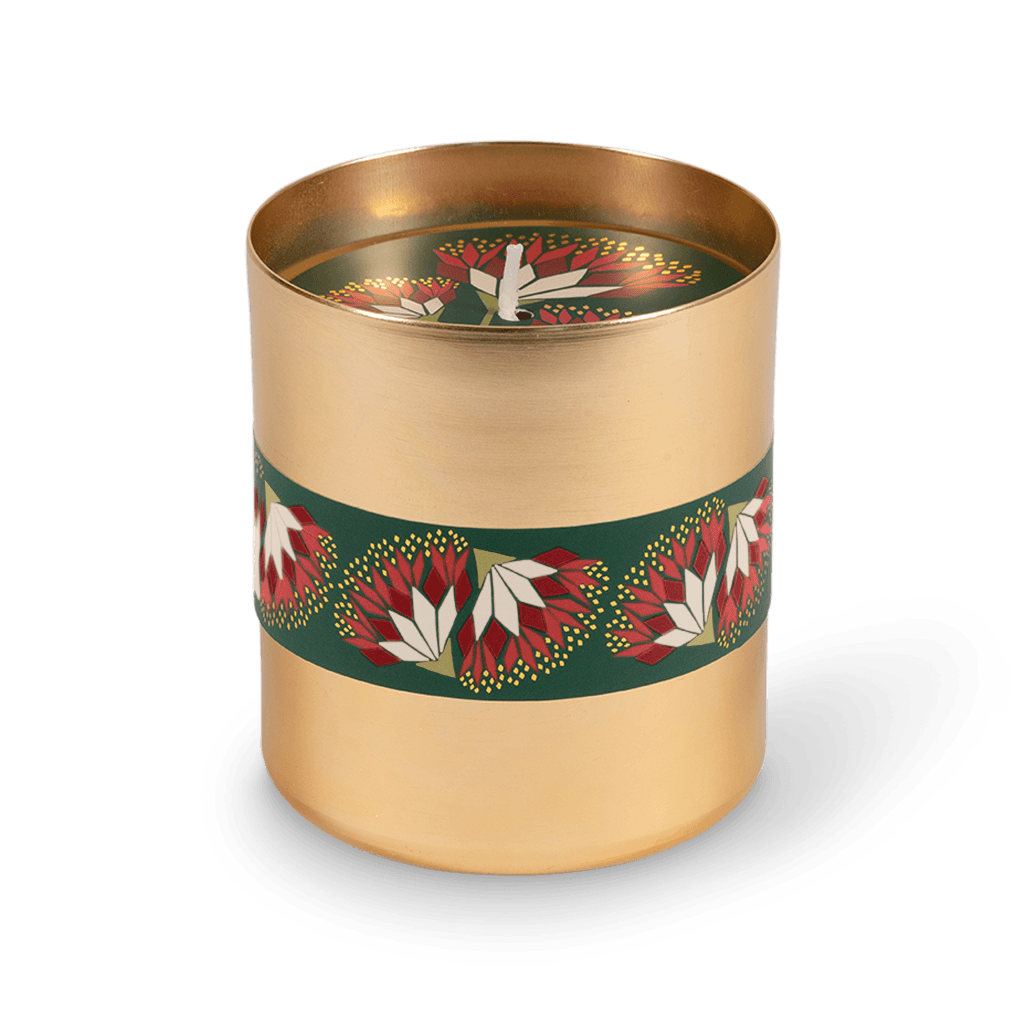
The GoodLight Noble Fir Flora Lumina Tumbler is the most affordable option in this guide, starting at $19.99. The wax base is non-GMO coconut oil, and the Noble Fir scent uses hinoki and noble fir essential oils with no synthetic compounds. GoodLight lists every ingredient on each product page. The glass tumbler is designed for reuse after the wax runs out.
At this price point, GoodLight makes the fully-disclosed, no-synthetic-fragrance standard accessible without a premium. It is also a straightforward gift option.
8. Branch Basics Beeswax Candle: Best ingredient disclosure

The Branch Basics Beeswax Candle applies the same full-disclosure standard the brand uses for its cleaning concentrates. The formula is a coconut wax and beeswax blend scented with bergamot, eucalyptus, and ylang ylang essential oils. Cotton wick. Hand-poured in small batches. Full ingredient disclosure includes the exact wax composition and wick material.
At $49, it is the premium option in this guide. Branch Basics has built its entire brand on the principle of publishing every ingredient. That track record gives this candle a higher trust baseline than brands for which a candle is a secondary product line.
What we passed on
Apotheke claims "all-natural essential oils" on its About page while individual product pages confirm synthetic perfume-grade oils. The About page claim contradicts the product-level disclosure. We do not recommend it.
Homesick and Boy Smells both use synthetic fragrance oils with no per-ingredient disclosure. "Made with essential oils" appears in marketing copy alongside products containing unnamed "fragrance." Both fail the disclosure gate.
Capri Blue (Volcano) uses synthetic fragrance across its full product line with no published ingredient list.
Paddywax and P.F. Candle Co. both use synthetic fragrance in the majority of their lines with no per-ingredient disclosure.
FAQ
Is Yankee Candle toxic?
Yankee Candle uses paraffin wax in most of its products. Paraffin is a petroleum byproduct that releases benzene and toluene during combustion. The brand also uses synthetic fragrance oils with no per-ingredient disclosure. Yankee Candle does not meet the ingredient standards in this guide.
Is Bath and Body Works candle toxic?
Bath and Body Works candles use a soy wax blend with synthetic fragrance oils. The fragrance line item conceals individual compounds, and the brand does not publish a per-ingredient fragrance list. They do not meet the disclosure standard in this guide.
What is the safest candle wax?
Beeswax has the highest melting point and lowest VOC output of any wax in this guide. Coconut oil wax burns more slowly than soy and without the GMO concerns of most US soy crops. Soy wax from non-GMO and USDA-certified sources is also a reasonable choice. Paraffin is the one to avoid: it is a petroleum derivative that releases hydrocarbon combustion byproducts.
What makes a candle fragrance non-toxic?
Full named disclosure is the baseline: every ingredient listed by its common or INCI name. Essential oils from named botanical sources are the clearest option. Named aroma isolates (like Linalool, Geraniol, or Ambroxan) are acceptable when they are individually disclosed. What is not acceptable: the single word "fragrance," "parfum," or "natural fragrance" as a catchall without naming the individual components.
Do cotton wicks contain lead?
Lead-core wicks were banned in the US by the CPSC in 2003. However, zinc and tin core wicks remain legal and common in candles. Every pick in this guide uses a cotton, cotton-paper, or hemp wick with no metal core. This is confirmed on each brand's product page.
Cover image: Nelli Neufeld via Pexels (Pexels License). Source.