
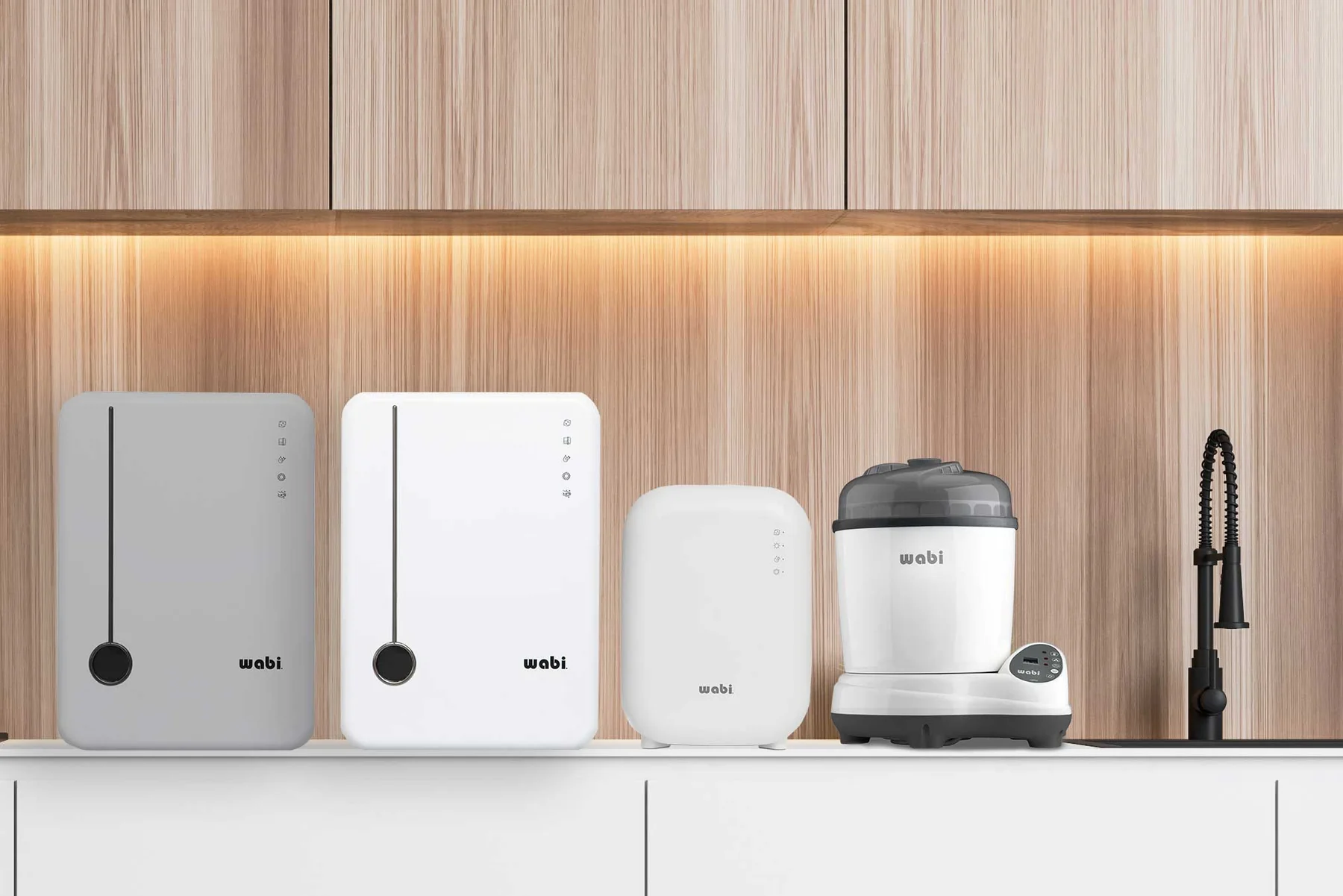
Our picks at a glance
| Pick | Best for | Key certifications | Price | Details |
|---|---|---|---|---|
| Wabi UVC LED Ultra | Mercury-free UV sterilization | FDA-registered, ETL Listed | $$$ | Full review |
| Hauture 6-in-1 | Most sterilization modes | -- | $$ | Full review |
| Baby Brezza Advanced | Largest capacity | -- | $$ | Full review |
| Papablic 4-in-1 UV | Water-free UV sterilization | -- | $$ | Full review |
| Dr. Brown's Deluxe | Simplest electric steam | -- | $$ | Full review |
| Ubbi Collapsible | Cleanest material profile | -- | $ | Full review |
| Haakaa Silicone Bag | Travel and daycare | -- | $ | Full review |
| Tommee Tippee Steridryer | One-cycle steam plus dry | -- | $$ | Full review |
The major formula brands changed their bottle resin formulations in 2023 and 2024 following updated EU toy-safety guidance on bisphenol substitutes. Sterilizers did not follow the same public reckoning. Most electric steam units sold today are built around a polypropylene tray inside a stainless steam chamber. The brand discloses that the PP is BPA-free. What it usually does not disclose is whether the PP contains bisphenol S (BPS) or bisphenol F (BPF), the two most common BPA substitutes now appearing in food-contact plastics research. That gap is industry-wide: it applies to every electric steam pick in this guide. We flag it on each pick rather than using it to exclude the category, because steam sterilization itself is effective and the tray contact is limited to the outside of sealed bottles. Silicone picks skip the issue entirely.
What we look for
Steam sterilization at 121 degrees Celsius kills 99.9% of common pathogens in under ten minutes. UV-C sterilization at 254 to 275 nanometers kills the same organisms, including C. difficile spores, without water or heat. Both are effective. The question we ask is what the equipment is made of, and what the brand is willing to disclose about it.
No lead, cadmium, or undisclosed heavy metals in interior materials. Stainless steel in steam chambers should be food-grade 304 or 316 grade. Manufacturers who describe only "stainless steel" without specifying the grade land under a caution flag; the ones we picked name the grade or have confirmed it through third-party documentation.
No plastic contact during sterilization. In electric steam units, the steam-generating base is usually stainless; the rack holding the bottles is usually polypropylene. Bottles sit outside that rack, so the PP exposure is indirect. UV units with stainless interiors and no plastic tray skip this concern entirely. The two silicone picks avoid plastic contact by design.
BPA disclosure is the floor, not the ceiling. We treat a BPA-free claim as a necessary but not sufficient condition. The BPS/BPF disclosure gap described above applies to the entire electric steam category. We note it and move on because the alternative is excluding a sterilization method that demonstrably works for most families.
UV bulb chemistry matters. UV-C LEDs (typically OSRAM or Nichia 275nm units) are mercury-free, solid-state, and do not require hazardous lamp disposal at end of life. Conventional UV-C bulbs at 254nm use mercury-vapor technology, the same chemistry as fluorescent tubes. They are effective sterilizers. They are also hazardous waste when spent. If UV is what you want, know which type is inside.
BPS and BPF show endocrine-disrupting activity at low doses in cell and animal studies. Disclosure gaps in consumer plastics prevent meaningful consumer assessment of exposure.
Certifications we look for. FDA registration for UV devices (a medical-device classification claim), ETL or UL listing for electrical safety, and NSF/ANSI certification for water contact. Most electric steam sterilizers carry only a CE mark and basic UL electrical listing. The Wabi carries FDA and ETL registration specifically for its UV-C LED technology.
Our picks
1. Wabi UVC LED Sanitizer & Dryer Ultra — Best overall

The Wabi UVC LED Sanitizer & Dryer Ultra covers bottles, pump parts, pacifiers, toys, and accessories in a water-free UV-C cycle. The 304 stainless interior reflects UV wavelengths for 360-degree coverage without a plastic tray in the chamber. At $349, it is the most expensive pick here by a significant margin. If your primary concern is documented materials and regulatory standing, the premium is justified. If you want a capable steam unit at a third of the price, Hauture or Dr. Brown's serve that need.
The mercury-free LED distinction matters primarily at disposal: when the Wabi's LEDs eventually degrade (rated at 10,000 hours), they go in the household bin like any LED bulb. A mercury-vapor UV sterilizer requires a certified hazardous-waste lamp recycler. That is not an exotic inconvenience, but it is a step most parents do not anticipate at purchase.
Made in South Korea, FDA-registered, ETL Listed, EPA registered.
2. Hauture 6-in-1 Baby Bottle Sterilizer and Dryer — Best steam sterilizer
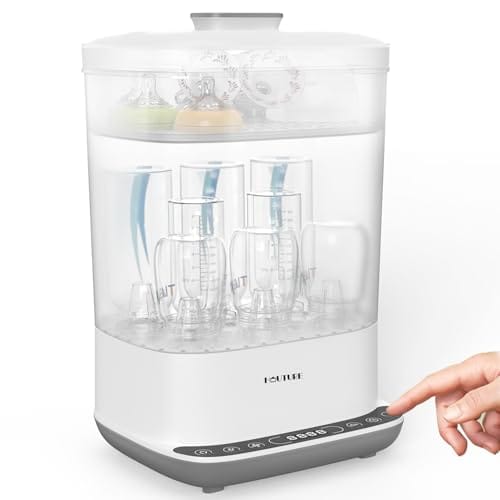
The Hauture 6-in-1 was the Consumer Reports top performer for temperature control and drying consistency among electric steam sterilizers in the 2025 testing round. Six sterilization modes cover bottles, pump parts, pacifier and nipple accessories, toys, jars, and kitchen utensils. The stainless steel steam chamber holds a BPA-free PP rack; bottles go on the rack, not directly on the PP surface. The BPS/BPF disclosure gap applies, as it does for every electric steam pick in this guide.
The digital control interface with cycle-progress display is useful if you are sterilizing in parallel with feeding preparation and need to know when the cycle completes. The drying mode uses filtered warm air rather than a bare heating element.
For families who sterilize multiple bottle types, pump sets, and accessories in a single cycle, this is the strongest steam pick in the guide.
3. Baby Brezza Bottle Sterilizer Dryer Advanced — Largest capacity

The Baby Brezza Advanced fits the most bottles at once among electric steam picks here: wide-neck and standard bottles together with pump flanges and nipples in the same cycle. Families using different bottle brands simultaneously (which is most families after month two) benefit from the mixed-load capacity more than a single-brand-only fit.
The BPA-free PP rack carries the same BPS/BPF disclosure gap as every steam pick. Steam cycles run at 121 degrees; the drying cycle uses HEPA-filtered warm air to minimize lint and particulate redeposition. The control panel has an auto-dry option that chains sterilization into drying without manual intervention.
At around $109, this is mid-range pricing for what it delivers.
4. Papablic 4-in-1 UV Light Sanitizer, Dryer and Storage — Best UV budget pick
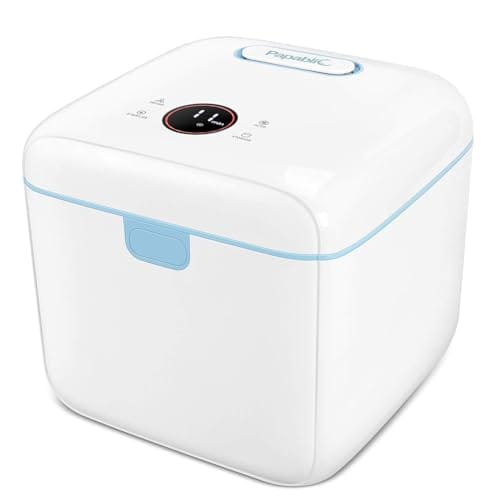
The Papablic 4-in-1 uses dual mercury-vapor UV bulbs at 254nm inside a 10-liter stainless steel chamber. It is a water-free cycle at 11 minutes, handling up to 11 bottles plus accessories. The stainless interior with no plastic tray is a materials advantage over every steam pick in this guide.
The mercury-vapor distinction is worth naming clearly: these are standard UV germicidal bulbs, the same technology used in hospital and laboratory air treatment. They work. They also contain mercury. When the bulbs degrade, they require hazardous lamp recycling: most municipal hazardous-waste programs accept them, as do Home Depot and Lowe's in the US. Check your local program before purchasing. The Papablic does not include information about lamp disposal in the box; find your nearest lamp recycler via your municipal hazardous-waste program or through the EPA's guidance linked in the Sources below.
At around $160, the Papablic is a capable UV unit for families who want water-free sterilization at a price well below the Wabi, understand the mercury-vapor lamp trade-off, and have a lamp recycler accessible.
5. Dr. Brown's Deluxe Electric Sterilizer for Baby Bottles — Simplest steam
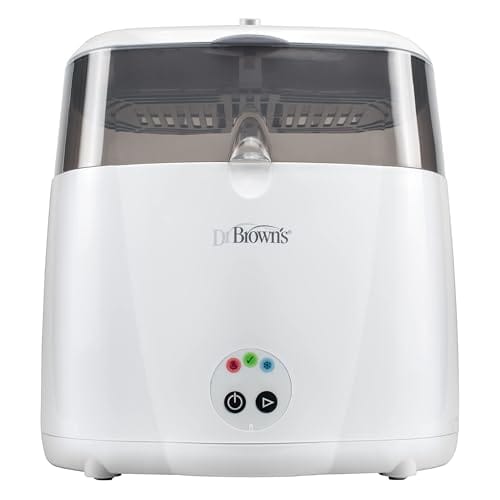
The Dr. Brown's Deluxe is the most operationally simple pick in the guide: add water to the base, place bottles on the BPA-free rack, press one button. The steam cycle completes and shuts off. There is no drying function, which is either a feature or a gap depending on your drying preference. Many parents prefer air-drying on a clean rack over an electric drying cycle; the Dr. Brown's matches that workflow.
The stainless steam base with BPA-free rack follows the same material pattern as the rest of the electric steam field. The BPS/BPF disclosure gap applies. At under $55, it is the most budget-friendly electric steam pick here.
6. Ubbi 3-in-1 Collapsible Microwave Baby Bottle Sterilizer — Best silicone pick

The Ubbi Collapsible is 100% food-grade silicone: no PP tray, no BPA/BPS/BPF disclosure gap, no heating element. Microwave steam sterilizes bottles, pump parts, and accessories in under six minutes. The collapsible design folds flat to about two inches for drawer storage or travel packing.
At under $40, the Ubbi has the cleanest material profile of any sterilizer in this guide. Its limitation is microwave dependence: if your microwave interior is smaller than average or you are traveling without microwave access, you will need a backup option. The capacity is also smaller than any electric steam unit; you may need two cycles for a full pump set plus a set of bottles.
7. Haakaa Silicone Microwave Steam Sterilizer Bag (40oz) — Best portable
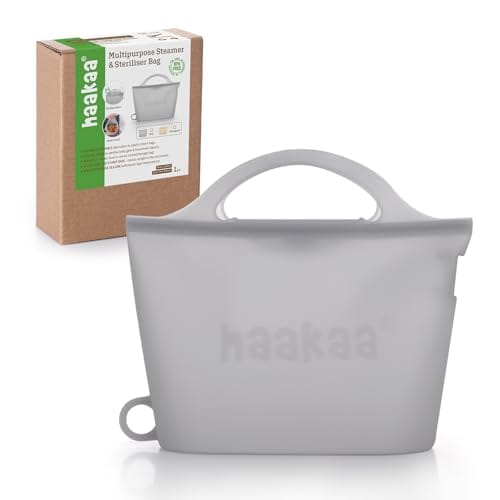
The Haakaa Silicone Bag is the most portable pick: food-grade silicone, reusable, 1250ml capacity, and collapses to a flat panel that fits in a pump bag. Microwave steam in three to five minutes handles bottles, pump parts, pacifiers, and teethers. Add two ounces of water, seal, microwave.
For daycare drop-off, overnight travel, or pump-parts sterilization in a workplace kitchen, the Haakaa bag is the most friction-free option. It does not replace an electric sterilizer for home use where volume and drying matter; it supplements one. At around $19, it is the lowest-cost pick in the guide.
8. Tommee Tippee Steridryer Electric Steam Sterilizer and Dryer — Best for Tommee Tippee families
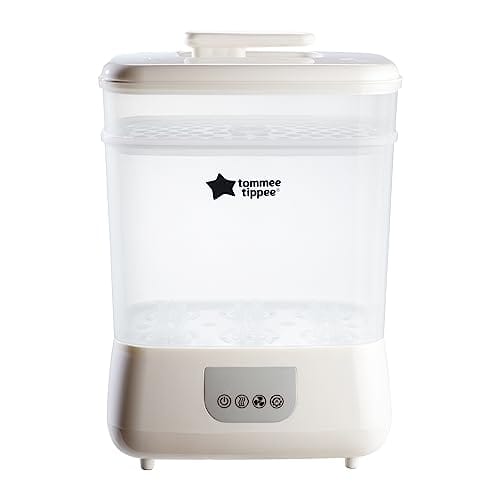
The Tommee Tippee Steridryer integrates sterilization and drying in a single uninterrupted cycle: press start, walk away, come back to sterilized and dried bottles. Most steam sterilizers complete sterilization and then require a manual drying cycle to start. The single-cycle design reduces the number of times you need to touch the unit between feeding prep sessions.
Compatibility extends beyond Tommee Tippee bottles to most standard-diameter bottles. The BPA-free construction follows the same PP tray pattern as other steam picks, with the same BPS/BPF disclosure gap. At around $64, it is mid-range in the steam field.
What we passed on
Philips Avent Combined Electric Steam Sterilizer and Dryer (B08FD8BK9V): A credible pick on materials and brand reputation, but unavailable on Amazon at guide publication. We do not list products we cannot confirm in stock. We will add the Avent unit if availability recovers.
Other mercury-vapor UV units without disclosed bulb specifications: Several $60 to $90 UV sterilizers on Amazon list "UV sterilization" without naming the wavelength, bulb type, or disposal requirements. Without that information, we cannot apply the mercury-vapor flag or clear it, which means we cannot publish the product. The Papablic was included because it names the bulb chemistry and Philips as the supplier.
UV units with plastic interiors: A number of UV sterilizer units use PP or ABS interiors. UV photons break down certain polymers over time, and the byproducts of that degradation in a food-contact environment are not well characterized. We defaulted to stainless interiors for all UV picks.
FAQ
Do I actually need to sterilize baby bottles?
The American Academy of Pediatrics recommends sterilizing bottles and nipples before first use and regularly for infants under three months, preterm infants, and immunocompromised infants. For healthy infants over three months, thorough cleaning with hot water and dish soap after each use is sufficient by most guidance. That said, steam or UV sterilization cycles take under ten minutes and eliminate the variability of hand-washing; many families continue them through the bottle-feeding period as a baseline.
Is steam or UV-C sterilization more effective?
Both achieve the same 99.9% pathogen reduction when used correctly. Steam at 121 degrees Celsius is the established hospital standard for heat-tolerant equipment. UV-C at 254 to 275nm is the established standard for surfaces and environments where heat cannot be used. The practical difference for home bottle sterilization is that UV cycles do not involve water (no mineral buildup, no drying step), while steam cycles are often faster. Neither is categorically superior.
Are silicone sterilizers as effective as electric steam?
Yes, when used correctly. Microwave steam reaches the same temperatures as a countertop electric steam unit. The limitation of silicone microwave bags is capacity (typically two to four bottles) and the need for a microwave. The material advantage is total absence of a plastic tray in the sterilization environment.
Do mercury-vapor UV sterilizers pose a household hazard?
In normal operation, no. The mercury is sealed inside a closed quartz bulb; there is no exposure during use. The hazard is at end-of-life disposal: if the bulb breaks during replacement, mercury vapor is released. Spent bulbs should not go in household waste. Retailers including Home Depot, Lowe's, and Best Buy accept them; so do most municipal hazardous-waste programs. The Wabi uses mercury-free LEDs and avoids this entirely.
What is the BPS and BPF disclosure gap?
Bisphenol A (BPA) was phased out of most food-contact plastics after regulatory pressure in the 2000s. The replacement bisphenols, primarily BPS and BPF, have since appeared in peer-reviewed research showing endocrine-disrupting activity at low doses. The EU and several US state agencies have flagged them for further review. Most consumer product brands selling BPA-free polypropylene do not specify whether BPS or BPF is present in the resin. This is a regulatory gap, not a confirmed harm threshold, but it is a meaningful disclosure failure. Silicone and stainless steel picks in this guide avoid the issue by material design.
Cover image: MART PRODUCTION via Pexels (Pexels License). Source.
