
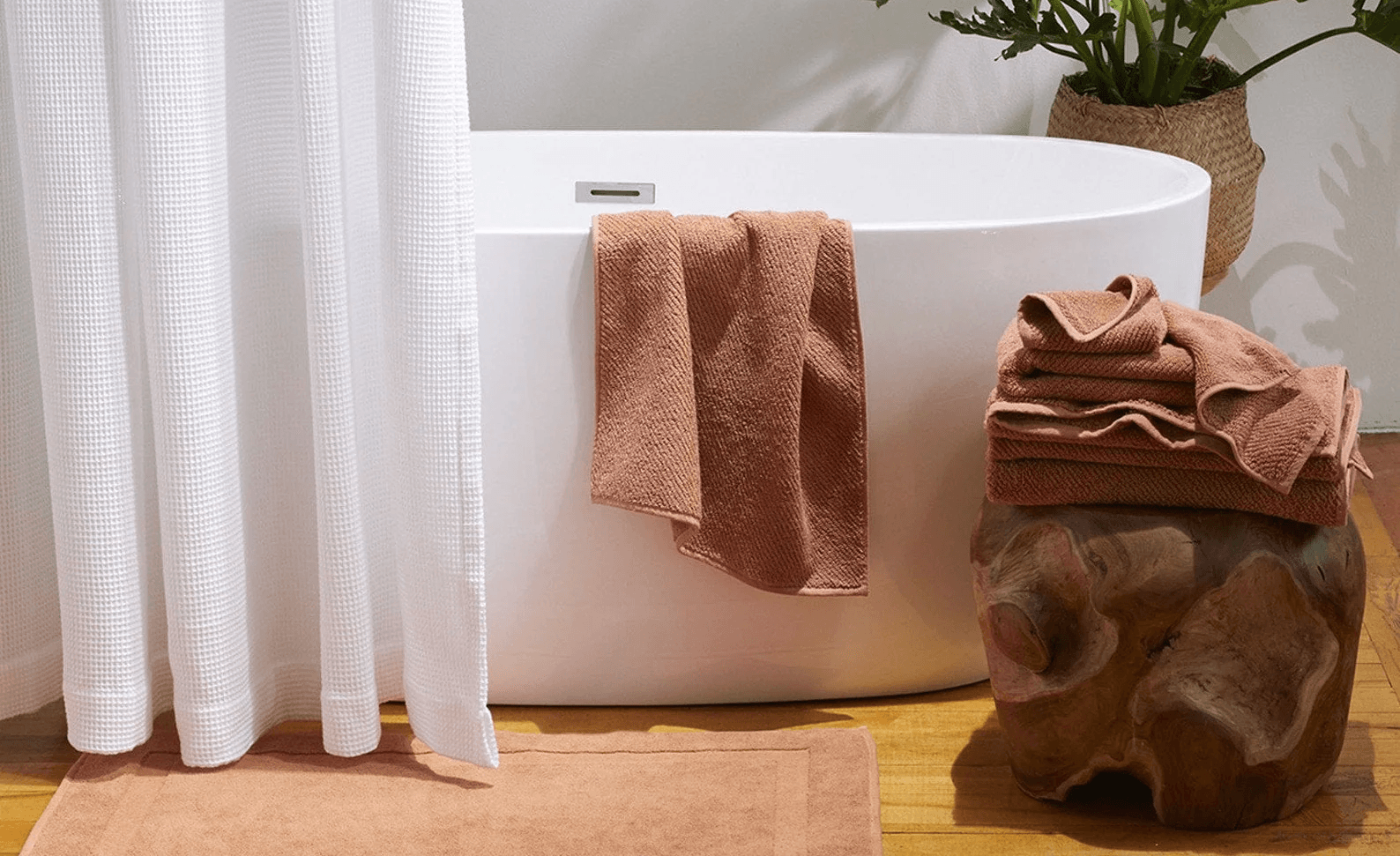
The shower curtain hanging in most American bathrooms is PVC (polyvinyl chloride), and it's one of the most chemically active items most households ever buy. The list included phthalates such as DEHP, an endocrine disruptor classified as a substance of very high concern by the European Chemicals Agency, and organotins including tributyltin and dibutyltin, used as heat stabilizers in PVC manufacturing.
The alternatives work as well or better. Organic cotton and linen curtains manage water through weight and drape rather than polymer membranes. For a waterproof film liner, PEVA (polyethylene vinyl acetate) and EVA (ethylene vinyl acetate) are chlorine-free alternatives to PVC that off-gas fewer hazardous compounds in comparative studies.
What we look for
No PVC or vinyl, under any name. PVC appears in product listings as vinyl, plastic liner, and sometimes as unlabeled clear film. The disqualifier is any chlorinated polymer in the primary material: this is the source of dioxin precursors in production, the organotin stabilizers, and the phthalate plasticizers that studies have detected in bathroom air after curtain installation.
No PFAS or DWR coatings. Fabric curtains sometimes carry PFAS-based durable water repellent treatments (DWR), originally developed for outdoor textiles. A "shower-ready" or "water-resistant" claim on cotton or linen should be verified against the brand's material spec page. Legitimate alternatives use tight weaves rather than fluoropolymer coatings.
Full material disclosure. Every pick here discloses the fiber composition or polymer type on the brand's product page. A curtain listed as "natural materials" without naming them fails the first precondition.
Certification tiers. For organic cotton, GOTS (Global Organic Textile Standard) is the most meaningful: it covers the entire supply chain from field to finished product, including dye and finish chemistry. OEKO-TEX Standard 100 tests the finished textile against residual chemical limits and applies to conventional and organic cotton alike; it is the certification most directly useful for a wet-room textile. Both certifications resolve in public registries by certificate number.
PEVA vs EVA vs PVC. PEVA and EVA are both chlorine-free ethylene copolymers. EVA (Quiet Town's Sun Shower liner material) is the simpler polymer, used in food-contact applications and foam cushioning. PEVA adds a vinyl acetate component. Neither requires chlorine chemistry in production, which is the primary concern with PVC. Both produce measurably lower levels of hazardous off-gassing than PVC in test conditions; airing a new film liner for 24 to 48 hours before use in a closed bathroom is a reasonable practice with any new synthetic product.
Liner vs curtain. A fabric curtain hangs outside the tub. A liner hangs inside the tub and handles direct water contact. Without a liner, water runs down the fabric and onto the floor. For walk-in showers with glass enclosures, a fabric curtain alone works fine. Several options here (Parachute, Coyuchi, Boll & Branch) are designed to be used with a liner; the liner does the waterproofing, the curtain handles the aesthetic.
Our picks
1. Parachute Organic Oasis Shower Curtain: Best overall

The Parachute Organic Oasis Shower Curtain is woven from 100% GOTS-certified organic cotton in a waffle texture. The GOTS certification covers the fiber origin, processing chemistry, and dye and finish treatments. The OEKO-TEX Standard 100 certification on the finished curtain verifies residual chemical limits on the end product, which is an additional layer for a textile used in a wet room with limited ventilation.
Parachute discloses the cert numbers on the product page; both resolve in the issuer's registry. The waffle weave dries faster than flat-woven cotton, a practical consideration for a bathroom curtain with daily moisture exposure. Available in natural/tobacco and several other colorways; the natural is a warm undyed tone. Standard 72x72 in. size; rings sold separately. Requires a liner for tub use.
2. Parachute Linen Shower Curtain: Best linen option

The Parachute Linen Shower Curtain is woven from 100% European linen, OEKO-TEX Standard 100 certified on the finished fabric. Linen has lower surface moisture retention than cotton, which means it dries faster and resists mildew more effectively in high-humidity environments. For bathrooms with limited ventilation, linen is the better practical choice over cotton.
European flax supply chains are among the more transparent in the industry. The natural colorway options are undyed or lightly treated; the ivory and natural finishes disclose a minimal finish process on the spec page. Heavier than you might expect at $87, which contributes to the drape. Requires a liner for tub use.
3. Coyuchi Organic Waffle Shower Curtain: Best waffle weave

The Coyuchi Organic Waffle Shower Curtain is 100% GOTS-certified organic cotton in a waffle weave construction. Coyuchi holds a brand-level GOTS certification, meaning the certification covers manufacturing processes across their product lines. This is a slightly broader scope than a per-SKU cert and reflects a more integrated supply chain commitment.
The waffle structure provides more surface area than flat-woven cotton, which means faster drying. The loom construction does not require finish chemistry to achieve the texture. Available in undyed natural and washed colorways. At $128, this is in the same range as the Parachute Organic Oasis; the choice between them is largely aesthetic. Requires a liner for tub use.
4. Boll & Branch Waffle Shower Curtain: Spa aesthetic

The Boll & Branch Waffle Shower Curtain uses 100% organic cotton and holds both a Fair Trade Certified and OEKO-TEX Standard 100 certification. The Fair Trade certification covers the fair wage and labor conditions for the workers who produced the fabric, which is unusual among shower curtain options at this price.
The OEKO-TEX Standard 100 cert is verifiable by style number on the OEKO-TEX website. The waffle weave is structurally similar to the Coyuchi option; the colorway range is comparable, centered on neutrals and warm whites. Boll & Branch's cotton sourcing documentation is publicly available on their supply chain page. Requires a liner.
5. Bean Products Organic Cotton Shower Curtain: Budget organic

The Bean Products Organic Cotton Shower Curtain is the most accessible GOTS-certified option on this list at $59.95. Bean Products is a Chicago-based manufacturer that holds a GOTS certification and uses the same organic cotton canvas across their product lines. That kind of single-source consistency is more common in specialty textile companies than in dedicated bath brands, and it shows in the material traceability.
The fabric is unbleached natural cotton in a flat canvas weave; no dyes, no finishes beyond what GOTS permits. Available in 70x72 in. sizing. The trade-off at this price is finish quality relative to the premium options: the grommets are standard, and the curtain is functional rather than refined. For households with a simple aesthetic, that is not a meaningful trade-off. Requires a liner.
6. Quiet Town End Bits Linen Shower Curtain: Premium linen

The Quiet Town End Bits Linen Shower Curtain is woven from 100% European linen using scrap fabric panels from previous production runs (the "end bits" of the name), sewn into a patchwork stripe pattern. There are no certifications on this curtain; Quiet Town has been clear on that point.
The inclusion is on material grounds: linen is among the most inert natural fibers in a textile context, with no synthetic binders required in weaving and no shrink or wrinkle treatments necessary. The natural waxy finish on flax fiber provides low surface energy without any coating chemistry. The composition is fully disclosed; the construction is in the United States using European linen. At $175, this is a considered purchase for buyers who want the material properties of linen without relying on certification coverage. Requires a liner.
7. Quiet Town Sun Shower Liner: Best EVA liner

The Quiet Town Sun Shower Liner is made from EVA (ethylene vinyl acetate), a chlorine-free polymer that sidesteps PVC's chlorine chemistry entirely. It is a waterproof liner intended for tub use, available in translucent colorways (the named colors such as olive are very faint tints, not opaque films).
EVA is used in food-contact applications and in cushioning materials. It is considered a lower off-gassing alternative to PVC in confined spaces. No certifications are offered, but the material is explicitly named and the brand's product page is specific about the composition. At $46, this is positioned between the budget PEVA options and the fabric curtain tier. For households that need a liner and want something less than the lowest-cost option, this is the best step up.
8. Barossa Design PEVA Shower Curtain Liner: Budget liner
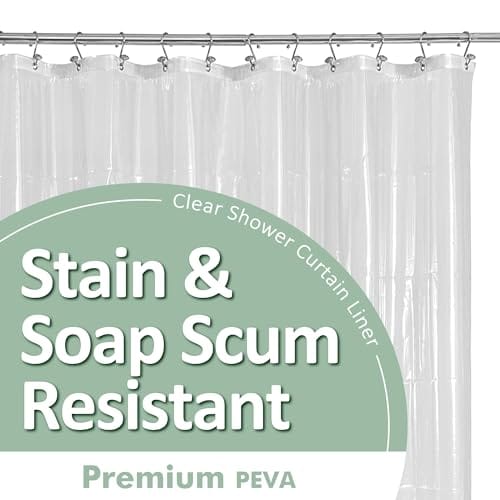
The Barossa Design PEVA Shower Curtain Liner is the budget floor for households replacing a PVC liner without spending on fabric. PEVA is a chlorine-free ethylene copolymer that off-gasses fewer hazardous compounds than PVC in comparative studies. This liner is also OEKO-TEX certified, an unusually strong credential for a film liner at this price point.
The clear version is standard for liners and pairs with any curtain. At $8.94 on Amazon, this is not a prestige product. The OEKO-TEX certification is independently verifiable by certificate number. For households currently using a standard PVC liner, this is a direct material swap with a measurable improvement for minimal cost.
What we passed on
Rawganique markets several shower curtains as organic hemp and organic cotton, but does not provide a GOTS certification or equivalent that resolves in a certifier's registry for specific products. The claims are plausible given other sourcing practices the brand has demonstrated, but the published disqualifier criteria require traceable certification; the claims here could not be confirmed at that level.
Standard PVC liners failed on the primary disqualifier. PVC liner, vinyl liner, plastic liner, and most unlabeled clear liners are PVC unless the product page states otherwise. This covers the bulk of what is sold at most home goods retailers and on Amazon at the lowest price points.
Garnet Hill offers a cotton shower curtain that appeared to use similar sourcing to some certified options, but the product page was inaccessible for material verification, so no evaluation was possible.
FAQ
Is PEVA safer than PVC?
In the areas most relevant to indoor air quality, yes. PEVA does not contain the organotin stabilizers or phthalate plasticizers present in standard PVC formulations, and its manufacturing does not require chlorine chemistry. PEVA still off-gasses volatile organic compounds; it is not completely inert. Airing a new liner for 24 to 48 hours in a ventilated space before bringing it into a confined bathroom is a reasonable practice with any new film product.
Do I need a liner with a fabric curtain?
For a tub with a showerhead, yes. The fabric curtain hangs outside the tub edge. The liner hangs inside, between the curtain and the water. Without a liner, water runs down the curtain and onto the floor. For a walk-in shower without a tub, a fabric curtain alone works. The Parachute, Coyuchi, and Boll & Branch options on this list are designed to work with a separate liner; the liner handles the waterproofing, the curtain handles the visual.
What certifications should I look for?
For cotton and linen curtains: GOTS Certified covers the fiber, processing, and dye and finish chemistry from field to finished product. OEKO-TEX Standard 100 tests the finished textile against residual chemical limits. Both certifications resolve in public registries by certificate number, which is how to verify a specific product's claim rather than a brand's general marketing. For film liners: OEKO-TEX Standard 100 is the relevant certification; it covers synthetic textiles and films as well as natural ones.
How do I wash an organic cotton shower curtain?
Most organic cotton shower curtains are machine washable on a gentle cycle in cold water. Parachute recommends this approach directly. Air-dry or tumble-dry on low heat; high heat can cause the waffle weave to set unevenly. Washing monthly is sufficient for a curtain in daily use. The liner, not the curtain, is the main site of mildew accumulation in a tub shower; washing both on a similar schedule covers the full moisture exposure.
Is linen or cotton better for a shower curtain?
Both work well for different reasons. Linen dries faster and resists mildew more effectively in high-humidity environments, making it the better choice for bathrooms with limited ventilation. Cotton is softer and easier to find in GOTS-certified versions. For bathrooms with a window or a functioning exhaust fan, certified organic cotton is an excellent choice. For a poorly ventilated bathroom, linen is the more practical option.
Cover image: PattayaPatrol via Wikimedia Commons (CC BY-SA 4.0). Source.


