

Why the foam in most high chairs is the problem
The American Academy of Pediatrics flagged flame-retardant chemicals as a developmental neurotoxin concern in 2012. Yet most conventional high chairs are still built around a foam seat that must meet federal flammability standards, and most manufacturers meet those standards with chemical flame retardants rather than foam-free construction.
The exposure calculus is straightforward: infants spend two to three hours per day in a high chair during peak developmental months. The foam-free alternative isn't a compromise; it just requires knowing which chairs are built differently.
What we look for
The cleanest high chairs are the ones that never needed flame retardants to begin with. A solid wood or metal frame carries no foam, so there's nothing to treat. We also checked for PFAS-based stain and water-resistance treatments on fabric components, a separate exposure vector that most reviews skip entirely.
No foam in the base chair. Every pick below either has no foam at all, or we've noted clearly where foam exists and what to do about it. Where we couldn't get written FR disclosure on foam components, we call it out explicitly rather than quietly excluding it.
No PFAS coatings on fabric. Stain-resistant and water-repellent finishes on high chair covers are a documented PFAS application point. We required either no fabric cover, or an explicit PFAS-free statement from the brand verified against a source URL on their own site.
Wood and metal construction. Solid hardwood and aluminum don't require FR treatment at the structural level. We required the brand to disclose species and finish, not just "premium materials."
Real third-party certifications. GREENGUARD Gold (UL) certifies low VOC emissions from finished products. FSC certifies sustainable forest sourcing. JPMA certifies compliance with ASTM safety testing. We cite the authority's verification page, not the brand's marketing copy.
Our picks
1. Stokke Tripp Trapp High Chair: Best overall
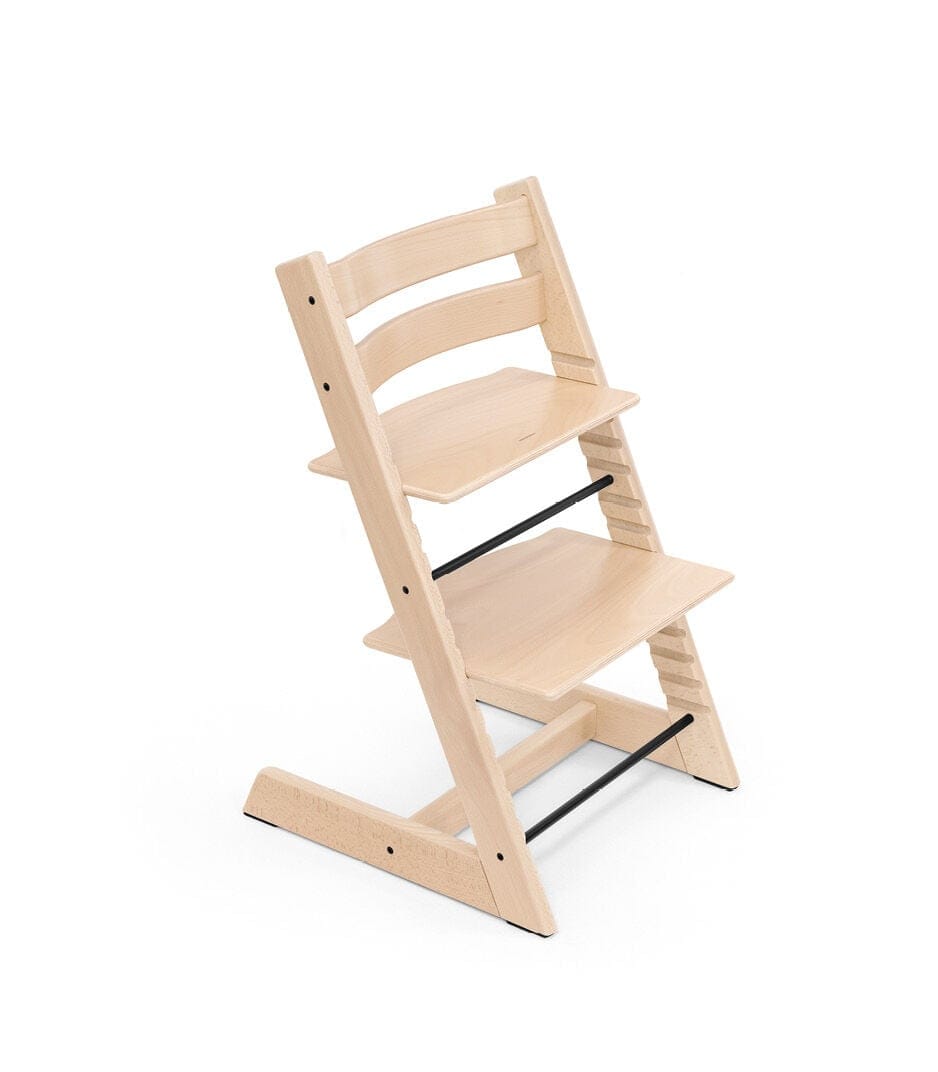
The Stokke Tripp Trapp is the clearest choice because the FR question is answered at the design level: no foam in the base chair means no chemical flame retardant anywhere in the structure you're buying. European FSC-certified beech grows with the child from newborn (with the Baby Set add-on) through adulthood at up to 300 lbs; the same seat serves a teenager at the dinner table that served them at six months. GREENGUARD Gold certification (independently verifiable via UL's registry) confirms low chemical emissions from the finished frame and water-based paint. The Baby Set cushion is optional; if you add it, Stokke offers a GOTS-certified organic cotton version, which is the cleaner path over the standard cushion.
Who it's for: Families who want the most independently verified option and are willing to pay for a seat that lasts 18+ years. The $$$-tier price amortizes to less per year than most budget chairs replaced annually.
What to skip: The standard Baby Set cushion if you can't confirm its FR chemistry. The GOTS-certified organic cushion (sold separately) is the verified alternative.
2. Lalo The Chair II: Best for grow-with-me convertibility

The Lalo The Chair II is the second generation of Lalo's beechwood-and-aluminum design, extended into seven configurations: infant high chair, infant chair without tray, toddler high chair, booster seat on a regular dining chair, and three play-seat modes. The beechwood legs and aluminum frame carry no foam by construction, so there's no chemical flame retardant in the base chair. Water-based paint throughout. FDA-grade silicone for the harness straps.
The tray is listed as BPA-free plastic on the product page, but the polymer type is not yet disclosed in writing from Lalo. We've submitted a materials inquiry and will update this entry when we have a written answer on tray composition. For now, the structural chair is the clean component.
Who it's for: Families who want one chair to carry from newborn through early childhood, with more configuration range than the original Chair. Available in six colorways; the Chair II launched in 2026 as the direct successor to the original Chair.
What to watch: The tray-polymer question applies until Lalo confirms in writing. Read the per-mode weight limits before moving a child between configurations: 30 lbs as high chair, 50 lbs as booster, 250 lbs as play chair.
3. Keekaroo Height Right High Chair: Best value, made in the USA
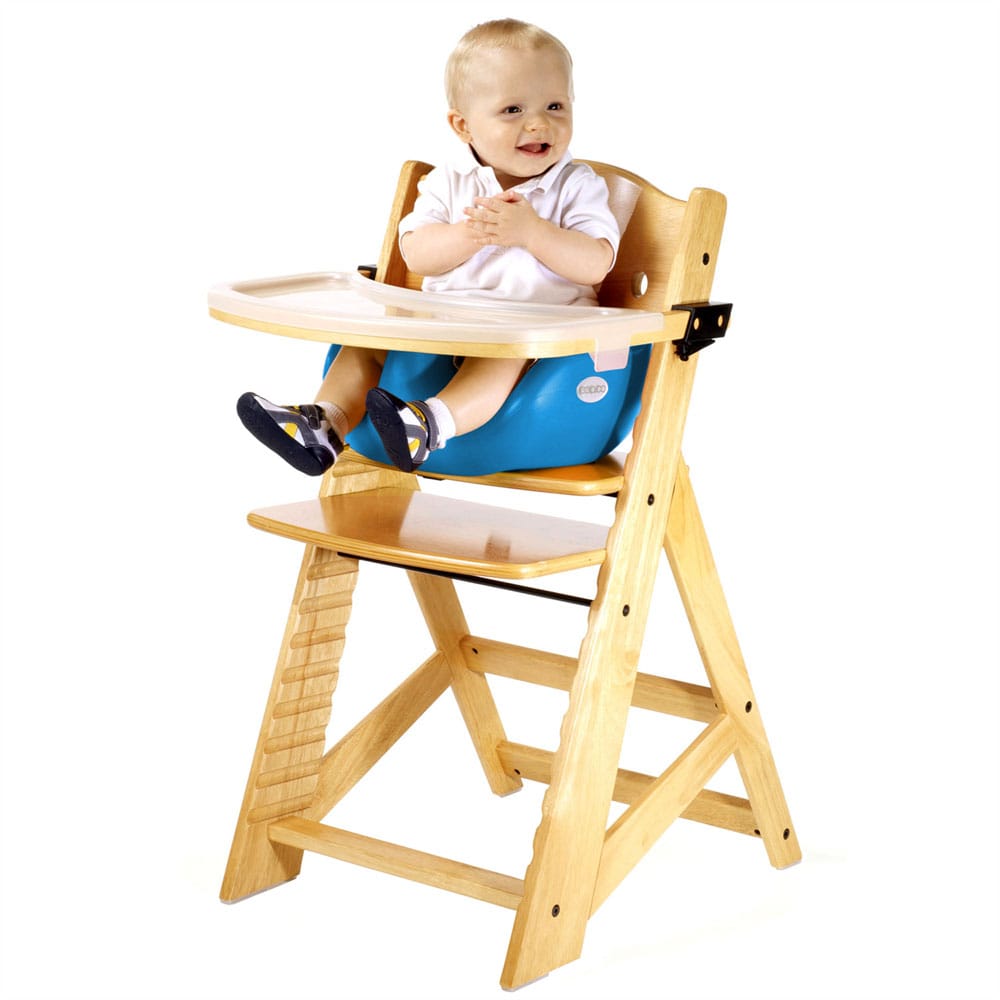
The Keekaroo Height Right is the only chair here made in the United States (Effingham, Illinois) with a rubberwood frame and plant-based low-VOC lacquer. No foam anywhere in the standard configuration. The Infant Insert is a single-piece seamless surface that wipes clean without fabric or padding to trap allergens or absorb stain-resistant coatings. JPMA certified to ASTM F404 standards. Adjusts to fit any standard dining table through adulthood up to 250 lbs.
The rubberwood species is worth noting. Rubberwood comes from rubber trees at the end of their latex-producing life, redirecting material that would otherwise be discarded, a genuine sustainability point that doesn't rely on FSC certification language. The plant-based lacquer is documented on Keekaroo's product page.
Who it's for: Parents who prioritize US manufacturing and want a foam-free seat at a mid-range price. The best value pick on this list by a meaningful margin.
What to skip: The optional foam Comfort Cushion add-on. No FR disclosure is available for it.
4. Inglesina Fast Table Chair: Best for travel and small spaces
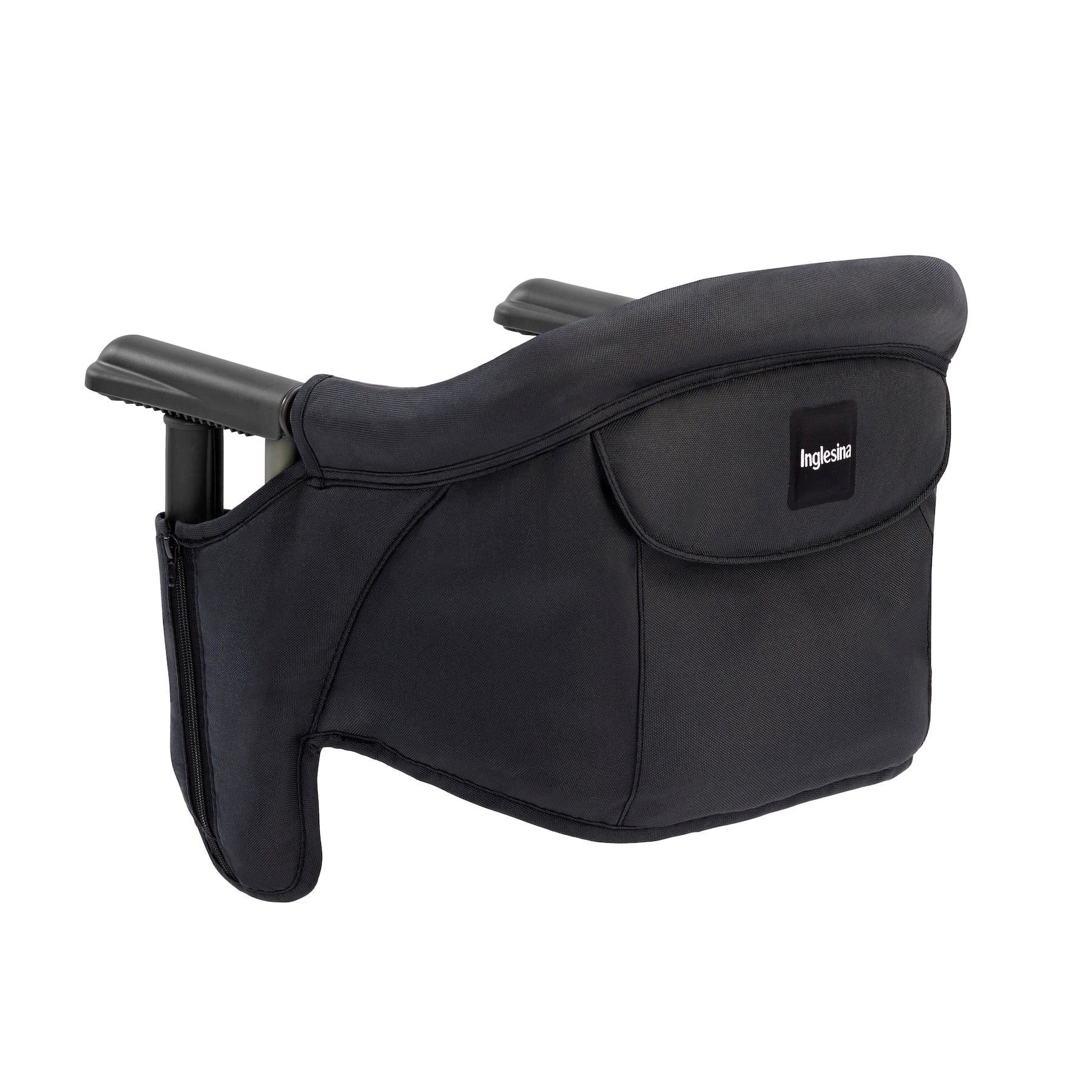
The Inglesina Fast Table Chair is the only hook-on chair here, and the one with the most explicit chemical disclosure on this list. Inglesina publishes a specific list of what's absent: BPA, PFAS, lead, phthalates, flame retardants, MDI, TDI, and TDCPP. Named chemical exclusions are rare in the high chair category, where most brands default to "ASTM compliant" without chemical specificity. The steel-and-aluminum frame has no foam by construction. ASTM F1235-15 certified, Baby Safety Alliance reviewed. Under 5 lbs and folds flat for a diaper bag.
Who it's for: Travelers, small-apartment families, and anyone eating at restaurants with babies regularly. Works on tables 0.8" to 3.5" thick.
What to watch: Tables with an apron rail (the structural frame under most farmhouse tables) won't fit the clamp mechanism. Measure your table clearance before buying.
5. Abiie Beyond Junior Y High Chair: FSC and JPMA certified, skip the cushion
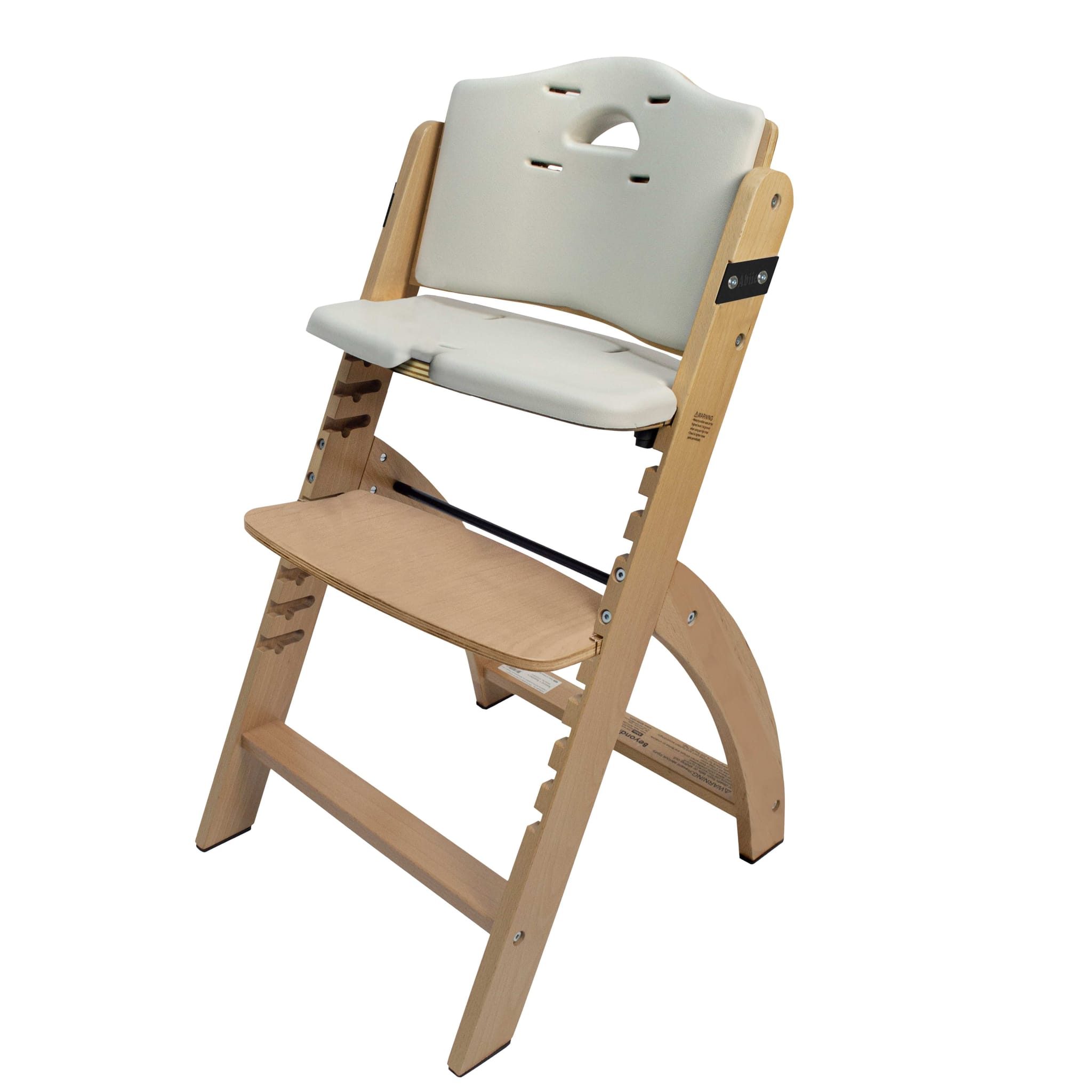
The Abiie Beyond Junior Y uses FSC-certified beech legs and a walnut tray with no foam in the base chair, and holds JPMA certification. The tool-free adjustment mechanism (seat height, footrest, recline) is among the more practical designs at this price point, and the walnut tray is a step up from the plastic trays that dominate this tier. Maximum capacity of 250 lbs means the chair serves well past toddlerhood.
Conditional pick: Abiie sells an optional seat cushion that doesn't carry the same FR disclosure as the frame. We sent a materials inquiry to Abiie's support team before this guide published and did not receive written confirmation of the cushion's flame-retardant chemistry. Use the chair without the optional cushion, or hold for written FR confirmation from Abiie before adding it.
Who it's for: Parents who want the FSC and JPMA credential combination at a mid-range price and are comfortable using the base chair without the optional cushion.
6. Lalo The Chair High Chair: Modern design, conditional on seat cover
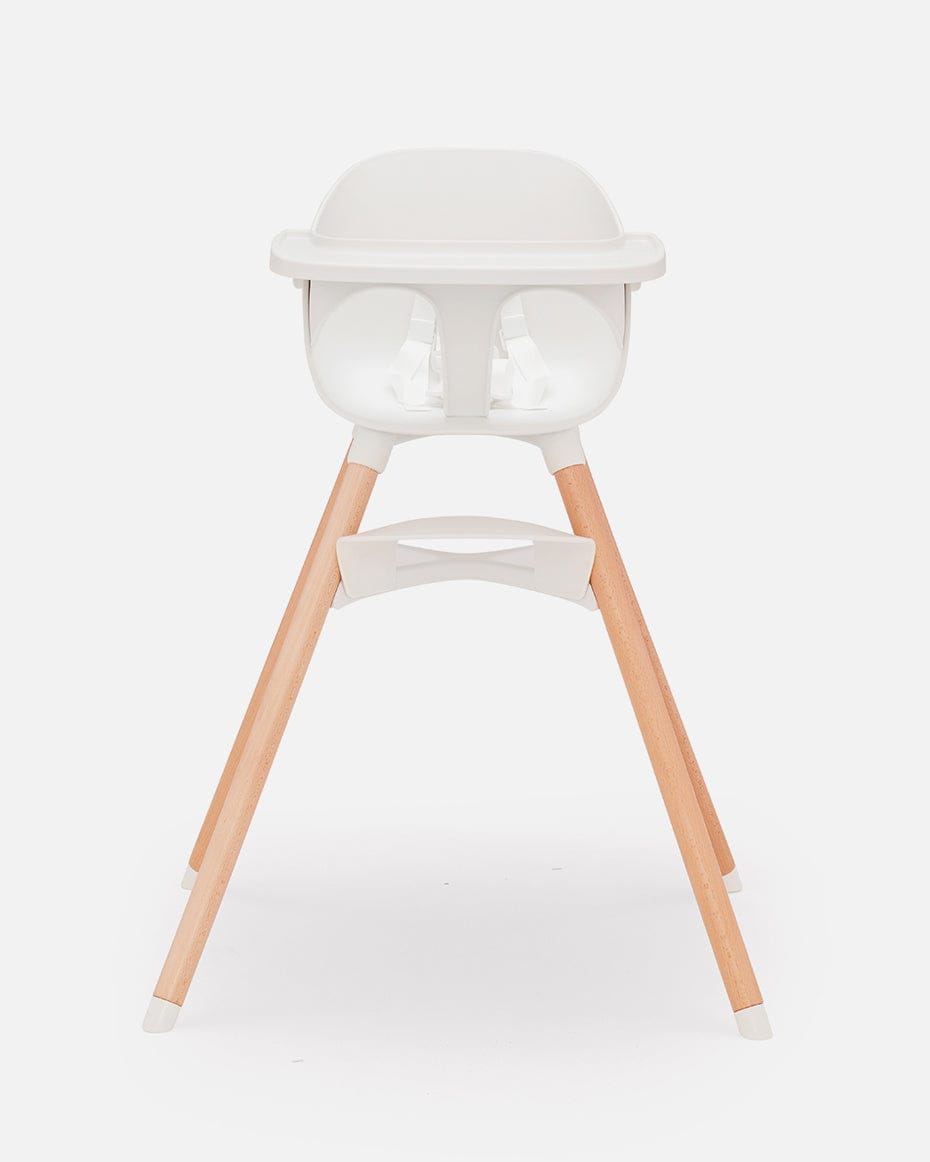
The Lalo The Chair uses an aluminum tube frame with a beech wood seat, the combination that keeps chemical flame retardants out of the structure. No foam in the base chair. Adjustable footrest, adjustable seat height, dishwasher-safe tray, easy-fold storage. The design fits modern kitchen aesthetics better than most chairs here, which tends to matter to parents who look at the high chair for three meals a day for two years.
Conditional pick: The removable fabric seat cover does not carry a published PFAS-free disclosure. We contacted Lalo and were directed to their general safety FAQ, which does not name the coating chemistry for the fabric. Use Lalo The Chair without the seat cover until you receive written PFAS confirmation from Lalo, or wash the cover several times before first use to reduce any surface finish load. The aluminum-and-beech frame itself is the clean component.
Who it's for: Design-forward households where the chair's visual language matters alongside the materials story.
What we passed on
Foam-core chairs with undisclosed FR chemistry. The Graco Slim Snacker, Chicco Polly, and Fisher-Price SpaceSaver all use foam seats and document their FR compliance only as "meets applicable regulations," language that tells you nothing about which flame retardants are present. Without a named exclusion or an FR-free foam certification, they don't qualify.
Monte Design Tavo. The Tavo was on our initial shortlist for its aluminum-and-leather construction. It has been discontinued and is no longer available from Monte Design or any major retailer at the time of writing.
Bamboo composite chairs. Bamboo marketing has taken hold in baby products, but most bamboo high chairs use fiber compressed with formaldehyde-containing binders, the same issue as engineered bamboo flooring. Without explicit binder chemistry disclosure, we don't include them.
Cover image: Lalo, used with permission. Source.