

1. LennyLamb Capybaras-Tribu Ring Sling: best for patterns
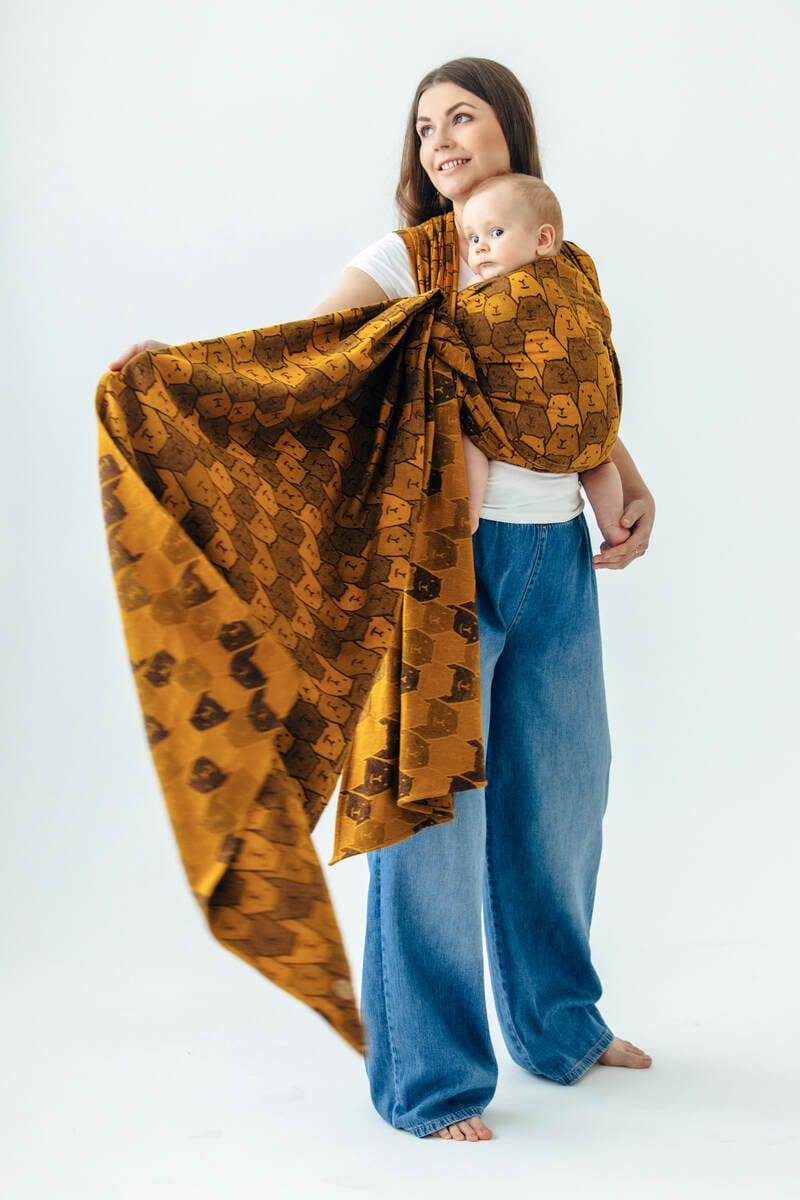
The LennyLamb Capybaras-Tribu Ring Sling is OEKO-TEX Standard 100 certified, woven in Poland from 100% cotton with azo-free reactive dyes. The Capybaras-Tribu print is a playful repeat pattern that holds its color through repeated washing, which the brand attributes to the reactive dye process rather than a topcoat finish.
LennyLamb is one of the larger certification-holding carriers on the market, and their OEKO-TEX 100 certificate number is printed on product packaging and available on request. The Standard 100 certification tests for 100+ restricted substance classes in the finished fabric, which means the certificate covers not just the fiber but the dyes, bleaches, and any processing aids used in production.
At $117.96, this is the mid-price option among our ring sling picks. The quality-to-price ratio is strong: LennyLamb's weave structure is tight and consistent, and the sling holds adjustment in the ring reliably under weight.
2. Wildbird Acadian Solid Ring Sling: best for beginners

The Wildbird Acadian Solid Ring Sling is the lowest-cost certified option on this list at $68, and one of the most accessible ring slings for first-time babywearers. The Acadian fabric is OEKO-TEX Standard 100 certified linen. Linen is naturally stiffer than cotton when new and softens with washing and use, which makes it a good learning fabric because it holds position well without requiring a tight initial adjustment.
The Acadian fabric carries OEKO-TEX Standard 100 certification, specifically Standard 100, not the broader OEKO-TEX Made in Green, which covers only social audits and not chemistry. The rings are solid aluminum, which is inert and does not corrode or leach.
The Acadian is also available on Amazon at a slightly lower price; the brand-direct link is position-0 on our listing. For a first carrier where there is a real chance of buying the wrong size or discovering babywearing is not for you, the $68 price point makes it easier to try without overcommitting.
What we passed on
Natibaby Vaflo Fuscus Baby Wrap was pick 5 until October 2026. Natibaby sells from Poland in euros only, so a US reader cannot buy it at a dollar price. It returns if a US retailer stocks it.
Moby Wrap Classic. The standard Moby wrap is 95% cotton and 5% spandex. Spandex is a polyurethane elastomer, a synthetic polymer, which fails the no-synthetic-fibers disqualifier for a carrier in prolonged skin contact. An organic version of the Moby was listed previously but is not currently sold on the brand's site.
Ergobaby Embrace. The Embrace uses a jersey fabric that contains polyester. Ergobaby does not hold GOTS or OEKO-TEX Standard 100 certification for the Embrace fabric. The brand's marketing emphasizes softness and ergonomics, not fiber chemistry, so we cannot verify dye process or finish chemistry independently.
BabyBjorn Carrier One. The mesh panels are polyester. The structured panels use a blend that BabyBjorn does not break down by fiber on their site. The carrier does not carry GOTS or OEKO-TEX Standard 100 certification.
Boba Wrap. The standard Boba Wrap formula includes rayon and spandex. While the Boba Organic is 95% cotton, it still contains 5% spandex and does not carry third-party fiber certification.
FAQ
Is a certified baby carrier really necessary, or is any natural-fiber wrap safe?
Certification matters because it verifies the supply chain, not just the fiber. A wrap marketed as "100% cotton" may still use azo dyes that can break down to carcinogenic aromatic amines, or may carry residual processing aids from the mill. GOTS and OEKO-TEX Standard 100 certifications test against both fiber content and processing chemistry via independent labs. An uncertified brand's claim of "natural fiber" is a marketing statement; a certificate number you can check in the issuer's registry is not.
What is the difference between a woven wrap and a ring sling for a newborn?
A woven wrap is a long rectangle of fabric that ties in a specific carry method. The weight is distributed across both shoulders and the full torso, which makes longer carries more comfortable. The learning curve is higher: correct positioning takes practice. A ring sling is a shorter panel of fabric that runs through two aluminum rings, adjusted by pulling the tail. It goes on faster and is easier to learn, but the weight sits on one shoulder only, which limits comfortable carry duration for most parents.
Are the aluminum rings in ring slings safe?
Solid aluminum rings, which all of the ring slings on this list use, are inert and do not corrode under normal use or washing. Aluminum rings meet ASTM F2907 requirements for baby sling carriers. Rings should always be solid, not welded; welded rings have a seam that can fail under load.
Can I machine wash these carriers?
Yes, with caveats. All three carriers on this list are machine washable in cold water on a delicate cycle. Avoid hot water, which can shrink natural fibers and fade reactive dyes. Do not use fabric softener, which can deposit a coating on the fabric that affects grip. Line dry or use a low-heat dryer cycle.
Do baby carriers off-gas like mattresses do?
The off-gassing concern that applies to foam mattresses comes from polyurethane foam blowing agents and VOC-rich synthetic adhesives. Woven wraps and ring slings, which are entirely fabric with no foam or adhesive components, do not have this concern. The relevant textile chemical concerns are residual dye chemistry and processing agents, which is what the GOTS and OEKO-TEX certifications address.
What size woven wrap do I need?
Most adults find a size 5 (4.6 meters) works for a basic front wrap cross carry, which is the standard starting point. Shorter parents often prefer a size 4; taller parents or those who want to do back carries comfortably typically prefer a size 6. Most wrap brands publish a sizing guide based on your torso length and preferred carries.
Cover image: Quang Nguyen Vinh via Pexels (Pexels License). Source.


