

Our picks at a glance
| Pick | Best for | Key certifications | Price | Details |
|---|---|---|---|---|
| Second Shower Head | Chloramine-removing shower filter | NSF 177 | $$ | Full review |
| Aquasana AQ-4100 Shower Filter | Chlorine-heavy water | NSF 177 | $$ | Full review |
| Brondell VivaSpring Compact | Budget shower filter | WQA tested | $ | Full review |
| Aquasana Claryum 3-Stage | Non-RO under-sink with PFAS cert | NSF 42/53/401/P473 | $$ | Full review |
| Brondell Coral UC300 | Budget under-sink | NSF 42/53/401/372 | $$ | Full review |
| iSpring RCC7AK 6-Stage RO | Full RO with remineralization | NSF 58 | $$$ | Full review |
| Brondell Capella RC250 | RO with PFAS certification | NSF 42/53/58/401/P473 | $$$ | Full review |
Most US water utilities switched from chlorine to chloramine between 2000 and 2015. Chloramine is more stable than chlorine: it stays active across long distribution systems without generating as many disinfection byproducts in the pipes. The EPA's Surface Water Treatment Rule allowed the substitution, and EPA water system data indicates roughly 65% of large systems now use it.
For shower filters and under-sink filters, that shift matters because the two disinfectants require completely different removal chemistry. A filter certified only for chlorine removal will underperform in chloraminated water, and most shower filter marketing does not make that distinction clearly.
What we look for
The chloramine problem. Chloramine (monochloramine) is formed by combining chlorine and ammonia. Most shower filter media, including KDF-55 (copper-zinc granules), remove chlorine efficiently through redox chemistry but do not neutralize chloramine at shower flow rates. Activated carbon and GAC filters reduce chloramine by adsorption, but the process requires extended contact time that a small inline shower filter cannot provide at 2-3 gallons per minute. Vitamin C (ascorbic acid or sodium ascorbate) neutralizes both chlorine and chloramine instantly through a direct chemical reaction, which is the only mechanism that works reliably in a shower application.
NSF/ANSI 177 is the certification standard for shower filters. It tests for free chlorine reduction by default. When a brand also claims chloramine reduction under NSF 177, that claim must appear explicitly in the NSF certificate to be verifiable. "NSF certified" on a shower filter box does not mean chloramine removal was tested. We checked the NSF product database directly for every pick in this guide.
Under-sink certification tiers. For drinking water under the sink, the certifications that matter stack in a specific order:
- NSF/ANSI 42: aesthetic contaminants, chlorine taste and odor.
- NSF/ANSI 53: health-related contaminants including lead, chromium 6, and VOCs.
- NSF/ANSI 58: specific to reverse osmosis systems; covers full RO removal performance.
- NSF/ANSI 401: emerging contaminants including pharmaceuticals, herbicides, and DEET.
- NSF/ANSI P473: PFOA and PFOS to a verified 98%+ removal standard. A filter certified to NSF 53 will not necessarily remove PFAS to any specific level.
Material disclosure. The filter housing, tubing, and connections matter alongside the filter media. We require that manufacturers disclose the materials used for water-contact components. Systems with undisclosed polymer housings or generic "BPA-free" claims without named replacements do not appear here.
Annual running cost. Every pick in this guide includes the annual cartridge replacement cost so the long-term math is visible from the start, not hidden in the purchase price.
Our picks
1. Second Shower Head: Best shower filter for chloramine

The Second Shower vitamin C shower filter uses ascorbic acid as the primary filter media, which neutralizes both chlorine and chloramine through direct chemical reduction. The NSF/ANSI 177 certification covers the chloramine removal claim specifically, which puts it in a different category from the KDF-based options below.
KDF-based shower filters, including the Aquasana and Brondell picks, are certified for chlorine removal under NSF 177. They work well for chlorinated water. They do not address chloramine at shower flow rates. If your utility uses chloramine (check your Consumer Confidence Report or the EWG Tap Water Database), the Second Shower is the certified option.
Vitamin C filters have shorter cartridge life than KDF units because the ascorbic acid is consumed in the neutralization reaction rather than rinsed through unchanged. Second Shower recommends cartridge replacement every 2-3 months depending on water quality and usage, which is a higher operating frequency than KDF alternatives.
Who it is for: Households on chloraminated water who want a certified chloramine-reducing shower filter.
2. Aquasana AQ-4100 Shower Filter: Best for chlorine-heavy water

The Aquasana AQ-4100 uses a two-stage media system: KDF-55 for chlorine removal via redox chemistry and catalytic carbon for residual organic removal. It is NSF/ANSI 177 certified for chlorine reduction. The dual-media approach produces better overall filtration for chlorinated water than single-media KDF filters, and the AQ-4100 has a 6-month cartridge life.
Installation is inline between the shower arm and showerhead, which means it works with your existing fixture without modification. Standard 1/2-inch NPT fittings. Aquasana also sells a bundled version with a replacement showerhead if you want a full fixture swap.
The AQ-4100 costs $79.99 upfront; replacement cartridges run roughly $60/year, which is mid-priced for shower filters. For chlorinated water, it is a well-certified and durable option. For chloraminated water, it does not hold a certification for that claim.
Who it is for: Households on chlorinated water who want a certified, durable inline shower filter.
3. Brondell VivaSpring Compact Shower Filter: Best budget shower filter
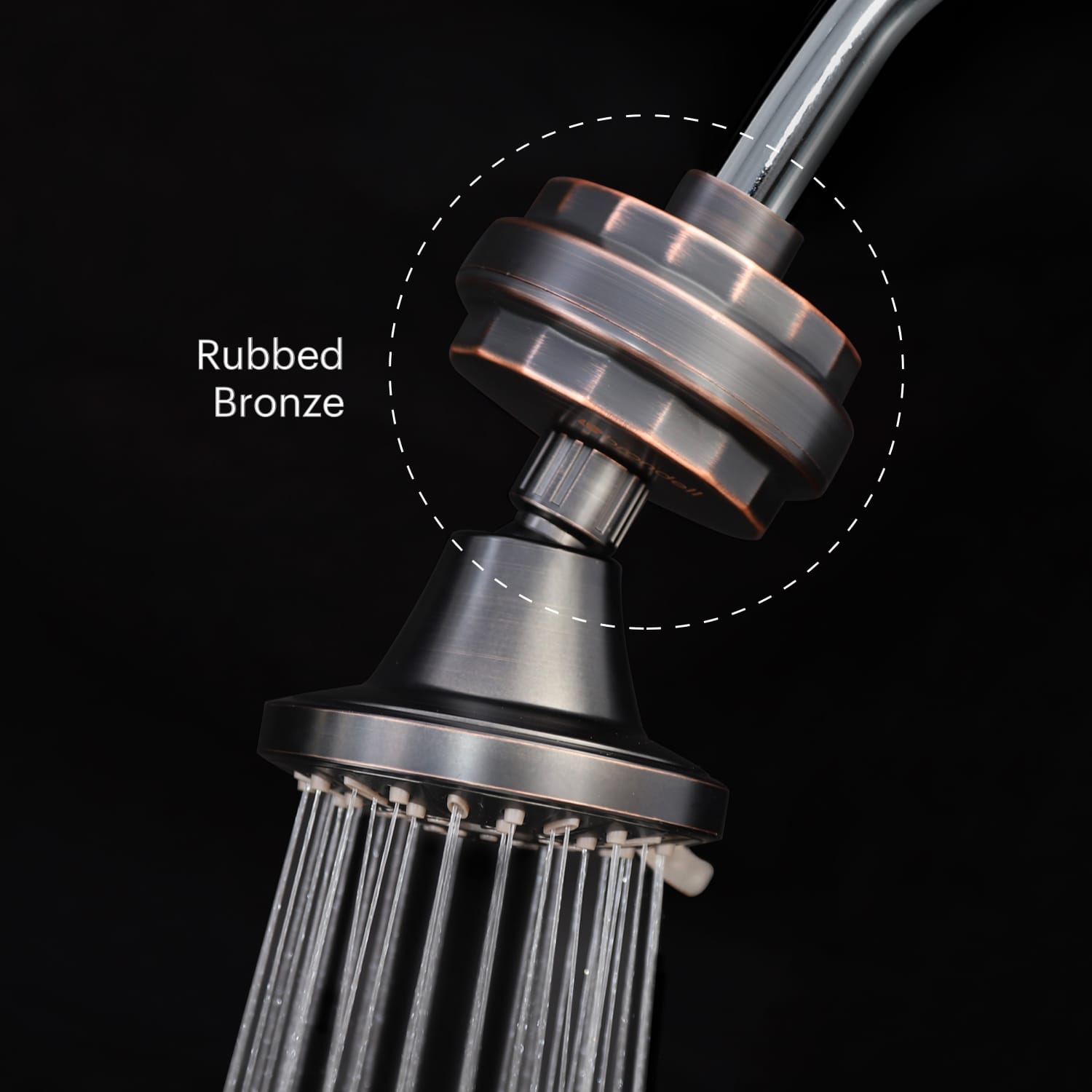
The Brondell VivaSpring is the most compact and affordable shower filter in this guide. High-purity KDF media handles chlorine removal. The compact body fits in tight shower spaces where the Aquasana AQ-4100 may not.
Current price is $25 on Amazon; Brondell's direct price runs higher. Replacement cartridges run $14-18. For chlorinated water, it does what it is certified for. For chloraminated water, it faces the same KDF limitation as the Aquasana: chloramine removal at shower flow rates is not tested or claimed.
Who it is for: Chlorinated-water households who want a low-footprint, budget-priced shower filter.
4. Aquasana Claryum 3-Stage Max Flow Under-Sink Filter: Best non-RO under-sink filter
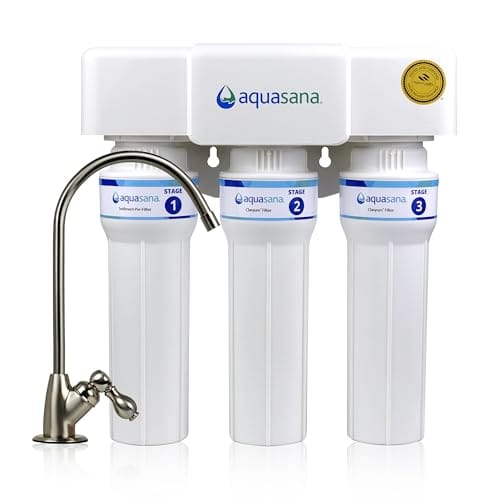
The Aquasana Claryum 3-Stage Max Flow holds the strongest non-RO certification stack in an under-sink system: NSF/ANSI 42 (taste and odor), 53 (health contaminants including lead and chromium 6), 401 (emerging contaminants), and P473 (PFOA and PFOS at 99.7% removal). The WQA Gold Seal covers the full system.
The P473 certification is the critical differentiator. Most non-RO under-sink filters are certified to NSF 53, which covers lead and a handful of VOCs but does not include PFAS. The Claryum's P473 certification is independently verified at 99.7% removal.
The system costs $199.99 upfront. Annual filter cost runs $156-184/year, which is higher than the Brondell Coral UC300 below. The premium is for the P473 certification. If PFAS in drinking water is a concern in your area, this is the verifiable non-RO option.
Who it is for: Households who want certified PFAS removal without a reverse osmosis system.
5. Brondell Coral UC300 Three-Stage Under-Sink Filter: Best budget under-sink filter
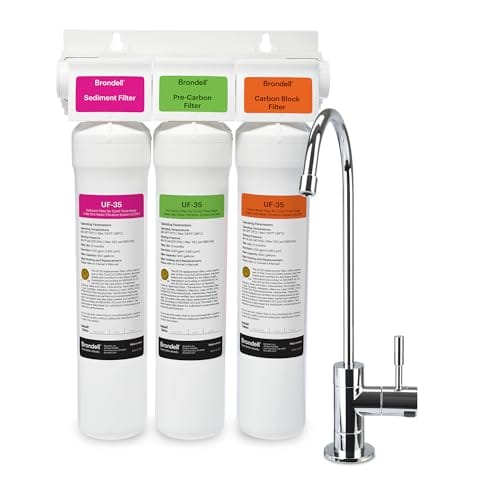
The Brondell Coral UC300 is the most affordable certified under-sink filter in this guide. WQA Gold Seal covers NSF/ANSI 42, 53, 401, and 372 (lead-free materials for the fittings and connections). One filter cartridge per year keeps annual running cost at $80.
The Coral UC300 does not carry NSF P473 certification. It reduces PFAS under NSF 53, but that standard does not test or certify to the same removal threshold as P473. If PFAS removal is the primary concern, the Aquasana Claryum or an RO system is the right choice. If chlorine, lead, and general organics are the concern and budget matters, the Coral UC300 is the most certifiably sound option at its price point.
The NSF 372 certification on the materials is worth noting: it covers the lead-free standard for the fittings themselves, not just the filter media, which many filter brands do not include.
Who it is for: Budget-conscious households who want a WQA Gold Seal under-sink filter for general contaminant removal.
6. iSpring RCC7AK 6-Stage Reverse Osmosis System: Best RO system
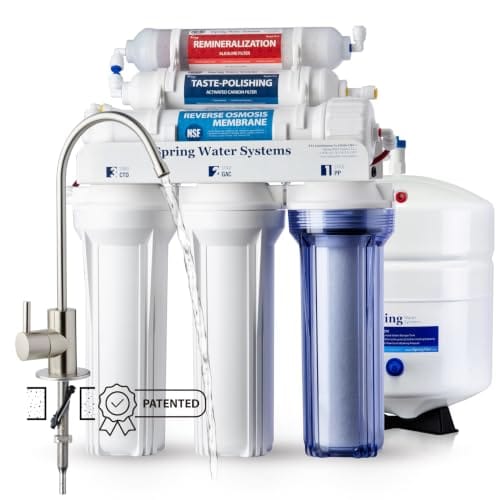
The iSpring RCC7AK is a 6-stage reverse osmosis system with NSF/ANSI 58 certification for the full system. RO removes effectively everything: chloramine, chlorine, lead, arsenic, fluoride, nitrates, and 1,000+ other contaminants at 93-99% efficiency. The sixth stage is an alkaline remineralization cartridge that adds calcium, magnesium, and potassium back to the RO-purified water, which addresses the flat taste typical of pure RO output.
At roughly $67-70/year in replacement filters, the iSpring RCC7AK has the lowest annual running cost of any pick in this guide. The upfront system cost is around $250. The DIY installation uses quick-connect fittings and fits in a standard under-sink cabinet.
The iSpring does not carry NSF P473 specifically. NSF/ANSI 58 covers an RO system's performance, and RO membranes physically block PFAS molecules. But if you need P473 on the certificate for documentation purposes, see the Brondell Capella RC250 below.
Who it is for: Households who want comprehensive RO filtration with the lowest long-term annual cost.
7. Brondell Capella RC250 Reverse Osmosis System: Best RO with PFAS certification
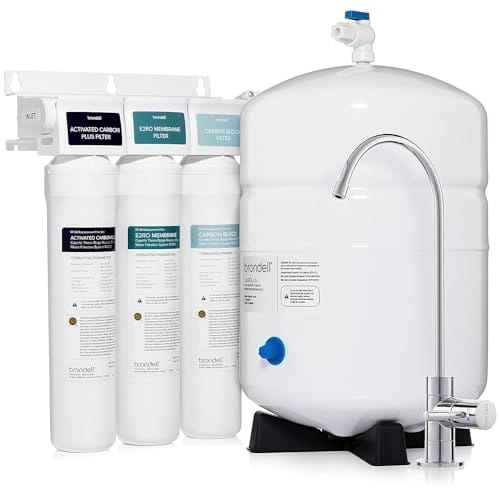
The Brondell Capella RC250 adds the WQA Gold Seal across NSF/ANSI 42, 53, 58, 401, and P473 in a tankless, compact RO design. It removes 99%+ PFOA and PFOS to the P473 standard. The tankless form factor matters for installation: traditional RO holding tanks are typically 2-4 gallon pressurized cylinders, and in tight under-sink spaces they are the component most likely to prevent installation. The RC250 fits where a tanked system will not.
Annual filter cost is $99/year, between the Coral UC300 and the Claryum. System price is $329.99 on Brondell's site. The Capella's differentiation over the iSpring RCC7AK is the P473 certification and the tankless design. If you want a documented NSF P473 PFAS removal certification on an RO system, this is the one.
Who it is for: Households who need documented NSF P473 PFAS certification on a compact reverse osmosis system.
What we passed on
Jolie Filtered Showerhead. Jolie built significant early buzz around NSF certification, but their NSF/ANSI 177 application was denied in April 2024. Independent testing found zinc levels in the filtered water at over 4,500% above the unfiltered input, consistent with leaching from KDF media at elevated temperatures. The product remains on the market. The certification does not exist.
Canopy Filtered Showerhead. Canopy's marketing materials claim chloramine reduction. Canopy does not hold NSF/ANSI 177 certification of any kind. The chloramine reduction claim is not supported by third-party testing, and the filter media is not disclosed in enough detail to evaluate independently.
FAQ
Does my shower filter need to handle chloramine?
It depends on your utility. Roughly 65% of large US water systems now use chloramine rather than chlorine. Check your annual Consumer Confidence Report (utilities are required to send it to customers) or search the EWG Tap Water Database for your zip code. If your report lists monochloramine as a disinfectant, you need a shower filter certified for chloramine removal under NSF/ANSI 177, not just chlorine.
Can an activated carbon shower filter remove chloramine?
Not reliably at shower flow rates. Carbon block and GAC filters reduce chloramine by adsorption, but the process requires extended contact time. At typical shower flow rates of 2-3 gallons per minute, water passes through a small inline filter in under a second. That contact time is not sufficient for meaningful chloramine adsorption. Vitamin C neutralizes chloramine instantly via chemical reaction, which is why it works where carbon alone does not.
What is the difference between NSF 53 and NSF P473 for PFAS?
NSF/ANSI 53 covers health contaminants broadly but does not specifically test for PFOA or PFOS. NSF/ANSI P473 is a dedicated PFAS protocol that requires testing at the 70 ppt concentration level and certifies removal to 98%+ efficiency. A filter certified to NSF 53 may reduce PFAS, but without P473, the removal rate at relevant concentrations has not been independently verified at that standard.
Do I need both a shower filter and an under-sink filter?
They treat different water. Your under-sink filter treats the drinking water from one faucet. Shower water comes from the same supply line but is heated, aerosolized into steam, and absorbed through skin. Chloramine is particularly relevant in showers because it volatilizes at shower temperatures and is inhaled during a typical shower session. The two filters address different exposure routes, so yes, both have independent rationale.
Is reverse osmosis worth it for bathroom sink water?
For most households on a municipal supply, a non-RO under-sink filter (like the Aquasana Claryum or Brondell Coral) handles the primary concerns: chloramine, lead, VOCs, and, with P473 certification, PFAS. RO makes sense when your source water has elevated total dissolved solids, nitrates, arsenic, or when you want the most comprehensive removal available regardless of cost. Note that RO wastes 3-5 gallons of water per gallon filtered, which is a real consideration.
Cover image: Karola G via Pexels (Pexels License). Source.