

Our picks at a glance
| Pick | Best for | Key certifications | Price | Details |
|---|---|---|---|---|
| Tribest Personal Blender with Glass Jar (PBG-5050-A) | Best single-serve, plastic-free food contact | None listed | $ | ↓ |
| Tribest Glass Personal Blender with Vacuum (PBG-5001-A) | Best for batch prep and extended freshness | None listed | $$ | ↓ |
| Beast Mini 600 Stainless Steel Blender | Best mid-range stainless personal blender | None listed | $$ | ↓ |
| Oster Classic Series Heritage Blender, 6-Cup Glass Jar | Best mid-range all-glass full-size blender | None listed | $ | ↓ |
| Oster Pro 1200 Blender with Glass Jar and 24oz To-Go Cup | Best step-up with preset programs | None listed | $ | ↓ |
| KitchenAid K400 Variable Speed Blender with Glass Jar | Best variable-speed glass blender | None listed | $$ | ↓ |
| Waring Commercial BB300S Blade Blender, 48oz Stainless Steel Jar | Best commercial stainless steel blender | None listed | $$ | ↓ |
| Waring Commercial BB900G Bar Blender, 40oz Glass Jar | Best commercial glass jar blender | None listed | $$ | ↓ |
| Luvele Vibe Blender System | Best premium stainless steel blender | None listed | $$$ | ↓ |
| Vitamix 48oz Stainless Steel Blender Container with SELF-DETECT | Best for Vitamix owners upgrading to stainless | None listed | $$ | ↓ |
| BEABA Babycook Neo Baby Food Maker | Best for infant and toddler food prep | None listed | $$ | ↓ |
Why the jar material matters
Most countertop blenders ship with a polycarbonate, Tritan, or similar BPA-free plastic jar. The BPA-free label addresses one specific compound but not a broader set of concerns: heat from blending friction, high-acid fruits, and scratching from repeated use can all accelerate what migrates from any plastic surface. The long-term migration behavior of many BPA replacements, including BPS and BPF, is still being studied. Glass and stainless steel carry no such uncertainty. They do not leach, they tolerate heat, and they are inert against acids. The jars on this list are made from the same material as the ones that came standard on kitchen blenders in the 1950s: glass.
That said, no plastic-free blender is made entirely of glass and metal. Motor bases are plastic or die-cast metal. Lids are usually BPA-free plastic. The question is not "zero plastic" but rather "what plastic touches my food, and for how long." Every pick on this list keeps the primary food-contact surfaces, the jar and the blade, in glass or stainless steel.
What we look for
Jar material. The jar is the criterion that eliminates most of the market. We require borosilicate or equivalent glass, or food-grade stainless steel. BPA-free plastic does not qualify, regardless of what it is advertised as being free from.
Blade material. Stainless steel only. Plastic blade hubs are not acceptable.
Material disclosure. The brand has to name the jar and blade materials directly on the product page. Listings that say "safe materials" or "BPA-free" without identifying what the material actually is get dropped.
Structural integrity. Glass is heavier and breakable. We look for reinforced bottom collars, thick-walled construction, and jar designs that seat securely onto the motor base.
Primary-jar priority. A blender that ships with a glass jar plus a Tritan to-go cup passes the test if the primary blending vessel is glass. The to-go cup is a secondary vessel; we note the plastic where it exists.
One honest caveat: all glass-jar blenders we found use a plastic lid, and most manufacturers don't disclose the exact plastic type beyond "BPA-free." The glass jar is where most food contact happens during blending; the lid sees splashing but not prolonged immersion. Tribest is the only brand in this guide with a substantive answer here (silicone inner lining on the lid). For everything else, a glass jar is a major reduction over an all-plastic blender, but not a complete elimination. The stainless steel picks below face the same lid-disclosure gap: lid body materials are stated (stainless) but center cap and seal details are not always fully disclosed.
Our picks
1. Tribest Personal Blender with Glass Jar (PBG-5050-A): Best single-serve, plastic-free food contact
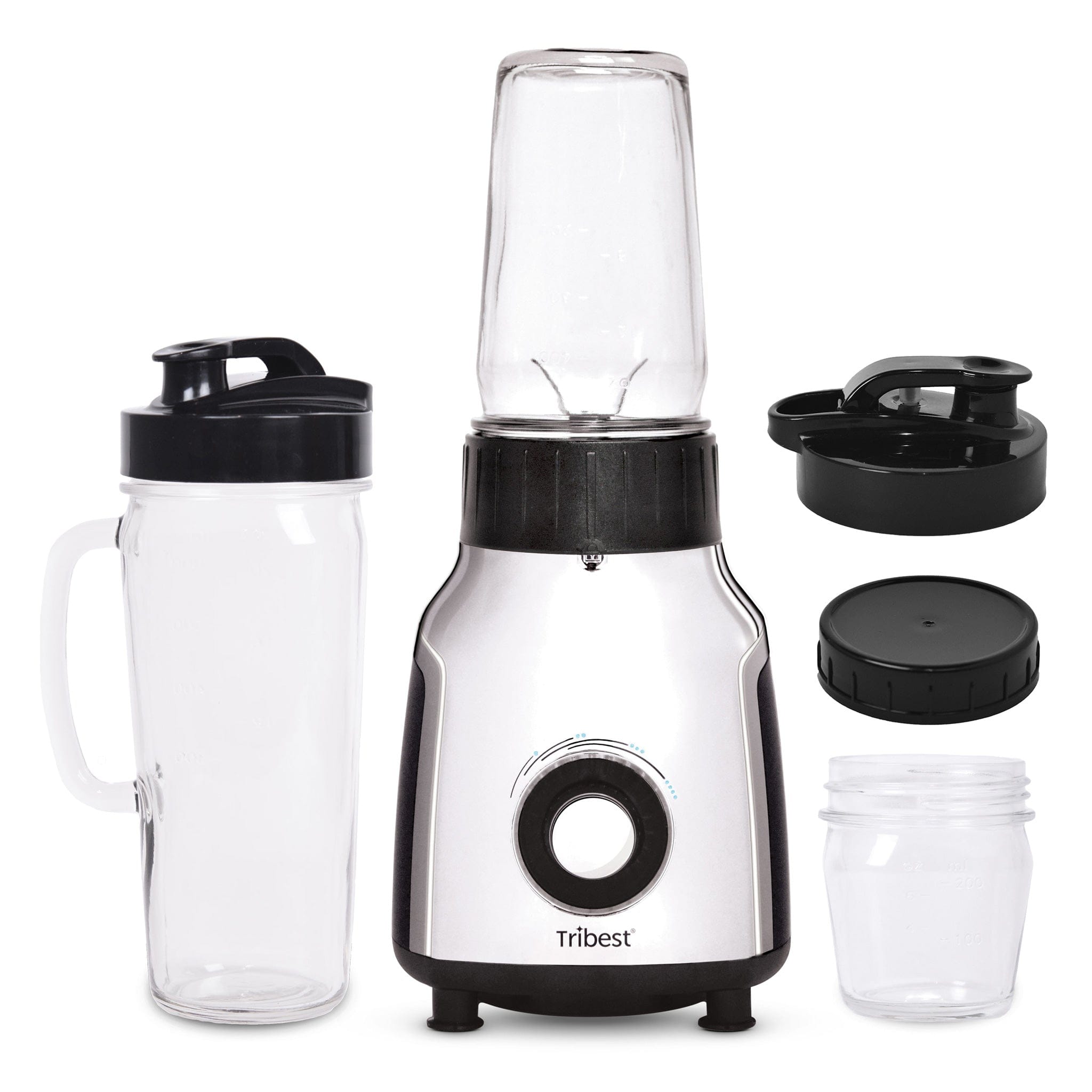
The Tribest Personal Blender with Glass Jar is the only pick on this list where no plastic touches food at any point in the process. You blend in the glass jar, you drink from the glass jar. Tribest discloses both materials on the product page: borosilicate glass jar, stainless steel blade. The 200W motor is sized for smoothies, nut milks, sauces, and purees made from soft ingredients. It does not crush ice or process fibrous root vegetables. If your blending is mostly soft fruit, seeds, leafy greens, and pre-soaked cashews, this covers the job.
At $179.95, the Tribest costs more per ounce of jar capacity than any other pick here. You are paying for the elimination of plastic from the food-contact path, not for motor power. If you need ice crushing or high-volume batches, step up to one of the Oster options. If you want a larger Tribest with a vacuum freshness mechanism, see pick 2.
2. Tribest Glass Personal Blender with Vacuum (PBG-5001-A): Best for batch prep and extended freshness

The Tribest Glass Personal Blender with Vacuum is the pick for those who blend ahead. The one-touch vacuum pump removes oxygen from the container before blending, which slows oxidation and extends the shelf life of blended drinks without needing immediate refrigeration. The 42oz primary container holds enough for three to four servings; the included 24oz tumbler goes directly from blender to bag.
Food contact is entirely glass and stainless, the same principle as the PBG-5050-A but with a larger jar and the vacuum mechanism. The silicone-lined lid on both containers is what Tribest uses instead of a standard plastic lid. At $279.95, the $100 premium over the PBG-5050-A buys the vacuum function and the larger capacity. If you make smoothies several times a week or prep for multiple people, that trade-off makes sense. Tribest backs this model with a 5-year warranty.
3. Beast Mini 600 Stainless Steel Blender: Best mid-range stainless personal blender

The Beast Mini 600 is the stainless steel entry point on this list. The Nutrient Vault blending vessel is 304-grade stainless steel; the blade and blade holder are stainless steel; and the brand discloses both on the product page. At $119, it costs less than either Tribest personal blender while delivering the same principle: food contact in metal, not plastic.
The 600W motor handles standard personal-serve tasks including smoothies, protein shakes, and soft purees. The 700mL vessel holds enough for a full single serving, with 500mL blending capacity. The lid material is not named on the product page; Beast states the unit is BPA-, BPS-, and PFAS-free overall but does not identify the specific plastic used in the lid. That disclosure gap applies to the lid only. The food-contact vessel and blade are clearly stated as stainless steel.
4. Oster Classic Series Heritage Blender, 6-Cup Glass Jar: Best mid-range all-glass full-size blender
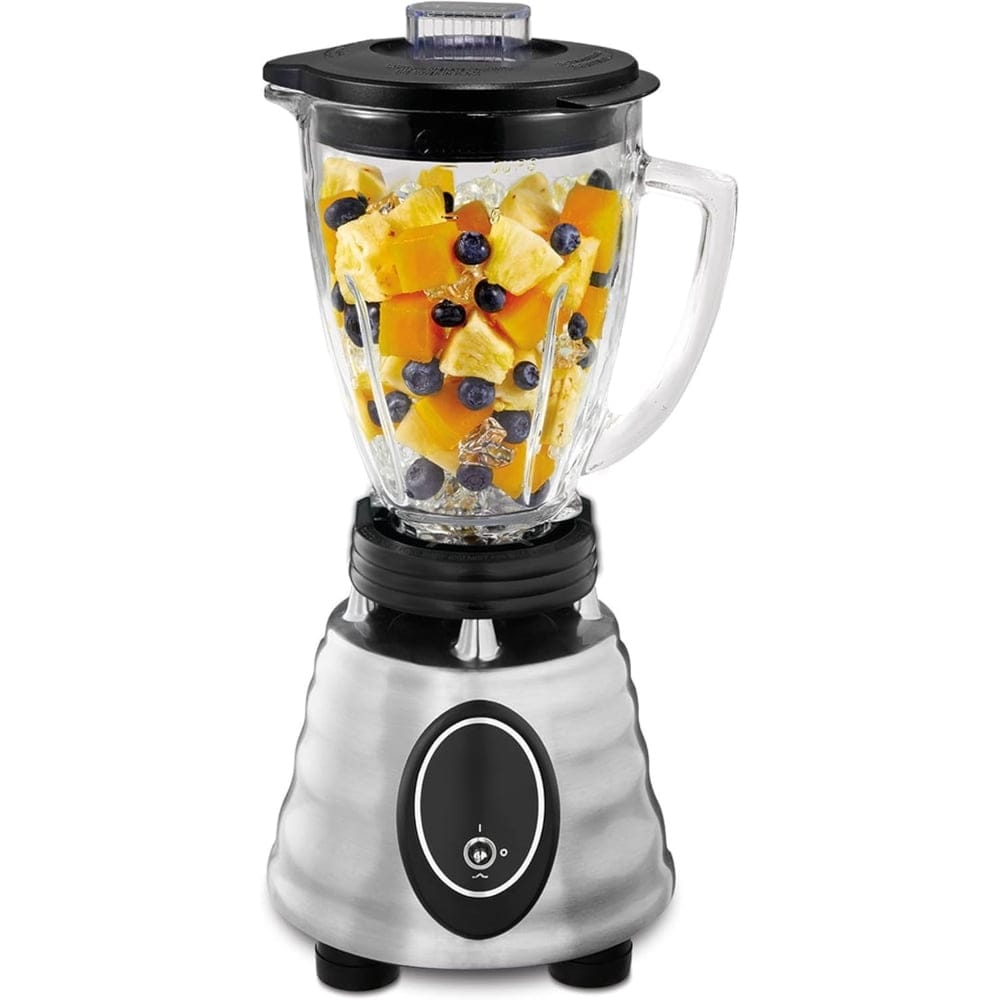
The Oster Heritage Blender is a straightforward machine: 1000W peak, a 6-cup (48oz) Osterizer borosilicate glass jar, a stainless steel blade that screws directly into the glass base, and a die-cast zinc alloy motor housing. The blade threads into the glass base without a plastic adapter hub, which means no plastic part sits between the blade and the food. At $59.99, it is the most affordable glass-jar full-size pick on this list.
Seven speed settings plus pulse cover the standard range of tasks. The die-cast base is heavier and more vibration-resistant than plastic-base blenders in this price range. Oster names the jar material as glass and the base as die-cast alloy on the product listing.
5. Oster Pro 1200 Blender with Glass Jar and 24oz To-Go Cup: Best step-up with preset programs
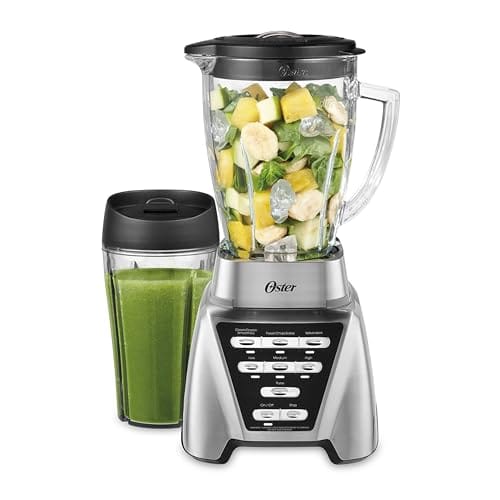
The Oster Pro 1200 adds preset programs and a significantly more powerful motor (1200W dual-direction) to the Heritage's glass-and-stainless foundation. Seven presets, including smoothie, frozen drink, and ice crush, handle common tasks without manual speed adjustment. The dual-direction blade pulls and pushes through thick mixtures more effectively than a standard unidirectional blade.
The 24oz to-go cup included with the Pro 1200 is Tritan, a BPA-free plastic, not glass. The primary blending jar is borosilicate glass and the blade assembly is stainless steel: those are the food-contact pass. The to-go cup is a secondary convenience option. If you want a fully glass carry option, transfer from the 48oz jar or pair this unit with the Tribest for single-serve.
6. KitchenAid K400 Variable Speed Blender with Glass Jar: Best variable-speed glass blender
The KitchenAid K400 brings a glass jar and stainless blade assembly to the midrange, with an asymmetric blade geometry that pulls ingredients toward the center without requiring a plastic tamper. The die-cast zinc housing is the same material Oster uses for the Heritage, but KitchenAid's finish and knob quality are noticeably more refined. At $299.99, it costs more than the Oster options but covers the same glass-and-stainless food-contact path with finer speed control.
The five-speed variable control plus pulse handles everything from smoothies to nut butters to hot soups. There are no preset programs, which means texture requires more attention from the user than a preset blender demands. For buyers who want to manage blend texture precisely without relying on automatic programs, that is a feature rather than a gap. KitchenAid backs the K400 with a one-year warranty and stocks replacement parts extensively.
7. Waring Commercial BB300S Blade Blender, 48oz Stainless Steel Jar: Best commercial stainless steel blender
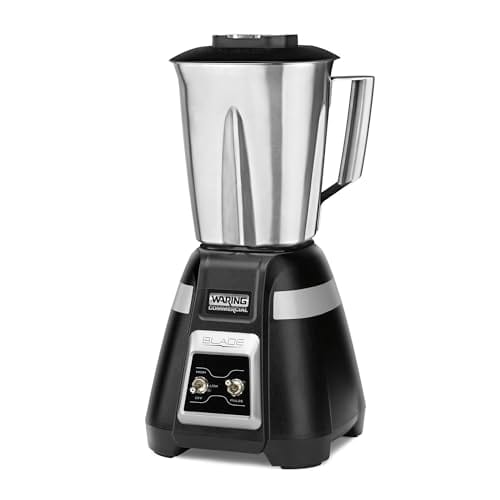
The Waring Commercial BB300S is a commercial bar blender with a 1-HP motor and a 48oz brushed stainless steel jar. Every food-contact surface is inert steel: the jar, the blade, and the blade assembly. Waring built this for up to 25 blending cycles per day in a bar or restaurant, so the construction is genuinely durable rather than aspirationally marketed. At $270, it costs less than the KitchenAid while delivering an all-stainless food-contact path at commercial build quality.
The toggle-and-pulse control provides high, low, and pulse settings without a touch panel or plastic speed dial. There are no preset programs. The unit is louder than consumer blenders and heavier; it is not designed for a quiet kitchen. For buyers who want a stainless-contact blender at commercial durability without paying Luvele prices, the BB300S is the case. It is assembled in the USA.
8. Waring Commercial BB900G Bar Blender, 40oz Glass Jar: Best commercial glass jar blender
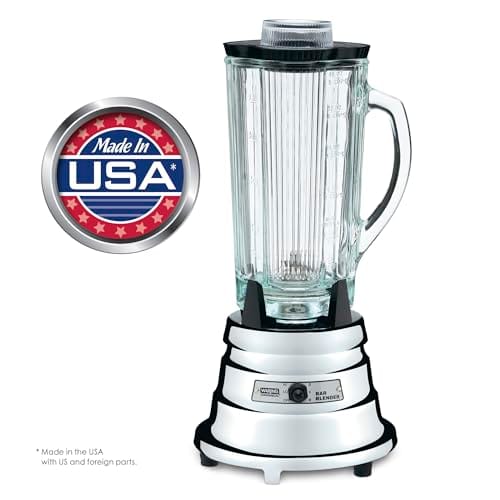
The Waring Commercial BB900G is the glass-jar counterpart to the BB300S: a 1/2-HP commercial bar blender built for restaurant-volume cycle counts with a 40oz borosilicate glass jar. The glass jar goes straight in the dishwasher. The Hi/Lo toggle provides two discrete speeds without a wear-prone touch panel. Assembled in the USA with domestic and foreign parts.
At the commercial price point, the BB900G delivers durability that consumer glass-jar blenders at lower prices cannot match. The glass jar is clear, which allows visual confirmation of blend progress and consistency without removing the lid. For buyers who want glass-jar blending at commercial build quality, particularly in a high-frequency home use or small professional context, the BB900G covers the case the Oster options do not reach.
9. Luvele Vibe Blender System: Best premium stainless steel blender

The Luvele Vibe is the full-size stainless steel option on this list. Where every other full-size pick uses a glass jar, the Vibe uses a 1.75L (59oz) pitcher made from 304 stainless steel. Medical-grade Japanese stainless steel blades, a stainless steel lid body, and a food-grade silicone gasket complete the identified food-contact surfaces. Luvele discloses both the pitcher steel grade and the blade steel grade on the product page.
At $629.95, the Luvele is the most expensive pick on this list. The price reflects the high-spec build and the 1500W motor capable of 35,000 RPM, a peak speed that exceeds any glass-jar blender in this guide. The lid center cap material is not disclosed on the product page; we flag this with the same honest caveat applied to lid plastics across the other picks. For a buyer who prefers stainless to glass as the primary food-contact material, or who needs processing performance above what glass-jar machines reach, the Luvele is the pick that covers it.
10. Vitamix 48oz Stainless Steel Blender Container with SELF-DETECT: Best for Vitamix owners upgrading to stainless
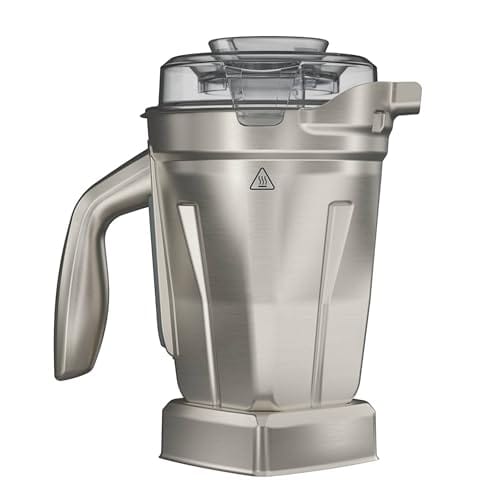
The Vitamix 48oz Stainless Steel Container is an accessory, not a standalone blender. It requires a compatible Vitamix base from the Ascent or Venturist series. If you already own one of those bases, this container converts your existing machine from a plastic-contact appliance to a stainless-contact one without replacing the motor base. The SELF-DETECT chip automatically configures the base to recognize the stainless container and adjusts blend programs accordingly.
The 48oz capacity matches the standard Vitamix container. Every food-contact surface is brushed stainless steel; the clear flip-top lid is the only non-steel component in the blend path. After years of use, scratched polycarbonate sheds microplastics into blended food; this container does not. At roughly $245 as a standalone accessory, it is a meaningful cost-add to an already expensive base, but for existing Vitamix owners who want to address the food-contact surface specifically, it is the most direct path.
11. BEABA Babycook Neo Baby Food Maker: Best for infant and toddler food prep

The BEABA Babycook Neo is the only pick designed specifically for preparing food for infants. BEABA redesigned the original Babycook's plastic bowl with borosilicate glass in the Neo version. The glass bowl handles both the steam cycle and the blend cycle, so food never contacts plastic at any stage. The blade is stainless steel. BEABA certifies the unit as BPA-free and phthalate-free, and publishes both claims on the product page.
The 4-in-1 function (steam, blend, defrost, reheat) processes food in one piece of equipment from frozen to finished puree. Capacity is 4.7 cups, enough for batch cooking that covers several days. The glass bowl and blade are dishwasher-safe. At $280, the premium over plastic-bowl baby food makers reflects the glass bowl specifically. The competing options at lower price points all use plastic, which is the main thing worth avoiding when preparing food for an infant whose digestive system is still developing.
What we passed on
Ninja blenders are the most common starting point for many blender shoppers. Every Ninja pitcher is polycarbonate or BPA-free plastic, which disqualifies the entire consumer lineup under this guide's criteria. Ninja does not offer a glass jar option on any model we found.
NutriBullet personal blenders use BPA-free plastic cups throughout. No glass cup option exists in the NutriBullet consumer lineup, which puts the entire brand outside the scope of this guide.
Tribest Dynablend DB-950-A was flagged as a high-priority candidate for this guide: a 60oz tempered glass full-size blender with a 10-year warranty. After verification, the product is not currently listed or available for purchase on tribest.com (the URL returns 404) and is not available on Amazon. Accessories for the DB-950-A are still sold, suggesting the unit itself has been discontinued. We will revisit if Tribest restocks it.
FAQ
Why does jar material matter in a blender?
Heat from blending friction, high-acid ingredients like citrus or tomato, and scratching from repeated use can all accelerate migration from plastic surfaces. Glass and stainless steel are inert against heat and acids and do not leach regardless of use conditions. That difference is why every pick on this list uses glass or stainless steel for the primary food-contact surface.
Do glass-jar blenders still contain plastic parts?
Yes. Motor bases are plastic or die-cast metal, and lids on virtually every glass-jar blender are BPA-free plastic rather than glass. The question is not "zero plastic" but "what plastic touches my food, and for how long." The jar and blade are where sustained food contact happens; the lid sees splashing but not prolonged immersion.
Is "BPA-free" plastic sufficient for a blender jar?
Not as a standalone claim. The BPA-free label addresses one specific compound but not the broader class of bisphenol replacements such as BPS and BPF, whose long-term migration behavior is still being studied. The picks in this guide require glass or stainless steel for the jar itself, not just BPA-free plastic.
Should I choose a glass jar or a stainless steel container?
Glass and stainless steel are both inert food-contact materials and both appear throughout this guide. Glass lets you see blend progress without removing the lid; stainless does not. Stainless tolerates rough commercial use without breaking risk. Picks 1, 2, 4, 5, 6, and 8 use glass; picks 3, 7, 9, and 10 use stainless. For most home kitchens the choice comes down to price and whether visibility during blending matters. For high-frequency use or a kitchen where breakage is a concern, stainless is the more practical material.
Can the Tribest PBG-5050-A crush ice?
No. The 200W motor is sized for soft blending tasks: smoothies, nut milks, sauces, and purees from soft ingredients. It does not handle ice or fibrous root vegetables. For ice crushing, the Oster Heritage (pick 4) at 1000W peak or the Oster Pro 1200 (pick 5) at 1200W are the glass-jar options that cover that task.
Is the BEABA Babycook Neo suitable after the infant stage?
The BEABA is designed and priced for infant food prep, where the motivation to avoid plastic food contact is highest. The 4.7-cup capacity supports batch cooking that covers several days of purees. Once a child moves to table food, a standard full-size blender from the earlier picks in this guide handles the longer-term job at a lower per-ounce cost.
Kristine Zalakmentane via Unsplash (Unsplash License). Source.