

Our picks at a glance
| Pick | Best for | Key certifications | Price | Details |
|---|---|---|---|---|
| Badger Baby SPF 40 | Babies 0 and up | NSF COSMOS Organic | $ | Full review |
| Babo Botanicals Baby SPF 50 | Newborns, highest SPF | EWG Verified | $ | Full review |
| Earth Mama SPF 40 | Organic-certified families | USDA Organic | $ | Full review |
| Badger Kids SPF 40 | School-age kids | NSF COSMOS Organic | $ | Full review |
| Raw Elements Kids SPF 30 | Eco packaging, long days outdoors | B Corp, non-nano zinc | $$ | Full review |
| Stream2Sea Sport SPF 40 | Athletes, reef safety | Reef-safe certified | $$ | Full review |
| Ilia Super Serum SPF 40 | Daily tinted coverage | EWG Verified | $$$ | Full review |
| ATTITUDE Mineral SPF 30 | Everyday adult use, budget | EWG Verified | $ | Full review |
Most sunscreens on pharmacy shelves use oxybenzone, octinoxate, avobenzone, or some combination of the twelve chemical UV filters the FDA in 2019 said it lacked enough safety data to approve. Every pick on this list uses zinc oxide as the sole active. No chemical filters, no undisclosed fragrance, a full ingredient list publicly accessible on the brand's own product page.
What we look for
Zinc oxide as the only active. The FDA's 2019 proposed sunscreen rule flagged oxybenzone, octinoxate, and ten other chemical filters as not generally recognized as safe and effective, pending additional data. Zinc oxide and titanium dioxide are the two filters with GRASE status. We screen for zinc oxide as the sole active; titanium dioxide as a co-active is acceptable but uncommon in the formulas tested here.
16
chemical UV filter ingredients
flagged by FDA in 2019 as lacking GRASE status
2
filters
zinc oxide and titanium dioxide confirmed GRASE
No chemical UV filters. Oxybenzone has been detected in blood after a single application and in coral tissue, where it disrupts reproduction. Octinoxate triggers coral spawning abnormalities at concentrations found near popular beaches. Both are banned in Hawaii, Palau, and other reef-protection jurisdictions. We reject any sunscreen that lists them or related filters (avobenzone, homosalate, octisalate, octocrylene, ensulizole) on the label.
Full ingredient disclosure. Every product we publish names every ingredient on the brand's own product page. "Proprietary blend" for fragrance or "natural aroma complex" as a catchall are automatic disqualifiers. Named essential oils pass (chamomile, lavender). "Fragrance," "parfum," or "natural fragrance" as a category placeholder do not.
No PHMB. Polyaminopropyl Biguanide is a broad-spectrum preservative the EU banned from all leave-on cosmetics in 2014. It was the reason one well-regarded tinted face sunscreen did not make this list, despite passing the chemical UV filter check.
Third-party certifications, verified in the certifier's registry. EWG Verified, NSF COSMOS Organic, USDA Organic, and B Corp are the marks we weighted most. Each is verifiable in the certifier's own database for this specific SKU. A logo without a registry entry does not count.
Non-nano zinc. Nanoparticle zinc oxide (under 100nm) may penetrate skin more readily than standard-sized particles. Where non-nano status is explicitly disclosed by the brand (Raw Elements, Earth Mama), we note it.
How this was vettedChecked September 2026
Formulas were screened against 15 universal disqualifiers: PFAS, chemical UV filters, undisclosed fragrance, PHMB, parabens, bisphenols, PVC, formaldehyde releasers, and more. Products were dropped if the brand could not be confirmed in the certifier's registry for this specific SKU, if an open recall existed, or if the primary buy link was conclusively dead at time of review.
Read the full criteria →Our picks
1. Badger Baby Mineral Sunscreen Cream, SPF 40: Best overall

The Badger Baby Mineral Sunscreen Cream, SPF 40 uses zinc oxide 18.75% and nothing else as the UV active. The inactive base is organic: castor oil, beeswax, sunflower oil, jojoba, and calendula extract, all named individually on the product page. NSF COSMOS Organic certification is verified in the NSF registry for this product specifically. Made in Vermont, USA. Water resistant 40 minutes.
No synthetic preservatives. No PHMB. No fragrance of any kind. The tradeoff is texture: this is a dense white cream that requires working in and leaves a visible white cast on deeper skin tones. For parents who want a no-guesswork formula with a long track record, that tradeoff is straightforward.
Who it is for: Families with babies or toddlers, and adults who want a simple, widely available formula. Not ideal for a no-white-cast result.
2. Babo Botanicals Baby Mineral Sunscreen SPF 50: Best SPF 50
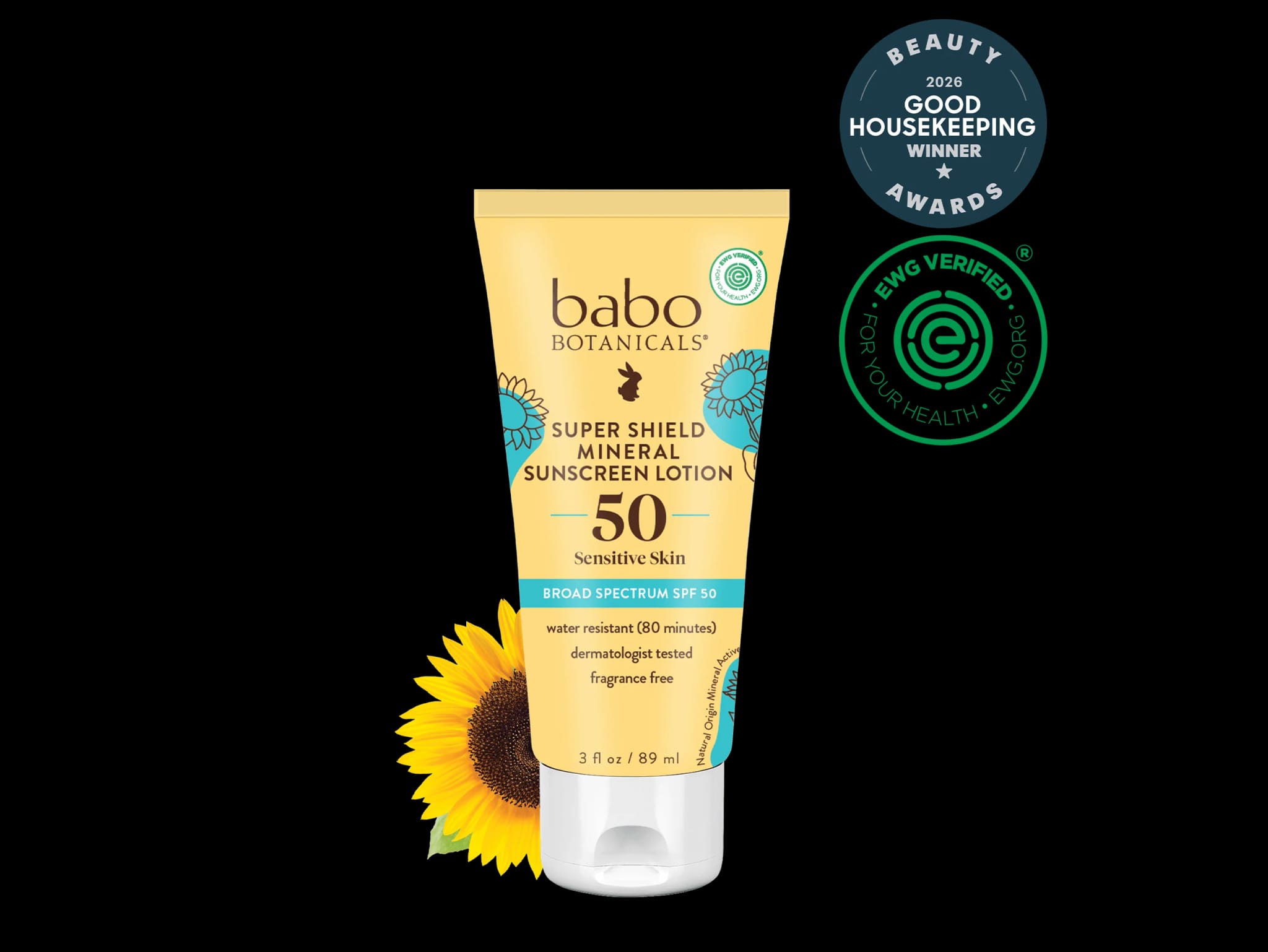
The Babo Botanicals Baby Mineral Sunscreen SPF 50 is EWG Verified, the most rigorous US-market non-toxic certification for sunscreen formulas. Zinc oxide 20% is the sole active. The base includes colloidal oat (Avena sativa kernel flour), calendula, and shea, each named. No synthetic fragrance, no parabens, no chemical UV filters. Water resistant 80 minutes.
EWG Verified requires full ingredient disclosure, no use of EWG's chemicals of concern, and complete safety data substantiation. Babo has maintained this mark across multiple product cycles.
Who it is for: Families who want SPF 50 with third-party verification, or those managing eczema-prone or reactive skin where an oat-based formula may help.
3. Earth Mama Mineral Sunscreen Lotion SPF 40: Best organic

The Earth Mama Mineral Sunscreen Lotion SPF 40 carries USDA Organic certification, which requires at least 95% organically produced ingredients and prohibits synthetic preservatives, colors, and fragrances. Active: non-nano zinc oxide 22.5%. No synthetic fragrance, no parabens, no chemical filters. Water resistant 40 minutes.
The base uses organic jojoba, organic sunflower oil, and organic shea. Earth Mama publishes the full ingredient list on the product page, traceable to the brand's organic certification document.
Who it is for: Families who prioritize USDA Organic over EWG Verified, or who want non-nano zinc explicitly stated on the label. The finish is sheerer than the Badger cream.
4. Badger Kids Mineral Sunscreen Cream, SPF 40: Best for kids

The Badger Kids Mineral Sunscreen Cream, SPF 40 is the kids-branded version of Badger's core formula with one addition: organic chamomile essential oil for a light natural scent. Chamomile is named explicitly, which passes the site's fragrance disclosure standard. Zinc oxide 18.75%, NSF COSMOS Organic certified. Water resistant 40 minutes.
Who it is for: School-age kids who do better with a mild, pleasant scent, and parents who want the Badger formula track record with something slightly easier to apply on a resistant child.
5. Raw Elements Kids SPF 30 Sunscreen Tin: Best plastic-free

The Raw Elements Kids SPF 30 Sunscreen Tin comes in a recyclable metal tin with non-nano zinc oxide 23% as the sole active. Raw Elements is a B Corp. No synthetic fragrance, no chemical UV filters. Water resistant 80 minutes, the longest water-resistance rating in the kids segment on this list.
The base includes organic beeswax, organic jojoba, organic sunflower oil, and organic cocoa butter, all named. No plastic tube, no pump.
SPF 30 is the lowest in the kids picks here. For extended outdoor time, reapplication frequency matters more than SPF number once you exceed 30, but families who want a higher number should see the other picks in this section.
Who it is for: Families reducing single-use plastic, beach and outdoor-intensive use, and kids who spend long periods in the water.
6. Stream2Sea Sport Mineral Sunscreen Zinc Balm, SPF 40: Best for sport

The Stream2Sea Sport Mineral Sunscreen Zinc Balm, SPF 40 is independently certified reef-safe by Haereticus Environmental Lab, the marine biology research group that advises Hawaii's sunscreen ban. Zinc oxide is the sole active. No oxybenzone, no octinoxate, no PHMB, no synthetic fragrance. Solid balm in a recyclable metal tin. Water resistant 80 minutes.
Stream2Sea was founded by a marine biologist. The reef-safety certification covers not just the active ingredient but also carrier ingredients, each tested for aquatic toxicity. The brand's ingredient documentation is publicly accessible on the product page.
Who it is for: Surfers, swimmers, snorkelers, and anyone applying sunscreen in or near open water. The solid balm format eliminates the leak-in-the-bag problem and is practical for outdoor activities where tube sunscreens get gritty or lost.
7. Ilia Super Serum Skin Tint SPF 40: Best tinted

The Ilia Super Serum Skin Tint SPF 40 is the only tinted formula on this list to pass the full disqualifier screen. Zinc oxide 12% is the sole active. EWG Verified across the complete formula. Available in 30 shades. No synthetic fragrance, no parabens, no chemical UV filters.
The base includes niacinamide and hyaluronic acid. The EWG Verified mark covers every ingredient in the formula, not just the SPF portion.
The zinc concentration (12%) is lower than the dedicated sunscreen picks above. For daily office and city wear without extended outdoor exposure, it is appropriate. For a full day at the beach or on the slopes, a higher-SPF mineral sunscreen applied underneath is more appropriate.
Who it is for: Adults who want SPF built into their daily skincare routine and who prefer a tinted, skin-tone-matching finish over a visible white cast.
8. ATTITUDE Mineral Sunscreen SPF 30 Face and Body: Best everyday

The ATTITUDE Mineral Sunscreen SPF 30 Face and Body is EWG Verified with zinc oxide 20% as the sole active. Unscented. Vegan. No synthetic fragrance, no parabens, no chemical UV filters. Full ingredient disclosure on the brand's product page. Water resistant 40 minutes.
ATTITUDE is a B Corp based in Quebec. The formula is a lightweight fluid, which blends more easily than the cream formulas above and makes whole-body coverage practical for daily use. The 5.2 oz size covers face and body in a single application for most adults.
Who it is for: Adults looking for a no-frills, budget-friendly mineral sunscreen for everyday wear, particularly those who find cream textures too heavy for daily face use.
What we passed on
Suntegrity 5-in-1 Tinted SPF 30 contains PHMB (Polyaminopropyl Biguanide) as a preservative. PHMB is banned in all EU leave-on cosmetics since 2014 under Commission Regulation (EU) No. 358/2014. That is a disqualifier regardless of the formula's other attributes.
Cocokind Daily SPF 32 was under consideration but was sold out on the brand site and unavailable on Amazon at time of research, failing the in-stock gate. We do not list products readers cannot currently buy.
Thinksport and Thinkbaby sunscreen formulas list "Natural Fragrance Oil" in the inactive ingredients. Under this site's fragrance disclosure standard, named essential oils pass; "natural fragrance oil" as a catchall does not, because it does not name the constituent compounds. All Think brand sunscreen products were ruled out on this basis.
FAQ
Is mineral sunscreen better than chemical sunscreen for babies?
Mineral sunscreens (zinc oxide, titanium dioxide) sit on the skin surface and reflect UV radiation. Chemical sunscreens absorb UV energy and convert it to heat. For babies, whose skin absorbs topical ingredients more readily than adult skin, zinc-only formulas are the more conservative choice. The FDA's 2019 proposed rule lists zinc oxide and titanium dioxide as generally recognized as safe and effective; most chemical UV filters did not receive that designation due to insufficient safety data.
Does SPF 30 or SPF 50 make a real difference?
SPF 30 blocks approximately 97% of UVB rays. SPF 50 blocks approximately 98%. The difference is real but narrow. What has a larger effect on protection is application amount (2 milligrams per square centimeter of skin) and reapplication frequency (every two hours, or after swimming or sweating). An SPF 30 applied correctly outperforms an SPF 50 applied once and skipped for four hours.
Why does mineral sunscreen leave a white cast?
Zinc oxide particles scatter visible light as well as UV radiation, which produces the white cast. Larger non-nano particles scatter more visible light than nano-sized ones. Some formulas add iron oxides to offset the cast and match skin tone. The tinted option in this guide, the Ilia Super Serum Skin Tint SPF 40, uses iron oxide pigments across 30 shades to eliminate the cast.
Is reef-safe sunscreen worth it if we only swim in a pool?
Pool chlorine degrades oxybenzone before it reaches open water, so the reef argument is less immediate for pool-only swimmers. The other reasons to prefer zinc oxide still apply: the FDA's unresolved safety data on chemical filters, absorption studies showing oxybenzone in blood after a single application, and the simpler ingredient profile. If you swim in the ocean, a zinc-oxide formula is straightforward. For a pick with independent reef-safety certification from a marine lab, see the Stream2Sea Sport SPF 40.
Can I use baby sunscreen on adults?
Yes. Baby sunscreens meet the same FDA performance standards as adult sunscreens and generally have simpler ingredient lists. There is no regulatory distinction between "baby" and "adult" SPF. The main practical difference is that baby formulas typically use denser cream bases, which some adults find too heavy for daily face use.
Cover image: Mikhail Nilov via Pexels (Pexels License). Source.