
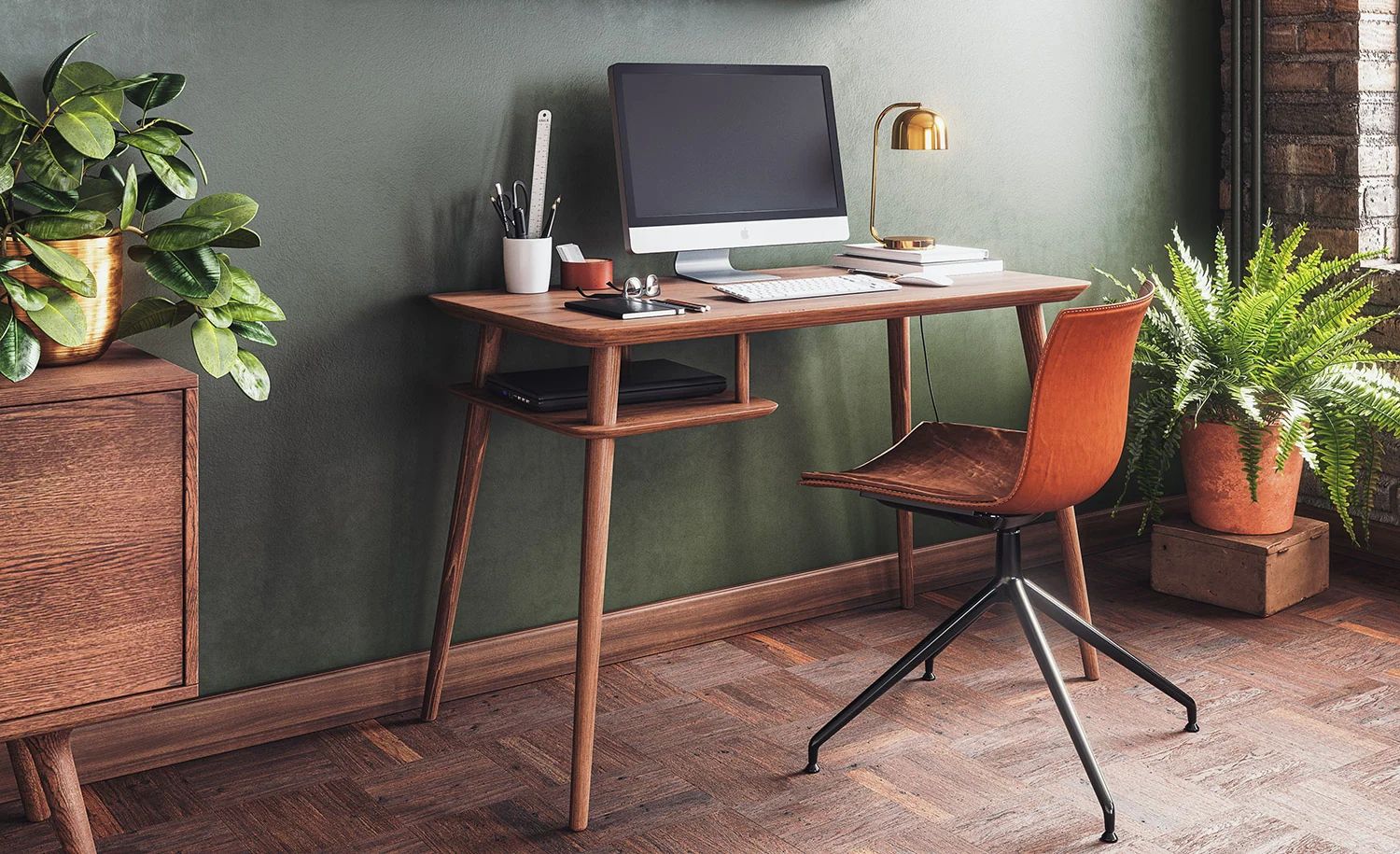
The vast majority of writing and computer desks sold online are built from laminated particleboard, medium-density fibreboard (MDF), or veneer over engineered wood. These materials rely on urea-formaldehyde adhesives for bonding, which off-gas into a room for years, often at levels that exceed safe thresholds in a small, enclosed home office. Solid wood construction avoids this entirely, but the finish applied to that wood introduces its own chemistry. A lacquer-free label or a vague reference to an eco-friendly coating is not a disclosure. What matters is the name of the specific finish product or compound, so a reader can verify the VOC content independently.
Finding desks that clear both bars, solid construction plus a named low-VOC finish, is surprisingly difficult. Most small woodworking studios disclose their materials honestly. The larger brands, including several that market themselves as sustainable, either use composite cores on structural parts or describe their finish only as lacquer or clear coat. We list fourteen desks. Most clear both bars. Four do not have a named finish on record: the Grain Wood Loft, the Keelan Scott standing desk, the Vermont Woods Studios study desk and the UPLIFT Parsons. Each of those sections says so.
What we look for
No composite wood, anywhere. Particleboard, MDF, HDF, chipboard, OSB, plywood, and any engineered-wood core fail our criteria regardless of their emissions grade. CARB2, ULEF, and NAF certifications reduce formaldehyde emissions compared to conventional composite boards, but they do not eliminate the adhesive chemistry. We require solid wood throughout: solid hardwood or softwood tops, legs, and frames. A steel base under a solid hardwood top is an acceptable hybrid; a solid top over a particleboard pedestal is not.
A named, low-VOC finish. The most common desk finishes are polyurethane lacquer, conversion varnish (catalyzed urea-formaldehyde), and solvent-based oil. All three can carry VOCs at levels that cause respiratory irritation, particularly in a closed home office. What we look for instead: water-based polyurethane (lower VOC than solvent-based), linseed oil, tung oil, carnauba wax, Danish oil, hardwax oil, and plant-based oil systems like Rubio Monocoat. The key condition is that the brand must name the specific finish product or compound. "Natural finish" and "eco-friendly coating" are not disclosures.
No laminated tops over composite cores. A desk can be described as having a wood top while that top is a thin wood veneer applied to a particleboard substrate. We looked for tops described as solid hardwood or solid softwood, with grain that runs through the full thickness. Thin-veneer products are excluded.
Adhesive transparency. Joints in solid wood furniture rely on adhesives. Conventional wood glues can contain urea-formaldehyde or formaldehyde releasers. We favor brands that disclose their specific adhesive product, or that use mechanical joinery (mortise and tenon, dovetail) without adhesive at primary joints.
Finish durability. A low-VOC finish that requires re-application every six months is a real maintenance commitment. We noted which brands use penetrating oils (which need periodic re-oiling) versus surface coatings (which last longer but may need occasional refinishing). Both can be low-VOC; the difference is maintenance, not chemistry.
Price spread. The category skews expensive. Most solid wood furniture from independent studios starts above $1,500. We included every qualifying option we found, from the sub-$500 Grain Wood Furniture pick to Vermont Woods Studios pieces above $4,000, so readers at any budget can compare.
Our picks
1. Vermont Furniture Designs Contemporary Craftsman Writing Desk: Best overall

Where to buy
Vermont Furniture Designs
See more details about Vermont Furniture Designs Contemporary Craftsman Writing Desk
The Vermont Furniture Designs Contemporary Craftsman Writing Desk earns its top position because the brand names both the specific finish compound (linseed oil) and the wax (carnauba) rather than offering a vague natural label. The finish for maple variants uses tung oil, which is also named. That level of specificity is rare in furniture marketing.
The desk is built from solid cherry, maple, or walnut with no MDF or particleboard components. Vermont Furniture Designs makes pieces to order through Vermont Woods Studios, which means lead times of several weeks but also the ability to choose wood species. The Arts and Crafts profile suits a traditional or transitional home office. Two drawers provide storage for a standard keyboard drawer and desk supplies. The dovetail joinery on drawers is a signal of construction quality that also reduces adhesive dependency.
At $2,352, this is a considered purchase. The wood ages with the user, and the linseed-oil finish can be refreshed with a wipe rather than stripped and recoated.
2. Medley Home Hank Monitor Desk: Best with a home trial

Where to buy
Medley Home
$2,785.50
The Medley Home Hank Monitor Desk is solid hardwood, in walnut, white oak or maple, finished with a plant-based hardwax oil that Medley names on its materials page. That is both of this guide's bars, material and finish, in one record.
Medley sells the desk with a 100-day trial and free returns. For a buyer who has not seen the desk in person, that trial is the practical reason to choose it.
3. UPLIFT V3 Custom Solid Wood Standing Desk: Best standing desk for size options
Where to buy
UPLIFT Desk
$1,989.00
See more details about UPLIFT Desk UPLIFT V3 Custom Solid Wood Standing Desk
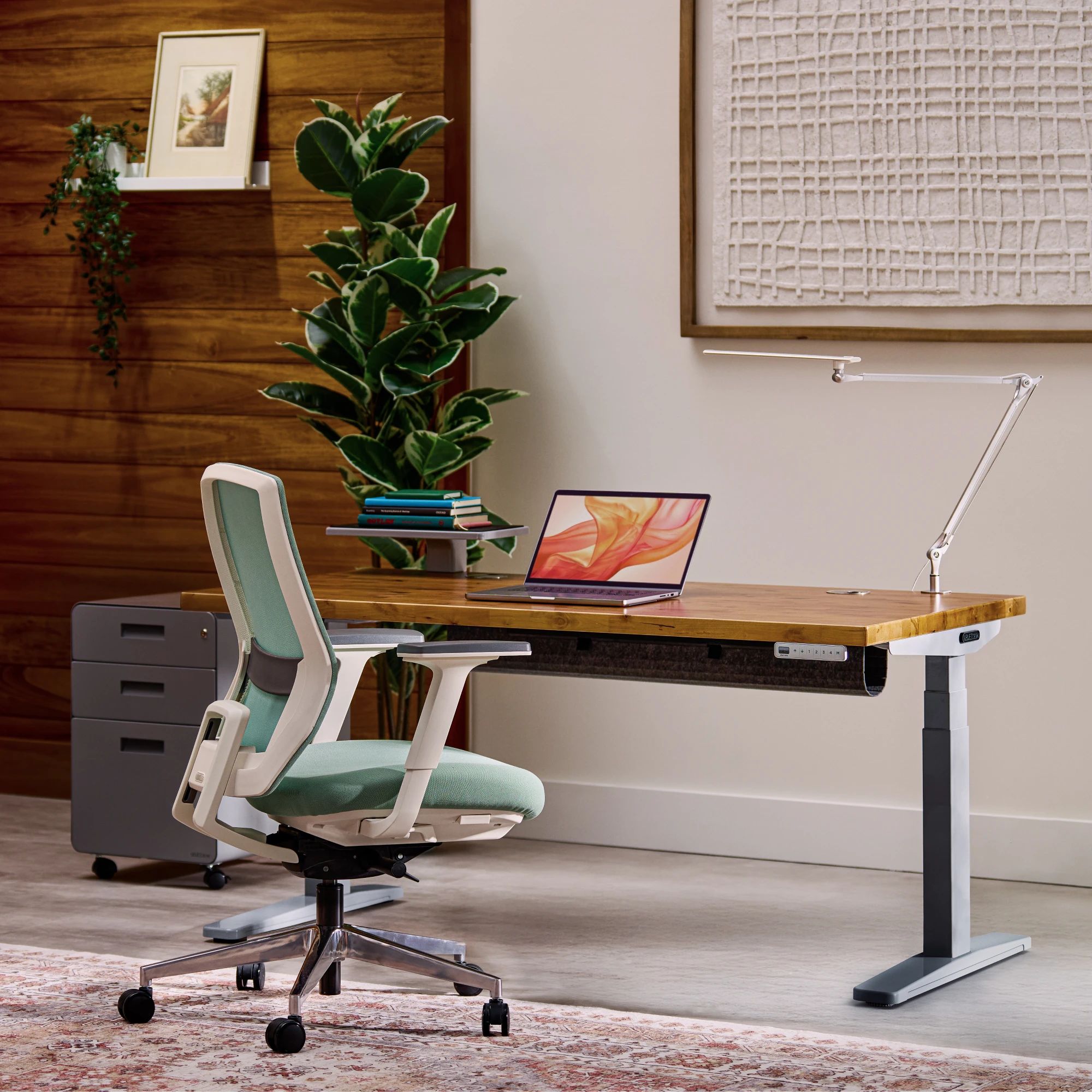
The UPLIFT V3 Custom Solid Wood Standing Desk pairs an electric height-adjustable frame with a solid hardwood top, 1.75 inches thick, in maple, cherry or walnut. UPLIFT discloses the finish as a water-based urethane. The top is built to order in widths from 42 to 80 inches and depths of 24 or 30 inches, and the frame adjusts from 22.6 to 48.7 inches.
Next to the Ergonofis Sway below: both put solid hardwood and a named water-based finish on a steel lift frame. The UPLIFT offers the wider range of top sizes, and UPLIFT backs its solid wood desktops with a 15-year warranty.
4. Grain Wood Furniture Loft 60" Desk: Best value

Where to buy
The Grain Wood Furniture Loft 60" Desk is built from 100 percent solid pine with no MDF or particleboard, and the brand discloses its adhesives by product name: Franklin Multibond EZ-1 and Titebond 50, both urea-formaldehyde-free. That adhesive transparency is unusual at this price point.
At $349, it is the lowest-priced desk in this ranking. The industrial-modern profile, with an X-base, suits a loft or contemporary workspace. The 60-inch top provides enough surface for a monitor, keyboard, and secondary workspace.
On certification, read the fine print. Grain Wood states that its Shaker and Greenport collections are UL GREENGUARD Certified and that it aims to certify the rest of its catalog. The Loft line is not one of the two, so we list no certification for this desk, and our record of it names no finish. It holds this rank on price and on adhesives disclosed by product name.
5. Maple Corner Woodworks Vermont Shaker Writing Desk: Best size range

Where to buy
Vermontwoodsstudios
See more details about Maple Corner Woodworks Vermont Shaker Writing Desk
The Maple Corner Woodworks Vermont Shaker Writing Desk stands out for offering five sizes, from 36 to 60 inches wide, with the same Vermont hardwood construction across all of them. That range makes it one of the few qualifying desks that can fit a small apartment study or a large dedicated office without compromising on materials.
The finish is a zero-VOC linseed oil, disclosed by name on the brand's wood-finishing page. Linseed oil penetrates rather than films over the wood surface, which means it will not chip or peel, and re-application takes a cloth rather than a refinisher. The Shaker tapered legs are characteristic of the style and identically finished.
Maple Corner Woodworks is a Vermont craftsman operation. Construction is to order in solid cherry, maple, or walnut from sustainably harvested stock. Lead times are several weeks. The piece is made in the United States, which simplifies delivery and reduces transit handling.
6. Ergonofis Sway Standing Desk: Best standing desk

The Ergonofis Sway Standing Desk is one of three height-adjustable options in this ranking that use a solid wood top rather than laminated particleboard or MDF. The top is available in maple, cherrywood, walnut, or white oak, and Ergonofis discloses a water-based lacquer as the finish, citing lower environmental impact as the reason for the choice.
The steel frame provides the mechanical lift mechanism, which is standard for standing desks. The notable difference from competitors is that most comparable electric sit-stand desks use composite cores in the top to reduce weight and cost. Ergonofis chose solid hardwood, which adds weight but eliminates the composite-wood chemistry.
The desk adjusts across a range that accommodates most adult heights in both seated and standing positions. At $1,895, it is priced similarly to premium particleboard standing desks that do not disclose finish chemistry at all. That makes it a comparatively straightforward upgrade for someone already considering a standing desk. It ships from Canada with North American service coverage.
7. wwmake Slim Tapered Leg Desk: Best finish disclosure

The wwmake Slim Tapered Leg Desk is finished with Rubio Monocoat, a plant-based hardwax oil that is widely recognized in finishing circles as one of the cleanest surface treatments available for wood furniture. Rubio Monocoat is a one-component oil-wax system derived from plant sources, formulated to cure without solvent release.
The desk is made from solid reclaimed oak, white oak, or walnut. Using reclaimed wood reduces demand for new timber and maintains the same material properties as new stock. The slim tapered legs are a modern profile that works in a range of interior styles.
wwmake is a small studio; pieces are made to order, which means customization in wood species and dimensions is possible by conversation. At $2,305, the desk is in the premium tier, appropriate for the material and handcraft involved. The Rubio Monocoat finish is the detail that sets it apart: it is not just low-VOC in category terms but among the most chemically benign finishes available for a production wood desk.
8. Hardwood Artisans Shaker Writing Desk: Best mid-price

Where to buy
Hardwood Artisans
See more details about Hardwood Artisans Shaker Writing Desk
The Hardwood Artisans Shaker Writing Desk offers solid hardwood construction with a disclosed Danish oil finish at $917, which is the lower end of the premium tier for hand-built American furniture. Danish oil here is polymerized linseed oil with a small amount of polyurethane for added durability; the brand states this explicitly on its finishing page.
Hardwood Artisans is a Virginia workshop with fifty years of production. The desk is offered in several hardwood species. The 1-inch solid hardwood top is thicker than most comparable pieces and gives the surface a satisfying rigidity. Shaker-style tapered legs carry the same no-composite principle to the base.
At under $1,000, this is the most accessible solid hardwood desk from an independent American woodworker in this ranking. Lead times and customization options are consistent with studio production. The disclosed finish chemistry and the 50-year track record of the workshop make it a reliable choice for buyers who want a qualifying desk without entering the $2,000-plus tier.
9. Lax Series Milk Desk: Best minimalist

The Lax Series Milk Desk is built from solid ash with a water-based polyurethane finish that the brand describes as free of VOCs and formaldehyde. It is designed by the Los Angeles-based MASHstudios, a studio known for work that prioritizes clean geometric profiles.
The name refers to the near-white color of the natural ash. The profile is slim, with a floating-top visual that suits modern and Scandinavian-influenced interiors. At $795, it is priced below most comparable solid hardwood pieces while maintaining solid-wood construction rather than veneer.
Water-based polyurethane is a surface coating rather than a penetrating oil, which means it resists everyday moisture and coffee-cup rings more effectively than an oil finish. The trade-off is that surface refinishing, if ever needed, requires sanding rather than re-oiling. For most home office users, that is not a practical concern.
10. Maple Corner Woodworks Cherry Moon Writing Desk: Craftsman alternative

Where to buy
Vermontwoodsstudios
See more details about Maple Corner Woodworks Cherry Moon Writing Desk
The Maple Corner Woodworks Cherry Moon Writing Desk is a second model from Maple Corner Woodworks, chosen because it is a visually distinct piece from the Vermont Shaker. The Cherry Moon uses a different leg profile and drawer arrangement that suits buyers who want the same Vermont hardwood construction but in a more traditional craftsman aesthetic.
Construction and finish materials are consistent with the brand: solid hardwood throughout, with the linseed oil finish disclosed on the brand's wood-finishing page. Cherry, maple, and walnut are the available species, ordered from Vermont stock.
At $1,988, it shares a price point with the Vermont Shaker. The choice between the two is primarily aesthetic. Buyers who prefer a desk where the leg-to-top proportion reads as more furniture-like than architectural may prefer the Cherry Moon. Those who want the stricter Shaker geometry and the five-size range will prefer the Vermont Shaker.
11. wwmake Modern Waterfall Desk: Most distinctive

The wwmake Modern Waterfall Desk is built around a single continuous wood slab that wraps over the front edge of the desk, a construction detail that requires a full-thickness slab rather than a veneered panel. That construction constraint is precisely why it qualifies: the waterfall edge cannot be faked with particleboard.
The wood options are reclaimed oak, white oak, or walnut. The finish is oil-based and VOC-free per the brand. While wwmake does not name the specific finish product here as precisely as it does for the Slim Tapered model, the oil-based VOC-free description excludes solvent lacquer and catalyzed varnish.
At $2,415, this is one of the more expensive picks in the ranking. It suits buyers for whom the desk is also a statement piece. The waterfall profile is a design moment; the solid slab construction is the material consequence of that design choice. For a studio or executive home office where the desk is a focal point, it is worth considering.
12. Keelan Scott Adjustable Standing Desk: Best live-edge standing desk

The Keelan Scott Adjustable Standing Desk sets a solid, live-edge wood top on a motorized steel frame that moves between 27.5 and 45.2 inches. The wood is Samanea saman, which Keelan Scott sells as South American walnut. The top comes in two sizes, 46 by 24 inches and 58 by 28 inches.
It ranks near the end for one reason. Keelan Scott describes the finish as a zero-VOC topcoat that is scratch-resistant and waterproof, and does not name the product or its chemistry, which is the disclosure this guide asks for. The solid top clears the material bar; the finish claim is the brand's own. Keelan Scott also sells a fixed-height desk with the same wood on steel legs: Keelan Scott Live Edge Desk with U-Shaped Legs.
13. Vermont Woods Studios Contemporary Craftsman Study Desk: Most storage

Where to buy
Vermont Woods Studios
See more details about Vermont Woods Studios Contemporary Craftsman Study Desk
The Vermont Woods Studios Contemporary Craftsman Study Desk is the most storage-rich option in this ranking, with file drawers and a keyboard tray option that suit a primary home office setup. Construction is from solid cherry, maple, or walnut.
Vermont Woods Studios describes the finish as non-toxic. That is a weaker disclosure than the named-chemistry approaches used by most other picks here: "non-toxic" is not a finish chemistry, and we cannot independently verify VOC content from a label alone. The desk ranks last in this guide precisely because of this gap. The solid wood construction qualifies; the undisclosed finish does not reach the standard of the picks that name theirs.
At $4,104 for a fully specified desk, it is the most expensive pick here. If the storage configuration is exactly what a buyer needs, it is worth asking Vermont Woods Studios directly for the finish product name before purchase.
14. UPLIFT Parsons Standing Desk (Solid Wood Top): Best solid wood top standing desk
Where to buy
UPLIFT Desk
$859.00
See more details about UPLIFT Desk UPLIFT Parsons Standing Desk (Solid Wood Top)
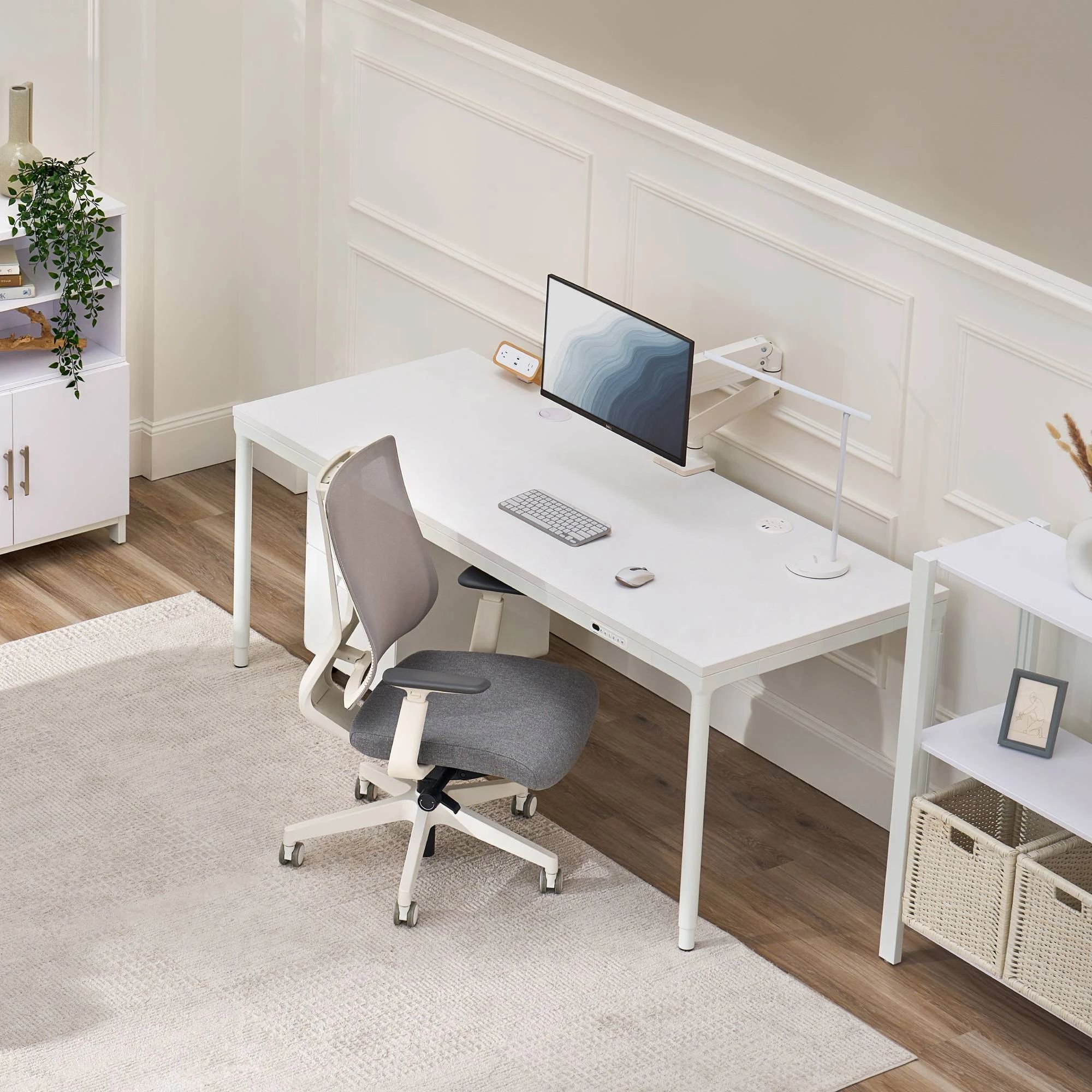
The UPLIFT Parsons Standing Desk is UPLIFT's solid wood top option for the standing frame format. Top choices include rubberwood, acacia, birch, mango, walnut, and mahogany. UPLIFT says it plants five trees in National Forests per solid wood desktop sold. Width ranges from 42 to 80 inches and depth from 24 to 30 inches, with a 15-year warranty. Finish chemistry is undisclosed: ask UPLIFT for the specific finish product name before ordering if VOC content is a concern. Available from UPLIFT Desk at $859.
Compared to the UPLIFT V3 Custom (pick 3): the V3 is a custom built-to-order sitting and standing desk with more configuration scope. The Parsons is a solid wood top standing desk suited to those who want UPLIFT's proven frame and a named wood species at lower build complexity. Both carry the 15-year warranty.
What we passed on
Fully markets a solid wood desktop option for its electric standing desk frames, but their materials page blocked our research access. We could not read any finish disclosure, so we could not vet it.
Room and Board sells solid wood furniture and is frequently cited in non-toxic home circles, but product and materials pages were inaccessible during our research. We could not read the desk models or finish specifications.
Artifox builds desks from solid walnut and has a loyal following among designers. The wood construction is confirmed. The finish is described as a satin finish without disclosing whether it is water-based or solvent-based. That gap in disclosure is the reason for exclusion: not a material failure, but an incomplete record.
Amish Direct Furniture explicitly states on its website that standard top coats are formaldehyde-based catalyzed varnish. That is a hard fail on finish chemistry.
Pottery Barn and West Elm each sell at least one qualifying model (Pismo Reclaimed Wood and Rockwell Oak, respectively) alongside a broader catalog of laminated particleboard desks. Because the qualifying models are a small subset of these mixed brands, and because product specifications at both retailers are presented inconsistently, we did not include them. A desk from either brand requires careful model-by-model review before purchase.
FAQ
Does solid wood off-gas like particle board?
No. The off-gassing concern in furniture comes primarily from urea-formaldehyde adhesive in composite boards and from solvent-based finish. Solid wood itself does not off-gas formaldehyde. The finish applied to it can, if it is a solvent or catalyzed varnish. Most desks in this guide name a finish with low or no VOC content, so off-gassing from either source is minimal. The three that do not name one are marked in their sections.
What finish is safest on a wood desk?
Penetrating oils such as linseed oil, tung oil, and hardwax oil systems like Rubio Monocoat are among the safest options because they cure by polymerization rather than solvent evaporation. Water-based polyurethane is a good second choice: it has lower VOC content than solvent-based polyurethane and forms a durable surface layer. The key condition in either case is that the brand discloses the specific product or compound so the buyer can verify the claim independently.
Can a standing desk be non-toxic?
Yes, but only if the desktop itself is solid wood rather than particleboard or MDF. The electric lift mechanism is a steel frame and does not introduce finish chemistry. Two standing desks in this ranking clear both bars, and a third, the Keelan Scott Adjustable Standing Desk, has a solid wood top under a finish its maker does not name. The UPLIFT V3 Custom Solid Wood has a solid hardwood top in maple, cherry or walnut with a water-based urethane finish, and the Ergonofis Sway uses a solid hardwood top in maple, cherrywood, walnut, or white oak with a disclosed water-based lacquer finish.
Why do most desks fail your criteria?
The vast majority of desks sold online are made from laminated particleboard because it is lighter, cheaper, and easier to manufacture at scale than solid wood. Particleboard relies on urea-formaldehyde adhesive as a binder. Even desks marketed as wood often use this construction with a thin wood-veneer or paper-foil surface. Beyond construction, most desks that use solid wood do not name their finish chemistry, which makes independent verification of VOC content impossible.
Is Danish oil a safe desk finish?
Danish oil is typically polymerized linseed oil with a small amount of polyurethane and drying agents. It is significantly lower in VOC than solvent-based lacquer or conversion varnish, and it cures to a stable film. The polyurethane component is minimal and cross-links during curing, leaving little to off-gas after the initial drying period. Hardwood Artisans uses Danish oil and discloses the composition by component, which we consider adequate disclosure.