

Our picks at a glance
| Pick | Best for | Key certifications | Price | Details |
|---|---|---|---|---|
| green sprouts Eco Snap | Overall | OEKO-TEX, GRS | $ | Review |
| KangaCare Lil Learnerz 2.0 | Sizing range | None | $ | Review |
| Thirsties Swim Diaper | Made in USA | None | $ | Review |
| Petite Crown Swim OS | Budget | None | $ | Review |
| Bambino Mio Swim Nappy | Infants | OEKO-TEX | $ | Review |
| Splash About Happy Nappy | Neoprene | None | $ | Review |
| Coterie The Swimsuit | Disposable | OEKO-TEX | $ | Review |
Consumer testing by Mamavation (2023) found elevated total fluorine levels in several popular swim diapers, including Charlie Banana and ALVABABY. PFAS (per- and polyfluoroalkyl substances) are a class of synthetic compounds linked to endocrine disruption and developmental effects in children; EPA has regulated the most persistent forms and continues to add restrictions.
Conventional reusable swim diapers often rely on DWR (durable water repellent) coatings to make the outer fabric water-resistant. DWR chemistry has historically relied on long-chain PFAS compounds, and shorter-chain replacements remain under regulatory scrutiny. The two constructions that sidestep this entirely are TPU laminate (a PFAS-free waterproof film fused to the inside of the fabric) and neoprene (inherently water-resistant at the molecular level, like a wetsuit, requiring no coating at all).
What we look for
The waterproofing construction comes first. A swim diaper's outer fabric has to resist water. There are two clean ways to do this without fluorinated chemistry: TPU laminate and neoprene.
TPU laminate is a thin polyurethane film heat-bonded to the inside of the outer shell fabric. It creates a waterproof barrier from within the material rather than a surface treatment applied on top. Every TPU-laminate pick on this list discloses that construction explicitly, and none add a DWR finish on top of it.
Neoprene works through molecular structure. It is a synthetic rubber with a closed-cell foam structure that repels water without any chemical treatment, the same way a wetsuit works. The tradeoff is density: neoprene is heavier and more insulating than a TPU-laminate diaper, which matters less for a 30-minute pool session than for a full beach day in summer heat.
OEKO-TEX Standard 100 tests the finished product against a restricted substances list that includes PFAS compounds, heavy metals, and a range of allergens. We weighted it most heavily because it applies to the product as the consumer receives it. GRS (Global Recycled Standard) certifies the recycled fiber supply chain rather than the finished product chemistry, but it adds a layer of traceability above brand disclosure alone.
No certification is a standalone pass. We checked each specific SKU against the certifier's registry where possible and noted where we relied on brand disclosure instead.
What we excluded automatically. Any brand with a PFAS-positive finding in independent testing was removed from consideration regardless of other credentials. Any brand that listed "water-resistant treatment" or "DWR" without naming the chemistry was treated as a potential PFAS source and excluded unless the brand could document a PFAS-free alternative.
Our picks
1. green sprouts Eco Snap Reusable Swim Diaper: Best overall
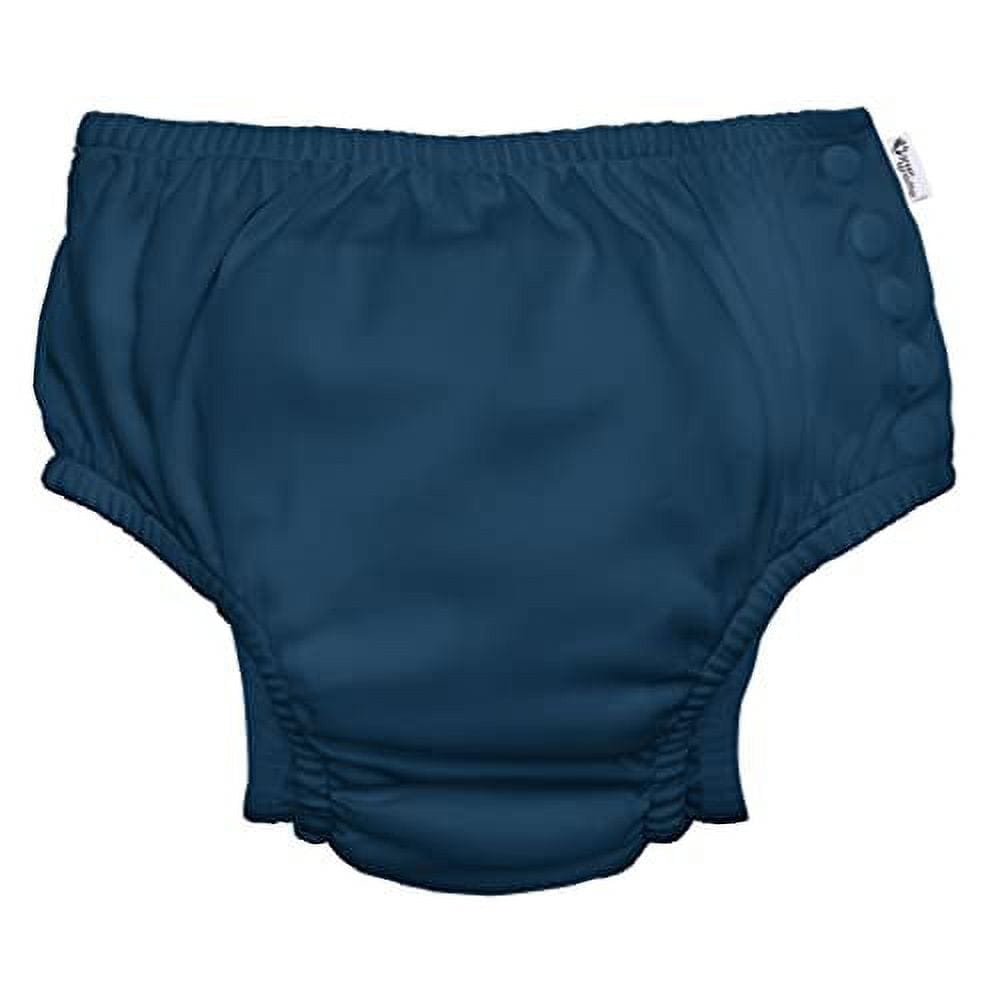
The green sprouts Eco Snap Reusable Swim Diaper leads this list because it combines three independent checkpoints: OEKO-TEX Standard 100 on the finished product, GRS certification on the recycled fiber supply chain, and an explicit PFAS-free manufacturing policy stated by the brand. At around $15, it is also the most affordable OEKO-TEX certified option here.
The outer shell is 100% recycled polyester (GRS certified) with a TPU waterproof laminate lining. No DWR coating. The snap closure adjusts across Small through XL. Community discussion across BuyItForLife and ZeroWaste consistently cites the materials disclosure as the deciding factor for this pick.
2. KangaCare Lil Learnerz 2.0 Swim Diaper: Best sizing range
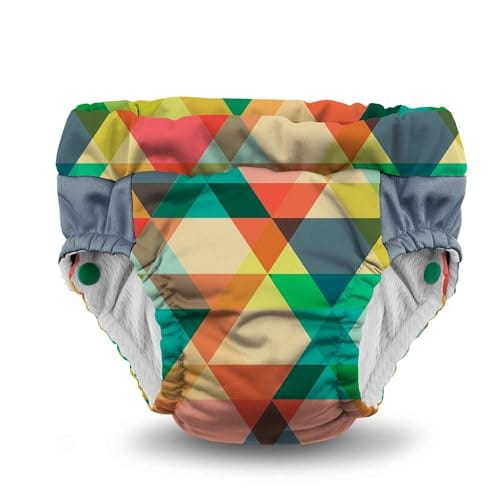
The KangaCare Lil Learnerz 2.0 Swim Diaper covers the widest size range of any pick here: XS (roughly 6 pounds) through XXL. That span is meaningful for families who want one swim diaper from the earliest pool sessions through the toddler years without sizing out.
The waterproofing uses bioTPU laminate, a plant-based thermoplastic polyurethane sourced from sugarcane. No DWR coating. KangaCare discloses the laminate chemistry directly on their product page. No OEKO-TEX certification on this SKU; the brand relies on direct materials disclosure rather than a third-party standard.
At $15.99, it sits at the same price tier as the top pick.
3. Thirsties Swim Diaper: Best made in USA

The Thirsties Swim Diaper is one of the few swim diapers in this category sewn in the United States. Thirsties discloses 100% polyester construction with a TPU waterproof laminate: no DWR coating, no fluorinated waterproofing. A 2023 Mamavation investigation placed Thirsties in the non-detect column.
No OEKO-TEX certification on the swim diaper. The brand's 20-plus year track record in the cloth diaper community and the Mamavation non-detect signal are the credentials here. At $17.50, it is slightly higher priced than comparable TPU-laminate options, with made-in-USA sourcing as the premium.
4. Petite Crown Swim OS: Best budget pick

The Petite Crown Swim OS is the most affordable one-size adjustable swim diaper on this list, typically under $15. The outer shell is 100% polyester with a TPU waterproof laminate: no DWR coating disclosed. CPSIA compliance and material composition are listed on the brand's product page.
No OEKO-TEX certification. Documentation is lighter than the top two picks, but the materials pass the disqualifier screen: TPU laminate, no fluorinated waterproofing. The one-size snap system adjusts from roughly 8 to 35 pounds.
5. Bambino Mio Swim Nappy: Best for infants
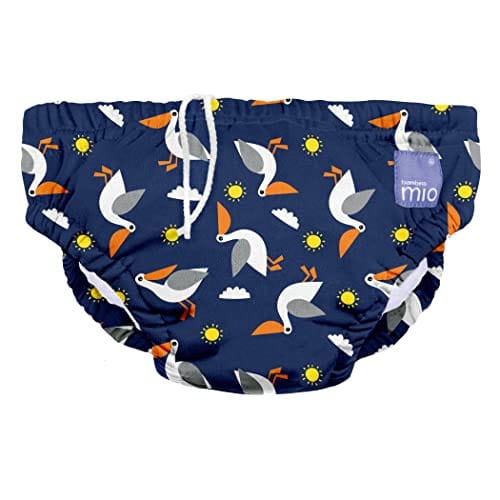
The Bambino Mio Swim Nappy holds OEKO-TEX Standard 100 certification (cert BJ020 172430) and starts at 11 pounds, making it the certified option for early pool sessions with younger babies. The outer shell is 69% nylon and 31% elastane with a TPU waterproof layer. No DWR coating.
The nylon outer differs from the polyester shells of most other picks here; for a swim diaper application the chemical inertness is comparable. Sizing runs from newborn through toddler. The Bambino Mio US direct website is temporarily offline as of this writing; the swim nappy is available via Amazon in multiple prints and sizes.
6. Splash About Happy Nappy: Best neoprene option

The Splash About Happy Nappy is the only neoprene pick on this list. Neoprene does not require a DWR or any chemical waterproofing treatment: it is inherently water-resistant at the molecular level by the same mechanism as a wetsuit. The 1mm shell is 69% nylon and 31% elastane with no added waterproofing finish.
No certifications. The brand discloses the full shell composition. Neoprene is heavier and warmer than TPU-laminate alternatives, which makes this better suited to cooler water temperatures or shorter sessions. Swim schools in the UK have recommended the Happy Nappy for over a decade on the strength of fit and containment.
7. Coterie The Swimsuit: Best disposable if needed

The Coterie The Swimsuit is the only disposable on this list, included for one reason: it is the only disposable swim diaper that has disclosed its chemistry and had it independently verified. OEKO-TEX Standard 100 (cert 25.HUS.21538) combined with a separate panel testing 40-plus PFAS compounds to non-detect puts it in a different category from conventional disposables that carry no chemical disclosure.
Conventional disposable swim diapers from major brands offer no PFAS testing, no certification, and no material composition disclosure beyond vague "safe materials" language. If a reusable is not practical for a specific trip, the Coterie is what we can actually recommend. Packs run 17 to 20 count depending on size, at roughly $20 per pack.
What we passed on
Charlie Banana returned elevated total fluorine levels in 2023 consumer testing by Mamavation. PFAS-positive results are a disqualifier regardless of other brand qualities.
ALVABABY returned the highest total fluorine reading in the same testing. Not considered.
GroVia was researched for inclusion. At time of writing, swim diaper sizes are sold out across the brand's site and major retailers. We will reconsider when inventory is restored.
Best Bottom was considered and removed after the brand's site showed repeated availability issues during research.
Any swim diaper sold as "water-resistant" without naming the waterproofing chemistry was excluded. Standard DWR marketing language does not rule out PFAS chemistry, and several brands declined to specify when contacted.
FAQ
Are reusable swim diapers safe for pools?
Most pool operators permit reusable swim diapers under the same requirement as disposables: the diaper must contain solid waste. The materials question we address here is separate: whether the waterproofing layer involves PFAS chemistry. Every reusable pick on this list uses TPU laminate or neoprene, neither of which involves fluorinated compounds.
What is TPU laminate and why does it matter?
TPU stands for thermoplastic polyurethane. In a swim diaper, it is a waterproof film heat-bonded to the inside of the outer shell fabric. It creates a water barrier from within the material rather than a surface coating applied on top. It is the alternative to DWR (durable water repellent) finishes, which have historically used PFAS. A swim diaper labeled "TPU laminate" or "PUL laminate" is using this construction. A diaper labeled "water-resistant" without specifying the method is the one worth scrutinizing.
Why is neoprene waterproof without a chemical coating?
Neoprene is a synthetic rubber with a closed-cell foam structure that repels water at the molecular level. No surface treatment is applied or needed, which is why wetsuits work without any finish. The tradeoff is density and warmth: neoprene is heavier and more insulating than a TPU-laminate diaper. This matters more on a summer beach day than in a 30-minute pool session.
Do reusable swim diapers hold everything in?
Reusable swim diapers are designed to contain solid waste in the pool. They are not absorbent and will not contain urine, which is normal and by design. In pool water, the absence of absorbency is a feature: an absorbent diaper would swell and become heavy. A good fit at the legs is what determines containment for solid waste.
Is Bambino Mio available in the US?
Yes, via Amazon. The Bambino Mio US direct website is temporarily offline as of this writing. The swim nappy is available in multiple prints and sizes through Amazon's US store at around $15.
Cover image via Pexels (Pexels License). Source.