
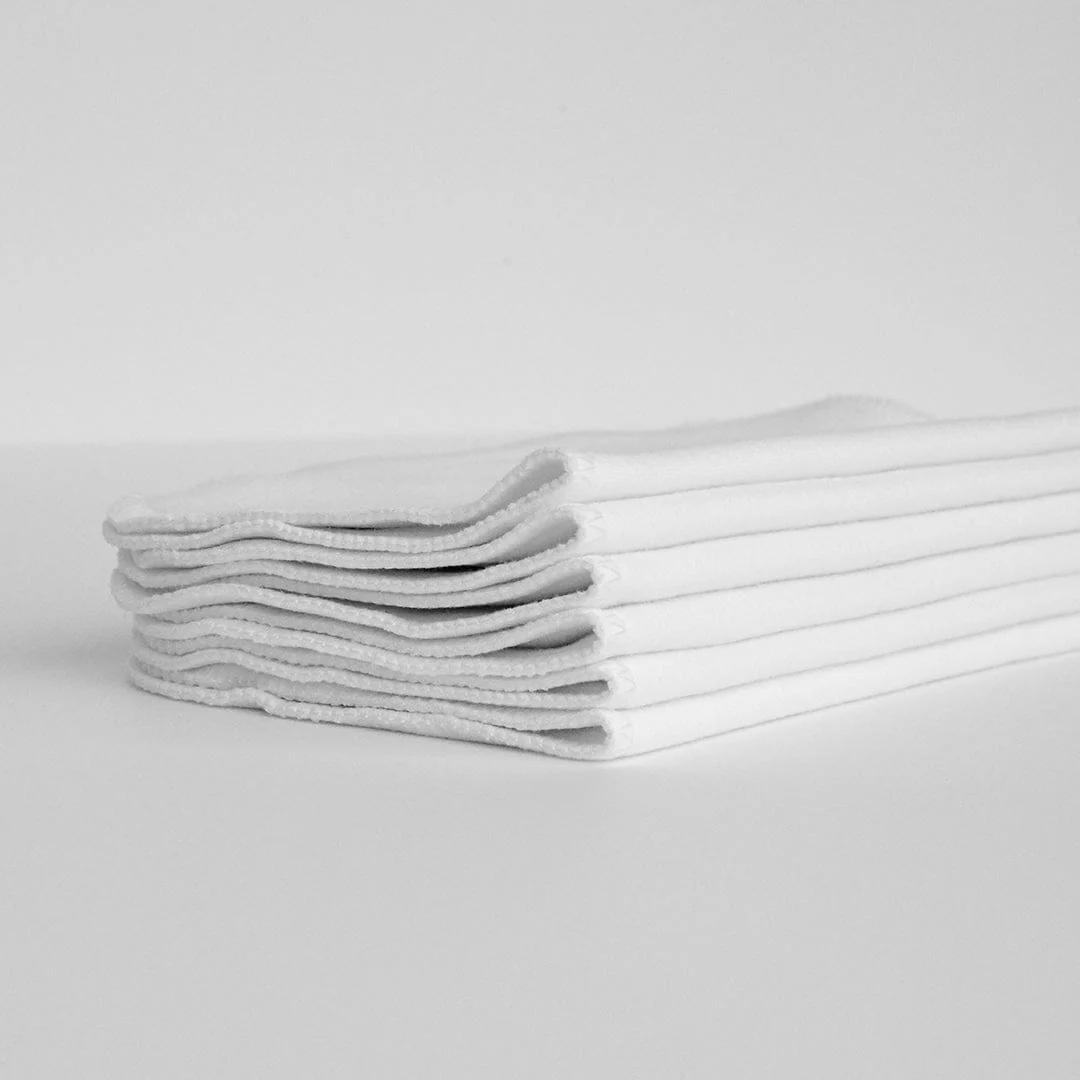
Our picks at a glance
| Pick | Best for | Key certifications | Price | Details |
|---|---|---|---|---|
| Geffen Baby Hemp and Organic Cotton French Terry Wipes, 10-Pack | Best overall | Organic cotton (brand-disclosed) | $ | Full review |
| Babee Greens Softie Wipes, 12-Pack | Larger starter bundle | Organic cotton (brand-disclosed) | $ | Full review |
| Esembly Wipe Ups, 12-Pack | Cloth diaper systems | Organic cotton (brand-disclosed) | $ | Full review |
| Charlie Banana Organic Cotton Baby Wipes, 10-Pack | Everyday versatility | Organic cotton (brand-disclosed) | $ | Full review |
| OsoCozy Unbleached Cotton Flannel Wipes, 15-Pack | Budget volume | None | $ | Full review |
Cloth baby wipes reduce disposable waste and remove a long list of synthetic preservatives, fragrances, and surfactants from your baby's most sensitive skin. The catch: the market is flooded with wipes labeled "bamboo" or "natural" that are actually made from viscose, a heavily processed semi-synthetic fiber. This guide covers the five wipes that passed our material and certification review.
What we look for
Single-fiber simplicity. Infant skin, particularly in the diaper area, has a thinner barrier than adult skin. That makes the material list short: certified organic cotton, hemp, or an organic cotton-hemp blend. Nothing else. No microfiber blends, no "bamboo blend" composites, no fabrics labeled "natural fiber" without a named fiber source.
The bamboo viscose problem. "Bamboo" wipes are among the most misleadingly marketed baby products on the market. Bamboo plant fiber requires chemical dissolution to become fabric: the cellulose is dissolved in caustic sodium hydroxide, carbon disulfide, or similar solvents and extruded as viscose (also called rayon). The FTC has cited numerous brands for calling this fiber "bamboo" without disclosure. The result is a semi-synthetic fiber with none of the hypoallergenic properties claimed, and potential residual solvent exposure. We do not list bamboo viscose wipes. (True mechanically-processed bamboo is different but is virtually absent from the retail wipe market.)
GOTS organic cotton. The Global Organic Textile Standard is the only third-party certification that covers the entire chain from farm to finished fabric: organic cultivation, mill processing, and dyeing. Brand-disclosed GOTS certification matters more than the word "organic" appearing on a package. Note: the GOTS certificate search at global-standard.org was returning errors during our research; we reviewed brand-disclosed GOTS claims from product pages but were not able to cross-check certificate numbers in the issuer's database at time of publication.
No dyes, bleach, or finishes. Wipes go directly on broken skin at diaper rash points. Even Oeko-Tex-tested dyes are unnecessary exposure in that context. All six picks are undyed and unbleached (or use only certified-organic cotton, which specifies natural color by default). We exclude wipes with any stated or suspected moisture treatments, antimicrobial finishes, or softening treatments.
Single-layer flannel or terry knit. Easier to rinse clean than multi-layer sewn constructions, and dries faster. Terry knit (looped pile) is gentler on sore skin than flat flannel; both perform well.
How this was vettedLast reviewed August 2026
We reviewed brand product pages, material disclosures, care instructions, and Reddit threads in r/clothdiaps, r/ZeroWaste, and r/BabyBumps. Amazon listing data was pulled via the Nontoxic Nook Creators API integration. GOTS certificate verification via global-standard.org returned errors during research; brands are noted as GOTS-disclosed rather than database-verified.
Read the full criteria →Our picks
1. Geffen Baby Hemp and Organic Cotton French Terry Wipes, 10-Pack: Best overall

Hemp-cotton blends have a structural advantage for diaper wipes: hemp fiber is naturally absorbent, dries fast, and softens with each wash without any chemical treatment. The Geffen Baby Hemp and Organic Cotton French Terry Wipes, 10-Pack use a 45% hemp / 55% GOTS organic cotton blend in a French terry knit. The looped side lifts debris gently without scrubbing, which matters for babies with recurring diaper rash. The flat side is softer for face cleaning or post-rash use.
Geffen Baby discloses the blend ratio and GOTS organic cotton certification on the product page (brand-disclosed). Hemp fiber itself has no equivalent organic certification standard, but it requires significantly fewer pesticides than conventional cotton as a crop. The 10-pack is a practical daily-use quantity; these wash and dry quickly.
2. Babee Greens Softie Wipes, 12-Pack: Best starter bundle

The Babee Greens Softie Wipes, 12-Pack are reversible: one side is organic cotton terry (more texture, for cleanup), the other is organic cotton jersey (softer, for face or sensitive skin). At 12 wipes, a single pack gives you enough for one full wash cycle without running out mid-day. Babee Greens discloses organic cotton on the product page; the wipes are undyed and unbleached.
These are a good entry point for parents switching from disposables, because 12 wipes per pack means buying one pack before committing to a larger set. The price per wipe is lower than Thirsties, which makes them a reasonable option for high-volume use with newborns.
3. Esembly Wipe Ups, 12-Pack: Best for cloth diaper systems

The Esembly Wipe Ups, 12-Pack are designed to work as part of the Esembly cloth diaper ecosystem, which uses a wet bag pail and a single wash-and-go laundry routine. They can also be used as standalone wipes with any wet-pail or dry-pail approach. The fabric is organic cotton, undyed. Esembly discloses organic cotton certification on the product page (brand-disclosed).
At 12 wipes per pack, these are sized for a one-week supply at lower change frequency for older infants. The flat cut makes them stackable in a wipe warmer or small travel container. If you are already running Esembly diapers, the Wipe Ups simplify laundering: they go in the same wash cycle on the same settings, with no sorting required.
4. Charlie Banana Organic Cotton Baby Wipes, 10-Pack: Best everyday wipe

The Charlie Banana Organic Cotton Baby Wipes, 10-Pack are a flat organic cotton wipe sized for diaper changes and general cleanup. Charlie Banana discloses organic cotton on the product page. At 10 wipes, this is a mid-size pack suited for occasional users or as a secondary set alongside a larger bundle.
They are also a practical long-term household item: after the diaper years, organic cotton flat wipes work as kitchen cloths, face wipes, or general household rags, extending the useful life well beyond infancy.
5. OsoCozy Unbleached Cotton Flannel Wipes, 15-Pack: Budget pick
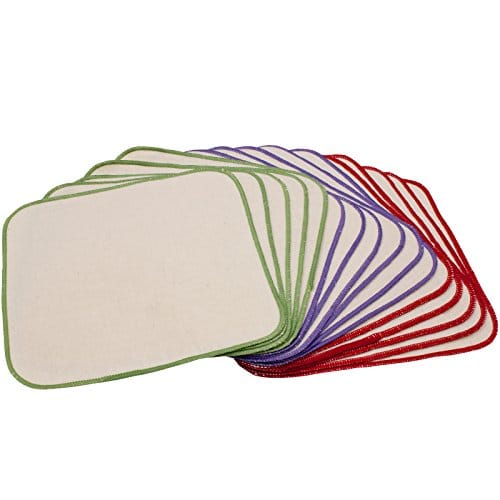
The OsoCozy Unbleached Cotton Flannel Wipes, 15-Pack are 100% cotton flannel, unbleached and undyed. They are not organic cotton; the listing confirms "unbleached/natural 100% cotton" without an organic designation. At 15 wipes per pack, they offer the most wipes per dollar of any pick on this list.
The unbleached cotton means no optical brighteners and no chlorine bleaching. If the absence of organic certification matters to your household, any of the five options above are the right choice. For parents who want a clean, basic cotton wipe at volume pricing without paying for certification overhead, OsoCozy is the straightforward option. These are machine-washable and dry quickly.
What we passed on
Bamboo viscose wipes (multiple brands): "Bamboo" on a wipe label almost always means viscose rayon made by chemical dissolution of bamboo cellulose. The FTC has issued warning letters to brands for making bamboo fiber claims on what are legally rayon products. We excluded every wipe in this category regardless of marketing language, because the fiber chemistry does not support the "natural" or "hypoallergenic" claims.
ImseVimse Organic Cotton Wipes (Sweden): A Swedish brand with GOTS-certified organic cotton wipes and transparent material disclosure. Their US distribution is limited; the brand does not operate a US-facing storefront with verifiable inventory, and no US retailer with confirmed stock was found during research. A strong candidate if US distribution becomes available.
Thirsties Organic Cotton Wipes, 6-Pack: Previously our top pick for GOTS organic cotton wipes made in the USA. Currently unavailable for purchase with no restocking date announced. Removed from active picks until a confirmed buy path exists.
Buttons and bumGenius cloth wipes: Both brands had unavailable or discontinued wipe products during our research period. We excluded them as all picks require a live, verifiable buy path.
Care and maintenance
Cloth wipes work well with either a wet pail (a lidded bucket with a few inches of water, optionally with a splash of white vinegar) or a dry pail (a lidded bucket or reusable wet bag) until laundry day. Wash in warm water with a fragrance-free detergent and no fabric softener; softeners coat the fibers and reduce absorbency over time. These wipes can go in the dryer on medium heat or air-dry.
For extra cleaning power, dampen the wipe with a small amount of warm water before use. No added soap is needed for most diaper changes; water alone works well for newborns.
FAQ
Are cloth baby wipes safe for newborn skin?
Yes, when made from undyed, unbleached organic cotton or a hemp-cotton blend with no finishing treatments. Cotton and hemp are non-irritating at the fiber level. Infant skin in the diaper area is thinner-barriered than adult skin, which is why undyed and unfinished fabric is the right specification for diaper-area wipes.
What is the difference between GOTS organic cotton and regular organic cotton?
GOTS (Global Organic Textile Standard) certifies the entire textile supply chain from farm through mill processing and finishing. Without GOTS, a "100% organic cotton" label can reflect organic farming but still allow conventional bleaching, dyeing, and finishing with non-organic chemicals. GOTS is the stricter standard and the only one that addresses what is applied to the fabric from fiber to finished wipe.
Why should I avoid bamboo wipes?
What is sold as "bamboo" fabric in most wipes is viscose or rayon produced by chemically dissolving bamboo cellulose in caustic solvents. The FTC has cited brands for misrepresenting rayon as bamboo. The resulting fiber has no special skin properties and may carry trace solvent residuals. The "hypoallergenic bamboo" claim is a marketing label, not a materials fact.
How many cloth wipes do I need to start?
Most parents need 24 to 36 wipes to maintain a two-to-three day laundry interval. Newborns average 8 to 12 diaper changes per day and use one to two wipes per change; older infants need fewer. A starter set of 24 wipes (three to four packs of most options here) provides a reasonable margin without excess inventory.
Can I use cloth wipes with disposable diapers?
Yes. Cloth wipes are independent of your diaper choice. The only practical difference: with disposable diapers, you need a separate container (a small wet bag or reusable zip bag) for used cloth wipes, rather than disposing of them alongside the diaper.
Cover image: Yellow Cactus via Unsplash (Unsplash License). Source.