
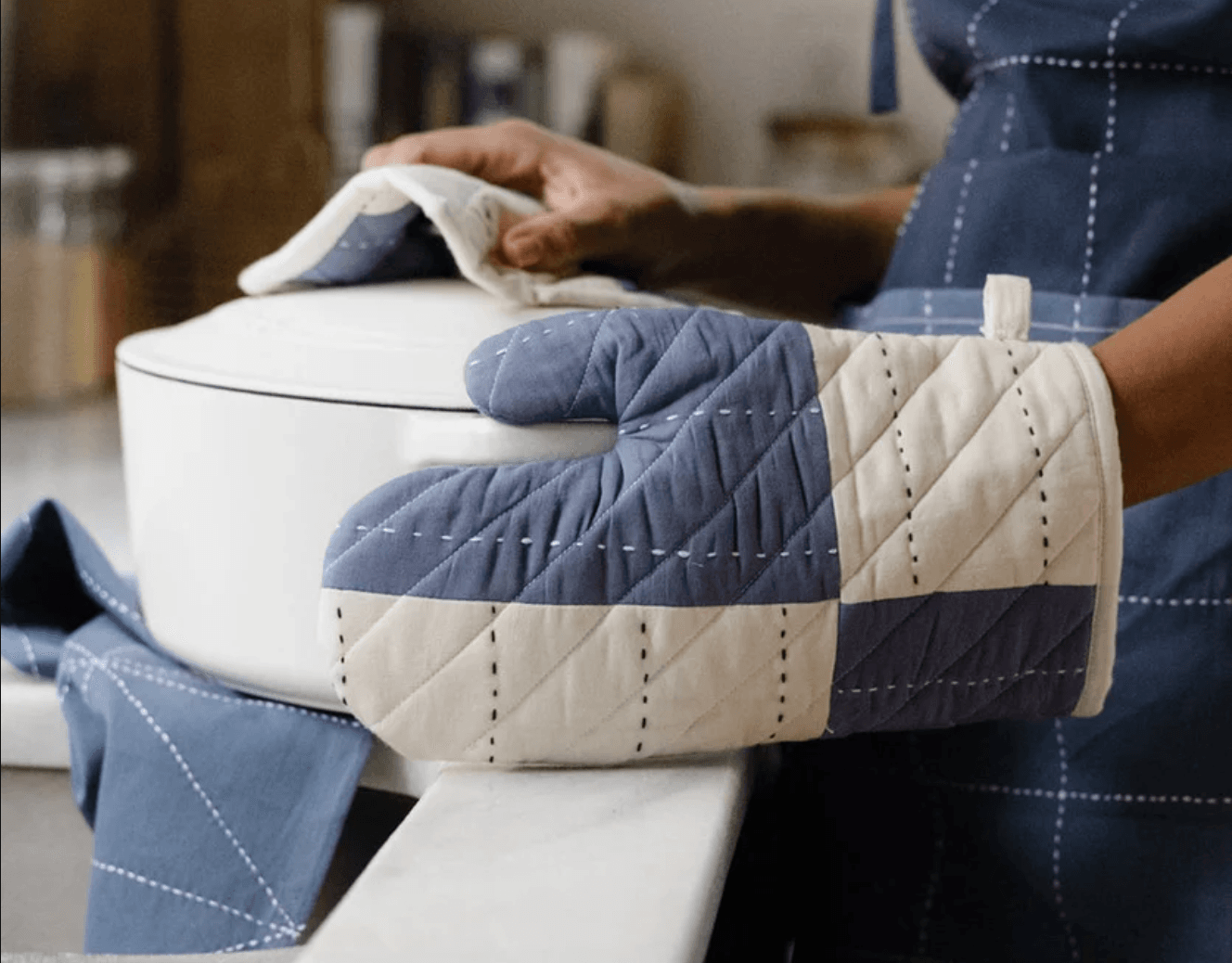
Oven mitts and pot holders sit between your hands and heat every time you cook. That contact is brief but daily, so the material that makes up the mitt matters. Conventional models often use polyester batting and PTFE or vinyl-based coatings, both of which transfer chemicals when heated. The good news is that natural-fiber alternatives with fully disclosed fills are available at prices comparable to what you would find at a mass retailer.
What we look for
A mitt or pot holder passes our screen when every material is named on the product page: the outer shell, the fill, the lining, and any coating chemistry. "Cotton oven mitt" with no fill disclosure does not pass the precondition, because the fill is where most of the volume sits and where polyester batting most commonly hides.
The specific gates for this category:
No PFAS finishes. Many conventional mitts carry a heat-resistant or stain-resistant coating based on PTFE or fluoropolymer chemistry. PFAS are persistent in the environment and in human tissue. Any product with a water-repellent, stain-repellent, or non-stick coating is disqualified unless the brand discloses the specific chemistry and it is not a fluoropolymer.
No vinyl or PVC construction. Some mitts use vinyl or PVC grip patches on the outer surface. PVC production and disposal generates chlorinated byproducts, and vinyl plasticizers including phthalates migrate under heat. We exclude these.
Silicone passes only when the grade is disclosed. Platinum-cured silicone is the food-safe standard: the catalyst is inert and the cured material does not leach. "Food-grade silicone" claims without disclosing the catalyst type leave open the possibility of peroxide-cured product, which can release trace benzene residues. We require either "platinum-cured" or LFGB documentation to let a silicone mitt through.
Fill must be named. An outer of organic cotton with a fill of "batting" or "insulation" is a fail on precondition 1: full material disclosure. We require the fill fiber to be identified, not just the shell.
Certifications help where they exist. GOTS covers the whole product chain from fiber to finished textile, including fill, so a GOTS certification on a mitt is strong evidence that both the outer and the fill are what the brand says. OEKO-TEX Standard 100 certifies that tested materials contain no harmful substances at defined limits; it does not cover the supply chain the way GOTS does, but it is a meaningful third-party check.
Our picks
1. Home of Wool Wool Oven Mitt - Best overall
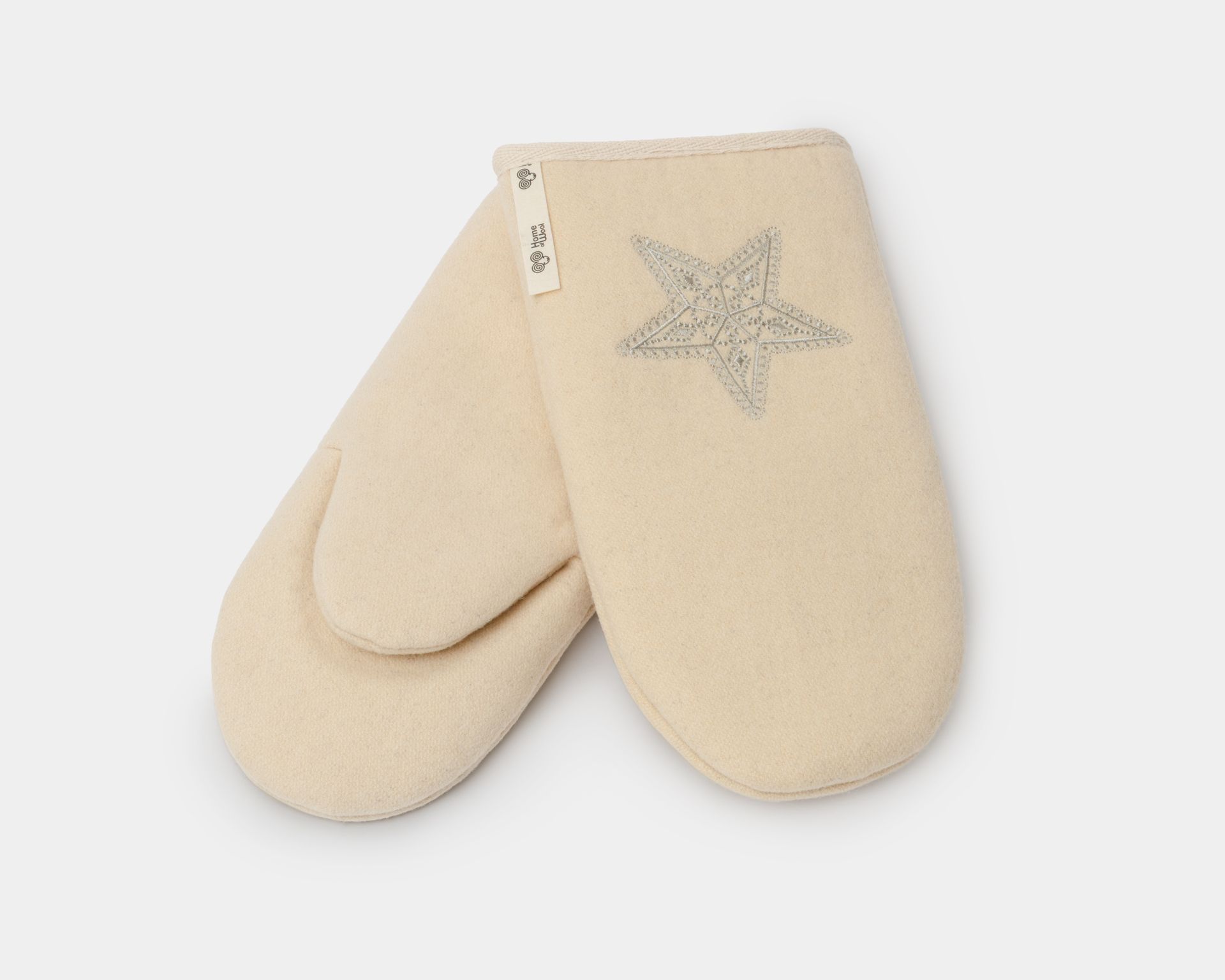
The Home of Wool Wool Oven Mitt earns the top spot because of what is certified and what is disclosed: a virgin wool outer with OEKO-TEX Standard 100, a 100% GOTS-certified organic wool batting fill, and a 100% GOTS-certified organic cotton lining, all verified on the brand's product page. That is two independent third-party certifications on the same product covering both shell and fill, which is uncommon at this price point.
Wool is an excellent natural heat insulator; it absorbs moisture without feeling wet and does not ignite easily below approximately 600 degrees Fahrenheit. The mitt is handmade from production scraps at the brand's facility, so off-cut wool pieces that would otherwise become waste end up in the insulating layer. Home of Wool discloses the construction clearly: virgin wool outer, unbleached organic cotton lining, and organic wool batting fill, with no polyester, no fire retardants, and no synthetic coatings.
The size is 5 by 11 inches, which fits a standard hand and is suited for handling oven pans and pot handles. Care is hand wash with mild soap and air dry; machine washing can cause wool to felt and degrade the batting layer.
Who it is for: Anyone who wants the most auditable material trail in the category, with both GOTS and OEKO-TEX on record.
2. Anchal Colorblock Oven Mitt - Best layered construction

The Anchal Colorblock Oven Mitt is built from six layers of 100% organic cotton shell and one layer of 100% cotton batting, which is more structural layers than any other mitt here. The brand discloses AZO-free dyes on all colorblock panels, which matters because azo dye breakdown products include aromatic amines classed as probable carcinogens by IARC.
Anchal Project is a women-owned studio that makes textile goods at its facility in India under Fair Trade Federation standards. The mitt measures 11.5 by 6 inches, a standard size for single-hand use. Colors are limited to Camel; the brand does not offer the colorblock in a full range, but the construction quality compensates for the limited palette.
The layering strategy here differs from certifying the fiber: six layers of woven cotton provide thermal protection through density rather than a lofted fill, which means the mitt stays thin and flexible while still insulating. It is a different hand feel from the Home of Wool option above, and some cooks prefer the more direct grip.
Who it is for: Cooks who want a certified-fair-trade option with an organic cotton construction and are comfortable with single-brand disclosure rather than third-party fiber certification.
3. Coyuchi Sonoma Organic Pot Holder (Set of 2) - Best pot holder

The Coyuchi Sonoma Organic Pot Holder is the only GOTS-certified pot holder in this lineup, made from organic cotton with an organic cotton fill, sold as a set of two. Coyuchi is one of the most established organic textile brands in the US market; the brand has held GOTS certification for years and discloses its supply chain in detail.
Pot holders serve a different use than mitts: they sit flat on a surface or grip a hot pan from one side, so the thickness distribution matters differently. These are square pads rather than fitted gloves, which makes them more versatile for handling cast iron or placing a hot dish on a table. The GOTS certification covers both the outer and the fill, the same chain-of-custody standard that applies to the Home of Wool mitt above.
The price point is accessible: a two-pack puts both pot holders in the kitchen at once, which is the practical use case for most cooks. Available in Blue Jay colorway; the brand sells these in a limited color range, but the GOTS status is the reason to choose them over a generic cotton pot holder.
Who it is for: Anyone who primarily uses pot holders rather than oven mitts and wants GOTS certification with a trusted brand name.
4. A Greener Kitchen Organic Cotton Oven Mitt - Best made in USA

The A Greener Kitchen Organic Cotton Oven Mitt is made in the USA from 100% organic cotton with two layers of organic cotton batting. No third-party certification is listed, but the brand discloses the shell, fill count, and country of manufacture directly on the product page, which satisfies the precondition for full material disclosure.
A Greener Kitchen operates under the Upland Road brand, a small US maker with a Shopify store. The mitt comes in Black and White Print and Green Print. The two layers of organic cotton batting provide adequate insulation for standard oven temperatures and standard pot handles.
The made-in-USA origin is a distinguishing factor: at this price point, most comparable mitts are imported. For buyers who prioritize domestic production, this is the only mitt in the lineup that ships that provenance.
Who it is for: Buyers who want a simple organic cotton mitt made domestically, without an import supply chain.
5. RawGanique BAKEVILLE Organic Hemp Oven Mitt - Best hemp

The RawGanique BAKEVILLE Organic Hemp Oven Mitt uses a 100% organic hemp outer shell and a 100% organic cotton fleece fill. RawGanique discloses both materials on the product page, states no fire retardants, and offers the mitt in a wide range of colors including natural, black, and several bolder options.
Hemp is a tightly woven bast fiber with good abrasion resistance; combined with an organic cotton fleece fill, the construction provides thermal protection through the fill layer while the hemp outer handles contact with surfaces. The brand also sells a set pairing the mitt with a matching organic cotton pot holder, which makes it possible to coordinate both items from a single purchase.
RawGanique does not carry a third-party certification on these mitts, so you are relying on brand disclosure rather than an external audit. That is a weaker evidentiary position than the GOTS options above, but the specific materials are named and there is no mention of synthetic fill or coatings. The price is higher than most of the others in this lineup, reflecting the hemp outer construction and the brand's small-batch manufacturing.
Who it is for: Buyers who prefer hemp as a primary fiber and want the option to add a matching pot holder.
6. GIR Oven Mitts Set of 2 - Best silicone

The GIR Oven Mitts are built differently from every other pick here: a platinum-cured silicone outer with a cotton terry inner. GIR (Get It Right) discloses on its FAQ page that the silicone is pharmaceutical-grade and free of BPA, BPS, phthalates, and heavy metals. Platinum-cured silicone is the food-safe standard; the catalyst is inert and does not leave residue in the cured material.
This is the only pick with a waterproof outer surface, which matters when reaching into a steam environment or handling wet cast iron. The cotton terry lining provides comfort against the hand. The set comes with two mitts in Red, Slate, Light Pink, or Black; the silicone construction also makes these dishwasher-safe.
One note on dexterity: silicone mitts are less tactile than cotton or wool ones. You cannot feel the texture of a pan handle as naturally or grip it as precisely. For baking sheets, cast iron, and covered pots this is not a problem; for tasks requiring finer grip, the textile picks above will serve better.
Who it is for: Cooks who handle wet pots and pans regularly, or who want a waterproof mitt they can rinse and machine-wash.
7. Hemptique Hemp Oven Mitt - Best unbleached
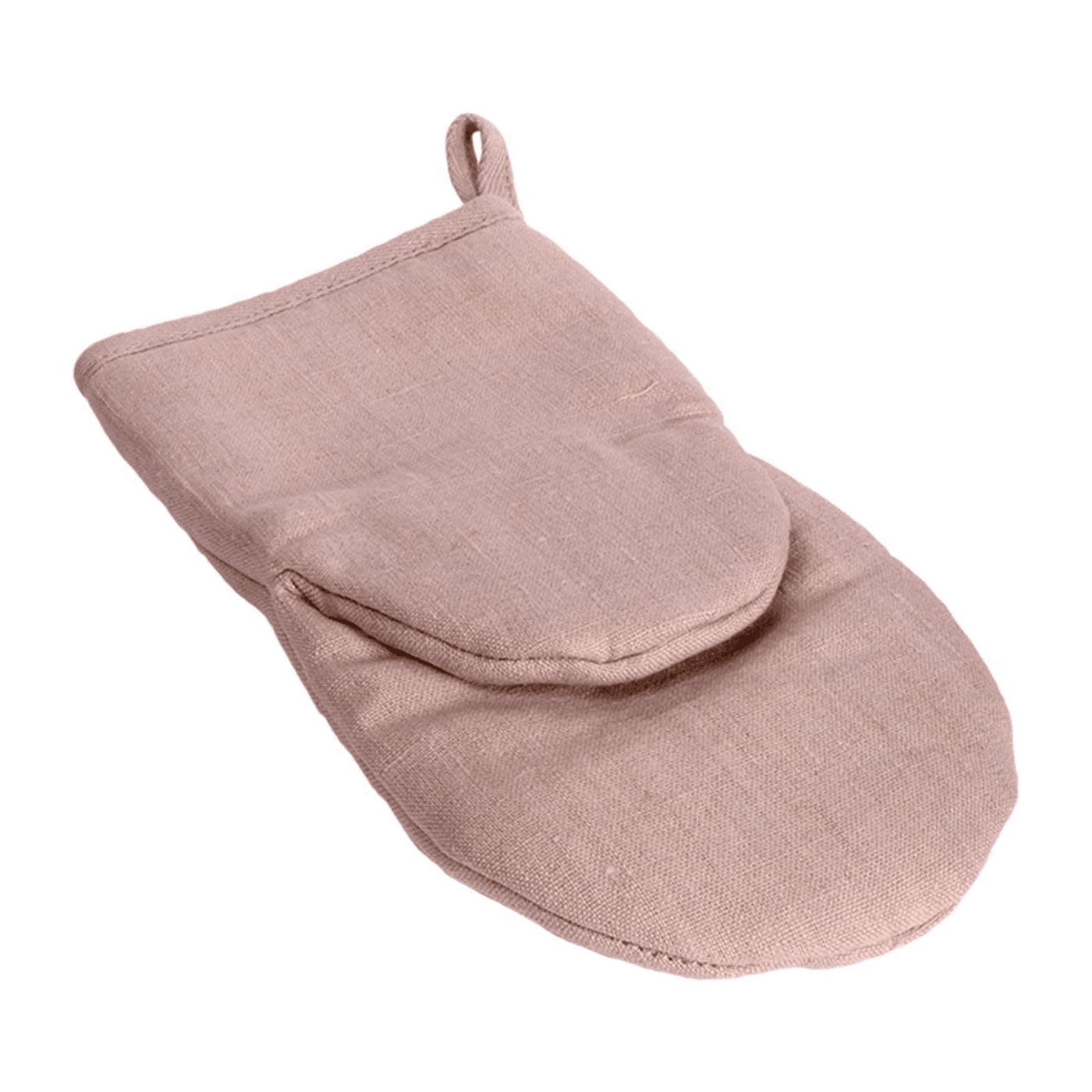
The Hemptique Hemp Oven Mitt is 100% hemp outer and 100% organic cotton fleece fill, unbleached and undyed, in a natural color. That means the mitt carries no dye-process chemistry at all: no colorants, no brighteners, no finishing treatments. For buyers who want to minimize all processing, this is the simplest option in the lineup.
Hemptique is a small hemp textile brand. No third-party certification is listed, so the material disclosure is brand-only. The mitt is approximately 6 by 10 inches, a standard size. The natural color limits aesthetic options but simplifies the material picture considerably.
The unbleached construction is the specific reason to choose this over the RawGanique hemp mitt above. Both use a hemp outer and organic cotton fill; this one is undyed and RawGanique offers multiple colors. If color range matters to you, the RawGanique pick is worth considering; if you want the simplest material profile possible, Hemptique is it.
Who it is for: Buyers who want zero dye or bleach treatment on a hemp-and-cotton mitt, with no additional processing chemistry.
What we passed on
Three brands appeared in research as conditional rather than passing: Galley & Fen states a 100% cotton outer and "insulated" fill but does not name the fill material anywhere on its site, which is a precondition failure on material disclosure. Printfresh similarly states a cotton outer but does not disclose fill or padding material on any product page. The Neighborgoods names a cotton outer on the product page but leaves the inner padding material undisclosed. All three would pass if they named the fill; as of the date of this research, none do.
Mitts from mainstream kitchenware brands that use PTFE-adjacent coatings or vinyl grip patches were excluded on those grounds. PFAS-based finishes persist in the environment and appear in human blood at measurable concentrations in population studies; we do not make exceptions for small contact areas or brief contact times.
FAQ
Are silicone oven mitts safe?
Silicone oven mitts are safe when the silicone is platinum-cured and the brand discloses the curing chemistry. Platinum-cured silicone is inert and does not leach under heat. The concern with generic "food-grade silicone" labels is that they sometimes cover peroxide-cured material, which can retain trace benzene. The GIR Oven Mitts explicitly state pharmaceutical-grade, platinum-cured silicone, which satisfies our screen; a silicone mitt without that disclosure does not.
Do conventional oven mitts contain PFAS?
Some do, particularly those marketed as water-resistant or stain-resistant. PFAS-based coatings have been used in textiles for decades to repel liquids. If a mitt's coating chemistry is not disclosed, there is no way to rule out fluoropolymer treatment. We excluded any product where the coating was unnamed or described with terms like "water-repellent" without naming the specific chemistry.
What is the difference between a cotton mitt and a wool mitt for heat protection?
Both work. Wool has a higher ignition point than cotton (around 600 degrees Fahrenheit versus about 400 for cotton) and absorbs moisture without feeling wet, which can be an advantage near steam. Cotton with multiple batting layers performs comparably for standard home-oven temperatures. The practical difference in a home kitchen is small; the material preference and certification status are more meaningful buying criteria than the theoretical ignition point difference alone.
Is organic cotton certification worth it for an oven mitt?
Yes, for a specific reason: conventional cotton production uses pesticide-intensive farming, and some finishing processes include synthetic resins and dye chemistries that can persist in the fabric. GOTS certification covers both the fiber and the processing chain, so a GOTS-certified mitt has been audited against a full set of chemical restrictions, not just the growing stage. It is a more complete guarantee than "organic cotton" without a certification.
Can I wash wool oven mitts in the washing machine?
No. Hand-washing is recommended for wool mitts. The Home of Wool Wool Oven Mitt specifies hand wash with mild soap and air dry. Machine washing can cause wool to felt and shrink, and the structure of the batting layer can degrade under agitation. Cotton mitts are generally more tolerant of machine washing.
Cover image: Grace Anne Bobadilla via Unsplash (Unsplash License). Source.


