The non-toxic case for this category comes down to the inner pot. Conventional electric pressure cookers almost always ship with PTFE-based nonstick inner pots. At the temperatures and pressures of pressure cooking, those coatings operate at the outer edge of the range where particle and gas release studies start to document degradation. Stainless steel pots do not have that ceiling. Every pot below is uncoated stainless steel, borosilicate glass, unglazed kaolin clay or, in one case, enameled cast iron. One pick, the Brod and Taylor proofer, has no pot of its own.
What we look for
Stainless steel inner pot, explicitly confirmed. The pot must be identified as stainless steel in the brand's own documentation: a spec sheet, product detail page, or manufacturer description that names the material. Marketing claims of "BPA-free" or "PFOA-free" on a coated pot are not a pass; those claims address one class of compounds but leave other PTFE formulations in play. We only list pots where the material is named.
Alternative vessel materials pass on the same logic. Borosilicate glass and unglazed kaolin clay are inert at cooking temperatures, have no coatings to degrade, and pass the same material-first bar that stainless steel does. Both appear in the picks below. One pick, the All-Clad, uses an enameled cast iron pot: cast iron under a fused glass enamel, with no PTFE or polymer nonstick layer.
Silicone sealing ring for electric models. The sealing ring is the one other food-contact component that matters. Food-grade silicone is inert across the full pressure-cooking temperature range. Natural rubber is acceptable but uncommon on current models; chlorinated, vinyl-based, or unspecified rubber gaskets are not.
Pressure cooking, or a plain statement that it does not. This guide covers multi-cookers and pressure cookers. Most picks include a pressure-cook program. Four do not: the Magnifique Round Claypot, the two slow cookers from All-Clad and 360 Cookware, and the Brod and Taylor proofer. Each says so in its own section. Stovetop pressure cookers follow the same material rules, and three appear in the picks (two from Fissler, one from Magefesa) for buyers who prefer a stovetop tool.
Verifiable materials disclosure. Every claim goes back to public brand documentation: a spec sheet, a product detail page, or the certifier's registry. Marketing copy that does not name the material does not satisfy the gate.
Our picks
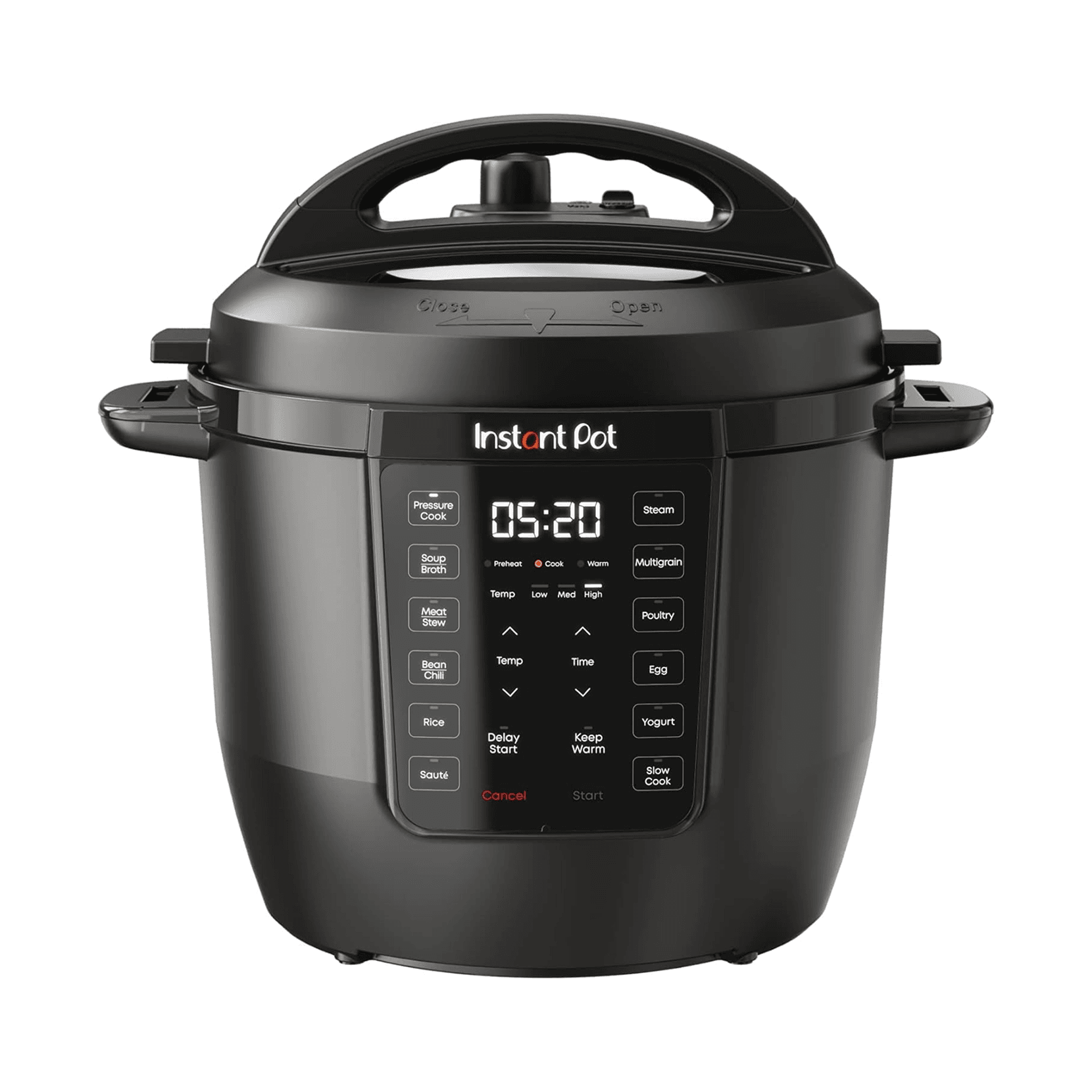
1. Instant Pot Duo 7-in-1 Multi-Use Pressure Cooker — Best overall
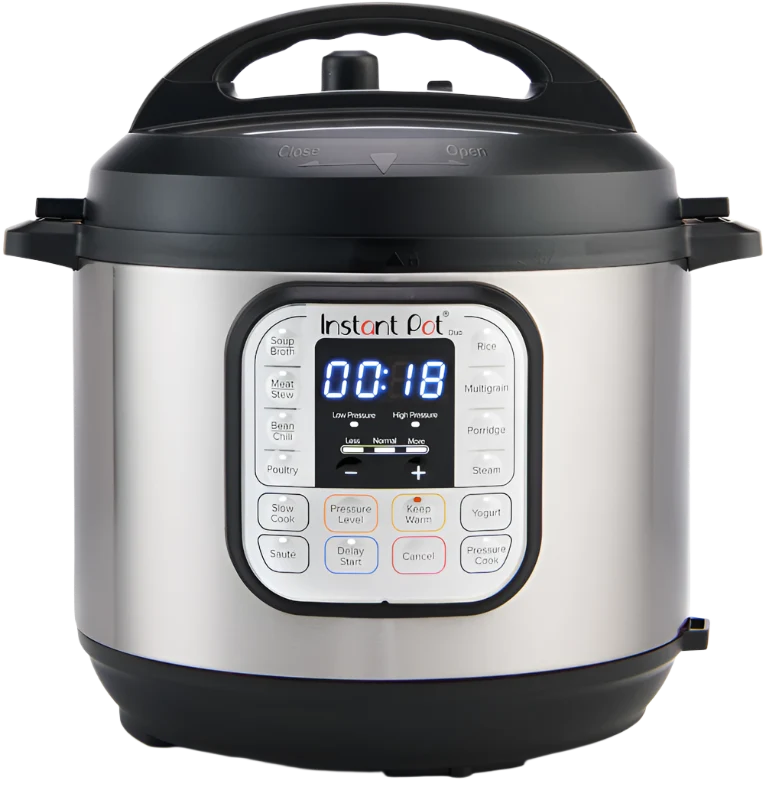
The Instant Pot Duo 7-in-1 inner pot is 18/8 stainless steel with a tri-ply bottom, confirmed on the brand's spec documentation. No coating, no PTFE, no ceramic binder. Seven cooking programs cover the cases that account for most weeknight use: pressure cook, slow cook, rice and grain, steam, saute, yogurt, and keep warm. The sealing ring is food-grade silicone.
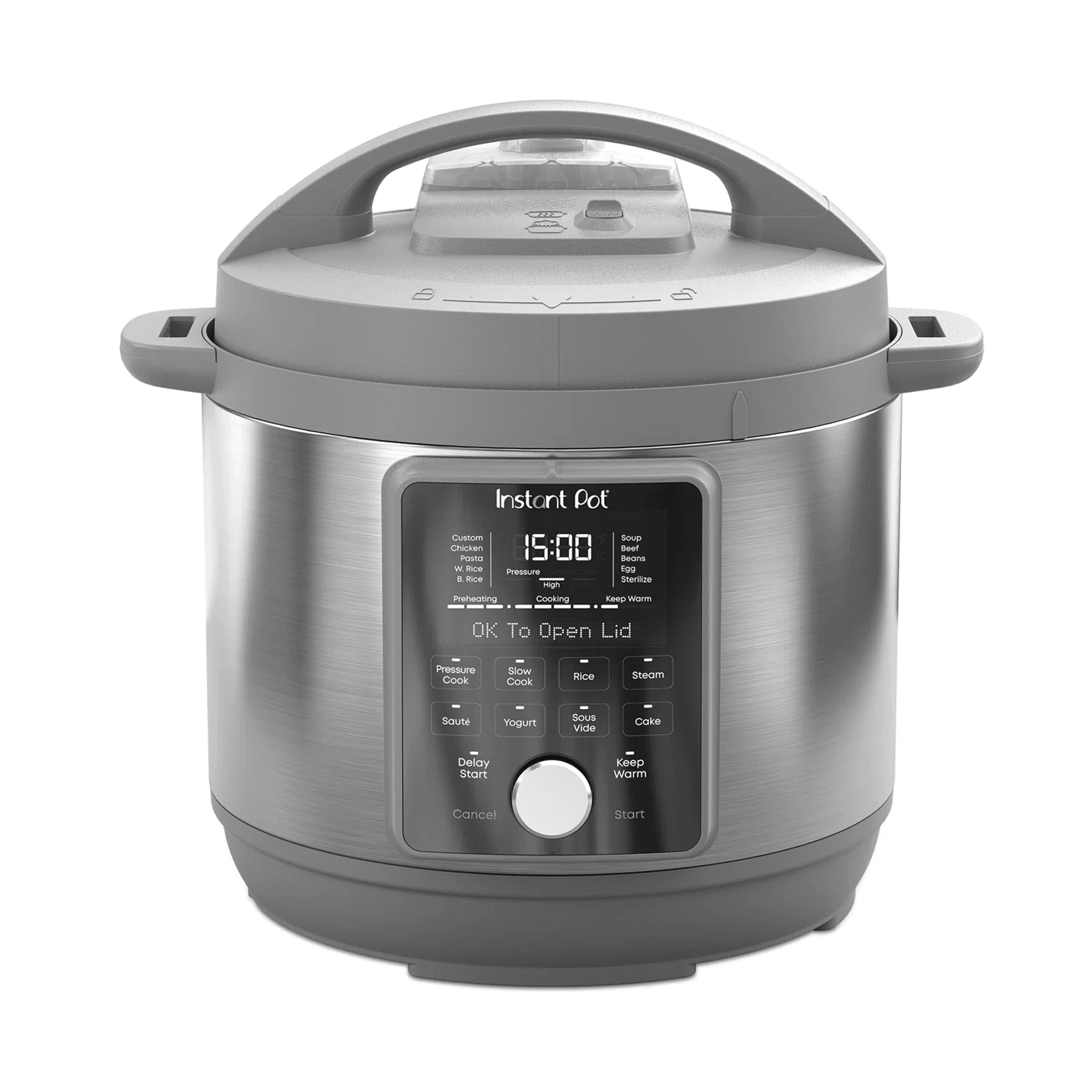
The Duo 7-in-1's real advantage over more feature-rich models is not the program count but the depth of community documentation. Timing guides, troubleshooting threads, and recipe libraries for this exact model go back several years and cover essentially every edge case. For a first electric pressure cooker, that resource base is worth more than a sous vide mode that rarely gets used. Three more Instant Pot models in our directory are listed with stainless steel inner pots: the Instant Pot RIO, the entry-level seven-function model; the Instant Pot Duo Plus 9-in-1, which adds sous vide and a quieter steam release; and the Instant Pot Pro Plus, which adds app control.
2. Cuckoo CMC-ZSN601F 6-Quart 8-in-1 — Best non-IP alternative

Cuckoo has manufactured pressure rice cookers in Korea since the 1970s and brings that background to the CMC-ZSN601F. The inner pot is uncoated 304 (18/10) stainless steel with no PTFE, ceramic binder, or nonstick treatment of any kind on the food-contact surface. Eight programs cover high and low pressure, slow cook, steam, saute and brown, rice, porridge, and keep warm.
The dual-pressure option is the main functional advantage over single-pressure models: the ability to dial between standard and high pressure gives finer control over texture, particularly useful for lentils, beans, and braised proteins where overcooking is easy. Cuckoo's build quality tends to run tighter at the lid seals than the equivalent Instant Pot models; the tradeoff is a narrower English-language recipe library and fewer community resources.
3. Instant Pot Duo Crisp Ultimate Lid 6.5QT — Best 2-in-1

The Duo Crisp Ultimate Lid ships with two lids: a pressure lid and a crisping lid. Swap them on the same 6.5-quart stainless steel base to pressure-cook a batch and then brown it in the same pot without transferring food. The crisping lid is transparent, letting you monitor without lifting. Thirteen cooking programs; WiFi app control is included.
The air-fryer integration is the only reason to choose this over the Duo 7-in-1. It is a genuinely different product class rather than a marginal spec upgrade: buying the Duo Crisp replaces a standalone basket-style air fryer and removes one appliance from the counter. If air frying is not part of your cooking rotation, the Duo 7-in-1 is a lighter, less expensive tool. The crisping basket uses stainless steel mesh, not a coated surface.
4. Fissler Vitavit Premium Pressure Cooker — Best stovetop

The Fissler Vitavit Premium is for buyers who prefer a stovetop tool over an electric one. The pot is 18/10 stainless steel with no coating on any food-contact surface, manufactured in Germany and available in five sizes from 2.6 to 8.5 US quarts. Stovetop pressure cookers operate on any heat source, require no power outlet on the counter, and have a simpler mechanical design than electric models.
The Vitavit Premium addresses the main concern with stovetop pressure cooking: control. The spring-based pressure indicator shows the current pressure level during cooking and maintains it passively without active adjustment. The lid locks at two pressure settings and releases cleanly. This is a long-service tool with replacement gaskets and spare parts available directly from Fissler.
5. Magnifique Glass Pot Multi-Cooker — Best glass-pot option

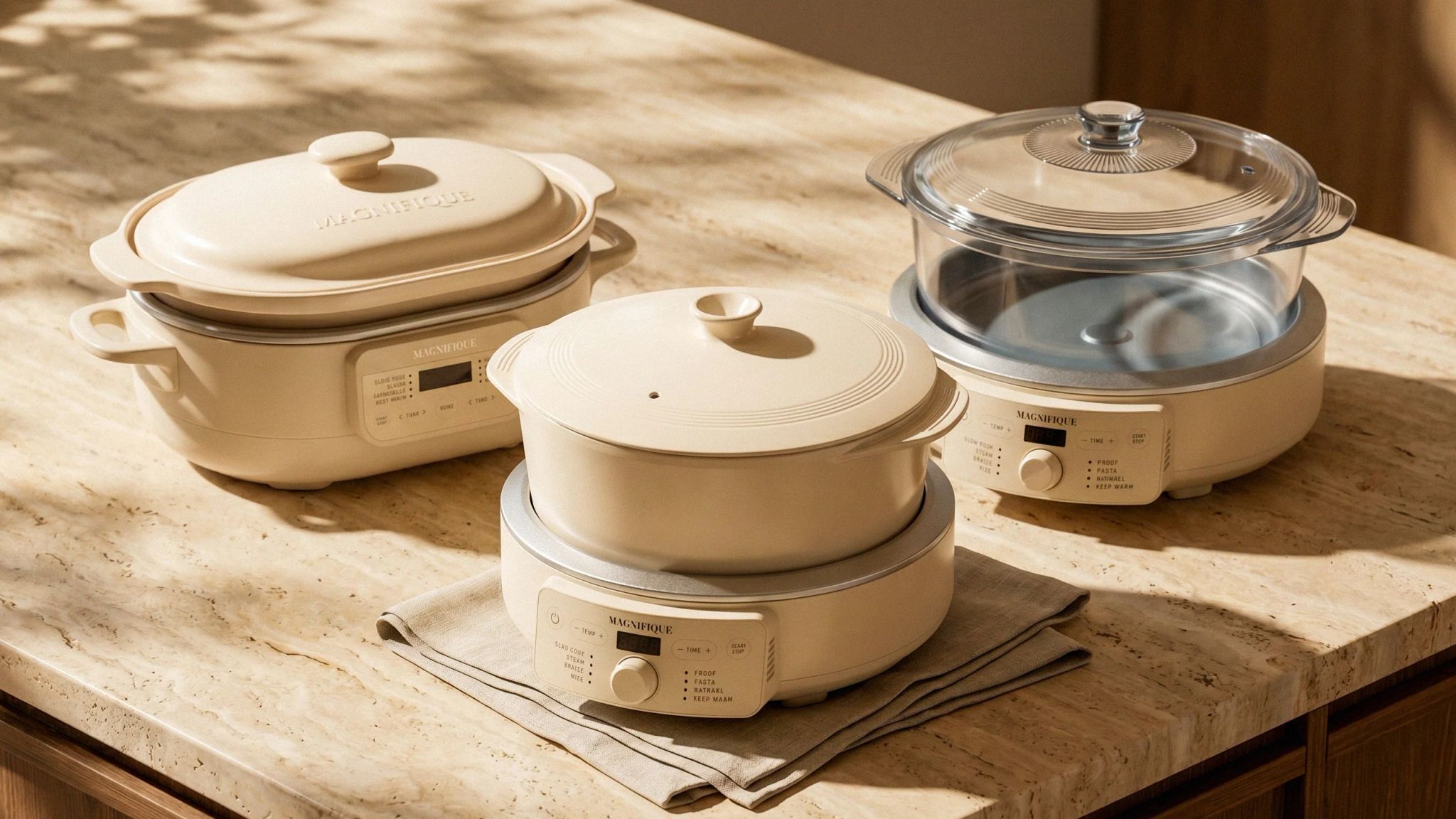
The Magnifique Glass Pot Multi-Cooker takes the material question in a different direction: its pot and lid are borosilicate glass, with a stainless steel steam rack. Borosilicate glass is inert at cooking temperatures, does not leach, requires no seasoning or deglazing technique, and can go directly into a dishwasher. Eight cooking modes include slow cook, steam, saute, rice, keep warm, and pressure cook.
The glass pot's advantage for this guide's purposes is complete transparency: you can observe the food throughout the cooking cycle without opening the lid and releasing steam. For buyers who cook sauces, broths, or anything that benefits from visual monitoring, the glass pot makes that possible in a way a steel pot cannot. The trade-off is fragility; glass cracks under impact in a way stainless does not.
6. Magnifique Round Claypot Multi-Cooker — Best clay-pot option

The Magnifique Round Claypot Multi-Cooker uses a 100% kaolin clay inner pot. Kaolin clay is a natural mineral with no coatings, no metallic components in the food-contact surface, and no synthetic binders. Clay cookware has been used for millennia in North African, East Asian, and Southern European cooking traditions precisely because clay is chemically inert and imparts no detectable flavor.
The electric base handles temperature regulation so the clay pot does not require the monitoring attention of a traditional wood-fire clay cooker. The pot includes rice, slow cook, saute, steam, and keep warm modes. For buyers who want the material profile of traditional clay cookware with the convenience of an electric appliance, this is the only option in the category.
7. HOUSNAT 10-in-1 Programmable Slow Cooker — Best budget pick
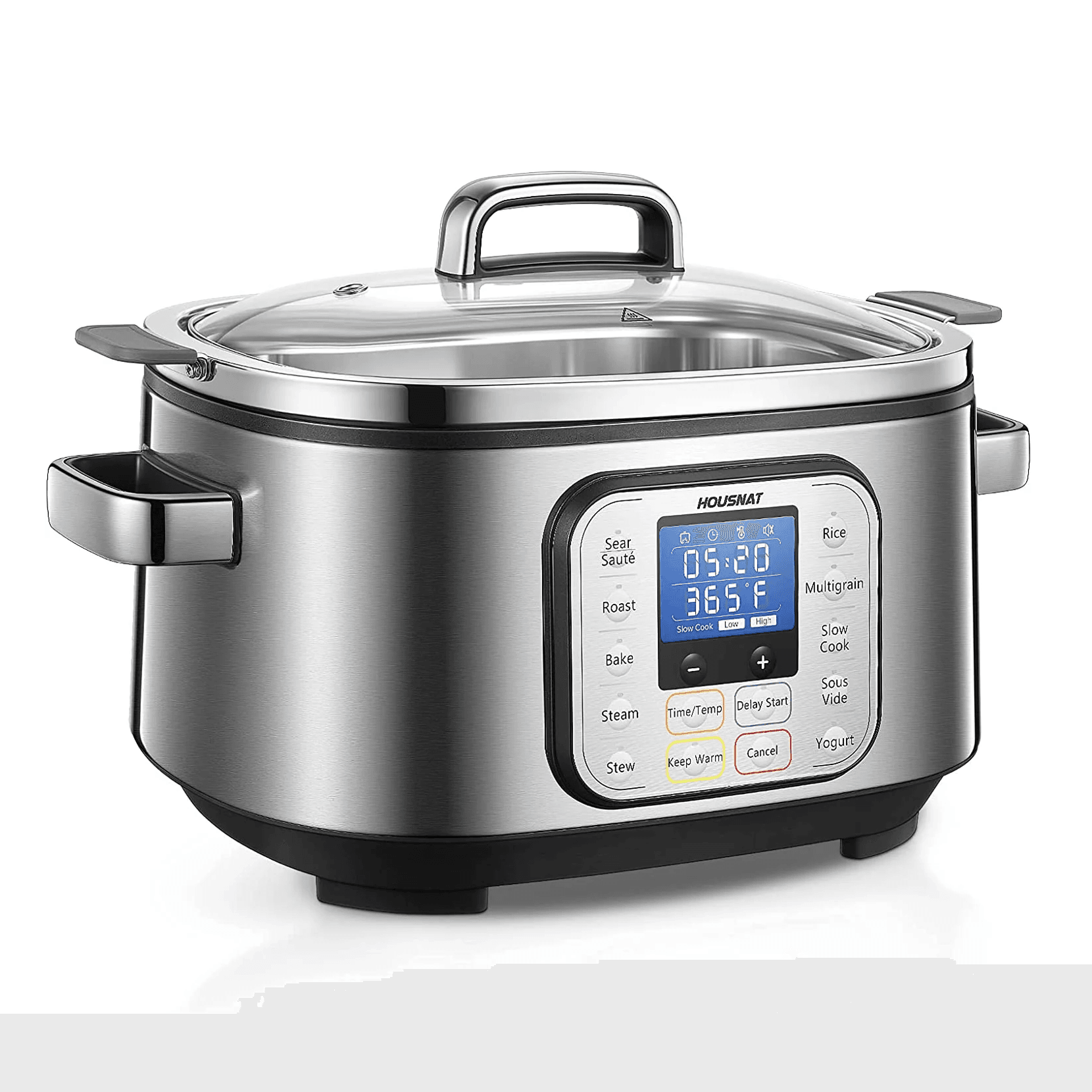
The HOUSNAT 10-in-1 is the value case for 304 stainless steel. The inner pot is bare, uncoated 304 stainless confirmed by the brand's product documentation, with ten cooking programs: pressure cook, slow cook, rice, steam, saute, yogurt, keep warm, and three additional specialty modes.
HOUSNAT is a smaller brand with less community documentation than Instant Pot. The tradeoff is a confirmed material disclosure and a price point that makes the uncoated pot accessible to buyers who do not want to pay for brand premium. For buyers who are comfortable with limited recipe library support and want verified 304 stainless from outside the two big brands, it delivers on that narrower brief.
8. Magefesa Practika Plus Stainless Steel Pressure Cooker — Best lower-cost stovetop
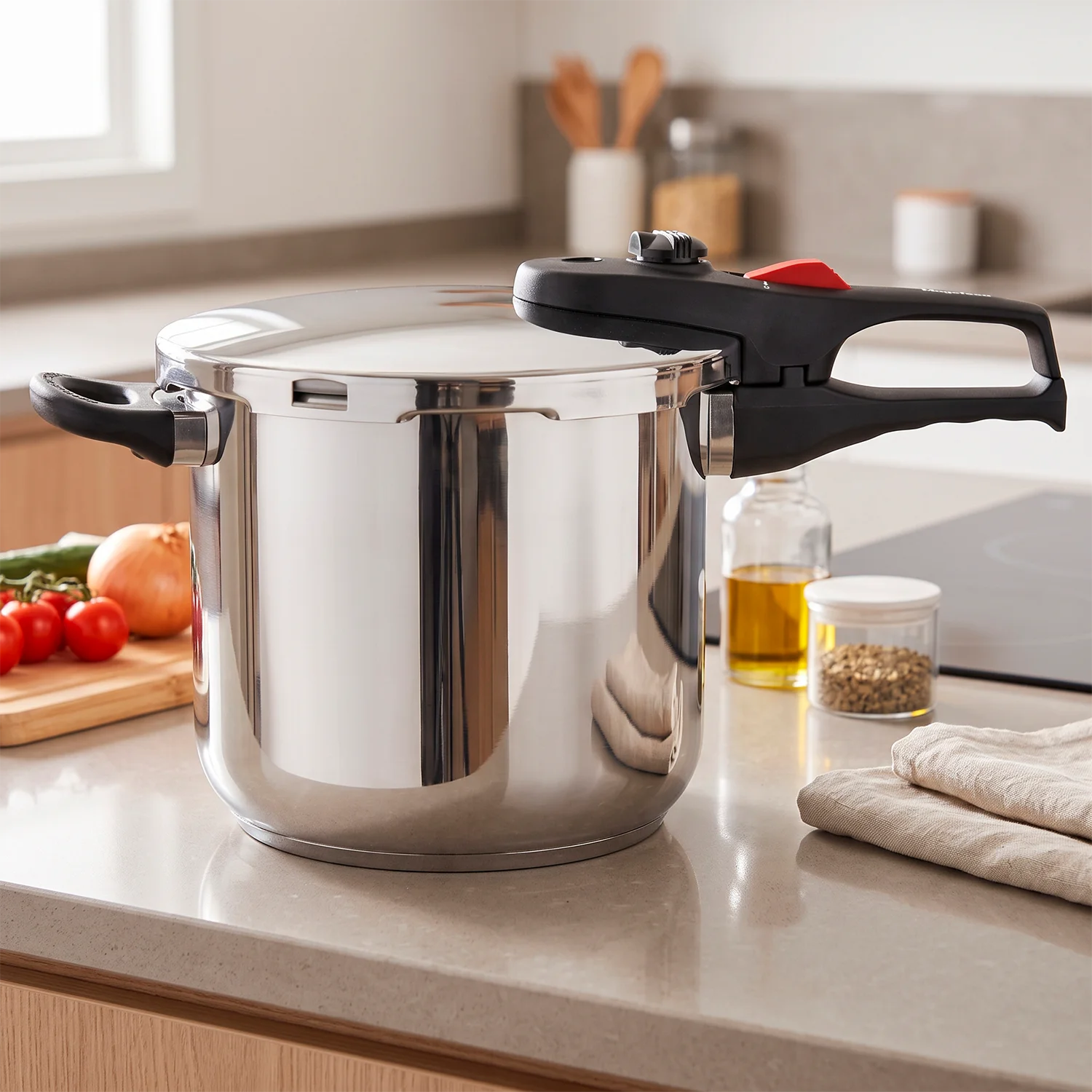
The Magefesa Practika Plus is the lower-cost way into stovetop pressure cooking. The body and interior are 18/10 stainless steel, over a five-layer encapsulated base that works on gas, electric, ceramic, glass-ceramic and induction hobs. It is sold in 6.3 and 8.4 quart sizes.
Against the Fissler Vitavit Premium it offers fewer sizes and a one-year warranty. What it keeps is the part that matters for this guide: a named stainless grade for the pot itself. Magefesa recommends washing it by hand and drying it straight away.
9. All-Clad 6-in-1 Digital Slow Cooker — Best for slow cooking and braising
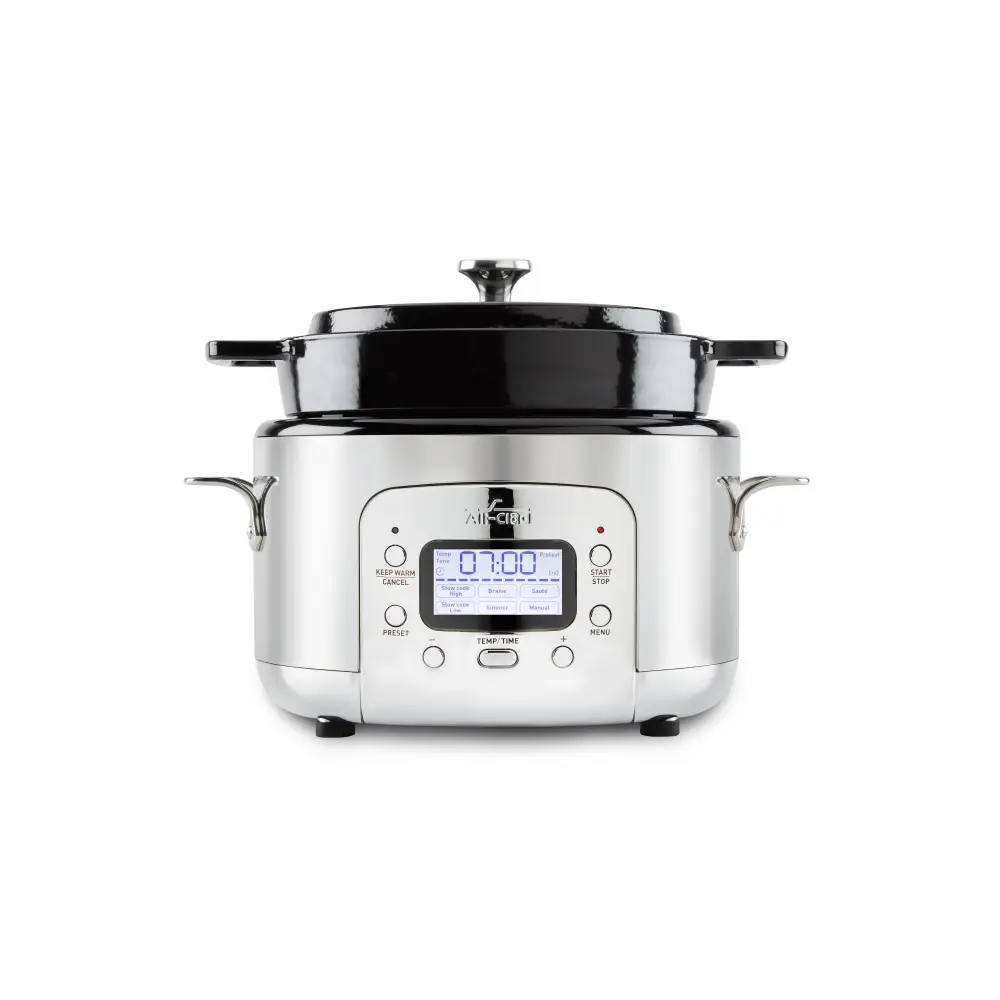
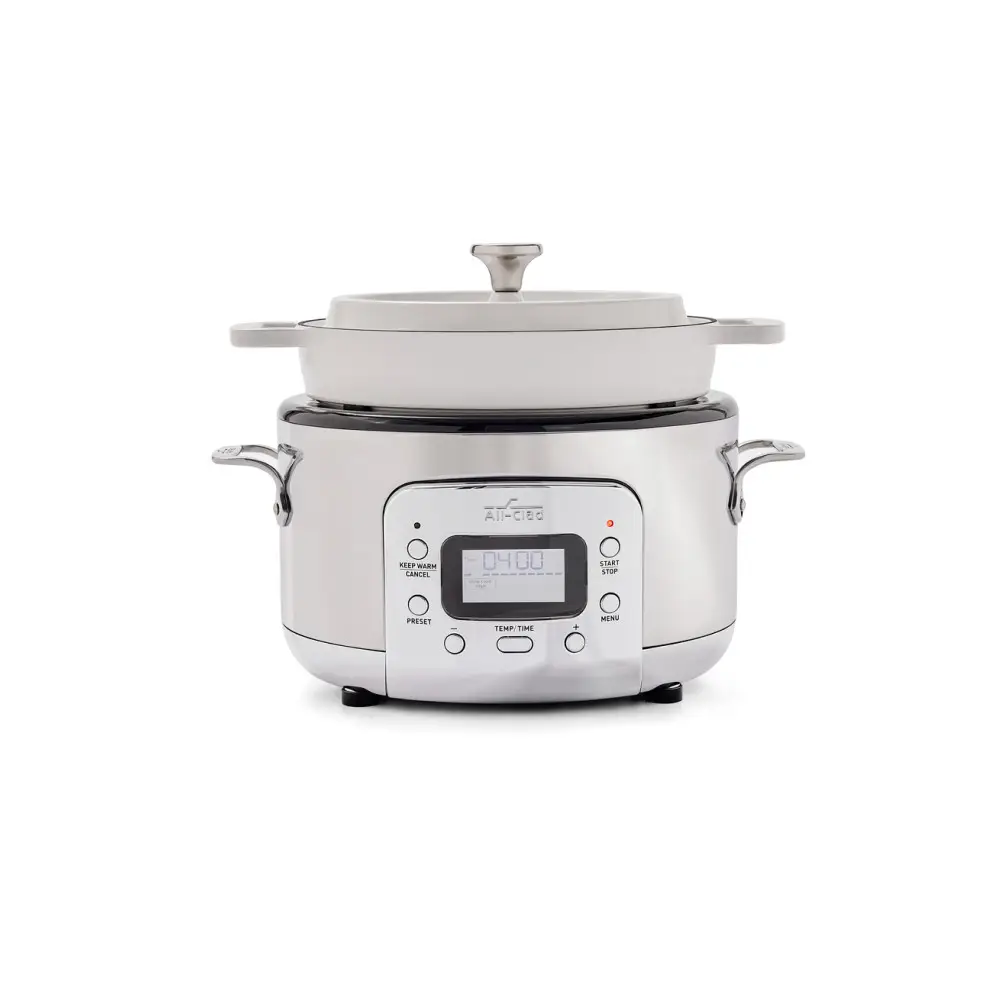
The All-Clad 6-in-1 Digital Slow Cooker does not pressure-cook. It is here for the cook who wants long, low programs in a pot with no polymer coating: the removable 5-quart pot is enameled cast iron, inside a stainless steel housing. Six programs cover high and low slow cook, braise, sauté, simmer and a manual mode. The same cooker is also sold in white: All-Clad 6-in-1 Digital Slow Cooker, white.
Having sauté and slow cook in one pot means a braise can start and finish in the same vessel. The trade-offs are the weight of cast iron and the care it asks for: the pot is washed by hand. If pressure cooking is what you are after, choose one of the pressure cookers above; this pick is for stews and braises that want hours.
10. 360 Cookware Stainless Steel Slow Cooker — Best all-stainless slow cooker

The 360 Cookware Stainless Steel Slow Cooker is the slow cooker with nothing but plain metal against the food: a 4-quart pot of T-316 surgical grade stainless steel on a steel plate heating base. It does not pressure-cook. The pot lifts off the base and can be used on the stovetop, so a dish can be browned and slow cooked in the same vessel.
Choose it over the All-Clad if you want uncoated stainless steel in place of enamel. Choose the All-Clad for the larger 5-quart pot and its built-in programs.
11. Brod and Taylor Folding Proofer and Slow Cooker — Best for bakers who also slow cook

The Brod and Taylor Folding Proofer and Slow Cooker is the odd one out, and it is here for one cook in particular: the bread baker who also wants to slow cook without another appliance on the counter. It is a folding chamber that holds a set temperature from 70 to 195°F, low enough to proof dough and culture yogurt, high enough to slow cook. The frame and the wire rack are stainless steel and the water tray is aluminum. It folds flat for storage.
It does not pressure-cook, and it has no pot of its own: you slow cook in a pot you already own, so the material against your food is that pot's. If you want a cooker that comes with its pot, choose one of the two slow cookers above.
12. Fissler Vitaquick Premium Pressure Cooker — Best stovetop with a steamer insert

The Fissler Vitaquick Premium is the second Fissler in this guide, and it earns the place by being a different offer from the Vitavit: one 6.3 quart size, sold with a steamer insert and a tripod. The pot is 18/10 stainless steel and works on induction.
Choose it over the Vitavit Premium if you want the steaming kit in the box and do not need the wider range of sizes. The material case is the same for both: a named 18/10 stainless steel pot.
What we passed on
Bella makes multi-cookers widely available at mass-market retailers, but all of their electric pressure cooker models use nonstick-coated inner pots. PTFE coating is a disqualifier regardless of price point; the entire Bella line was excluded on that basis.
Chef iQ is an Instant Pot competitor with a ceramic nonstick inner pot (explicitly PTFE-free and PFOA-free per the brand). The ceramic coating is not a PTFE disqualifier, but the product page carries a Proposition 65 warning (Cancer and Reproductive Harm) with no chemical identified. Without a named chemical, the warning cannot be evaluated against our disqualifier list; Chef iQ remains conditional in our research until the Prop 65 source is clarified.
GreenLife produces multi-cookers with Thermolon ceramic nonstick coating, which the brand markets as PFAS-free. The inner pot coating claims were not independently verifiable from the brand's product documentation for the specific multi-cooker models; GreenLife remains conditional pending clearer per-model disclosure.
KitchenAid makes multi-cookers but the inner pot material could not be confirmed from the brand's product documentation for any current model. Some KitchenAid models are reported to use PTFE nonstick; without per-model material confirmation, the brand was left as conditional.
VitaClay's Nourishing Pot uses an unglazed Zisha clay inner pot, passes every disqualifier, and includes a pressure-cook mode. It covers the same material class as the Magnifique Round Claypot at nearly three times the price. With both clay-pot options on the page, the Magnifique was the stronger value proposition for most buyers.
FAQ
Does the Instant Pot inner pot have a nonstick coating?
The models in this guide, specifically the Duo 7-in-1 and the Duo Crisp Ultimate Lid, use stainless steel inner pots with no coating. Instant Pot does sell a separate nonstick pot upgrade for some models; we only list and link the stainless pot versions. Confirm the pot material on any model you purchase before the box is opened.
Is the silicone sealing ring safe at pressure-cooking temperatures?
Food-grade silicone is thermally stable across the full range of electric pressure cooker operation, typically up to 250 F (121 C). It does not leach at those temperatures. The ring is a replaceable part on all Instant Pot and Cuckoo models listed here, available directly from each brand. Most users replace the ring every 12 to 18 months or when odor retention becomes noticeable, whichever comes first.
How do I avoid the burn notice with a stainless steel pot?
The burn notice on most Instant Pot models is a dry-bottom safety sensor, not a defect in the pot material. Stainless steel requires a small amount of liquid between the pot base and the food before pressurizing. A quarter cup of water or broth, or deglazing after a saute step, prevents the sensor from triggering. This is a technique adjustment, not a reason to choose a coated pot.
What is the difference between the stovetop Fissler and the electric models?
A stovetop pressure cooker like the Fissler Vitavit requires a compatible burner, operates manually, and has no slow-cook, saute, or rice programs built in. An electric multi-cooker is self-contained and programmable. Both categories use stainless steel pots and pass the same material criteria. The stovetop option is for buyers who prefer a tool with a simpler mechanical design and no electronic components.
Can I pressure cook with a glass or clay pot?
The Magnifique Glass Pot model in this guide includes a pressure-cook program. The Magnifique Round Claypot model does not include high-pressure cooking; it covers slow cook, steam, saute, rice, and keep warm. If pressure cooking is a primary requirement, the glass pot model qualifies and the clay pot model does not.
Cover: miltonphotography via Pexels (Pexels License). Source.