Our picks at a glance
| Pick | Best for | Key certifications | Price | Details |
|---|---|---|---|---|
| Canopy Bedside 2.0 | Small bedrooms, nurseries | FDA-cleared UV-C | $$ | Review |
| Venta LW25 | Filterless evaporative | No biocide filter | $$$ | Review |
| Carepod One | All-stainless interior | 304 stainless steel | $$$ | Review |
| Vitruvi Cloud | Design-led spaces | Disclosed BPA-free PP | $$$ | Review |
| Levoit Classic 300S | Budget ultrasonic | Disclosed BPA-free PP | $$ | Review |
| Frigidaire 50-Pint | Whole-room dehumidifying | ENERGY STAR, R-32 | $$$ | Review |
| Midea Cube 50-Pint | Compact dehumidifying | ENERGY STAR, R-32 | $$$ | Review |
Dry air causes cracked skin, irritated sinuses, and conditions in winter heating season where viruses survive longer on surfaces. Most humidifiers solve the humidity problem while creating a different one: a plastic reservoir refilled daily and cleaned monthly at best. That reservoir becomes a culture flask for bacteria, mold, and biofilm, which the ultrasonic plate then sends airborne with the mist.
The non-toxic lens asks a more specific set of questions. What exactly contacts the water? What exits as mist? How realistically can the unit be cleaned? These are not questions most manufacturers answer upfront, which is why this list is shorter than a general humidifier roundup.
This guide also covers dehumidifiers (picks 6 and 7) because the same material scrutiny applies to units that remove moisture, and because many households need both depending on the season or the room.
What we look for
Water contact materials. Ultrasonic humidifiers vibrate water into a fine mist at the molecular level. Whatever is in the water goes airborne, including dissolved minerals and anything that grew in the reservoir. We look for units where surfaces in sustained water contact are named: stainless steel, borosilicate glass, or food-grade polypropylene with a complete material statement. Units where the brand uses phrases like "premium plastic" or "food-safe materials" without naming the specific polymer fail this gate.
No biocide treatments. Silver-ion antimicrobial cartridges and nanosilver-coated filters are disqualifiers under our antimicrobial biocide rule. Every humidifier on this list either uses physical sanitation design (UV-C light, all-stainless interior, or evaporative mechanics) or has a plain paper wick with no coating.
Realistic cleaning design. A unit you cannot realistically clean every week will go uncleaned. Picks on this list either disassemble to dishwasher-safe components or have an interior geometry that allows full surface access with standard cleaning tools.
No PFAS or plastic in the mist path. A number of humidifiers use coated components or unlabeled polymers in the mist channel. We look for units that name each material, and we reject any with undisclosed coatings or PTFE-adjacent descriptions.
For dehumidifiers. The critical questions shift: what material is the condensate bucket? Is the filter coated with an antimicrobial treatment? What refrigerant does the unit use? We look for removable, cleanable buckets, untreated filters, and R-32 or R-410A refrigerant rather than legacy R-22.
Our picks
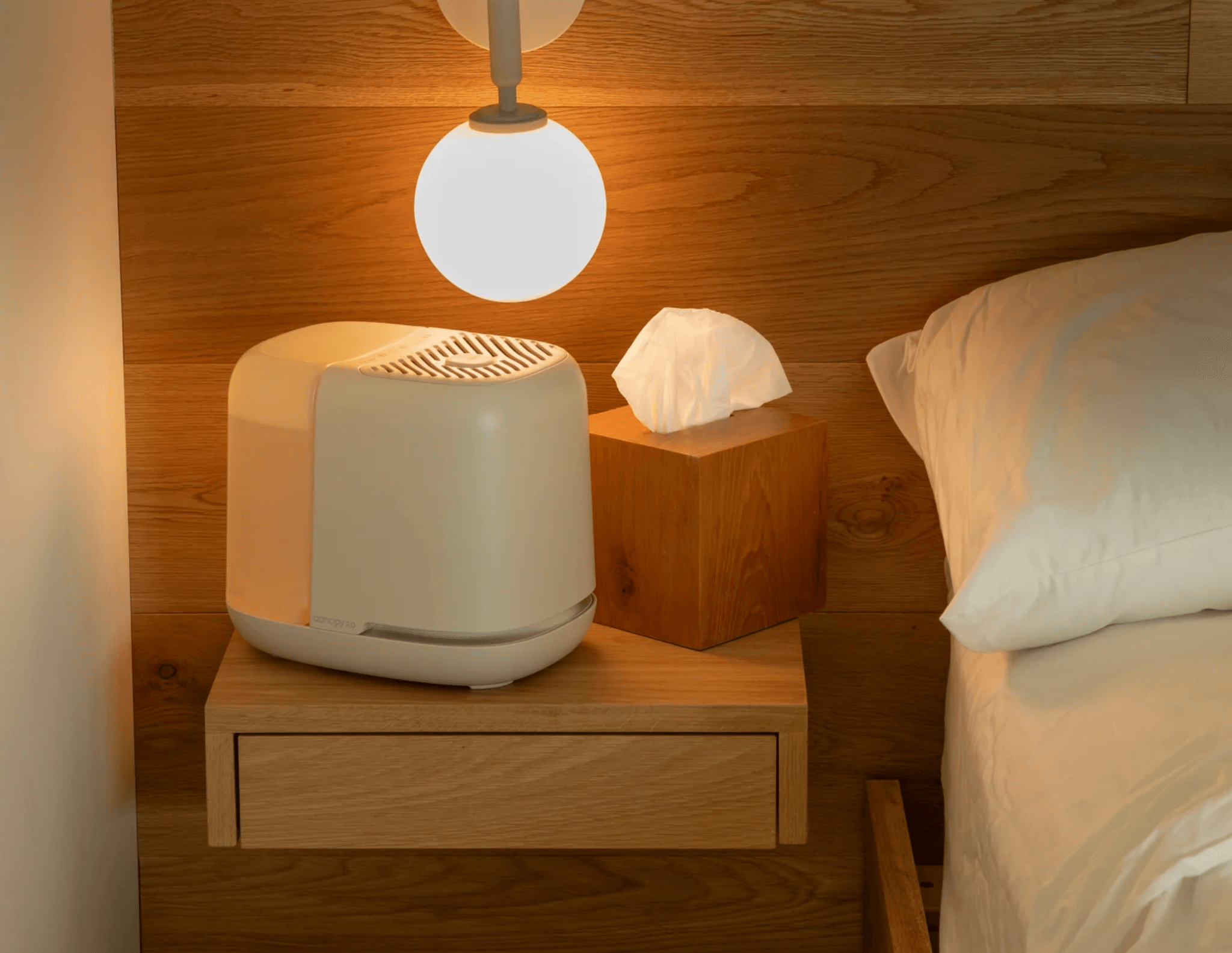
1. Canopy Bedside Humidifier 2.0: Best for small bedrooms and nurseries

The Canopy Bedside Humidifier 2.0 earns its top position because it removes the two failure modes that plague most ultrasonic humidifiers: contaminated reservoirs and undisclosed water-contact materials. The tank, tray, and all water-path components are dishwasher-safe, which means cleaning becomes a weekly dishwasher cycle rather than a vinegar-soak ritual. A UV-C light array treats water before it becomes mist. The replacement filter is a plain paper wick with no silver or biocide coating.
Coverage is sized for bedrooms up to about 500 square feet. It runs quietly enough for light sleepers. The optional aroma diffuser insert accepts essential oils via a separate compartment that does not interact with the main mist output.
The brand discloses polypropylene for all water-path surfaces and specifies the UV-C wavelength at 270nm. This level of transparency is still unusual in the category.
2. Venta LW25 Original AirWasher: Best evaporative
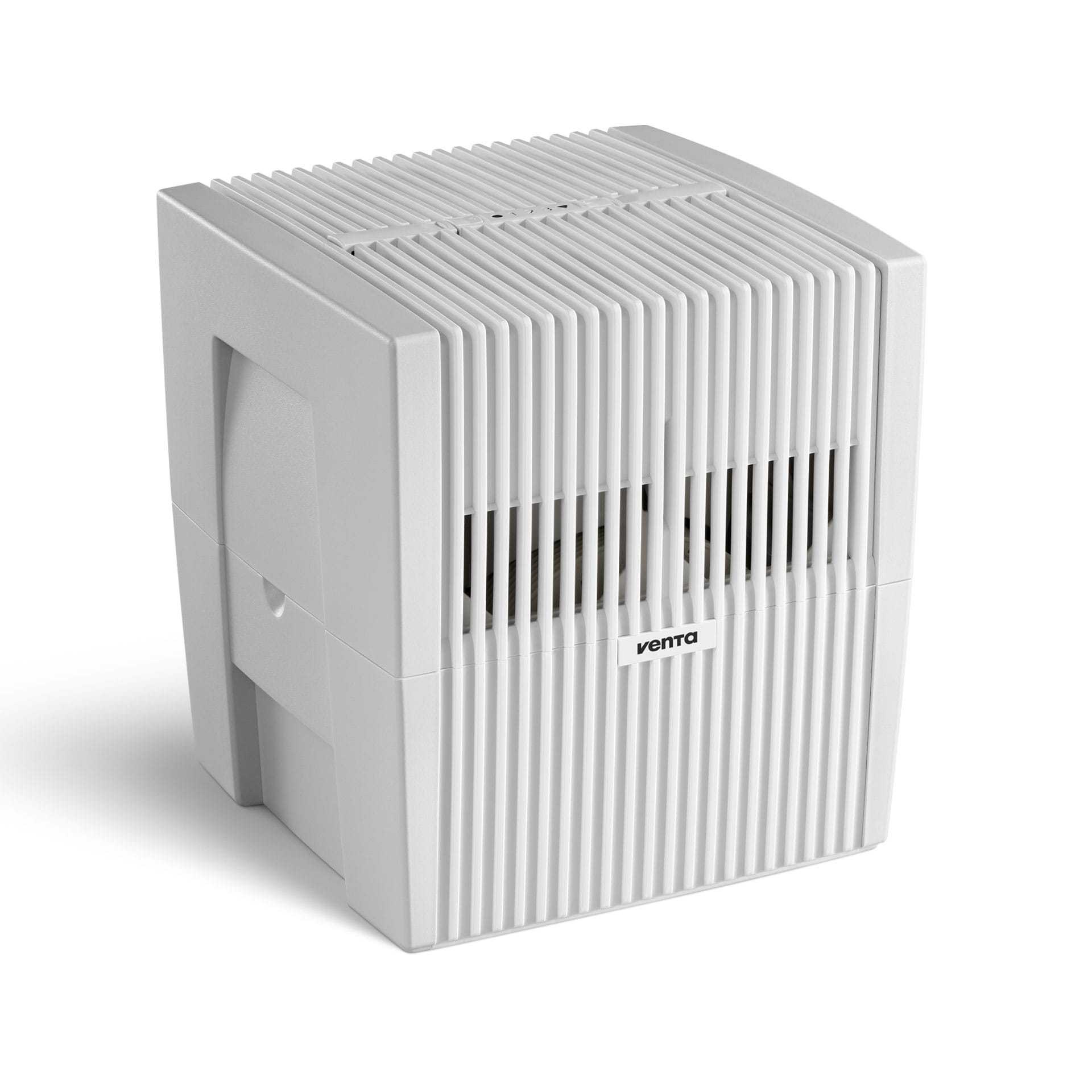
The Venta LW25 Original AirWasher takes a different approach to contamination risk: it does not produce mist at all. A stack of rotating polyethylene discs sits half-submerged in the water basin; air passes over the wet disc surfaces, picks up moisture through natural evaporation, and leaves minerals and contaminants behind in the water. Nothing is aerosolized that was not already in the ambient air.
The discs are polyethylene, the housing polypropylene. Venta publishes both on the product page. The disc stack lifts out and the basin wipes clean. Venta recommends their own Hygiene Booster maintenance additive; this is a cleaning product added to the water, not an antimicrobial coating baked into the unit.
The LW25 covers up to about 430 square feet and self-regulates: when ambient humidity reaches saturation, evaporation naturally slows without a humidistat. The trade-off is speed; evaporative units are slower than ultrasonic when humidity is very low.
3. Carepod One Stainless Steel Humidifier: Best all-stainless construction

The Carepod One Stainless Steel Humidifier eliminates polymer from the water path entirely. The reservoir and all interior water-contact surfaces are 304-grade stainless steel. Stainless steel does not leach, does not degrade over years of cleaning cycles, and does not harbor biofilm as readily as polymer surfaces.
Carepod is an ultrasonic unit with a ceramic mist nozzle. The operating noise level is rated at 28 dB at the lowest setting, quieter than most white-noise machines. Coverage is rated for spaces up to about 430 square feet.
Stainless interiors still require descaling. Dissolved minerals from tap water deposit on the ultrasonic plate over time. A weekly wipe with dilute citric acid or white vinegar prevents buildup. If you have very hard water, factor the descaling time into your decision.
4. Vitruvi Cloud Humidifier: Best design

The Vitruvi Cloud Humidifier is a matte ceramic-bodied ultrasonic unit that reads as a design object rather than an appliance. The outer housing is ceramic; the water reservoir is food-grade polypropylene, disclosed by Vitruvi on their product page. The mist nozzle is also ceramic. No coatings are listed on the water-contact components.
Coverage is rated up to about 400 square feet. The 2.5L tank refills from the top and runs up to 12 hours on a single fill. Mist output adjusts across three levels.
Versus the Carepod, the reservoir is polymer rather than stainless. Versus the Canopy, there is no UV-C light and no dishwasher-safe disassembly. The Vitruvi earns its position for people who want clean materials, a compact footprint, and a unit that integrates into a room without visual friction.
5. Levoit Classic 300S Humidifier: Best budget
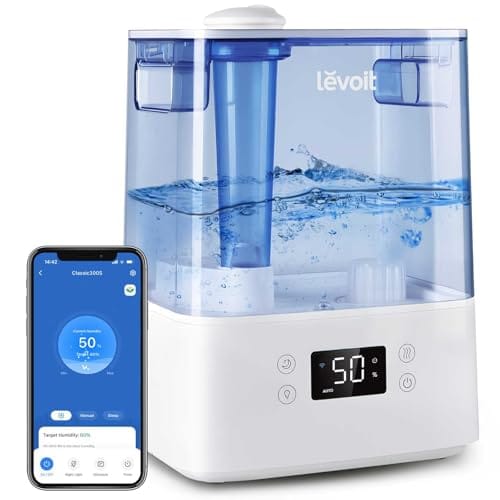
The Levoit Classic 300S Humidifier covers up to 500 square feet, includes built-in WiFi and voice control, and runs an auto mode that stops when target humidity is reached. Levoit discloses BPA-free polypropylene for the water-contacting components and publishes the material list on their site. The aroma pad is a separate insert; it does not mix with the main mist path.
At under $80 it is the most affordable pick here. Versus the Canopy there is no UV-C light. Versus the Carepod there is no stainless interior. Among ultrasonic humidifiers under $100 that actually name their water-contact materials, the Classic 300S is the most transparent option we found. The 6L tank means fewer refills than most competitors in this tier.
6. Frigidaire 50-Pint Dehumidifier (WiFi): Best dehumidifier overall
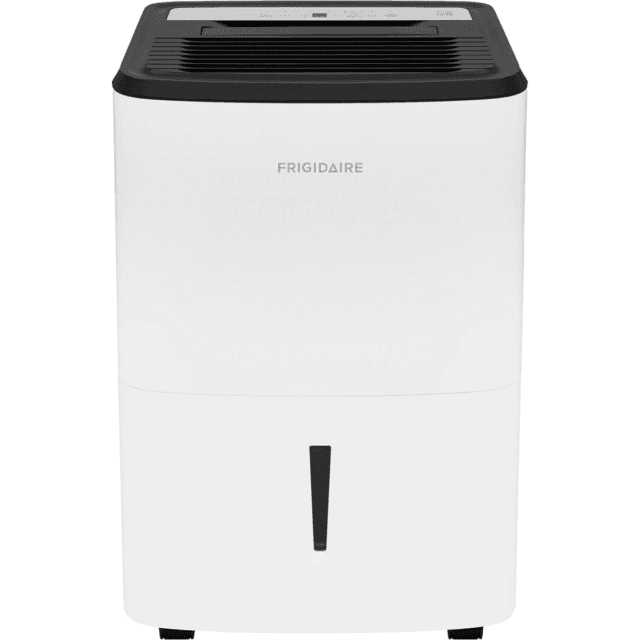
Picks 6 and 7 address the opposite problem: too much moisture. Basements, crawl spaces, and homes in humid climates need humidity removed rather than added. High indoor humidity above 60% creates conditions for dust mites, mold spore germination, and structural damage. The same material scrutiny applies.
The Frigidaire 50-Pint Dehumidifier uses R-32 refrigerant, which has a lower global warming potential than the R-410A still found in many older units. ENERGY STAR certified. The washable filter has no antimicrobial treatment listed. The condensate bucket is polypropylene and removes fully for cleaning; a drain hose port allows continuous drainage.
Coverage is rated for spaces up to 4,500 square feet at 50 pints per day. WiFi enables scheduling and remote humidity-target control via the Frigidaire Home app. Warranty is one year parts and labor.
7. Midea Cube 50-Pint Dehumidifier: Best compact dehumidifier
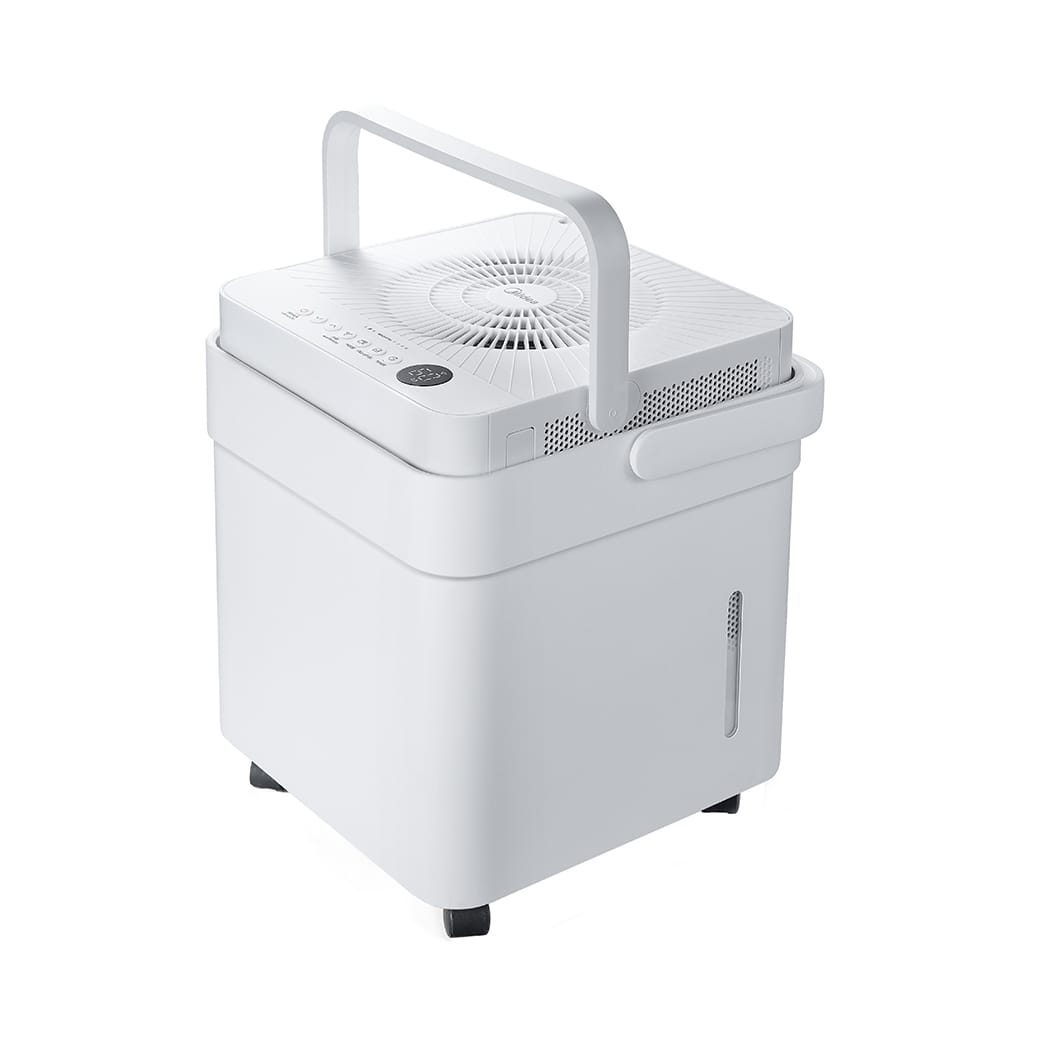
The Midea Cube 50-Pint Dehumidifier collapses for storage in a way no other 50-pint unit does: the top section nests inside the bottom, reducing the stored footprint by roughly half. In apartments and smaller basements where storage space is the constraint, this distinction matters.
ENERGY STAR certified, AHAM verified at 50 pints per day, R-32 refrigerant. The condensate bucket holds approximately 7.5 pints. The filter has no stated antimicrobial treatment. Midea is one of the largest appliance manufacturers globally; the Cube dehumidifier is sold directly and through major retailers, at $246.
What we passed on
Stadler Form Oscar: A popular Swiss-designed ultrasonic humidifier with a clean aesthetic and a following in the non-toxic community. OOS across all merchants we checked and has been for several months. We will revisit when restocked.
Most ultrasonic humidifiers under $40: Water-path materials are universally undisclosed in this price tier. "BPA-free" appears on packaging but the replacement polymer is never named. We cannot pass a product where the brand opts out of basic ingredient transparency.
Levoit LV600S (warm and cool mist): The warm mist function heats water, which reduces bacterial growth risk. But the reservoir is unsealed polycarbonate, which may contain bisphenol residuals. Levoit does not publish the name of the BPA replacement on this model; we could not verify water-contact materials against the disqualifier list.
FAQ
Are ultrasonic humidifiers safe?
Ultrasonic humidifiers are safe when the reservoir is cleaned weekly and the water is filtered or distilled. An unclean reservoir grows biofilm; the ultrasonic plate then aerosolizes that contamination into the mist stream. The Canopy's dishwasher-safe design and UV-C light address this at the product level rather than relying solely on cleaning discipline.
Is tap water safe to use in a humidifier?
Tap water contains dissolved minerals that ultrasonic humidifiers aerosolize as fine white dust. This is not acutely harmful, but the mineral aerosol accumulates on surfaces and can be inhaled over time. Filtered or distilled water reduces this output considerably. Evaporative humidifiers like the Venta LW25 are less sensitive to water quality because water evaporates naturally while minerals remain in the basin.
What humidity level is healthy indoors?
The EPA recommends maintaining indoor relative humidity between 30% and 50%. Below 30%, nasal passages dry out and wood furniture shrinks. Above 50%, dust mite populations increase and mold growth becomes more likely. A humidifier with a built-in hygrostatic auto-mode, like the Levoit Classic 300S, stops automatically when your target is reached.
Do humidifier filters need to be antimicrobial?
No. Antimicrobial filter coatings (silver-ion, nanosilver) are disqualifiers under our antimicrobial biocide standard. A plain paper or woven filter with no coating is preferable. The Canopy's paper wick filter and the Venta LW25's filterless design both clear this gate cleanly.
What is the difference between a humidifier and a dehumidifier?
A humidifier adds moisture to dry air; a dehumidifier removes moisture from humid air. Most homes need a humidifier in winter when heating systems dry the indoor air, and a dehumidifier in summer or in persistently damp spaces such as basements. If your indoor humidity reads consistently above 60%, start with a dehumidifier rather than treating the symptoms.
Cover photo via Unsplash (Unsplash License).