

Our picks at a glance
| Pick | Best for | Key certifications | Price | Details |
|---|---|---|---|---|
| Blueland Glass + Mirror Starter Set | Best overall | EPA Safer Choice, USDA BioPreferred, C2C Platinum | $$ | Full review |
| Branch Basics Concentrate, 33.8 oz | Multi-use concentrate | MADE SAFE, EWG Verified | $$$ | Full review |
| ECOS Window Cleaner, Vinegar, 22 oz | Best budget | EPA Safer Choice, Leaping Bunny | $ | Full review |
| AspenClean Natural Glass Cleaner, 22 oz | Light scent | EWG Verified | $ | Full review |
| Aunt Fannie's Glass + Window Vinegar Wash, 16.9 oz | Minimal ingredients | Full ingredient disclosure | $ | Full review |
| Force of Nature Starter Kit | Disinfecting glass | Green Seal, EPA List N | $$$ | Full review |
Most glass cleaners on store shelves rely on ammonia, glycol ethers, or fragrance blends that are not fully disclosed. These pass the sniff test but not the ingredient test: ammonia is a respiratory irritant at concentrations found in common household sprays, and several popular brands include synthetic surfactants under trade-secret claims.
The glass cleaner category is also one where "natural" has nearly no regulatory meaning. A bottle can carry a leaf logo and still contain undisclosed fragrance or a conventional surfactant. What actually clears the bar: a third-party certification that reviews every ingredient, or a published ingredient list short enough to cross-reference yourself.
What we look for
Ammonia-free, always. Ammonia is the most common active in mainstream glass cleaners and the most avoidable. It is a respiratory irritant, reacts with bleach to form chloramines, and adds nothing a mild acid or plant-derived surfactant cannot accomplish. No pick here contains it.
Full ingredient disclosure. A glass cleaner is applied to surfaces in enclosed spaces with poor ventilation. Every surfactant and solvent should be named. We disqualified any brand using "cleaning agents (surfactant blend)" or similar trade-secret language.
No glycol ethers or high-VOC solvents. 2-butoxyethanol and propylene glycol butyl ether are commonly used in glass cleaners for streak prevention; both carry EPA hazard flags. We require either no-solvent formulas or solvents that have passed EWG or EPA hazard review.
No undisclosed fragrance. "Fragrance" as an ingredient can contain dozens of compounds, some linked to respiratory sensitization. Products that list only "fragrance" or "natural fragrance" without naming the specific essential oils or aroma compounds are disqualified. Named essential oils are fine.
Certifications that verify, not just label. EPA Safer Choice reviews all ingredients against EPA hazard criteria. EWG Verified requires disclosure and screens against known hazardous chemicals. MADE SAFE evaluates every ingredient for human and ecological toxicity. We give weight to certifications that have published criteria and an actual verification process, not to claims like "plant-based" or "eco-friendly" that have no regulatory definition.
Our picks
1. Blueland Glass + Mirror Starter Set: Best overall

The Blueland Glass + Mirror Starter Set clears every certification bar we apply and adds one more: Cradle to Cradle Platinum, which addresses materials, recycling, and end-of-life, not just the cleaning chemistry. The USDA BioPreferred designation means the formula is independently verified as bio-based, which Blueland publishes with the percentage on its certifications page.
The format is a small dissolvable tablet that drops into Blueland's reusable glass spray bottle. No single-use plastic. One tablet per refill. The ingredient list is short: a plant-derived surfactant, citric acid, and sodium carbonate. No glycol ethers, no fragrance, no optical brighteners.
The starter set includes the reusable bottle and one tablet. Refill tablets are sold separately through the brand's site. The per-use cost is roughly comparable to a premium ready-to-use spray.
2. Branch Basics Concentrate, 33.8 oz: Best multi-use concentrate

The Branch Basics Concentrate is the pick if you want one product to replace your entire cleaning cabinet. The 33.8 oz bottle dilutes into a glass cleaner (1 teaspoon per 8 oz water), an all-purpose spray, a bathroom cleaner, a laundry booster, and a foaming hand wash. Each use costs less than any ready-to-use bottle here.
Dual MADE SAFE and EWG Verified certifications mean every ingredient in the concentrate has passed two independent hazard reviews. The formula is free of synthetic fragrance, PEG-derived surfactants, optical brighteners, and glycol ethers. For glass, the recommended dilution gives a streak-free result without any solvent assist.
The concentrate is fragrance-free. If you want scent, the brand sells a separate essential oil blend that can be added post-dilution, but the base formula ships without it.
3. ECOS Window Cleaner, Vinegar, 22 oz: Best budget
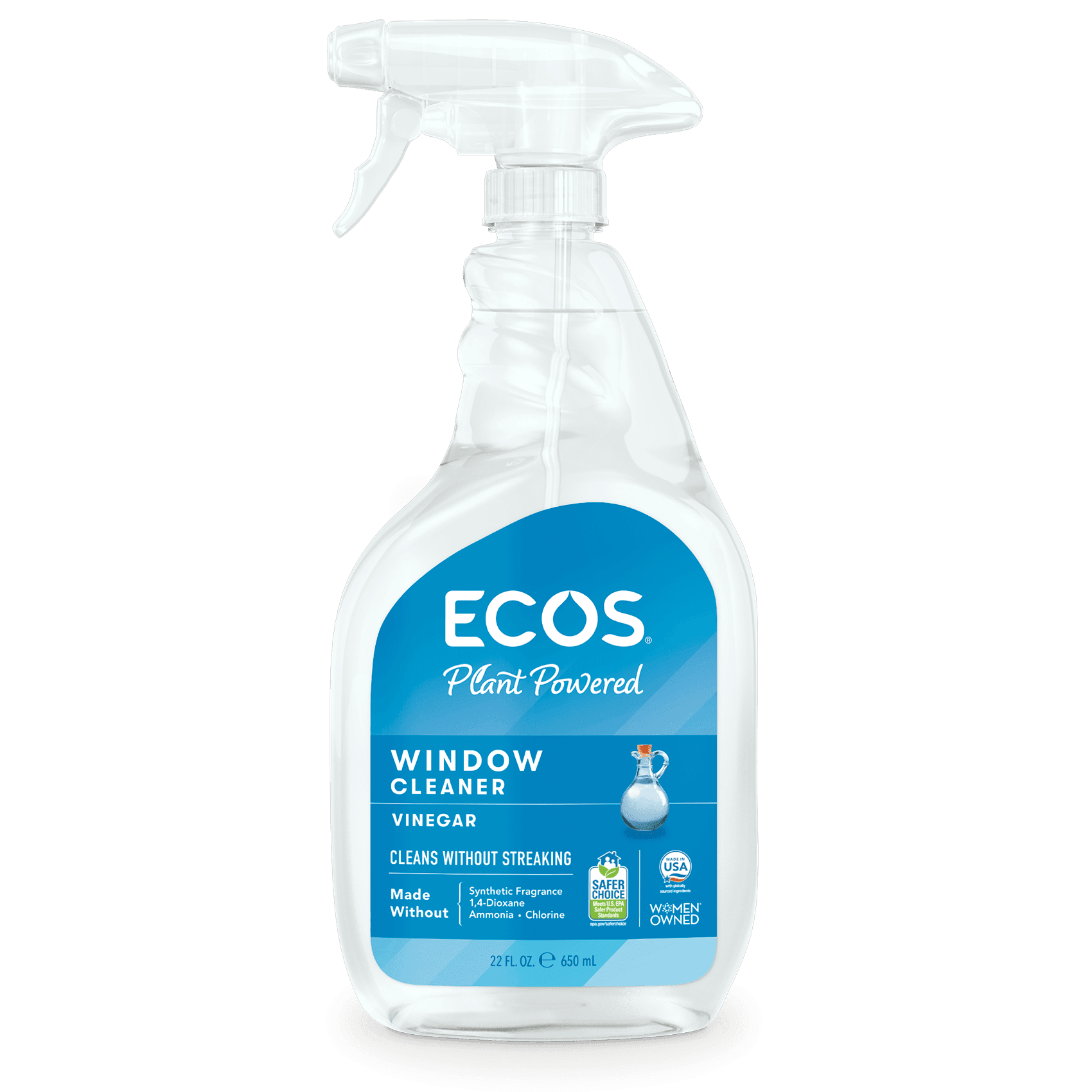
The ECOS Vinegar Window Cleaner costs four to six dollars per bottle, making it the most accessible pick on this list. EPA Safer Choice certification means every ingredient passed EPA's hazard screen, and Leaping Bunny confirms no animal testing in the supply chain.
The active cleaning agent is dilute white vinegar (acetic acid), which cuts through mineral deposits and grease without a synthetic surfactant. The formula is unscented, which is rare at this price point. ECOS manufactures in the United States under EPA Safer Choice oversight, which also covers the manufacturing facility.
The bottle is a standard 22 oz ready-to-use spray with no mixing required. If you want the most defensible option at the lowest price point, this is it.
4. AspenClean Natural Glass Cleaner, 22 oz: Best lightly scented

The AspenClean Natural Glass Cleaner is the option for readers who want a scented spray that does not hide its scent behind "fragrance." The only scent compound is organic lime essential oil, named on the label and in the online ingredient list.
EWG Verified status confirms disclosure and hazard screening. The formula is free of ammonia, synthetic surfactants, and artificial dyes. At roughly the same price as ECOS, it is competitive for a certified scented cleaner.
AspenClean is based in Canada and uses GOTS-certified organic essential oils for its scents. The glass cleaner is ready-to-use, no dilution required.
5. Aunt Fannie's Glass + Window Vinegar Wash, 16.9 oz: Fewest ingredients
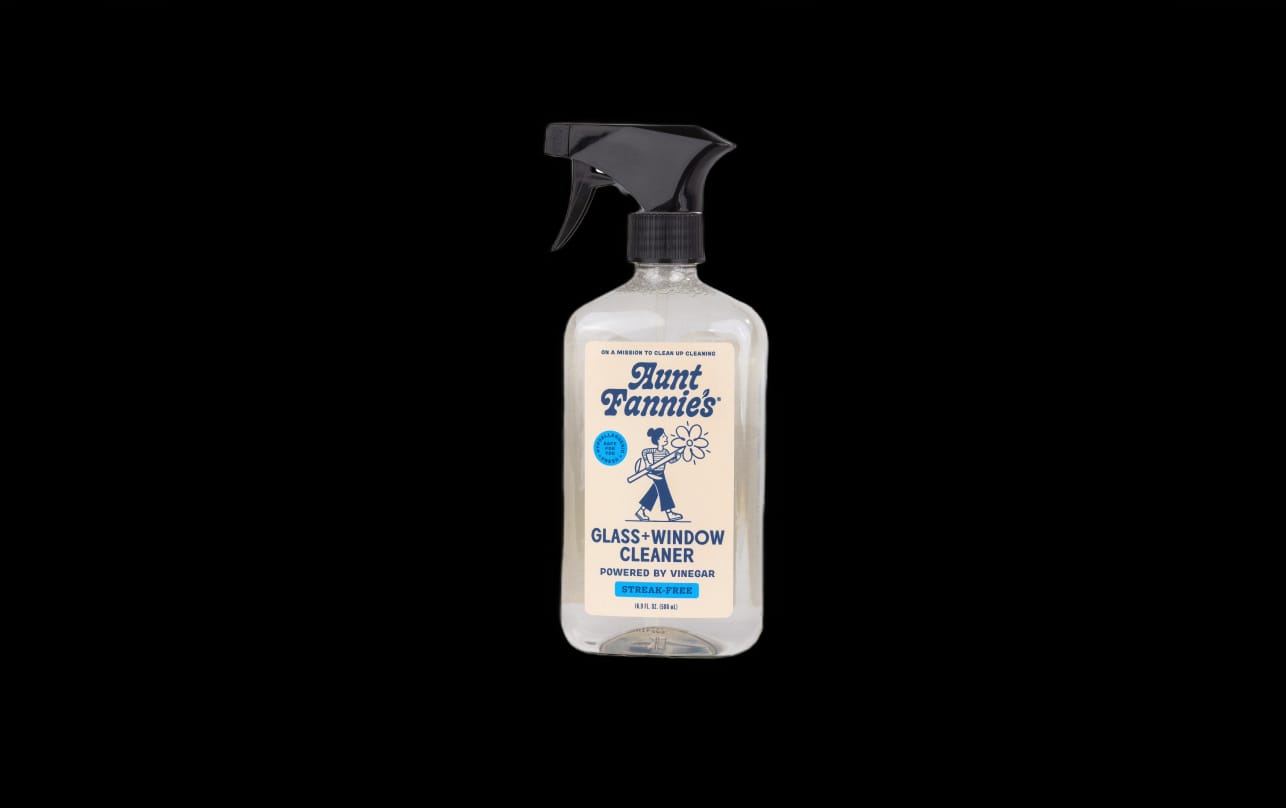
The Aunt Fannie's Glass + Window Vinegar Wash carries no third-party certification, but makes up for it with the shortest ingredient list on this page: water, white distilled vinegar, decyl glucoside (a named plant-derived surfactant), and essential oil. Every ingredient is printed on the bottle. No trade-secret blends, no "surfactant system," no fragrance.
This is the pick for readers who prefer to verify ingredients themselves. The list is short enough to look up every compound in five minutes. Decyl glucoside is a well-documented, low-hazard sugar-derived surfactant; dilute vinegar is the active; and the essential oil is the only scent source.
The 16.9 oz bottle is slightly smaller than the ECOS and AspenClean options at a comparable price. Available through the brand's site and on Amazon.
6. Force of Nature Starter Kit: Best for disinfecting
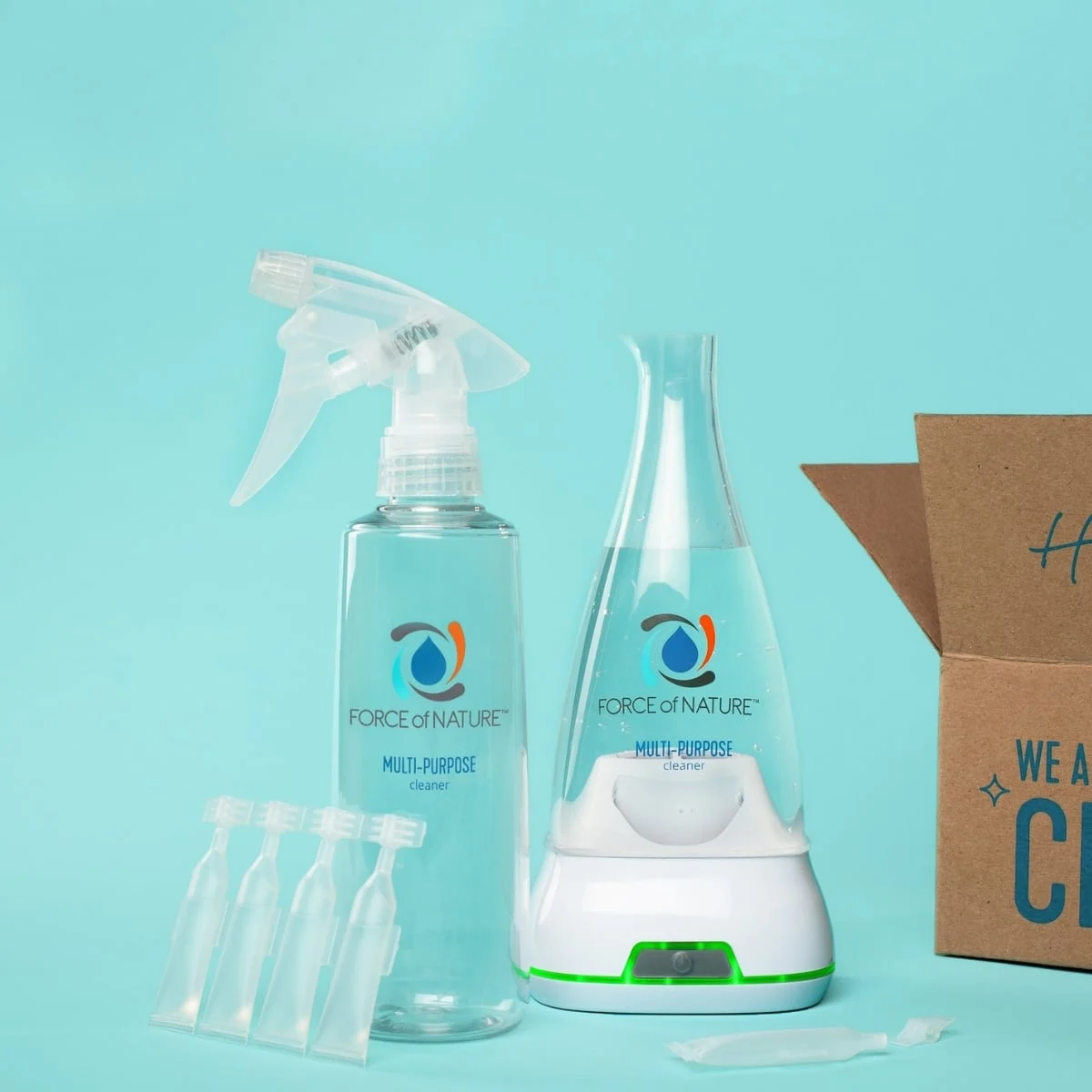
The Force of Nature Starter Kit is categorically different from every other pick here. It is an electrolyzer appliance that generates hypochlorous acid on demand from water, salt, and a small vinegar capsule. The resulting liquid is a Green Seal certified cleaner and an EPA List N registered disinfectant.
Hypochlorous acid (HOCl) is what white blood cells produce to fight infection. At the concentrations Force of Nature generates, it kills 99.9% of pathogens including SARS-CoV-2 on glass surfaces, per EPA List N data. Unlike bleach, it leaves no chlorine residue after drying; the HOCl degrades back to water and a trace of salt.
The limitation is format: the electrolyzer generates a batch per capsule, and shelf life of the resulting HOCl is approximately two weeks. It is not a grab-and-go spray you fill once and use all year. For most households, it is a dedicated disinfecting tool rather than a primary everyday window cleaner.
What we passed on
Better Life Natural Glass Cleaner lists "cleaning agents" without disclosing the specific surfactant compounds, failing our ingredient-transparency requirement.
Method Glass Cleaner uses undisclosed synthetic fragrance, disqualifying it outright. The brand has not adopted EWG Verified certification for this product.
Seventh Generation Glass Cleaner lists "surfactant (plant-derived)" without naming the compound. We applied the same standard here as to Better Life: if the compound is not named, the product is not listed.
Invisible Glass discloses some ingredients but continues to use undisclosed fragrance across its formulations.
Truly Free Glass Cleaner labels itself fragrance-free but does not carry independent certification, and its surfactant list includes ingredients under EWG caution flags.
FAQ
Is vinegar safe to use on all glass surfaces?
Dilute vinegar at the concentrations in ECOS and Aunt Fannie's is safe on standard residential window glass, mirrors, and glass cooktop surfaces once they have cooled. It should not be used on natural stone countertops because acidity etches the surface, but that is a countertop concern and not a window concern. On tempered glass shower doors it is safe; on plastic-framed windows, extended contact with the frame is worth avoiding.
What makes a glass cleaner streak-free without ammonia?
Ammonia prevents streaks by evaporating quickly and cutting grease, but dilute acids (vinegar, citric acid) do the same without the respiratory hazard. Plant-derived surfactants like decyl glucoside or alkyl polyglucoside also provide streak-free results when used in low enough concentrations that no residue remains. Blueland's tablet formula uses citric acid and sodium carbonate as the active pair; the low surfactant loading in the recommended dilution is what keeps it from filming.
Can I use Branch Basics Concentrate for windows?
Yes. Branch Basics recommends 1 teaspoon of concentrate per 8 oz of water in their spray bottle for glass. At that dilution, the surfactant concentration is low enough that it does not leave a film. Use a microfiber cloth and buff after spraying for best results. The brand's site has a dilution chart for every use case.
Do these cleaners work on greasy kitchen windows?
For greasy buildup above a stove, vinegar-based sprays (ECOS, Aunt Fannie's) are less effective than a mild surfactant-based cleaner like Branch Basics or Blueland. For routine maintenance cleaning, all six picks perform well. For heavy-grease situations, Branch Basics at a slightly higher dilution (1.5 tsp per 8 oz) or a second pass is the recommendation from the brand's application guide.
What is Cradle to Cradle Platinum, and why does it matter for a glass cleaner?
Cradle to Cradle Platinum is the highest level of the C2C Products Innovation Institute's certification, which evaluates material health, material reutilization, renewable energy and carbon management, water stewardship, and social fairness. For a glass cleaner, the material health score confirms every ingredient has been assessed for toxicity; the reutilization score evaluates whether the packaging can be recycled or reused. Blueland's tablet refill system, combined with its reusable bottle, is what allows it to reach Platinum.
Cover image: Lisett Kruusimae via Pexels (Pexels License). Source.