
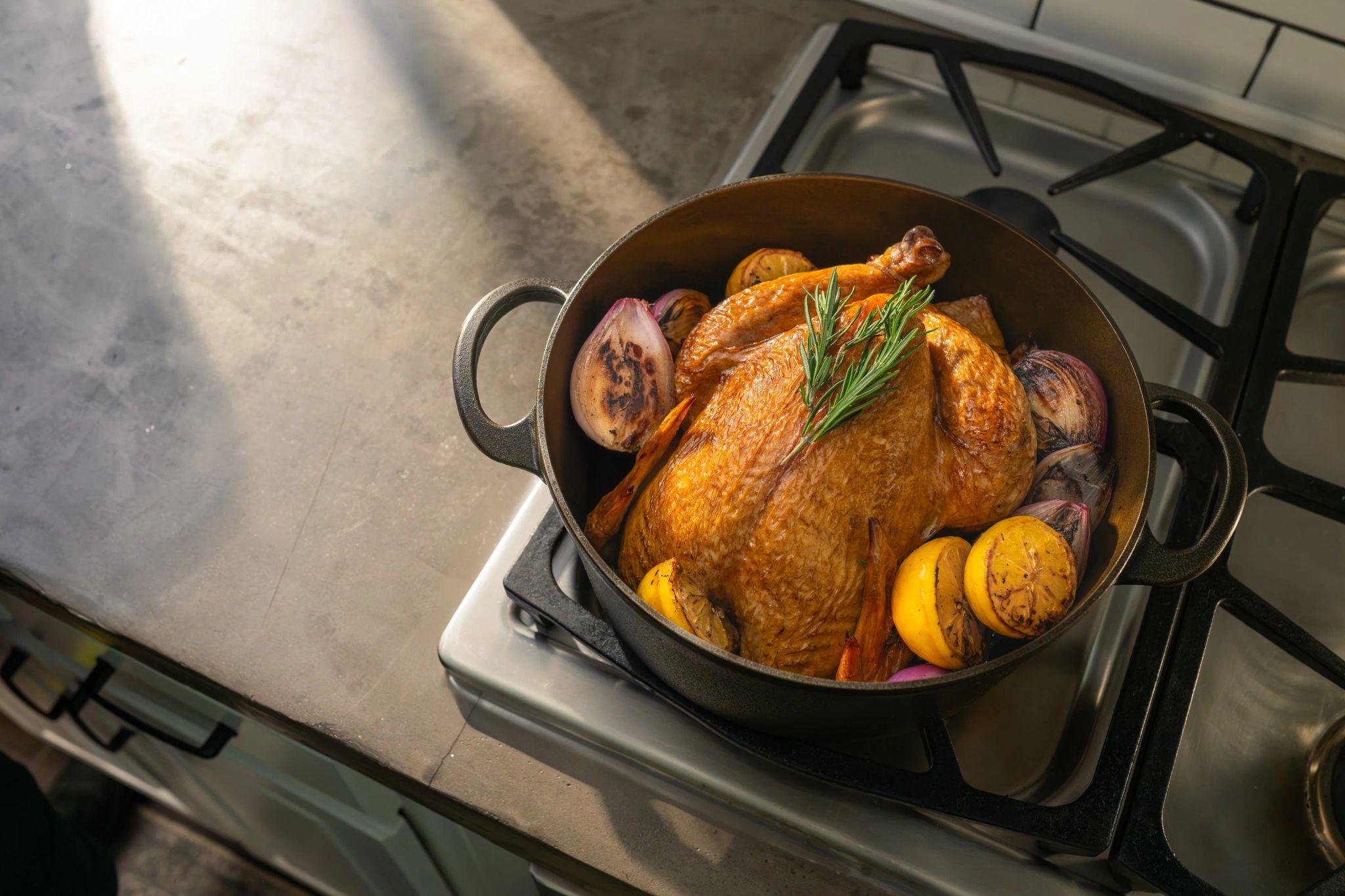
The enamel test
Dutch ovens with a colored enamel glaze can leach lead and cadmium into acidic food cooked for extended periods. This is not a fringe concern: the FDA's compliance program for ceramic cookware (CPG 7117.07) tests exactly this scenario. The enamel is typically a vitrified glass fused at high temperature, and its composition varies by manufacturer. Some brands use cobalt for color; some have historically used cadmium-based pigments for vibrant reds and oranges. The safe approach is to look for brands that publish actual leach-test results tied to specific SKUs, not marketing phrases about "food-safe enamel."
Eight of the thirteen pots here sidestep the question entirely by using bare cast iron with no glaze at all: the cooking surface is seasoned iron. The other five use a ceramic, enameled, or clay body whose lead and cadmium status is disclosed on the brand's own site with direct statements that meet our criteria.
What we look for
No PFAS, ever. No Dutch oven reviewed here uses PTFE, PFOA, or any fluoropolymer coating. That category is out. PTFE begins to off-gas above 500 degrees and degrades at oven temperatures Dutch ovens regularly reach during bread bakes or braises. Bare cast iron and ceramic are the right materials for the category.
Bare cast iron: the clearest pass. No enamel means no lead or cadmium glaze to test. The cooking surface is the iron itself, plus the seasoning oil. Bare cast iron pots qualify under our criteria as long as the seasoning oil is disclosed (most list flaxseed, canola, or vegetable oil) and no synthetic coatings are present.
Enameled cast iron and ceramic: test results required. For enameled pots, we require that the brand publish actual numeric test results or a Prop 65 certification covering the specific enamel formulation. Marketing claims like "heavy-metal free" or "food-safe enamel" without supporting documentation are conditionals on this site. The Emile Henry option here cleared the bar with a direct statement on the About page citing Prop 65 compliance and naming the absence of lead and cadmium.
Materials disclosure. Every pot on this list discloses what the cooking surface is made of and what seasoning or glaze is applied. Vague language ("proprietary coating") or incomplete disclosures send a product to the conditional pile.
Made-in transparency. We note country of manufacture where it is disclosed. Five of the picks here are made in the United States (Smithey, Field Company, Lancaster, Made In Cookware, and Nest Homeware). Staub is made in France; Victoria in Colombia. We do not require US manufacture, but we do require the brand to disclose where the pot is made.
Our picks
1. Smithey Ironware 5.5 Qt Dutch Oven — Best overall

The Smithey Ironware 5.5 Qt Dutch Oven earns the top spot because it combines a machine-polished cooking surface with bare cast iron, meaning there is no enamel glaze to test for lead or cadmium and no synthetic coating to degrade over time. Smithey pre-seasons each pot with oil only, confirmed on the brand's product page.
The polishing is Smithey's defining step. Where most cast iron comes out of the mold with a rough, pebbly surface, Smithey runs the cooking surface through a CNC polishing process that removes the texture without changing the material. The result cooks like a well-seasoned skillet out of the box. At 5.5 quarts it handles a whole chicken, a sourdough boule, or a deep braise without crowding.
The brand is a family-founded operation in Charleston, South Carolina. No third-party certification is listed, which is not required for bare cast iron: when the cooking surface is simply iron and oil, the certification question is a materials one, and both are disclosed. The brand's product page at smitheyironware.com confirms the seasoning composition.
2. Field Company No. 8 Cast Iron Dutch Oven — Lightest cast iron

The Field Company No. 8 Cast Iron Dutch Oven takes the same approach as Smithey: bare cast iron, smooth-polished interior, factory-seasoned with oil only, made in the USA. At 4.5 quarts and 6.5 pounds, it is the lightest bare cast iron Dutch oven on this list, which matters when lifting a full pot of braised short ribs onto a trivet.
Field Company is a family business. The product page at fieldcompany.com states the material is all cast iron, the finish is polished smooth, and the seasoning is factory-applied with no chemical treatments. No synthetic coatings are disclosed because none are present.
The 4.5-quart capacity is on the smaller side for feeding four to five people; Field also makes a 7-quart No. 10 that is not yet published on this site. If you are cooking for two or doing smaller batches of bread, this is the right size. If you need more room, the Smithey at 5.5 quarts or the Made In at 6 quarts give you that without leaving this list.
3. Emile Henry Round Dutch Oven — Best ceramic option

The Emile Henry Round Dutch Oven is the only pot on this list made from glazed Burgundy clay, and the only enameled-style option here that publishes a direct statement about lead and cadmium. Emile Henry's About page states verbatim: "There is no lead or cadmium in our products, all of the glazes meet California Prop 65, and all of the products are 100% food safe." The brand has made glazed Burgundy clay cookware in Marcigny, France, since 1850.
The Flame Ceramic body holds and distributes heat differently from cast iron: it heats more gently and suits long, low braises better than high-sear applications. It moves safely from freezer to a hot oven. The clay body also absorbs and releases moisture during long braises in a way metal does not, which some cooks find contributes to tenderness in stewed meats and vegetables. It comes in 2.6 to 5.5 quart sizes in Charcoal and Burgundy.
At the $$$ tier, it is lighter than comparably priced cast iron and easier to clean because the glazed surface does not need seasoning. For readers who want an enameled pot but are waiting for larger brands to publish test data, this is the responsible choice now.
4. Lancaster Cast Iron 5 Quart Dutch Oven (No. 8) — Best USA artisan

The Lancaster Cast Iron 5 Quart Dutch Oven is made in Lancaster, Pennsylvania, in small batches. Like the Smithey and Field Company, it uses bare cast iron with no enamel coating and no synthetic treatments: the cooking surface is seasoned iron. What sets it apart is a self-basting lid design, with a rim that channels condensation back over the food during long braises, plus a brass knob that handles high oven temperatures without issue.
Lancaster discloses the manufacturing location, the material, and the seasoning process on its product page at lancastercastiron.com. No third-party certification is listed, consistent with the bare cast iron category: no glaze means no glaze to certify.
At $329 it is the most expensive bare cast iron pot here, reflecting small-batch domestic production. If you want American-made provenance and a thoughtful lid design, this is the right pick. If provenance matters less than value, the Made In (US-made, $249.99) closes the gap at a lower price.
5. Made In Seasoned Cast Iron Dutch Oven 6 Qt — Best value mid-range

The Made In Seasoned Cast Iron Dutch Oven is sand-cast at a single US foundry and pre-seasoned with organic flaxseed oil. The brand's product page at madeincookware.com confirms no PFAS, PFOA, PTFE, lead, or cadmium and states the pot is third-party tested.
At $249.99 for a 6-quart US-made bare cast iron Dutch oven, it represents the best value at the $$ tier. The 6-quart capacity handles larger batches: a 4-pound chicken with vegetables, a double batch of chili, or a larger sourdough boule. The machined-smooth interior performs comparably to the Field Company and Smithey.
Made In is the most accessible brand on this list in terms of distribution: it ships reliably and is available at Williams Sonoma as well as direct from the brand. For buyers who want an American-made bare cast iron Dutch oven at under $250, this is the straightforward recommendation.
6. Nest Homeware Cast Iron Dutch Oven — Best compact

The Nest Homeware Cast Iron Dutch Oven is a 3.5-quart bare cast iron pot with a CNC-polished smooth surface and two coats of organic flaxseed oil seasoning applied at 425 degrees before shipment. It is the smallest pot on this list, making it the right choice for small households, solo cooks, or bread bakers who prefer a tighter boule.
The brand's product page at nesthomeware.com discloses the seasoning process and confirms no synthetic coatings. No third-party certification is listed, consistent with the bare cast iron category.
At $295 it costs more per quart than the larger pots, typical for smaller specialty cookware. The double-seasoning pass out of the factory means less break-in time before it performs reliably. Nest is a boutique DTC brand with no big-box distribution.
7. Bayou Classic Cast Iron Dutch Oven — Best budget

The Bayou Classic Cast Iron Dutch Oven is the value entry point at under $40: bare cast iron, pre-seasoned with oil, and no enamel coating. The same material category as the Smithey and Field Company, at a fraction of the price. Available in 2-quart and 4-quart sizes.
Bayou Classic's FAQ confirms the oil-only pre-seasoning and the absence of any synthetic coating or enamel glaze. The rough cast surface that comes standard on most budget cast iron means more break-in time compared to the polished pots above, but the cooking surface chemistry is identical: seasoned iron over heat, nothing synthetic to worry about.
The tradeoff is surface texture and manufacturing tolerances. The polished finishes on Smithey, Field Company, and Made In cost more for a reason. For a first Dutch oven, a camping or outdoor cooking pot, or a vessel you want to use hard and not worry about, the Bayou Classic delivers the essential material at a price that removes the barrier to entry.
8. Romertopf Clay Baker Natural Glazed — Best traditional clay baker
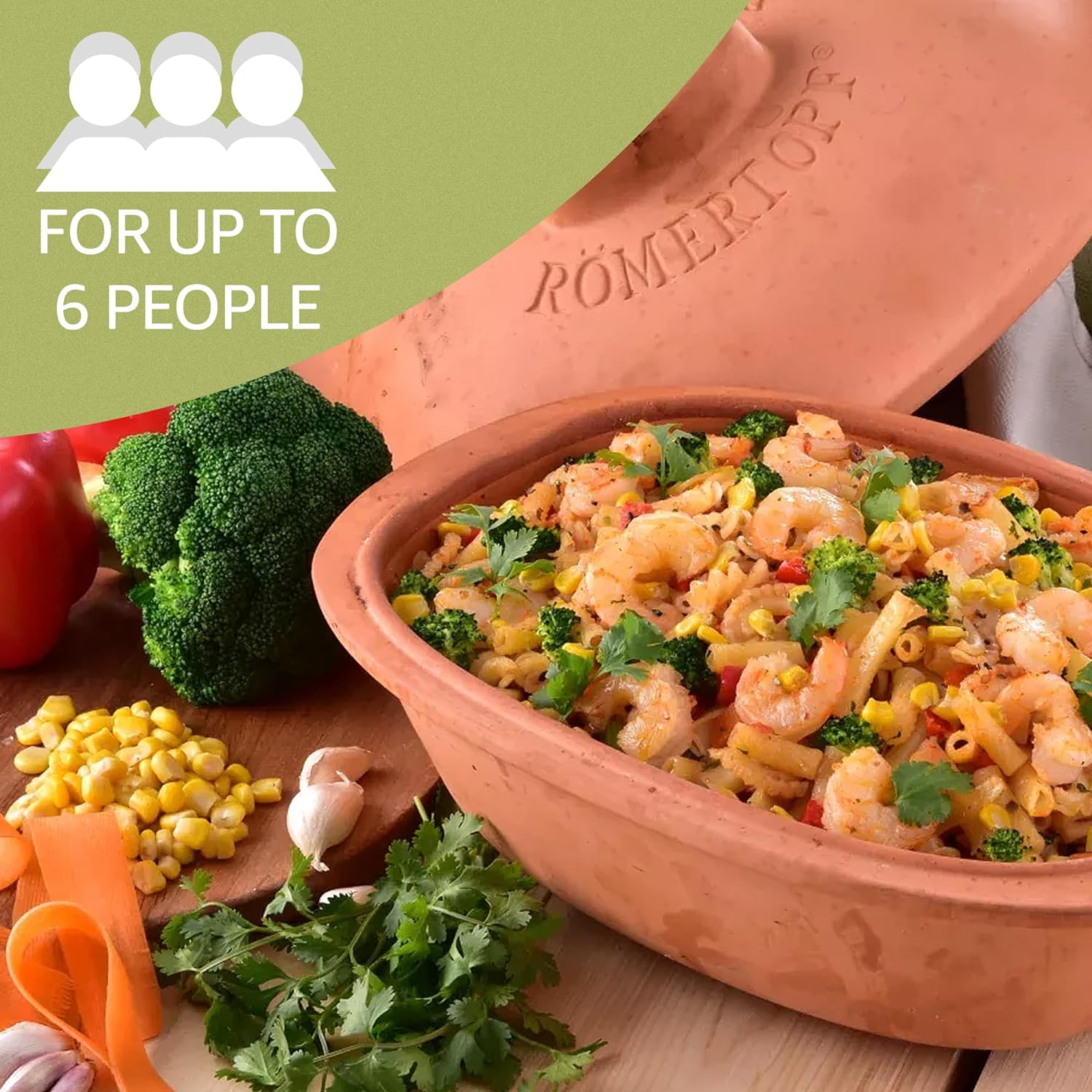
The Romertopf Clay Baker Natural Glazed is an oval 4.7-quart clay baker made from Westerwald natural clay, a dense unprocessed mineral clay from a single German region. The base is glazed; the lid is unglazed and absorbs water when soaked for 15 to 20 minutes before use, then releases that moisture as steam during cooking. This keeps roasts and braises moist without added fat or liquid.
Romertopf's product page states the clay contains no lead, cadmium, or fillers and that the product is safety-tested in both Europe and the United States. The natural clay glaze on the base is not an enamel in the vitrified-glass sense: it is a fired mineral glaze derived from the same clay body, which Romertopf has safety-tested rather than left to consumer inference. The brand has been making clay bakers continuously since 1967.
At $79, it is the second-least-expensive pot here and the only oval shape on this list, making it the right choice for oblong roasts: a whole chicken, a rack of ribs, or a pork loin fit more naturally than in a round pot. It is not suitable for stovetop use on glass or induction surfaces, and it requires gradual heating to avoid thermal shock. For slow oven roasting and braising, it performs a job no cast iron pot quite replicates.
9. Staub La Cocotte Round Dutch Oven — Best enameled cast iron
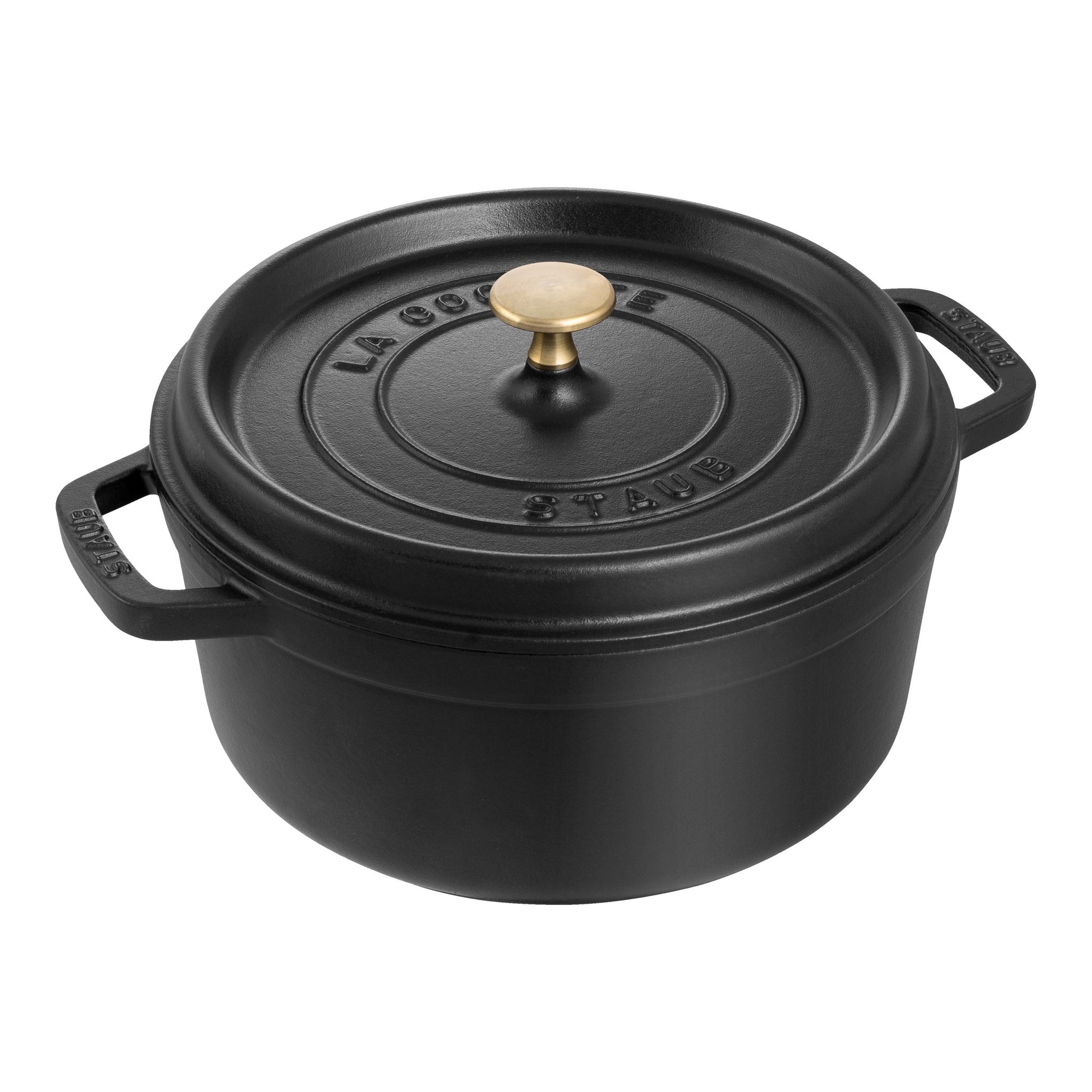
The Staub La Cocotte Round Dutch Oven is a 5.5-quart enameled cast iron pot made in Alsace, France. The interior is coated with a matte black glass-based enamel rather than a colored vitreous coating. Staub's published safety and materials documentation states the enamel is free of lead, cadmium, PFOA, PTFE, and PFAS, meeting our disclosure requirement for enameled cookware.
The matte black interior is different from the glossy cream or colored enamel common on other brands. It develops a natural patina over time and does not require the seasoning maintenance of bare cast iron. The heavy lid fits tightly for long, slow braises.
At $$, it is the premium enameled option on this list. Staub is widely available, backed by a lifetime warranty, and made in France by a brand that has been manufacturing cast iron cookware since 1974. For cooks who want an enameled pot with published safety data and prefer not to maintain bare cast iron seasoning, it now meets our standard.
10. Victoria 6 QT Cast Iron Dutch Oven — Best budget with full disclosures

The Victoria 6 QT Cast Iron Dutch Oven is a 6-quart bare cast iron pot preseasoned with flaxseed oil, with no enamel, PTFE, or PFOA coating. Victoria publishes both a Minnesota PFAS disclosure and an AB 1200 full ingredient disclosure at victoriacookware.com, making it one of the most transparently documented bare cast iron options at the budget tier.
Made in Colombia, it weighs 13.9 pounds and measures 11 inches across. The rough cast surface is standard for this price range: it takes more break-in seasoning than the polished finishes on Smithey, Field Company, or Made In, but the material is identical, seasoned iron with no synthetic chemistry.
At under $80 direct and often under $70 on Amazon, it is the least expensive pot here with a fully documented ingredient disclosure. For buyers who want the full materials transparency story without paying for a polished surface, this is the right pick.
11. Magnifique Flami Pot Clay Dutch Oven — Best everyday clay pot

The Magnifique Flami Pot Clay Dutch Oven is a 5-quart covered pot made from kaolin clay with a kaolin-based glaze. Cook Magnifique's FAQ at cookmagnifique.com states the glaze is third-party tested for lead, cadmium, and PFAS, with none found, meeting our criteria for a glazed clay vessel.
Kaolin is a naturally occurring white clay used in ceramics and food-contact applications. Unlike the Romertopf clay baker, the Magnifique does not require a pre-use soak: the glazed surface closes the pores and allows use directly from the shelf. It is stovetop-compatible and oven-safe, and available in Oatmeal and Brown Sugar colorways.
At under $90, it is in the same price range as the Romertopf and serves a similar market: cooks who want a clay pot without the seasoning demands of cast iron. Its round shape suits stews and round roasts; the Romertopf's oval shape is better suited to oblong cuts like a rack of ribs or a whole chicken.
12. Xtrema Pure Ceramic Dutch Oven — Best large-batch ceramic

The Xtrema Pure Ceramic Dutch Oven is a 10.5-quart seamless one-piece pot made from 100% pure ceramic with no metal core, enamel, or coating of any kind. Xtrema's materials page at xtrema.com states the ceramic body contains no extractable metal, cadmium, lead, or PFOA.
The 10.5-quart capacity is the largest on this list, suited to large-batch cooking: a whole turkey, a double batch of stock, or a large braise for eight or more. The seamless one-piece construction eliminates the question of coating integrity that applies to enameled pots: there is no joint between a metal body and a glass layer to chip or leach.
At $336, it sits in the $$ tier. It is heavier and slower to heat than the smaller pots here but retains heat well for long braises once up to temperature. This is a niche pick for cooks who cook in volume and want the simplest possible material story.
13. Camp Chef Classic Dutch Oven — Best campfire Dutch oven

The Camp Chef Classic Dutch Oven is a bare cast iron Dutch oven with three legs and a flanged lid designed for outdoor cooking over charcoal briquettes or a wood fire. Camp Chef's FAQ at campchef.com states the factory pre-seasoning uses 100% plant oils, with no enamel or synthetic coating.
The legs and flanged lid are the defining features. The legs elevate the pot above the coals; the flanged lid holds additional coals on top for even top-down heat. This is the standard campfire Dutch oven configuration used in outdoor and backcountry cooking. It is not designed for glass cooktops or induction burners, and is not a substitute for a kitchen Dutch oven.
Available in 10, 12, and 14 inch sizes, it is priced under $80 at the brand and often under $65 on Amazon. For campers and outdoor cooks who want a bare cast iron Dutch oven vetted to our criteria, this is the category-specific pick.
What we passed on
Le Creuset, Lodge (enameled line), Great Jones, Misen, and Tramontina are the brands most readers expect to see here. All use enameled cast iron, and all are conditionals on this site for the same reason: none has published numeric lead or cadmium leach-test results for its specific enamel formulation as of the date of this research. Marketing language such as "food-safe enamel" and "chip-resistant porcelain" without a linked test report does not meet our standard. We checked each brand's FAQ, product pages, and materials disclosure pages. These brands may pass when they publish testing. Readers who want an enameled pot now should see the Emile Henry or Staub options above.
Cast iron care
Bare cast iron does not require complicated maintenance. After cooking, rinse while still warm, dry with a cloth or on a low burner, and apply a thin film of neutral oil before storing. Soap is acceptable on a well-seasoned pan in small amounts. Prolonged soaking and abrasive pads will strip seasoning; a brief wash will not. The smooth-polished versions here (Smithey, Field Company, Made In, Lancaster, Nest Homeware) build a stable cooking surface faster than rough-cast surfaces and require fewer early seasoning cycles.
The Emile Henry clay pot needs no seasoning. Wash with warm soapy water and use a nylon scrubber for stubborn bits. Avoid heating the empty pot at high heat: the ceramic body absorbs heat slowly, and thermal shock from an empty dry pot at high temperatures can crack it.
The Romertopf clay baker requires a soak before every use: submerge the unglazed lid (and optionally the glazed base) in cold water for 15 to 20 minutes. The absorbed moisture releases as steam during cooking. Wash with warm water and no soap, since the unglazed surface absorbs detergent; a natural bristle brush removes residue. Store it dry with the lid off.
FAQ
Is Le Creuset lead-free?
Le Creuset markets its enamel as free of PTFE and PFOA, and the brand has stated the enamel is food safe. However, Le Creuset does not publish numeric lead or cadmium leach-test results for its specific enamel formulations. Without a linked test report, it remains a conditional on this site until that documentation is published.
Does bare cast iron leach iron into food?
Yes, small amounts of iron migrate from bare cast iron into food, especially acidic dishes cooked for extended periods. This is not a safety concern for most people: dietary iron is an essential mineral, and the amounts are well within safe ranges. People with hemochromatosis (iron overload disorder) are an exception and should use ceramic or stainless cookware instead.
Is enameled cast iron safer than bare cast iron?
For lead and cadmium specifically, it depends on the enamel. A well-tested enamel with published results showing non-detect levels is safe. An enamel with no published test data is a question mark. Bare cast iron with no enamel bypasses the question entirely. For PFAS, neither bare nor enameled cast iron uses PTFE or fluoropolymer coatings, so both categories are clear on that criterion.
Can I use a Dutch oven for baking bread?
Yes. Dutch ovens are the standard home baker's steam chamber: the lid traps moisture from the dough during the first phase of baking, producing an open crumb and a crackly crust. Any of the bare cast iron pots here work for bread. The Emile Henry clay pot is also excellent for bread and is what Emile Henry's own marketing centers on. Preheat the pot in the oven before loading the dough.
What size Dutch oven should I buy?
For most households cooking two to four servings, a 4.5 to 5.5 quart pot is the right choice. That covers a 3-pound chicken, a sourdough boule up to about 900 grams, and most braise recipes. The 3.5-quart Nest Homeware is better for one to two people. The 6-quart Made In gives room for larger batches. The Bayou Classic 2-quart is a specialty size for small side dishes or single servings. The 4.7-quart Romertopf is the right size for a whole chicken or a 3-pound roast.
Cover image: Saskia Schulz via Pexels (Pexels License). Source.


