

Conventional dryer sheets and liquid fabric softeners share one active mechanism: they coat fabric fibers to reduce static and increase perceived softness. The chemistry is typically ester-quaternary ammonium compounds (ester-quats), which build up over repeated loads and are designed to persist even after rinsing. Wool dryer balls work differently. They lift and separate fabric mechanically as the drum tumbles, so hot air circulates more evenly. Nothing is added to the clothes; the softness comes from reduced fiber compression, not a coating.
The practical case is straightforward. A quality 6-ball set is rated for 1,000 or more loads. You also remove the fragrance question entirely. "Fragrance" and "parfum" are legally protected ingredient catch-alls in both US and EU law. In fabric softeners and dryer sheets, they can carry phthalate carriers, acetaldehyde, and dozens of undisclosed compounds. With dryer balls, you add nothing by default, or you add a few drops of an essential oil you chose.
What we look for
The dryer ball materials list is short: wool, air, and ideally nothing else. But the specifics matter.
100% wool, no synthetic fill. Some budget balls are wound with a polyester or acrylic core. We require the brand to state the fiber composition explicitly, not use "natural" as a descriptor.
Unbleached, or azo-free dye with full disclosure. Bleaching wool involves chlorinated compounds. Conventional fabric dyes may contain azo compounds that cleave to restricted arylamines during use. We accept undyed/unbleached balls and balls dyed with azo-free colorants when the brand states the dye type on the product page.
Disclosed felting origin. Most wool dryer balls are hand-felted in Nepal. That is not a disqualifier, but we prefer brands that name the country. The same transparency standard we apply to ingredients applies to supply chain.
No added treatments. No antimicrobial biocide finishes, no pre-loaded fragrances, no "freshness" coatings. The ball should be wool and nothing else.
Third-party verification where it exists. Leaping Bunny and EWG Verified each audit different parts of the picture. We weight them as supporting evidence, not a pass by themselves.
Our picks
1. Smart Sheep Wool Dryer Balls, XL 6-Pack - Best overall
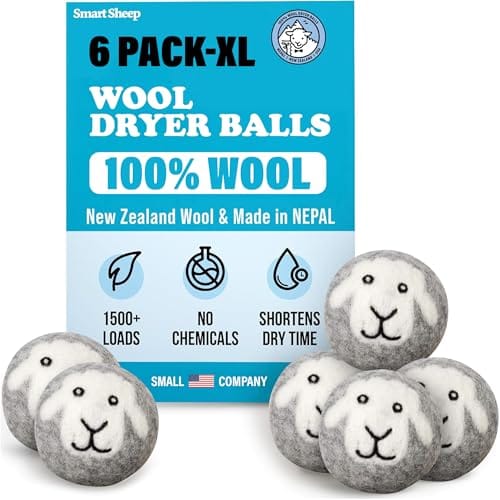
The Smart Sheep Wool Dryer Balls clear every materials bar we set. The wool is 100% New Zealand sourced and arrives unbleached: no chlorinated processing chemistry, no dye. Felting happens in Nepal. The brand states composition directly and does not claim certifications it has not earned, which we read as a positive editorial signal compared to brands that paste cert logos without registry-verifiable entries.
XL sizing gives more surface area per ball, which means more effective fabric separation in a full drum. Six balls cover large loads without supplementing. For those who want scent, add 3 to 5 drops of an essential oil to one ball before the cycle.
2. Woolzies Wool Dryer Balls, XL 6-Pack - Best cruelty-free verified
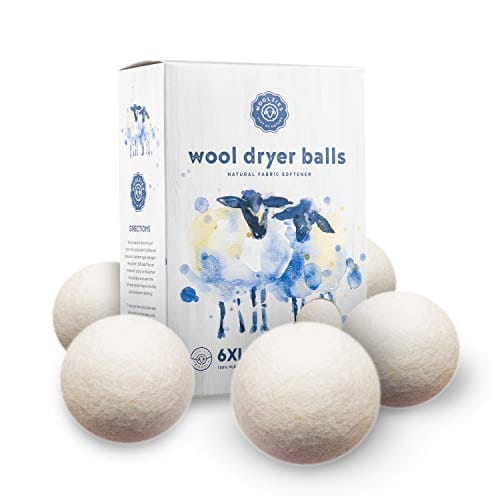
The Woolzies Wool Dryer Balls carry Leaping Bunny certification, which requires an ingredient-level supplier audit rather than a brand-level pledge. For shoppers who weight cruelty-free supply chain verification alongside materials transparency, Woolzies is the pick.
Fiber is 100% New Zealand wool. The listing confirms no synthetic fill, no fragrance pre-loading, and natural felting. Woolzies has operated in the dryer ball category for over a decade, which means their supply chain documentation is more developed than newer entrants in the space.
Certification: Leaping Bunny (verified via Leaping Bunny brand directory).
3. Molly's Suds Wool Dryer Balls, Black Set of 6 - Best with color, triple-washed
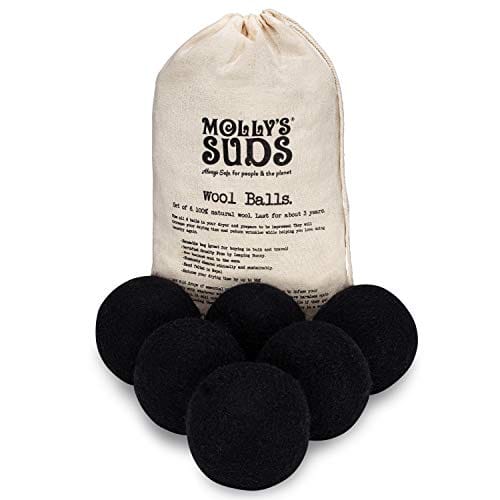
The Molly's Suds Black Wool Dryer Balls are the only dyed option on this list, and they clear the dye bar. The black colorant is azo-free, stated on the brand's product page. Wool is 100% New Zealand, triple-washed before felting in Nepal. The triple-wash step reduces lanolin residue that can cause performance inconsistency in early loads.
Molly's Suds has held Leaping Bunny certification since 2011 and earns an EWG Guide to Healthy Cleaning A rating across their laundry line. The multi-year cert history means audits are not recent one-offs; the brand has maintained the standard through multiple review cycles.
Certifications: Leaping Bunny (since 2011, registry verified), EWG A-rated brand.
A note on fabric softener
If you are switching to dryer balls because you want to step away from conventional fabric softener, it helps to understand what the trade actually is.
Ester-quats are the dominant chemistry in modern liquid fabric softeners. They replaced older dihydrogenated tallow dimethyl ammonium chloride (DHTDMAC) formulations in the 1990s and are generally considered the safer alternative. They are not on our universal exclusion list. The gap is disclosure: most fabric softeners list "fragrance" without naming constituents, which means the "no undisclosed fragrance" precondition fails regardless of the ester-quat itself. That is the practical problem with conventional softeners, not the softening compound.
Two alternatives if you want softening effect:
Truly Free Softening Rinse uses citric acid as its active ingredient and earns an EWG Guide to Healthy Cleaning A rating. The mechanism is pH neutralization: citric acid reduces the alkalinity that makes fabric feel stiff after detergent washing, rather than depositing a fiber coating. A cap in the rinse dispenser slot is the simplest substitution.
White vinegar (one-quarter cup in the rinse dispenser) works by the same mechanism. The active is acetic acid, which is fully disclosed by definition. No fragrance, no surfactants. Hard-water areas benefit most, since mineral alkalinity is the primary stiffness driver.
Both options are compatible with wool dryer balls.
What we passed on
Friendsheep Eco Wool Dryer Balls appear in most non-toxic laundry roundups and carry strong Amazon visibility. When we traced their certification language through the relevant issuer registries, "GOTS certified" language on their listings did not resolve to a current certificate for this product in the GOTS public database. Our editorial precondition requires claims to be traceable to primary documentation in the cert issuer's registry. Self-claims without a verifiable issuer record do not clear that bar. We would revisit if the registry record is established.
Blueland Dryer Ball Set is made from New Zealand wool and priced at $18 for a three-pack, sold direct-to-consumer only. The balls are dyed light blue, but Blueland does not specify the dye type anywhere in their product documentation. Our bar for any colored dryer ball requires the brand to name the dye and confirm it is azo-free: without that disclosure, the dye-transparency standard cannot be met. There is also no textile certification covering dye safety (GOTS, OEKO-TEX Standard 100, or Responsible Wool Standard). The product is currently out of stock and available by waitlist only. If Blueland adds dye type disclosure and returns to regular stock, they would be worth revisiting.
Cover image: Photo via Unsplash (Unsplash License) - source.
