
The ceramic mug category has a disclosure problem. Mugs are not subject to mandatory pre-sale safety testing in the US, so most brands never commission lead and cadmium testing even when their glazes are likely fine. The mugs on this list made it because the brand chose to test and publish the results, not just because the clay body is probably safe.
What we look for
Most ceramic mugs on the market use commercially formulated glaze compounds from suppliers who do not disclose ingredient details to the brands they supply, let alone to consumers. Lead and cadmium have been used in glaze colorants for centuries because they produce reliable, vivid colors and predictable firing behavior. Modern US regulations restrict their use in dinnerware, but enforcement depends on a voluntary testing system that most artisan studios and import brands do not participate in.
The FDA's guidance limits acid-extractable lead in cups and mugs to 0.5 ppm. California's Prop 65 sets the threshold for lead at 0.5 micrograms per day of oral exposure. These are regulatory floors, not endorsements of the limit as safe at any level. The most credible mugs on this list test to zero or near-zero detectable lead, not just to the regulatory minimum.
Cadmium appears in many of the same glaze colorants as lead, particularly in reds and oranges. The FDA limits cadmium in cups to 0.25 ppm. Like lead, there is no established safe level for daily cadmium intake from food contact.
0.5 ppm
FDA lead limit for mugs
0.25 ppm
FDA cadmium limit for mugs
What we required from every pick:
- Explicit lead-free and cadmium-free statement, traceable to a product page, FAQ, or spec sheet rather than generic marketing copy
- Third-party testing or ASTM C738-94 compliance, or a verifiable production context that explains why the disclosure is credible (a studio that controls its full glaze formula from raw materials, for example)
- No undisclosed coatings or liners: the mug surface in contact with liquid must be fired ceramic or porcelain only
- Clay body type stated: at minimum, the brand discloses whether the material is stoneware, porcelain, or vitrified ceramic
Several brands with genuinely fine mugs did not make this list because their product pages say only "microwave safe" or "food safe" without a material disclosure. Those are regulatory compliance claims, not ingredient statements. We can only vouch for what a brand is willing to say plainly about what is in its glazes.
The FDA limit is a floor, not a target. The brands on this list set their own bar, which is uniformly lower.
Our picks
1. East Fork The Mug: Best overall

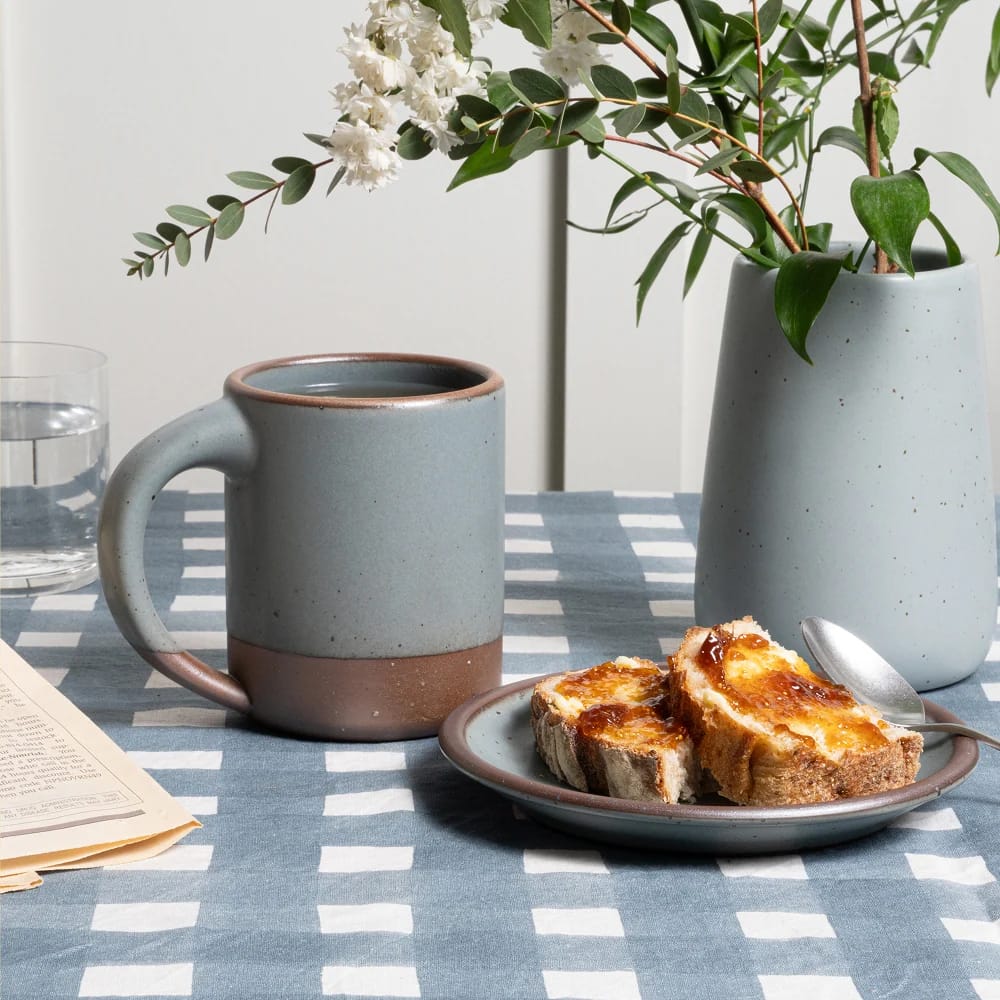
The East Fork The Mug is made in Asheville, North Carolina, from stoneware clay that is reduction-fired at high temperature. East Fork uses only lead-free materials across every glaze in production, independently tested per ASTM standards before any new formula enters use. That testing protocol is documented on their materials page, not provided on request. The 12 oz capacity and generous handle are designed for a full morning grip. The thick walls retain heat well; the glaze surface is slightly matte with a tactile quality that improves with handling.
At $44 for a handmade American piece with a documented testing trail, East Fork represents the strongest combination of transparency and value in this category. The brand built its entire identity around material honesty, which is what makes the ASTM claim credible rather than aspirational.
2. Heath Ceramics Mug: Best American heritage

The Heath Ceramics Mug has been made in Sausalito, California since 1948, when Edith Heath developed a proprietary low-fire manganese stoneware body that is still in use today. All glazes are lead-free. Every piece is thrown, trimmed, and fired at the Sausalito workshop. Heath's B Corp certification reflects a broader operational commitment; on material safety the lead-free claim applies to the same proprietary formula the company has used since its founding.
At 12 oz with a clean matte glaze available in more than a dozen colorways, this is the mug with the most deliberate glaze development history of anything on this list. The price ranges from $55 to $63 depending on the colorway. That is the premium for a handmade American piece with 75 years of unbroken production behind its chemistry. If provenance matters, no other mug here has the same depth of history.
3. HF Coors Coffee Mug: Best USA-made set

HF Coors has made vitrified ceramic dishware in Tucson, Arizona since 1925. Vitrification means the clay body is fired at a high enough temperature that it becomes non-porous without relying on a glaze to seal it: the same process used in commercial restaurant-grade ceramic. The lead-free matte white glaze is applied to the food-contact interior only, and the company discloses this on the product page.
The set of four 12 oz mugs costs $81, which is about $20 per mug for a credible USA-made piece. They are chip-resistant to commercial foodservice standards, dishwasher, microwave, oven, and broiler safe. For a household that needs four durable mugs and wants American manufacturing with a transparent materials history, this is the practical answer.
4. Farmhouse Pottery Silo Mug 14 oz: Best wheel-thrown

Farmhouse Pottery wheel-throws every Silo Mug on-site in Woodstock, Vermont using American stoneware clay. The glaze is tested lead- and cadmium-free to Prop 65 and FDA standards, a level of documentation that is rare from a handmade studio. Most artisan potters stop at "food safe" without specifying what that means; Farmhouse Pottery went further with lab verification and published the result.
The 14 oz mug sells for $60 as a single piece. The exposed stoneware foot and white glaze interior is the classic Farmhouse Pottery form: honest materials, minimal design. This is the pick for someone who wants a wheel-thrown American mug and is prepared to pay for the combination of studio provenance and verified glaze safety.
5. Myrth Porcelain Mug: Best handmade porcelain

Myrth makes its mugs from a proprietary restaurant-grade porcelain clay body in Providence, Rhode Island. The Myrth Porcelain Mug holds 12 oz and is dishwasher and microwave safe. Glazes are explicitly formulated without lead or cadmium, as stated on the product page, and each piece is hand-finished, resulting in slight natural variation between mugs.
Porcelain fires denser and more vitrified than most stoneware, producing a smoother liquid-contact surface and a slightly lighter weight. At $48 for a handmade American piece made from restaurant-grade clay, this is the pick for someone who prefers porcelain's feel and wants production that stays domestic.
6. Fable The Mugs Set of 4: Best value set

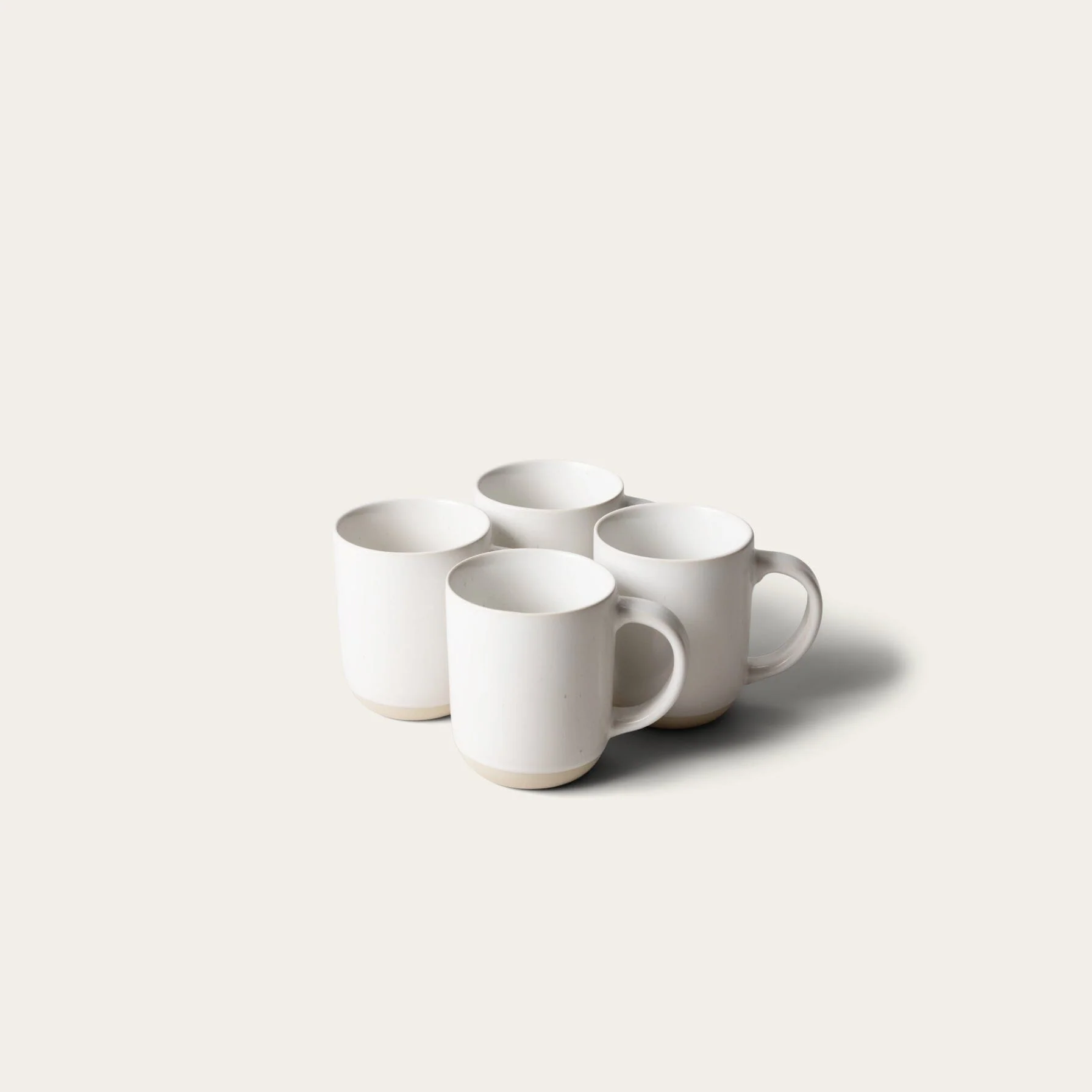
Fable's The Mugs are hand-finished Portuguese stoneware with glazes tested per ASTM C738-94 for lead and cadmium extraction. Fable publishes this on their FAQ alongside compliance with FDA and Prop 65 standards. The brand is B Corp certified. At $91 for four mugs, that is $22.75 per mug for a brand that did the specific testing required to meet the most widely cited food-safety standard in ceramic safety literature.
The semi-matte glaze and comfortable handle are consistent across the set, with slight hand-finishing variation. Available in a small range of colorways, dishwasher and oven safe to 450F.
7. Year & Day Stoneware Mug: Best minimalist set

Year and Day sources its stoneware from Portuguese factories that test glazes per ASTM C738 lead and cadmium standards, published on their FAQ. The Year & Day Stoneware Mug set of four sells for $68, making it about $17 per mug: the best price-per-mug in the ASTM-tested Portuguese stoneware category on this list.
The design is intentionally minimal: thick-walled chip-resistant stoneware in a matte glaze, dishwasher-safe. If you want a set that disappears into daily use without requiring thought, this is the straightforward answer.
8. MudWorks Mountain Mug: Best artisan character
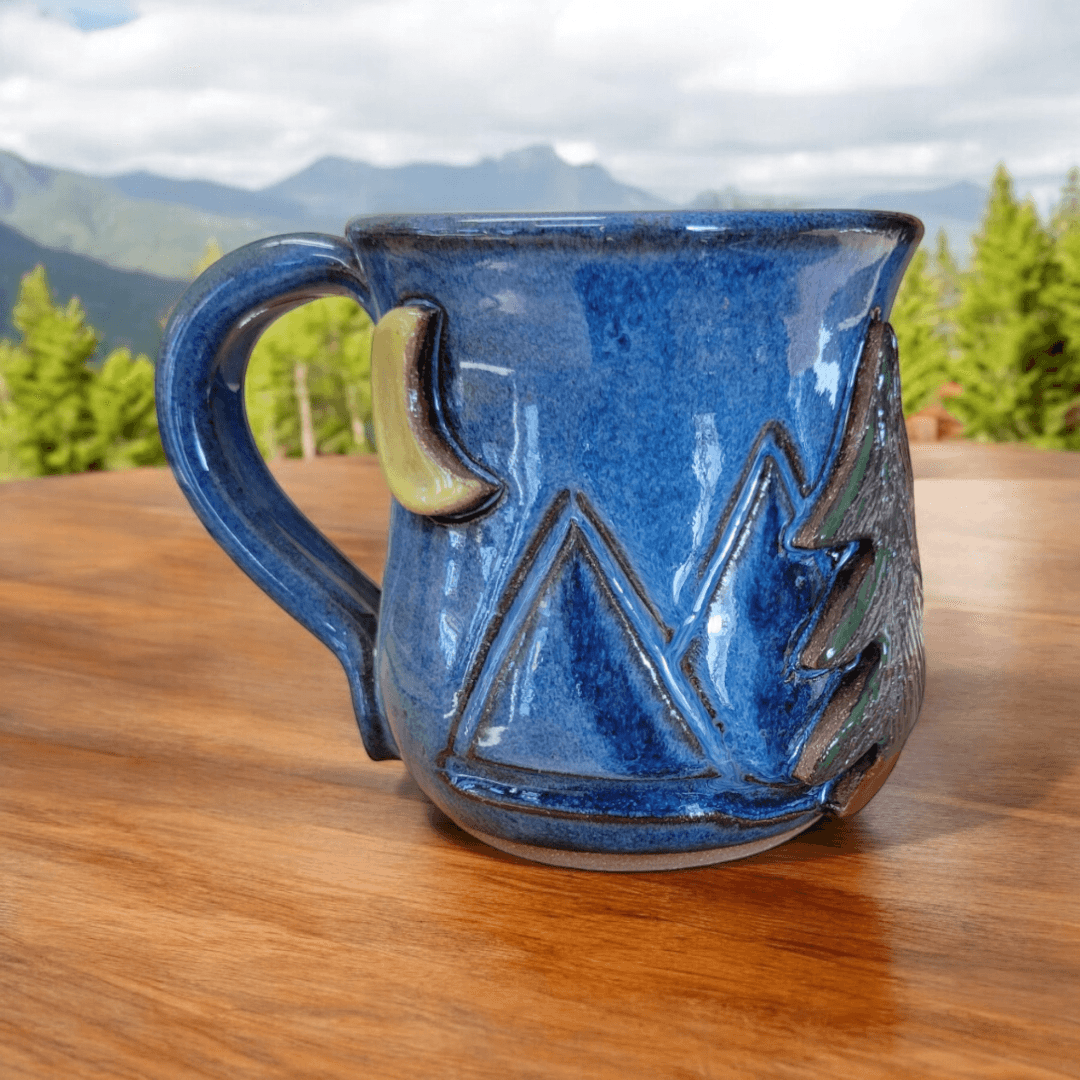
MudWorks throws and fires every mug at their studio in Effort, Pennsylvania using lead-free glazes and food-safe stoneware clay. The MudWorks Mountain Mug has a hand-carved mountain and pine tree motif applied before firing, so no two pieces are identical. The reactive blue glaze fires with natural variation, making each mug distinct in a way that no production line can replicate.
At $57, this is the most visually distinctive piece on the list. For someone who wants a mug that has a specific story behind it, MudWorks is the pick. Single-studio production also provides a chain of traceability that import brands cannot match.
9. Mora Ceramics Latte Mug: Best budget

At $35 for a set of four 16 oz mugs, the Mora Ceramics Latte Mug is the most affordable entry on this list. Mora uses lead- and cadmium-free glazes per their published FAQ. The half-dipped design leaves the lower terracotta body unglazed, which is both an aesthetic choice and a material disclosure: you can see that the mug body is stoneware without a full-coverage coating obscuring it.
The 16 oz capacity suits lattes, large teas, or morning coffee. The glaze disclosure is not the most detailed on this list, but the FAQ statement is specific and the price makes this the accessible starting point for a non-toxic kitchen on a budget.
10. Staub Ceramic Mug: Best PFAS-verified
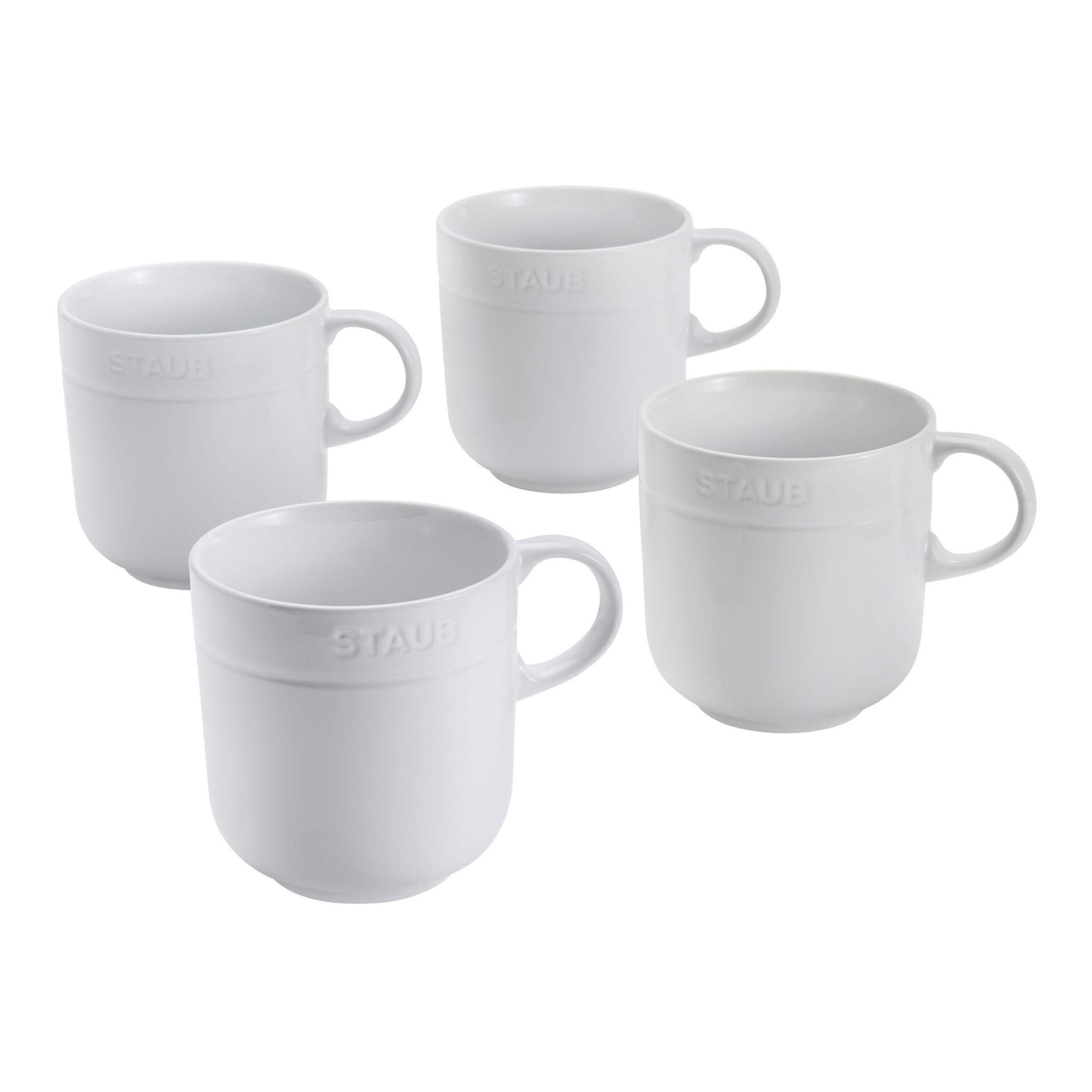
Staub documents lead-free, cadmium-free, and PFAS-free glazes with third-party lab testing on their safety page: a level of specificity uncommon in branded ceramic mug sets. The 16 oz stackable mugs are FDA and Prop 65 compliant. White-fired ceramic, no surface coatings.
At $79.99 for a set of four, that is $20 per mug for a brand that has addressed fluorochemical surface treatments specifically, not just the standard lead-cadmium check. For someone whose concern extends beyond heavy metals to PFAS contamination, this is the set with the most thorough safety documentation.
11. Hamkke Ceramic Mug Set of 4: Best recycled clay

Hamkke's mugs are made in Portugal from locally sourced recycled clay, single-fired with a semi-matte glaze the brand states is lead-free and cadmium-free. The clay origin and firing process are disclosed on the product page, which is more transparency on raw material sourcing than most ceramics brands publish.
At $88 for a set of four, this is the pick for someone whose concern extends to embodied material, not just food-contact safety. The recycled clay sourcing is the distinguishing fact here; the per-mug price of $22 is in line with the rest of the tested Portuguese stoneware category.
12. Fable The Small Mugs Set of 4: Best for smaller drinks
The Fable The Small Mugs are the same hand-finished Portuguese stoneware as pick 6, at 10 oz instead of the larger capacity. The same ASTM C738 testing and B Corp certification apply. At $91 for four, the per-mug price is identical to the larger set.
For cortado drinkers, espresso drinkers who want a slightly larger cup, or households that prefer a smaller capacity, this is the appropriate size pick in the same tested category.
13. CURVD Ceramic Mug: Best ergonomic grip

The CURVD Ceramic Mug publishes third-party lab results showing zero lead and cadmium in the ceramic body and pigments: the most direct testing disclosure at this price point. At $25, it is also the most affordable single-mug option on the list. The oversized angular handle was engineered to keep fingers away from the hot ceramic body, a design detail that makes it meaningfully different from every other mug here.
The ceramic is uncoated and the brand leads with the lab results rather than burying them. For a budget pick with explicit zero-detection testing behind it, this is the one.
What we passed on
Felt & Fat (Philadelphia studio) makes handmade porcelain with a local production story worth appreciating. Their product pages describe the clay body and hand-dipped glaze process clearly, but we could not find a lead-free or cadmium-free declaration on their website, FAQ, or product pages. Without a specific statement, we cannot include them, regardless of how good the studio sounds.
Luvhaus (West Oakland, CA) makes high-fire stoneware domestically and markets it as food safe. Same gap: no explicit lead-free or cadmium-free statement on the website. "Food safe" meets California's threshold for lawful sale but does not tell us whether the glaze colorants were chosen with heavy metals in mind.
Many popular mugs from major brands appear in other roundups but did not reach our worklist at all. Most branded ceramic sets sold on mass-market platforms do not disclose glaze ingredients or publish independent testing. The FDA's enforcement approach is largely complaint-based rather than premarket, which means a mug can be manufactured and sold in the US without anyone checking whether its glaze meets the limit for lead extraction. That gap is what this list is designed to help navigate.
FAQ
Is ceramic always lead-free?
No. The word "ceramic" describes a firing process, not a chemical composition. Lead and cadmium can appear in glaze colorants whether a piece is described as ceramic, stoneware, or porcelain. The relevant question is whether the glaze formula was specifically developed or tested to exclude them, which is what the brands on this list have done.
What is the difference between stoneware and porcelain for food safety?
Both can be lead-free and cadmium-free; neither has a structural safety advantage over the other. Porcelain uses kaolin clay fired at very high temperatures and comes out white, dense, and low-porosity. Stoneware uses earthen clays fired at moderate-to-high temperatures and typically has a more textured surface. The glaze chemistry is what determines safety, not the clay type.
Should I be concerned about older ceramic mugs I already own?
Lead glaze regulations in the US tightened significantly in 1971 and again after 1986. Mugs made before 1971, mugs imported before the 1990s, and pieces with brightly colored glazes on the food-contact surface (particularly reds, oranges, and yellows) are the higher-risk categories. If you have older mugs with those characteristics, replacement is a reasonable precaution.
Does microwave-safe mean a mug is lead-free?
No. Microwave-safe means the ceramic will not arc or heat unevenly in a microwave, which depends on the mug's structure rather than its glaze chemistry. A mug can be microwave-safe and still contain lead in its glaze colorants.
Does washing affect lead leaching from ceramic?
Acidic liquids and dishwasher detergents can accelerate leaching from glazes that contain lead, particularly as the glaze ages, scratches, or chips. This is not a concern for any mug on this list, since all have been specifically formulated or tested to be lead-free. For mugs whose safety you are uncertain about, hand-washing with mild soap is the lower-risk approach.
Cover image: Jin He via Pexels (Pexels License). Source.


