
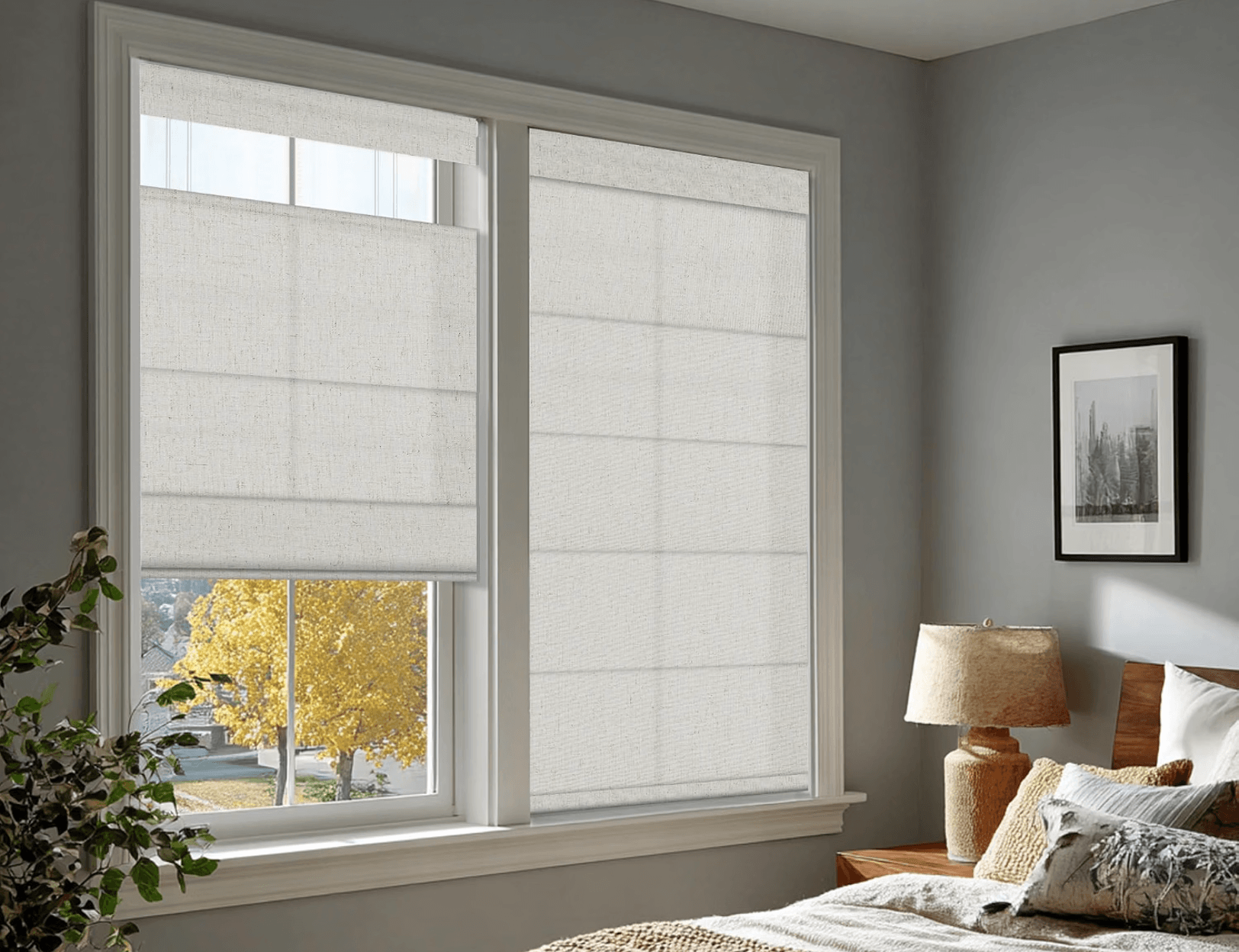
The window covering aisle is one of the quieter chemical problem zones in the home, but it earns the concern. Standard venetian blinds use PVC vinyl slats: a vinyl chloride polymer that off-gasses and, once scratched or degraded, sheds micro-particles into house dust. Roller shades sold as "blackout" or "light-filtering" almost always use woven polyester as the face fabric, often with a PVC foam backing. Many carry a stain-repellent or water-resistant finish that signals PFAS treatment, particularly on products marketed as "easy care" or "fabric protection" ready.
For natural-fiber woven wood shades, the traps are subtler. The weave itself can be fine; the problem shows up in the backing fabric (frequently polyester scrim), the chemical flame retardant applied to pass flammability codes, or the undisclosed "anti-mold" biocide finish sometimes used on bamboo and rattan products. Everything here clears all three.
What we look for
Fiber disclosure first. A shade that lists "natural fibers" or "eco-friendly woven fabric" without naming the fiber fails our first gate. Every product here names the specific plant material: bamboo, ramie, jute, linen, or combinations of these. This is the same standard we apply to bedding and towels.
No polyester in the face fabric. Polyester is the most common filler in window shade fabric because it is cheap, dimensionally stable, and takes to synthetic coatings easily. It is also the route by which flame retardants, optical brighteners, and PFAS finishes enter the product. If a shade's face fabric is polyester, it fails regardless of what the brand says about the bamboo slats in the headrail.
No PVC components. Vinyl slats in venetian blinds are the classic entry point. Some roman shade hardware also uses PVC channels. We require that any structural fabric-contact material be metal, wood, or a disclosed natural fiber.
No finish or coating without disclosure. "Anti-static," "easy wipe," and "moisture resistant" language on a woven natural fiber is a flag. The products here either carry no finish, or the brand explicitly states the fabric is sold untreated. Where a lining is offered, only unlined and cotton-lined options pass; polyester blackout lining is a fail on its own.
Our picks
1. MorraHome Custom Natural Woven Wood Shades — Best overall

The MorraHome Custom Natural Woven Wood Shades earn the top slot because they represent the full woven wood category the way it should work: a multi-fiber woven face (bamboo, ramie, and jute) with a linen edge binding, custom-sized to your window, available in eight colorways. The brand discloses each material on the product page; there is no polyester in the face fabric and no PVC in the system. No synthetic finish is listed.
The custom-made-to-order model means these are cut to spec, not trimmed from a standard drop. That matters for woven shades specifically: a gap at the edge of a standard shade is not just aesthetic, it creates light bleed that undercuts the whole reason to cover the window. At around $120, it lands mid-range for the category.
Eight colorways span warm natural tones from bleached ivory to amber to dark driftwood. No cordless mechanism is listed on the brand page; verify with MorraHome before ordering if cord safety is a priority.
Who it's for: Anyone who wants the classic woven wood look with clean material sourcing and doesn't want to narrow down to a single fiber type.
2. 3HLinen Linen Roman Shades Made to Measure — Best linen

The 3HLinen Linen Roman Shades are the clearest choice for a pure linen window treatment. The face fabric is 100% Belgian flax linen, a single-fiber disclosure with no blend qualifiers. The brand offers 24 colors (from undyed naturals through navy and forest) and two lining options that pass: unlined, or cotton-lined for added light control. A polyester blackout lining is also offered but is a polyester fail and must be excluded from any order that lands here.
Belgian flax is a denser, coarser weave than most woven wood bamboo, which translates to more structured folds in a roman shade style and a slightly warmer hand. The matte surface takes dye well, which is why the color range is so wide. 3HLinen ships worldwide and sews each shade to measurement; turnaround is typically two to three weeks.
Who it's for: Rooms that need a clean textile look rather than a woven wood aesthetic. The wide color range makes it the right pick for anyone matching a specific interior palette rather than going with a natural tone.
3. TailorVibe Tina Woven Bamboo Shades - Ivory White — Best bamboo

The TailorVibe Tina Woven Bamboo Shades are made from 100% woven bamboo reed in Ivory White. The brand's material disclosure page names the fiber specifically and states no PVC, no polyester, and no chemical flame-retardant or PFAS finish on the fabric. The shade is available on Amazon, making it one of two picks here with an Amazon buying path.
The Tina model has a tighter, finer weave than the Tailor model (pick 11), giving it a more refined look. At $190, it sits in the mid-range for custom bamboo shades. TailorVibe makes the shade to order; the Amazon listing ships from stock and may have different sizing options.
Who it's for: Anyone who wants a clean 100% bamboo shade in a neutral tone with the option to buy through Amazon for faster delivery or returns.
4. Art Shades Artisan Knotted Bamboo Weave Window Shade — Best artisan

The Art Shades Artisan Knotted Bamboo Weave is the most decorative shade in the lineup and the only one with a top-down bottom-up option, which lets you raise the shade from the bottom while keeping the upper portion down for privacy without blocking the sky. The face fiber is ramie (confirmed on the brand's product page), a natural bast fiber with a slightly silkier look than bamboo reed. The knotted weave pattern creates a grid-like surface that filters light differently from a tightly woven reed shade.
Art Shades is a small DTC brand. The shade is sold on their Shopify storefront and priced around $155. No polyester and no chemical finish are disclosed. The top-down bottom-up mechanism is available as a configuration option; specify it at order.
Who it's for: Rooms where you want a window treatment that reads as a design element. The knotted pattern and ramie fiber give this a distinctive look that pairs well with rattan furniture and natural-texture rugs.
5. EaseEase Natural Linen Custom Bamboo Shades — Best linen-bamboo blend
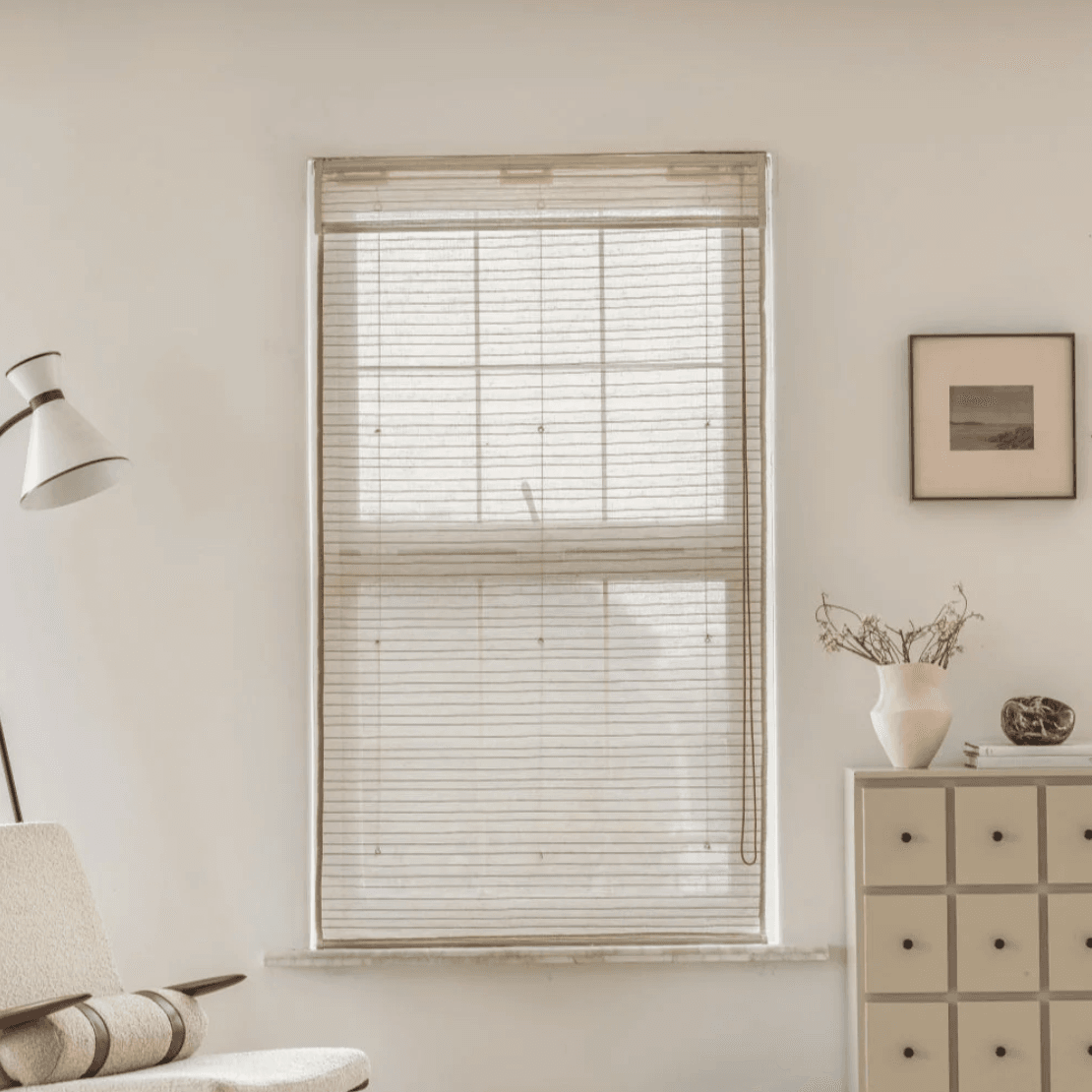
The EaseEase Natural Linen Custom Bamboo Shades are handwoven on traditional wooden looms from a 90% linen, 10% bamboo blend. The black stripe pattern woven into the face fabric is what distinguishes these from every other pick here: it is a decorative element that reads as a design choice rather than a neutral background. The blend gives the shade the structure of linen with a slight textural interest from the bamboo element. No polyester and no flame-retardant treatment are disclosed.
The shade is sold made-to-measure at $119.99. The brand sells through their own Shopify storefront at easeeasecurtains.com. The black striping is subtle at distance and becomes more visible in direct light, which makes these a better fit for rooms with intentional pattern mixing than for rooms that need the shade to disappear into the wall.
Who it's for: Rooms where the window treatment is meant to contribute texture and pattern rather than blend in. The linen-bamboo blend and black stripe work well in spaces with natural materials and muted palettes.
6. Berissa Blinds No-Drill Light Filtering Linen Soft Fold Roman Shades — Best value

The Berissa No-Drill Light Filtering Linen Soft Fold Roman Shades start at $49.99 and are also available through Amazon at a comparable price, making them the most accessible linen shade in the group. The face fabric is described as plied natural linen yarns with slub texture, giving a slightly nubby, handloom-adjacent appearance. The shade is cordless and installs without drilling using a tension-mount system: relevant for renters, metal window frames, or anyone wanting to avoid wall anchors.
No polyester or flame-retardant treatment is disclosed. The soft fold style means the fabric folds horizontally when raised rather than in rigid panels, giving a more relaxed, draped look than a structured roman shade.
Who it's for: Renters and apartment dwellers who want a natural fiber shade without drilling, or anyone who wants a linen roman shade with Amazon availability as a backup purchase path.
7. Barn & Willow Belgian Flax Linen Roman Shade - Natural — Best Belgian linen

The Barn & Willow Belgian Flax Linen Roman Shade is made from 100% Belgian flax linen with no synthetic materials, as confirmed by the brand's FAQ. The linen is grown, woven, and finished in Belgium, which gives it one of the more transparent supply chains in this category. Barn & Willow offers three roman shade styles — cascade, flat, and relaxed — in a single natural colorway. Sizing runs from 30 to 100 inches wide and 54 to 120 inches long, covering a range that accommodates most window configurations, including oversize or floor-length panels.
No pricing is listed at the standard widths; custom shade pricing is calculated at checkout. No PVC, no polyester, and no synthetic finish are disclosed on the product page or FAQ.
Who it's for: Rooms that call for a premium linen shade with verified Belgian flax provenance and a range of roman shade styles. The single natural colorway means this is a neutral-first pick rather than a color-matching one.
8. LuxDrape B1-1 Natural Ramie Woven Wood Blinds & Shades - Ginkgo — Best ramie-wood blend

The LuxDrape B1-1 Natural Ramie Woven Wood Blinds & Shades in Ginkgo are made from a 50% ramie yarn and 50% wood fiber blend. The ramie component brings a silkier hand and lighter color to the weave, while the wood fiber gives it the structural appearance of a traditional woven wood shade. The cordless lift mechanism is the other notable feature: no dangling cords, inside or outside mount, custom width and height. At $108.99, it sits at the accessible end of the custom shade market.
No flame-retardant or PFAS finish is mentioned on the product page, and neither polyester nor PVC are listed as components. Lining options are available (blackout and light-blocking); only the unlined default passes, as the specific lining material for those options is not disclosed — order unlined.
Who it's for: Anyone who wants a woven wood aesthetic with a cordless mechanism at a mid-range price. The 50/50 ramie-wood blend gives the Ginkgo colorway a warmer, more natural tone than a standard bamboo shade.
9. MorraHome Custom Bamboo Woven Shades — Best budget bamboo

The MorraHome Custom Bamboo Woven Shades are MorraHome's single-fiber option: 100% natural bamboo, made to measure, starting at $54.99. Where the brand's Natural Woven Wood Shades (pick 1) weave bamboo, ramie, and jute together for a richer visual texture, this model is a clean, single-material bamboo shade for anyone who wants the look without the blend. No polyester, no PVC, no flame-retardant treatment, and no liner option are disclosed; this shade is sold unlined only.
At under $55 it is the least expensive custom bamboo shade in the group, and it ships to the US mainland. The pared-down construction and lower price point make it the right entry into the woven wood category for buyers who are testing the aesthetic before committing to a more complex shade.
Who it's for: Anyone who wants a simple, clean 100% bamboo custom shade at the low end of the price range. The single-fiber disclosure and no-liner construction keep the product transparent and the price down.
10. Berissa Blinds Natural Bamboo Ramie Woven No Drill Shades — Best budget woven

The Berissa Natural Bamboo Ramie Woven No Drill Shades sit at $69.99 and combine bamboo, ramie, and grass fibers in a woven face. The blend gives the shade the multi-tone visual quality of woven wood (the dark and light grass stems and the paler ramie catch light differently), which you do not get from a single-fiber weave. No polyester or chemical finish is listed; the brand discloses all materials on the product page.
This shade is cordless and installs without tools. Six color options span from blonde natural to darker caramel tones. The key distinction from the Berissa linen option above: this is a woven wood aesthetic, the other is a textile fabric aesthetic. Both are from the same brand, but they look fundamentally different on a window.
Who it's for: Anyone who wants the organic woven wood look at the lower end of the price range, with no-drill installation.
11. TailorVibe Tailor Woven Bamboo Shades - Coconut — Best ramie

The TailorVibe Tailor Woven Bamboo Shades in Coconut are made from 100% ramie, which is distinct from the Tina model's 100% bamboo. Ramie has a longer fiber length and a silkier sheen than bamboo reed, and the Tailor model's slightly looser weave pattern emphasizes the natural color variation within the fiber. The Coconut colorway is a warm pale tone. At $250, this is the highest-priced pick in the group, appropriate for rooms where the shade needs to stand out as a design choice. No polyester, no chemical finish, and no PVC components are listed.
Note: the Amazon listing for this model showed as out of stock during our review; the brand-site link was in stock.
Who it's for: Rooms that call for a natural fiber shade with a slightly more refined, silkier surface than bamboo reed and a warm natural tone. Best when you want ramie's fiber character visible in the weave.
12. Homerilla Natural Bamboo Roman Shades, Cordless - Best cordless woven

The Homerilla Natural Bamboo Roman Shades are woven from natural fibers (jute, bamboo, kenaf, and ramie depending on colorway) with cordless operation and no PVC components, no polyester face fabric, and no synthetic coatings disclosed. The brand states the shades are free from flame retardants and chemical finishes.
The cordless lift mechanism removes the strangulation hazard of corded shades and the looped cord that sits inside most corded blinds, which simplifies installation and removes a safety concern for households with young children. The shade installs inside or outside the window frame. The natural fiber weave gives the same organic texture as woven wood shades at a mid-range price point.
Who it's for: Rooms where a cordless lift is a priority and you want a natural fiber woven shade without the premium of custom options.
13. LuxDrape B1-9 Natural Red Ramie Woven Shade - Beige - Best beige ramie

The LuxDrape B1-9 Natural Red Ramie Woven Shade is woven from natural red ramie plant fibers rather than synthetic materials. Ramie is a bast fiber from a plant in the nettle family with a longer staple length and a silkier sheen than bamboo reed (see the ramie section above). The B1-9 is the Beige colorway of the LuxDrape ramie line, warmer and lighter than the Ginkgo colorway at pick 8.
LuxDrape discloses natural red ramie as the fiber on the product page. No polyester, no PVC, and no undisclosed chemical finish stated. The shade operates cordless.
Who it's for: Rooms where the LuxDrape Ginkgo colorway (pick 8) is too green-toned, and you want the same fiber composition in a warmer beige tone.
What we passed on
The window covering market is dominated by brands whose core lines fail the screen. Achim Home Furnishings runs a full PVC vinyl slat line (the GII Madera Falsa and Morningstar series) with embossed foam vinyl construction across all faux-wood blind offerings (source: achim.com product pages). Best Home Fashion window shades are woven polyester blackout roller fabric, which fails on the face fiber alone. TWOPAGES sells woven wood shades that might qualify, but their bestseller Liz shade is 90% polyester and Isabella is 76% polyester; those models fail and they were the primary window shades ranking in search results for this category. Loom Decor offers a "Classic Linen" roman shade that the brand tags as pure linen, but their adjacent Slubby Linen option is a confirmed linen-polyester blend; we could not fully clear the classic variant given the adjacent blend and the brand's absence from formal vetting.
Allen + Roth at Lowe's sells natural bamboo roman and horizontal shades that look similar to our picks on the shelf, but Lowes.com returns 403 for all product page fetches, making it impossible to verify fiber identity, finish status, or whether a polyester backing is present. That is a cannot-vet outcome, not a fail, but we cannot include a product we cannot verify. Earthshade Natural Window Fashions and Country Curtains were also checked; both brand sites were unreachable for evidence verification, leaving no path to confirm materials or certifications.
FAQ
Are bamboo blinds non-toxic?
Bamboo itself is a natural plant fiber and does not contain PVC, polyester, or added chemical flame retardants. The concern is with what gets added during manufacturing: a polyester backing fabric, a stain-repellent PFAS finish, or an antimicrobial biocide coating. Bamboo shades sold by the brands in this guide disclose that none of those finishes are applied. Bamboo from a mass-market brand with no material disclosure may or may not carry those treatments; the absence of a disclosure is itself a reason to avoid the product.
Do woven wood shades contain formaldehyde?
Woven reed and bamboo shades sold as individual textile shades (not part of a composite core with adhesive layers) generally do not. The formaldehyde risk in window treatments tends to be higher in composite wood headrails, MDF valances, or in polyester face fabrics treated with wrinkle-resistant resin finishes. The safest path is a metal headrail and an untreated natural fiber face.
Can I use linen roman shades in a bathroom?
A bathroom is a marginal environment for linen: humidity cycles can cause the fabric to shrink or distort over time, and persistent moisture creates mold risk. Unlined linen dries faster than cotton-lined. If the bathroom gets good ventilation, a linen shade works; in a wet bathroom with no window, it does not. None of the shades here are sold with a moisture-resistant finish, and adding one would likely introduce a PFAS treatment.
What is ramie, and why does it appear in window shades?
Ramie (Boehmeria nivea) is a bast fiber from a plant in the nettle family, grown primarily in East Asia. It has a longer staple length and a naturally silkier surface than bamboo reed, which makes it useful in woven shades where you want visible fiber character without the straw-like appearance of coarser reed. It is also one of the strongest natural fibers by weight. In this guide, Art Shades' knotted shade, TailorVibe's Tailor model, LuxDrape's ramie-wood blend, and pick 4 from Art Shades all feature ramie as the primary or co-primary fiber.
How do I confirm a shade doesn't have PFAS?
Ask the brand directly whether a stain-resistant, water-repellent, or easy-care finish is applied to the face fabric. Marketing terms like "easy wipe clean" and "fabric protection" are flags worth questioning. The brands in this guide either state explicitly that no finish is applied, or they describe the fabric in terms of fiber identity only with no finish language.
Cover image: Anastasiia De Oliveira via Pexels (Pexels License). Source.


