
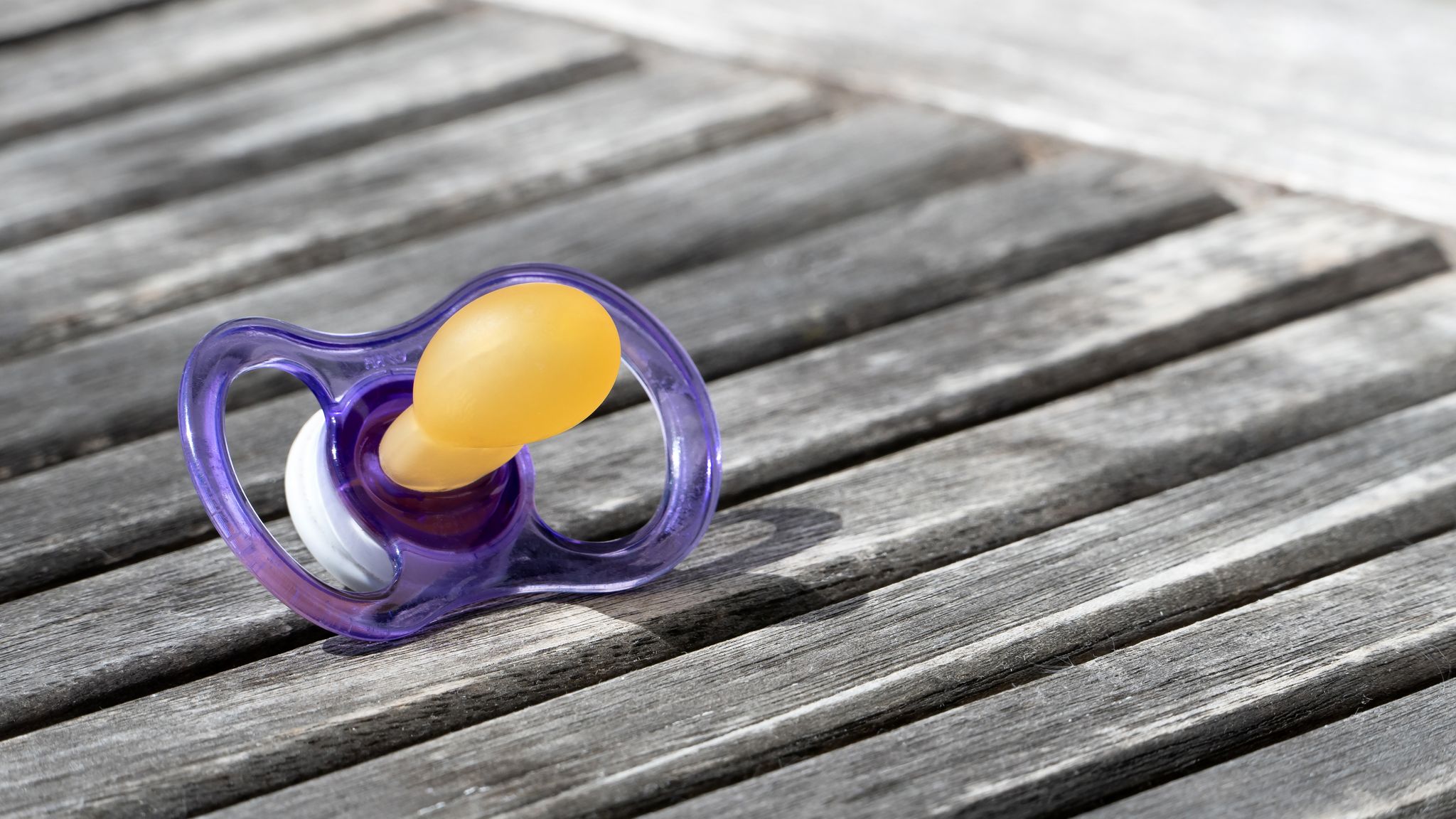
A January 2026 study from researchers at LMU Munich tested seven pacifiers sold as "BPA-free" and found measurable BPA leaching from all of them. The worst performer released 26,536 ng per liter -- a concentration that exceeds the European Food Safety Authority's daily tolerable intake by up to 11,600 times. The researchers confirmed the source: the polypropylene shield, the flat plastic disc that the nipple sits in and that presses against a baby's face for hours each day.
Polypropylene is the material most pacifier shields are made from. It carries a "BPA-free" label because manufacturers do not add BPA intentionally -- but polypropylene can be contaminated with BPA during polymerization, and that contamination leaches under typical use conditions: saliva, body heat, and mild mechanical stress from sucking. Every "BPA-free" claim on a polypropylene shield is a claim about intentional addition only. It says nothing about residual process contamination or leaching under real-world conditions.
The straightforward fix is to avoid polypropylene shields entirely. One-piece pacifiers -- designs where shield, nipple, and ring are cast or molded as a single unit from one material -- remove the shield as a separate BPA pathway. All five picks below are one-piece, made entirely from natural rubber or medical-grade silicone. Neither material requires BPA in its production, and neither has been implicated in the leaching pattern the Munich study documented.
What we look for
One-piece construction. The LMU study points to the shield specifically. A one-piece design has no polypropylene frame and no seam between shield and nipple where bacteria accumulate.
Material: natural rubber or food-grade silicone. Both are inherently BPA-free in a meaningful sense: no BPA in the monomer, no contamination pathway from the polymerization chemistry that affects polypropylene. Natural rubber is plant-derived (Hevea brasiliensis latex); silicone is a platinum-cured polymer. Each has tradeoffs: natural rubber is not for latex-sensitive infants; silicone's greater durability means it lasts longer but also outlives most babies' pacifier phase.
Disclosed colorants or no colorants. Plant pigments (FDA-approved) and inorganic pigments with clean SDS records are acceptable. "Color" or "pigment" without a named compound is not.
Published lab data. SGS or similar third-party test results, freely accessible -- not a certificate number on a landing page that links nowhere.
EU EN 1400 or ASTM F963 / CPSIA compliance. Both restrict heavy metals and phthalates in childcare articles. CPSIA applies to US market sales; EN 1400 is the European pacifier-specific standard covering nibbling strength, shield ventilation, and pull-force testing.
Our picks
1. HEVEA Classic Natural Rubber Round Pacifier -- Best overall

The HEVEA Classic is molded from a single pour of natural Hevea rubber -- shield, nipple, and ring are one continuous piece. There is no polypropylene anywhere in the design, so the BPA pathway the LMU study traced to plastic shields is architecturally absent, not merely labeled away.
HEVEA publishes SGS lab results for each production batch and uses only FDA-approved plant-based pigments (or leaves the rubber in its natural color in the clear colorways). The brand holds B Corp certification, meets EU EN 1400, and discloses its manufacturing chain at the product level.
Worth noting: natural rubber is Hevea latex. Infants with a confirmed or suspected latex allergy need a silicone option; the Ryan & Rose pick below is the right substitute.
The case for it: Most complete documentation of any natural-rubber pacifier in this category, with no polypropylene anywhere in the design.
What to know: Natural rubber may carry a faint earthy smell. It softens faster than silicone under daily sterilization; replace at the first sign of stickiness or discoloration.
2. Ryan & Rose Cutie PAT Pacifier + Teether -- Best silicone

The Ryan & Rose Cutie PAT is 100% medical-grade silicone -- patented one-piece construction with no polypropylene shield, no latex, and no detachable parts. The combined pacifier-teether design carries a child through the teething stage without requiring a separate item.
CPSIA and ASTM F963 certified; brand discloses BPA, PFAS, and phthalate-free formulation. At around $5 per unit, it is the most accessible fully-silicone one-piece pick in this guide.
The case for it: Best option for latex-sensitive families; also the cheapest fully-silicone one-piece pick.
What to know: The wide flat shield may not fit under infant chin-strap swaddles. The teether wings add bulk -- some infants prefer a simpler nipple shape.
3. Ecopiggy EcoPacifier Natural Rubber -- Budget pick

The Ecopiggy EcoPacifier is the only pick in this guide with zero colorants -- natural rubber in its unprocessed color, nothing added. For parents who want to minimize every chemical variable and not just those covered by the disqualifier list, this is the starting point.
Construction is one-piece natural rubber, so the polypropylene BPA pathway is absent for the same reason as the HEVEA: no plastic shield in the design. The certification footprint is lighter than HEVEA's (no published SGS results, no B Corp status), but the material simplicity compensates for some of that.
The case for it: Zero-dye formulation; natural rubber without premium certification overhead.
What to know: Less third-party documentation than the HEVEA. If published lab results matter to you, HEVEA is the stronger choice.
4. Philips Avent Soothie Pacifier -- Hospital-grade silicone
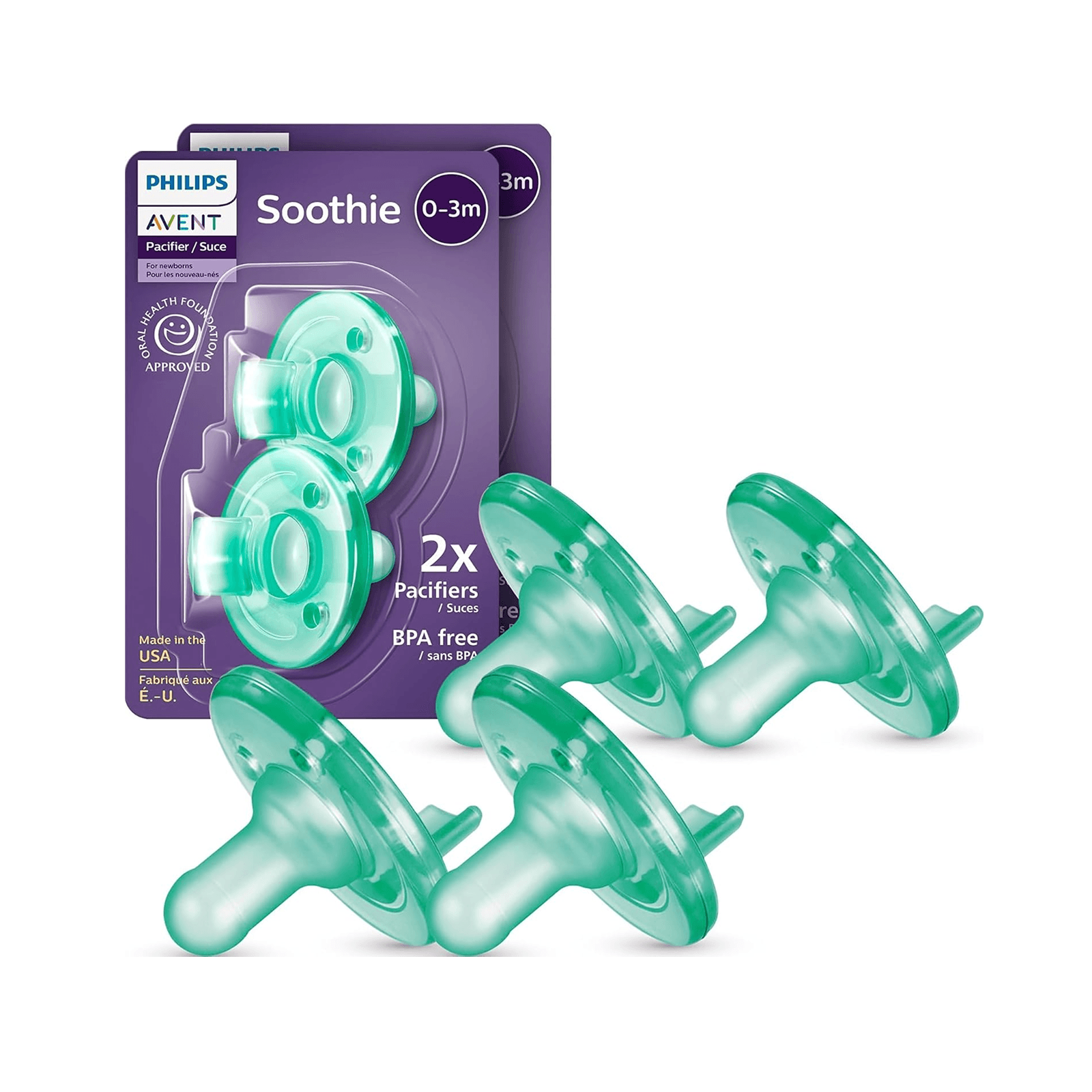
The Philips Avent Soothie is one of the few pacifiers issued to newborns in US NICUs and hospital nurseries. The same design, made in the same medical-grade silicone formulation, is sold directly to consumers. CPSIA phthalate restrictions apply to it as a childcare article, and hospital sourcing creates a de facto quality floor that most consumer products lack.
Silicone does not require BPA in its production chemistry. The Soothie's one-piece ring-and-nipple construction has no polypropylene shield. The design is simpler than most consumer pacifiers, which means fewer materials and fewer points of failure.
The case for it: Hospital-issued; medical-grade silicone; dead-simple one-piece design.
What to know: No handle ring. Smaller shields mean slightly less ventilation than wider-shield designs. Some infants reject the shape after transitioning away from the hospital version.
5. Dr. Brown's HappyPaci One-Piece Silicone Pacifier -- Bottle transition

The Dr. Brown's HappyPaci is fully silicone, including the butterfly-shaped shield -- no separate polypropylene frame. The shape is designed to match Dr. Brown's bottle nipple contour, which matters for infants being transitioned from bottle to pacifier. Hospital and NICU use; one-piece construction eliminates the bacteria-collection seam.
The case for it: Best match for Dr. Brown's bottle-fed infants; fully-silicone shield removes the polypropylene BPA pathway.
What to know: The butterfly shield shape is narrower than a traditional round shield, which works well for small faces but may not suit every feeding position.
What we passed on
BIBS pacifiers are widely recommended in non-toxic parenting circles, and the nipple is natural rubber -- but the shield is polypropylene. That places BIBS squarely in the category the LMU Munich study implicated. We appreciate that BIBS is transparent about the shield material, but a polypropylene shield cannot be waived on brand reputation alone.
NUK and MAM are the dominant conventional brands in the US and EU markets. Both use polypropylene shields with silicone or latex nipples -- exactly the split construction the LMU study flagged. The NUK Orthodontic and MAM Air pacifiers are frequently recommended for their shape research, but the BPA finding applies to their shield material category regardless of nipple rating.
FAQ
Can silicone pacifiers leach BPA?
Silicone is made from silicon dioxide (from quartz), not from petrochemical monomers. BPA is a byproduct of polycarbonate and epoxy resin production -- neither of which is involved in food-grade silicone synthesis. The LMU Munich study found no BPA associated with silicone nipples; every leaching detected traced to polypropylene shields. A silicone-only or natural-rubber-only pacifier has no BPA pathway that the study identified.
Are "BPA-free" labels reliable on pacifiers?
The label means the manufacturer did not intentionally add BPA during production. It does not mean the material is free of contamination from the polymerization process or that BPA cannot leach under use conditions. The LMU study tested pacifiers that all carried BPA-free labels and found BPA leaching from all of them. The label describes intent, not residual chemistry.
Natural rubber or silicone?
If latex allergy is not a concern, natural rubber (specifically Hevea brasiliensis) is the simpler material: no synthetic chemistry in the base, plant-derived. The tradeoff is durability -- natural rubber degrades faster under repeated sterilization and should be replaced when it shows any stickiness or discoloration. Silicone lasts longer and is the right choice for latex-sensitive families. Both pass our criteria.
How do I sterilize a one-piece pacifier safely?
Boil in clean water for 5 minutes, or use a steam sterilizer. Let it cool completely before giving it to the infant. For natural rubber, avoid chemical sterilizing tablets (they can degrade rubber over time). For silicone, any method is fine. Replace either material at the first sign of surface changes -- stickiness or discoloration means the material is breaking down.
At what age should we stop using a pacifier?
The American Academy of Pediatrics recommends pacifier use during the first six months (it is associated with reduced SIDS risk during infancy). After six months, the AAP recommends beginning to wean. Most pediatric dentists flag prolonged use past age two as a risk factor for bite development. The material choice here applies across any age a child uses one.


