

Most baby food containers sold in the US are marketed as "BPA-free." That label has become nearly meaningless. BPA was replaced in most products with BPS and BPF, two structural analogs that laboratory studies have flagged for similar endocrine activity. Polypropylene, the rigid plastic in most meal-prep containers, continues to be studied for microplastic release under heat. And most silicone on the market is not the platinum-cured, LFGB-tested formulation that food safety regulators in Europe actually require.
This guide covers the batch-cooking stage of infant feeding: the freezer tray for Sunday prep, the jar for the fridge, the bag that travels to daycare. Nine containers from nine brands, each one selected because the brand discloses what it made the thing from, and the disclosure holds up.
None of these are perfect. A few have polypropylene lids on otherwise-glass bodies. One stainless pick is not leak-proof. We call out every limitation directly in each section.
VerifiedWhat we look for
No plastic touching food. Glass, platinum silicone, and 18/8 stainless steel are the materials that pass here. Polypropylene lids on glass jars are a compromise we note where applicable. Recycled HDPE, Tritan, melamine, and BPA-alternative plastics do not pass.
Silicone grade: platinum or documented LFGB. There are two primary methods for curing silicone: peroxide-cure and platinum-cure. Platinum-cure produces fewer residual byproducts and is the standard in European food contact materials. The LFGB, Germany's food and feed law, requires migration testing at 100 degrees C, which is stricter than the FDA room-temperature standard. Products that document LFGB compliance show you evidence the silicone was actually tested under realistic use conditions. "Food-grade silicone" without that qualification is a marketing phrase, not a specification.
Glass type disclosed. "Glass" on a label can mean borosilicate or soda-lime. Borosilicate handles thermal shock; soda-lime can crack moving from freezer to microwave. Every glass pick in this guide discloses borosilicate construction with a traceable source. We didn't include any container where we couldn't confirm the glass type.
Lids are a separate question. A borosilicate glass jar with a polypropylene lid has an important limitation: the lid contacts food, and PP is a plastic. We note the lid material for every glass pick. If glass-only contact at every step is your requirement, the silicone-lidded picks are the answer.
Claims traceable to source. We required a spec sheet, product description, or certification documentation for every material claim. "Made with safe materials" is not a source. If a brand claimed LFGB compliance, we checked that it was stated on the product page or in accessible product documentation.
2
silicone grades
LFGB platinum vs FDA-only; we picked the former or noted the gap
9
picks
across silicone trays, glass jars, silicone bags, and stainless
0
BPA-free claims
cited as evidence; we looked at what replaced it
Our picks
1. BEABA Multiportions Silicone Baby Food Storage Container, 5 oz: Best for transport

The BEABA Multiportions container takes a different approach to the tray format: each 5-ounce cup lifts out individually. That matters when you want to send one portion to daycare without bringing the whole tray. BEABA documents 100% platinum silicone with FDA food-grade compliance; the container is made in Italy, which brings EU manufacturing standards into the supply chain rather than just claiming compliance with them.
At 5 ounces per cup versus 1 ounce for most freezer trays, the BEABA is better suited to babies who have moved past early purees into larger portions and chunkier food. Six cups per set means one batch session covers the week.
2. Bumkins Silicone Snack and Sandwich Bags: Best silicone bag for daycare

Once a baby moves to finger foods and soft solids, a bag is often more practical than a jar. The Bumkins Silicone Snack and Sandwich Bags use LFGB-certified platinum silicone with a pinch-seal closure that uses no plastic zipper touching food. Bumkins documents LFGB certification on the product page. The opening is wide enough to clean by hand without a bottle brush, which matters when bags become a daily-use item.
Oven, microwave, and dishwasher safe. The silicone-on-silicone seal is not rated for liquids, so keep these for soft solids and snacks rather than purees. Sold as a two-pack in multiple sizes.
3. Stasher Premium Reusable Silicone Sandwich Bag: Best value silicone bag

The Stasher Sandwich Bag is the accessible entry point into platinum silicone bags. FDA and EU food contact certified; Stasher publishes compliance documentation and supplier chain information at stasherbag.com. The Pinch-Loc seal is silicone-on-silicone with no plastic components touching food.
Stasher has published material sourcing more extensively than most silicone brands. Among platinum silicone bags that publish their certification documentation, this is the entry-level price option. Works for soft solids and thicker purees; not ideal for very liquid foods.
4. OXO Tot Glass Baby Blocks Food Storage Containers, 4 oz: Best glass jars for reheating (lid note)
The OXO Tot Glass Baby Blocks are the most widely available borosilicate glass option. OXO documents borosilicate construction on the product page, and the glass body handles the thermal shock of moving from freezer to microwave without cracking.
Lid note: The lids are polypropylene. Remove them before microwaving. When you reheat directly in the container, the food contacts glass only; the PP lid is off. If glass-only contact at every step matters to you, transfer food to a glass bowl for reheating rather than using the microwave in the container. For parents who want borosilicate glass at an accessible price and who use the microwave, these are the pick. Sold as a set of four 4-oz containers with snap-on lids.
5. Elk and Friends 4 oz Borosilicate Glass Baby Food Storage Jars, Set of 6: Best glass jars for batch cooking

The Elk and Friends glass jars are the batch-cooking choice: six jars per set at a price that makes buying two sets practical for a full week of prep. Borosilicate glass body, documented on the product page. The silicone lids are FDA food-grade, not LFGB. That distinction matters if European-standard silicone testing is a priority. The glass body is not in question; the lids carry a lower certification tier than the LFGB picks above. If the lid certification gap concerns you, use these for cold storage and transfer to a glass bowl for reheating.
6. LunchBots Rounds 4 oz Stainless Steel Snack Containers, Set of 2: Best stainless option (older babies, dry foods)

The LunchBots Rounds are the only stainless pick here, with a specific use caveat: dry or semi-dry foods only. The food-grade silicone lids are not leak-proof for liquids or purees. For a baby 8 to 12 months old eating soft cooked vegetables, crackers, or dry cereal, this is a genuinely plastic-free option with no glass-breakage concern. LunchBots publishes 18/8 stainless steel grade on the product page.
Use these once a baby is reliably eating solids, not for the early puree stage. For the puree stage, the silicone trays and glass jars above are the right containers.
7. Souper Cubes 2-Tablespoon Silicone Freezer Tray: Best for stage-1 portions
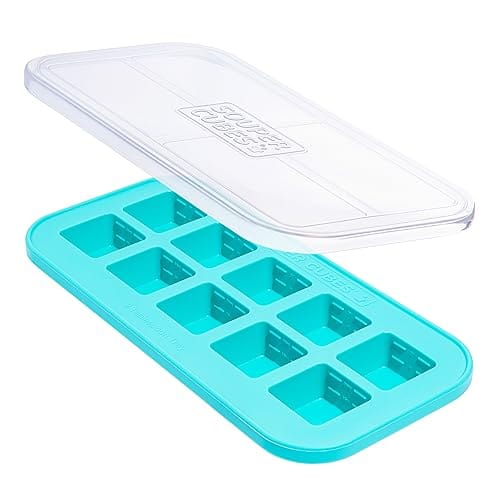
The Souper Cubes 2-Tablespoon Silicone Freezer Tray is the only tray in this guide sized specifically for stage-1 puree portions at 2 tablespoons per cube. Ten cubes per tray, platinum-cured silicone throughout, a steel-reinforced rim, and a tight-fitting lid that seals out freezer odors during multi-day storage. FDA-approved silicone; the brand runs quarterly testing against California Prop 65 standards.
This tray covers the earliest stage of puree feeding. For larger portions as feeding progresses, the BEABA (pick 1) handles 5-ounce servings. Widely available at Target and Walmart.
8. ECOlunchbox Seal Cup Mini, 3oz: Best leak-proof stainless pick

The ECOlunchbox Seal Cup Mini is the only fully leak-proof stainless container in this guide. The LunchBots Rounds use a press-fit silicone lid not rated for liquids. This one uses an NSF-tested silicone lid that creates a genuine seal, making it practical for pureed foods in addition to solids. One important note: this is the Seal Cup line specifically. ECOlunchbox other product lines use lower-grade 201 stainless steel. The Seal Cup Mini uses 304 (18/8).
At 3oz, it fits the gap between the silicone trays and larger stainless containers, and works well for single-serve stage-1 and stage-2 purees sent to daycare. B Corp certified brand.
9. Wean Meister Freezer Pods: Best for batch yield, LFGB certified

The Wean Meister Freezer Pods are LFGB-certified platinum-grade silicone, with the no-white-lines pinch test as the brand's stated quality indicator. The 9-pod format produces more servings per batch than the 6-pod trays typical in this category, making this the pick for parents who batch-cook in larger weekly volumes. LFGB certification requires migration testing at 100 degrees C, the same standard met by the BEABA pick. Available in the US through Biome specialty retail.
What we passed on
WeeSprout glass containers ship with silicone lids that don't disclose silicone grade or curing method in their product specifications. The borosilicate glass body is fine. Without lid material disclosure at the LFGB or platinum level, this one didn't make the cut.
Re-Play uses recycled HDPE as the primary food-contact material. Recycled plastic is still plastic: direct food contact in a container for infant feeding requires material traceability we don't have here. HDPE is a disqualifier regardless of whether it's recycled.
Lifefactory glass bottles are popular, but the silicone sleeve specification isn't disclosed at the LFGB level on the product page. The glass itself is fine; the sleeve documentation question keeps it off this list.
Green Sprouts Fresh Baby Food Freezer Tray was previously pick 1 in this guide. The product is no longer available; the Wean Meister Freezer Pods (pick 9) and the Souper Cubes tray (pick 7) cover the LFGB-certified silicone freezer tray category.
If you're shopping right now, the product directory is filtered against the criteria this guide applies to every pick here.
How this was vettedLast reviewed August 2026
Each pick was verified against the published disqualifier list at /our-promise: no PFAS, no plastics as primary food-contact materials, no phthalates, no bisphenols, no chemical flame retardants. Silicone grade was verified against brand documentation. Glass type (borosilicate vs soda-lime) was verified against brand spec sheets. All certifications have a source URL in the product record.
Read the full criteria →Cover image: Ella Olsson via Pexels (Pexels License), source.
