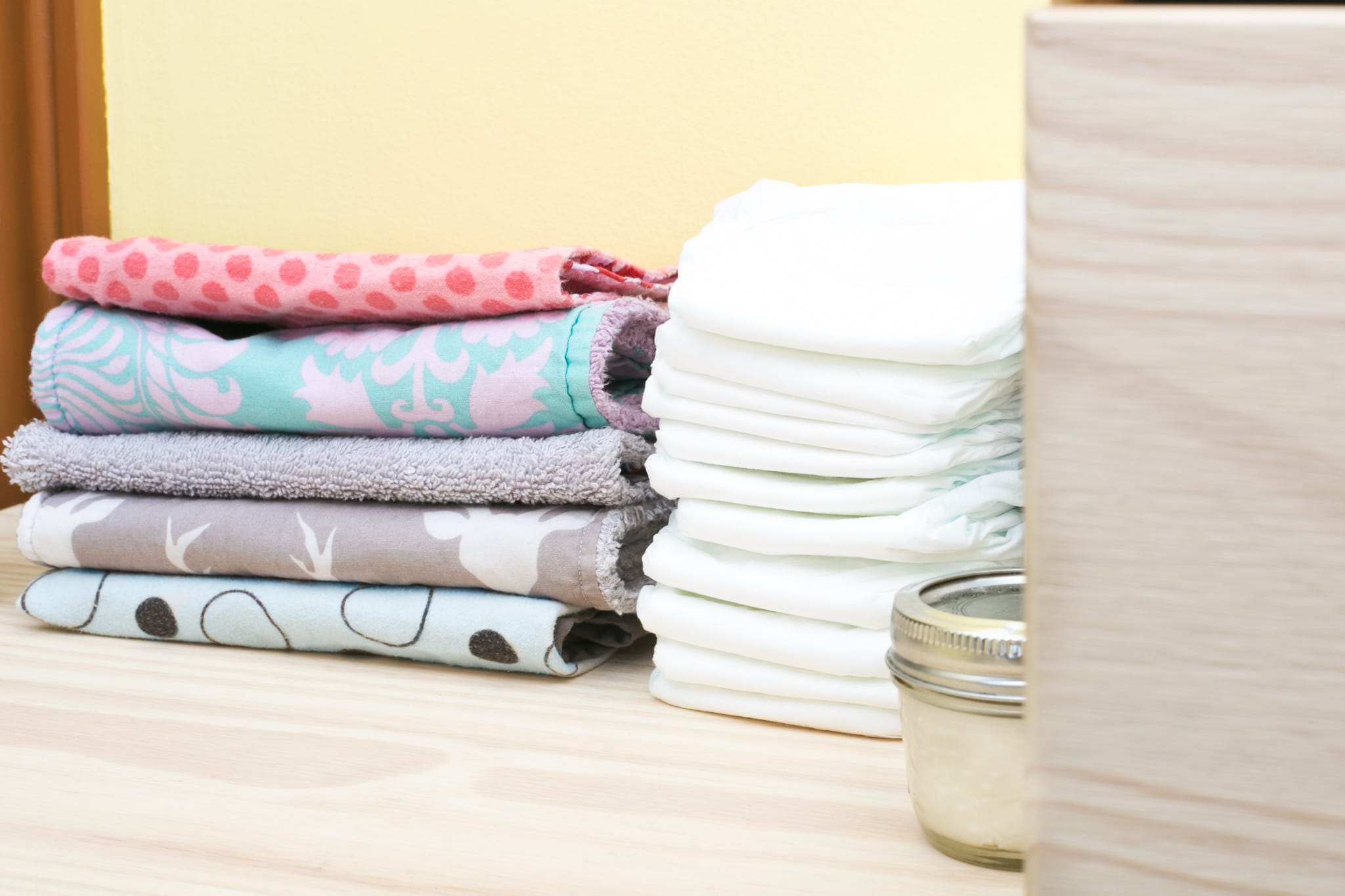
A baby's clothing is in contact with their skin for most of their waking hours. Infants' skin is thinner, more permeable, and more chemically reactive than adult skin — a compound absorbed through a baby's skin can reach the bloodstream more efficiently, at lower concentrations, than the same compound absorbed by an adult.
This makes the question of what baby clothes are made from one of the most consequential purchasing decisions in the first year — and it's almost entirely absent from mainstream product coverage.
Federal law and the flame retardant requirement
The CPSC (Consumer Product Safety Commission) requires children's sleepwear in sizes 9 months through 14 years to meet open-flame resistance standards. There are two compliant paths:
Path 1: Chemical flame retardant treatment. The garment is treated with chemical compounds that slow combustion. This was historically the dominant method.
Path 2: Tight-fitting construction. The garment is designed to fit snugly against the body with minimal air gap. Fire spreads across loose fabric; a snug-fitting garment eliminates this pathway. The CPSC explicitly allows this as an alternative to chemical treatment — but it requires the garment to actually be snug-fitting, with CPSC-defined measurements at every age size.
Every children's sleepwear label is required to carry a disclosure. Tight-fitting garments say: "For child's safety, garment should fit snugly. This garment is not flame resistant." This label is on millions of garments every year. Most parents, reading it, assume they've found something concerning — a warning that the garment is dangerous.
It's the opposite. It's the label that confirms no chemical flame retardant treatment was used.
The chemical flame retardants used on children's clothing
The compounds historically and currently used on children's sleepwear include:
PBDEs (polybrominated diphenyl ethers): Found in the blood and breast milk of virtually every American tested. Bioaccumulative — meaning concentrations increase over time in tissue. Most PBDE variants have been phased out of US production but remain in products manufactured before phase-out and in products imported from countries with weaker regulations.
Organophosphate flame retardants: Replaced PBDEs in many products but carry their own exposure concerns. TDCPP (chlorinated Tris), banned from children's products in California, has been detected in the blood of infants at meaningful levels. TCEP, an organophosphate classified as an "unreasonable risk" by the EPA in 2024, continues to appear in some older-stock and imported children's products.
Antimony trioxide: Used as a synergist with halogenated flame retardants — it amplifies their effectiveness, which allows lower concentrations. Classified as a possible carcinogen (Group 2A, IARC). Found in trace amounts in older-generation FR-treated garments.
These compounds are not inert once applied to fabric. Studies consistently find that chemical-treated garments transfer compounds to skin through contact, and that dermal absorption is a meaningful exposure pathway — particularly for infants in prolonged skin contact.
The polyester problem
Here is the counterintuitive issue that most "non-toxic baby clothing" coverage misses entirely.
Many brands — including major mass-market manufacturers — have moved toward tight-fitting polyester as their sleepwear material. This avoids chemical flame retardants (the "fits snugly" label appears). But polyester introduces a separate set of concerns:
Antimony in polyester fiber: Antimony trioxide is used as a catalyst in the production of polyethylene terephthalate (PET) — the polymer that becomes polyester fiber. Trace antimony residue remains in the finished fiber. It's not applied as a flame retardant; it's inherent to how the material is made. Studies on polyester fabrics have detected antimony at concentrations of 50–250 ppm.
Microplastic shedding: Synthetic fabrics shed microplastic fibers with every wash and during wear. Research published in 2024 found that polyester baby garments shed measurable microplastic particles into the skin contact environment — particles small enough to be absorbed dermally or inhaled. An infant in a polyester sleeper is in contact with a microplastic-shedding material for 10–14 hours per day.
Thermal hazard in fire: Polyester doesn't burn the way natural fibers do. In a fire, polyester melts and adheres to skin — a fundamentally different and more severe burn injury than fabric that chars and self-extinguishes. The tight-fit rationale (reduce air gap) assumes the fabric behaves like cotton. Molten polyester behaves differently.
The practical implication: tight-fitting 100% organic cotton sleepwear is the clearest available solution. It meets the CPSC snug-fit alternative, requires no chemical treatment to do so, is a natural fiber with no antimony-catalyst residue, and doesn't melt.
The dye problem
Synthetic dyes — azo dyes, reactive dyes, and direct dyes — are the most commonly used colorants in mass-market children's clothing. Several azo dye variants are restricted or banned in the EU under REACH regulations because they can break down to form aromatic amines, some of which are classified as carcinogens. US regulations on textile dyes are more limited.
What to look for: OEKO-TEX Standard 100 certification screens for 100+ restricted substances including specific banned azo dye breakdowns, heavy metals (lead, cadmium, nickel), formaldehyde, and pH outside safe range for skin contact. For children's products specifically, OEKO-TEX has a separate product class (Class I) for infant items.
GOTS certification requires both organic fiber and restricted substance limits throughout processing, including dye restrictions. It is the most comprehensive standard for textile supply chain chemical management.
What "natural" doesn't mean
Organic labeling on clothing is not federally regulated in the United States the way USDA Organic governs food. "Natural," "eco-friendly," and "sustainable" on a clothing label have no legal definition and require no disclosure. Even "organic cotton" without a third-party certification mark (GOTS, USDA Organic) carries no verification requirement.
The minimum meaningful bar for children's sleepwear:
- GOTS-certified organic cotton (or GOTS-certified organic wool)
- OEKO-TEX Standard 100 (as a second option if GOTS isn't available)
- 100% natural fiber — not polyester blends, not bamboo-polyester
- "Fits snugly / not flame resistant" label, or a brand that explicitly discloses their fire barrier method if the garment is labeled flame-resistant
Brands that disclose the specific name of their fire barrier treatment, rather than describing it vaguely as "natural" or "chemical-free," are making a meaningful transparency commitment. Ask: what specific compound or material is used? A brand that can't answer that question hasn't earned a clear answer on the safety one.
The product directory includes vetted baby clothing picks that meet these standards. Our promise explains exactly how we evaluate them.
Cover photo: Kateryna Hliznitsova via Unsplash (Unsplash License) — source.