

Our picks at a glance
| Pick | Best for | Key certifications | Price | Details |
|---|---|---|---|---|
| HF Coors American Modern Dinner Plate, Set of 4 | Best overall | Vitrified, FDA-compliant | $$$ | Full review |
| Corelle Vitrelle 18-Piece Winter Frost White Dinnerware Set | Best value set | Lead/cadmium-free, Prop 65 | $$ | Full review |
| MORA Ceramics Dinner Plates, Set of 6 | Best stoneware | FDA-tested glazes | $$ | Full review |
| Made In Cookware 11" Dinner Plates, Set of 4 | Best restaurant quality | Lead-free, cadmium-free | $$ | Full review |
| Heath Ceramics Coupe Dinner Plate, Opaque White | Best artisan ceramic | Lead-free, cadmium-free, Prop 65 | $$$ | Full review |
| Libbey Tempo 12-Piece Glass Dinnerware Set | Best glass set | NSF, lead-free, cadmium-free | $ | Full review |
| Bormioli Rocco Alta Cucina 10.5" Opal Glass Plates, Set of 12 | Best opal glass | EU food-contact | $$ | Full review |
| Duralex Le Picardie 8" Tempered Glass Plate, Set of 6 | Best side plate | EU food-contact, lead-free | $$ | Full review |
The glaze on your dinner plate sits between your food and the ceramic body underneath. For most dinnerware, that glaze is where the chemistry gets interesting. Lead and cadmium have been used in ceramic glazes for centuries because they lower melting temperature, intensify color, and produce that glossy surface. They are also classified carcinogens. The FDA sets limits on how much lead and cadmium a ceramic plate may release into food, but limits are not the same as zero.
The safest dinnerware sidesteps glaze chemistry entirely: full vitrification, opal glass, and fully tempered glass all produce surfaces that are non-porous and do not rely on a distinct glaze layer for their finish. Where a glaze is used, the sourcing question is whether the brand can trace its colorant chain and has third-party leach testing on file.
This guide lists eight plates and plate sets that cleared the disqualifier screen. No lead or cadmium glazes, no PFAS coatings, no melamine resin bodies, no undisclosed "proprietary" glaze blends. Each pick has a verified lead-free claim traceable to primary documentation.
What we look for
VerifiedLead and cadmium in glazes are the primary risk in ceramic dinnerware. The safest category posture: pick brands that disclose their glaze chemistry or have eliminated glaze entirely.
Melamine resin is the material most commonly mislabeled as a safe alternative. Melamine-formaldehyde dinnerware is made by molding a plastic-like resin under heat and pressure. The FDA permits it for dry or cold foods, but melamine and formaldehyde both migrate into hot liquids and acidic foods in measurable quantities. Most melamine plates are marketed using language like "natural bamboo fiber," "eco-friendly," or "safe for kids," with the melamine resin buried in the fine print. We excluded every melamine product from this list.
PFAS and non-stick coatings sometimes appear on "easy-clean" dinnerware. Any product marketed with a stain-resistant or non-stick surface claim triggers a hard fail unless the coating chemistry is named and independently verified as PFAS-free.
Material disclosure: a plate whose spec sheet says only "high-quality ceramic" or "food-safe materials" is not disclosing anything checkable. We required brands to name the clay body or glass type, describe the glaze or lack of one, and point to documentation for any lead-free or cadmium-free claim.
The categories that consistently clear this screen: fully vitrified china (non-porous, kiln-fired at temperatures above 1200°C until the clay body densifies and no longer requires a separate glaze layer), opal glass (the same inorganic family as standard glass, colored by calcium phosphate rather than metallic oxides), and fully tempered glass (annealed glass that is all-surface, no coating needed). Standard stoneware and porcelain can also qualify when the glaze is disclosed and third-party leach tested.
Our picks
1. HF Coors American Modern Dinner Plate, Set of 4: Best overall

The HF Coors American Modern plates sit at the top of this list for one reason: vitrification. At kiln temperatures above 1200°C, the clay minerals fuse into a dense, glassy matrix that is non-porous and does not require a separate glaze layer to hold liquids or resist food absorption. HF Coors has run its Barstow, California kiln since 1925. The matte white surface is not a coating; it is the ceramic body itself.
HF Coors publishes its FDA compliance documentation and submits plates for commercial food-service certification, which means the lead and cadmium testing is on record for institutional buyers and available to consumers on request. The price ($155 for four) reflects American manufacturing and lifetime durability rather than a design premium.
Best for families who want a set to last decades. The commercial-grade body chips far less than typical home-market porcelain.
2. Corelle Vitrelle 18-Piece Winter Frost White Dinnerware Set: Best value set

The Corelle Vitrelle 18-piece set is not ceramic. Vitrelle is a proprietary triple-layer tempered glass: a textured glass core laminated between two flat glass layers under heat. The resulting material is non-porous, has no glaze, and is dishwasher-stable. Corelle publishes its Proposition 65 compliance and lead/cadmium-free status on its product pages.
The 18-piece set ($49.99 on Amazon) covers four place settings with dinner plates, salad plates, and bowls. The plates are thin for glass, which makes them lighter than ceramic, and the tempering means they resist thermal shock better than standard glass.
Best for households that want a complete set under $75 with zero glaze chemistry to think about.
3. MORA Ceramics Dinner Plates, Set of 6: Best stoneware
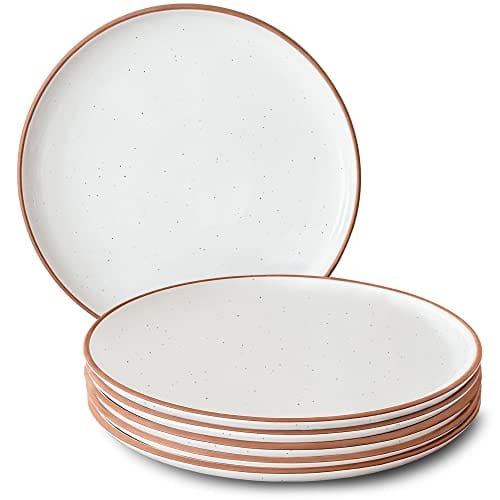
The MORA Ceramics dinner plates use reactive glaze on a stoneware body. Reactive glazes shift color subtly with each firing, producing the organic variation in tone that makes each plate look slightly different from the others. MORA discloses on its product pages that all glazes are FDA tested for lead and cadmium migration and that the ceramic body is kiln-fired stoneware rather than earthenware (earthenware's higher porosity makes it more susceptible to glaze leaching over time).
Six plates for $52.99 makes this the stoneware pick at a mid-range price. The vanilla white colorway reads close to off-white in most lighting.
Best for households who prefer the weight and texture of ceramics over glass.
4. Made In Cookware 11" Dinner Plates, Set of 4: Best restaurant quality

The Made In 11" dinner plates are high-alumina vitrified china, produced at the Stoke-on-Trent potteries in England that have served professional kitchens for over a century. Higher alumina content in the clay body increases resistance to chipping and allows firing to full vitrification temperatures. Made In declares both lead-free and cadmium-free status on its product pages.
One caveat worth noting: Made In does not publish third-party test documentation on its site. We requested the underlying test data and have not received a response as of this writing. The declared status is consistent with the Stoke-on-Trent manufacturing tradition, which operates under UK food-contact regulations, but the absence of a primary-source test document means we have a pending verification on file. We will update this entry when documentation is confirmed.
$119 for a set of four on Made In's website. Best for households that want professional-kitchen durability and are comfortable with a lead-free declaration in advance of third-party test confirmation.
5. Heath Ceramics Coupe Dinner Plate, Opaque White: Best artisan ceramic

The Heath Ceramics Coupe dinner plate is handmade in Sausalito, California. Heath has operated continuously since 1948 and sources its glaze chemistry from the same material tradition Edith Heath established: opaque, matte, lead-free and cadmium-free glazes in subdued earth tones. The Opaque White glaze is one of the studio's baseline glaze colors. Heath publishes its lead-free and cadmium-free glaze policy on its website and holds its glazes to California Proposition 65 standards.
$58 per plate (direct from heathceramics.com) makes this the highest per-unit price on the list. The form is handmade and not perfectly uniform, which is a feature in studio ceramics. These plates are not identical to each other.
Best for a heirloom piece or for a household that prioritizes craft provenance over price-per-piece.
6. Libbey Tempo 12-Piece Glass Dinnerware Set: Best glass set

The Libbey Tempo 12-piece set is fully tempered glass: no glaze, no ceramic body, no coating of any kind. The glass is inert to food contact, dishwasher-safe, and non-porous. Libbey discloses its lead-free and cadmium-free status on product pages and submits to NSF certification for its food-service glass lines.
The 12-piece set ($39.99 on Amazon) includes four dinner plates, four salad plates, and four bowls. At that price, clear tempered glass is the most economical option on this list and the one with the fewest material questions to research.
Best for households that prefer glass over ceramic or are replacing a single damaged piece and want a set that skips glaze chemistry entirely.
7. Bormioli Rocco Alta Cucina 10.5" Opal Glass Plates, Set of 12: Best opal glass
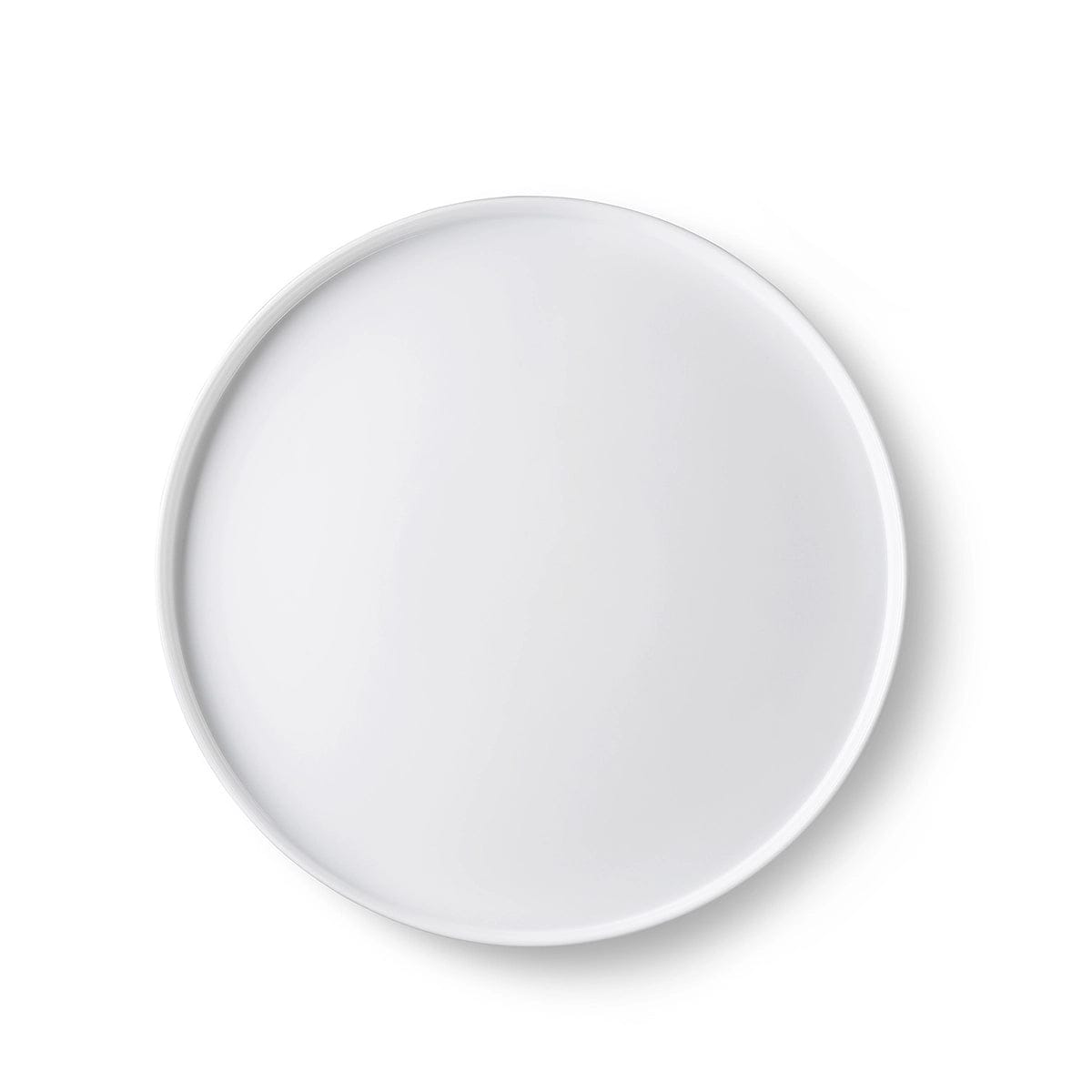
The Bormioli Rocco Alta Cucina opal glass plates look like white ceramic but are made from opal glass: a fully non-porous glass material that achieves its white opacity through calcium phosphate rather than metallic colorants. There is no clay body and no glaze. The material is inert, non-porous, and produced to EU food-contact standards. Bormioli Rocco has manufactured glass in Fidenza, Italy since 1825 and publishes its EU food-contact compliance on product documentation.
$87.63 for a set of 12 on Amazon makes this the best per-plate price on the list. Opal glass is heavier than standard tempered glass and lighter than most ceramic, giving it a weight that reads as substantial without being burdensome.
Best for households that want the look of white ceramic with the material certainty of glass.
8. Duralex Le Picardie 8" Tempered Glass Plate, Set of 6: Best side plate

The Duralex Le Picardie 8" plates are fully tempered glass, made in La Chapelle-Saint-Mesmin, France by a company that has manufactured glass continuously since 1945. Duralex glass is heat-treated to a temper that makes it roughly four times stronger than standard annealed glass. No glaze, no coating, no ceramic body. Duralex publishes its EU food-contact compliance and discloses lead-free material status. These are 8-inch plates, which is the standard European side or salad plate format.
A set of six is $42.95 from duralexusa.com. Best for households that want a side plate in the same material category as their main dinnerware, for adding glass plates alongside ceramic ones, or for a smaller household where the European portion size fits the table.
What we passed on
Melamine. This is the most important exclusion on this list and the one least likely to appear on the packaging. Melamine-formaldehyde is a thermoset plastic resin used to make hard, colorful, break-resistant plates and bowls. It is often marketed as "bamboo fiber dinnerware," "wheat straw plates," or "eco-friendly tableware." The bamboo or wheat straw is real; it is added as filler in a melamine resin base. The FDA restricts melamine dinnerware from use with hot foods or liquids because both melamine and formaldehyde migrate into food above room temperature, particularly into acidic foods. Melamine migration studies consistently show elevated readings when the dishes are used in microwave ovens or with hot soup. "Melamine-free" and "BPA-free" are not the same claim. Several manufacturers make "BPA-free" melamine sets; the absence of BPA does not address the melamine migration issue.
If you are looking at a set that appears to be ceramic or wood but is priced under $20 for 12 pieces, check the material composition. Melamine is denser and heavier than other plastics but lighter than ceramic, and it makes a dull sound when tapped rather than the clear ring of glass or vitrified china.
East Fork Pottery makes stoneware in Asheville, North Carolina and publishes lead-free glaze documentation. The brand would have been a first-choice stoneware pick, but all colorways were out of stock across the brand's site and major retailers at the time of this writing. We will revisit when inventory recovers.
Fiestaware contemporary. The current Fiestaware line (post-1986) uses lead-free glazes and is Proposition 65 compliant. We passed primarily because the brand was out of stock in both white and ivory across the main stockists we verified, not because of a material concern. Vintage Fiestaware from before 1986 is a separate story: those glazes contained uranium and lead, and vintage pieces should not be used for food contact.
Branded "bamboo" sets sold at major retailers. The term "bamboo" is not regulated in dishware. Many products carrying it are bamboo-and-melamine composites. Read the ingredient list, not the marketing name.
FAQ
Is melamine dinnerware safe for hot food or liquids?
No. Melamine-formaldehyde is a thermoset plastic resin used in many break-resistant plates and bowls. Both melamine and formaldehyde migrate into food above room temperature, particularly into acidic foods, and migration increases significantly in microwaves. The FDA permits melamine only for dry or cold foods. Many melamine sets are marketed as "bamboo fiber" or "wheat straw" tableware, with melamine listed in the fine print of the material disclosure.
What makes vitrified china different from regular ceramic or porcelain?
Vitrified china is fired at temperatures above 1200 degrees Celsius until the clay minerals fuse into a dense, glassy matrix. The resulting surface is non-porous and does not require a separate glaze layer to hold liquids or resist food absorption. Standard earthenware and stoneware are fired at lower temperatures and remain porous unless glazed. The glaze layer is where lead and cadmium risk lives in conventional ceramics: vitrification eliminates the need for a separate glaze entirely.
What is Corelle Vitrelle? It looks like ceramic.
Corelle Vitrelle is a proprietary triple-layer tempered glass: a textured glass core laminated between two flat glass layers under heat. It is not ceramic. The material is non-porous, has no glaze, and contains no lead or cadmium by construction. It is lighter than ceramic of comparable size, which is why it looks more substantial than standard glass but feels lighter than a ceramic plate.
How do I know if a ceramic plate's glaze contains lead?
Brands must publish either a lead-free declaration traceable to FDA leach testing, a primary-source document from the kiln, or an independent test report. A spec sheet that says only "food-safe" or "high-quality ceramic" without naming the glaze chemistry is not adequate disclosure. Imported ceramics sometimes exceed FDA advisory limits despite legal compliance because FDA enforcement is reactive rather than pre-market. Vitrified and glass options sidestep the glaze question entirely by construction.
What is opal glass, and is it different from glass-ceramic?
Opal glass is a fully non-porous glass material that achieves its white opacity through calcium phosphate rather than metallic oxide colorants. There is no clay body and no glaze. It is not a glass-ceramic composite: it is standard glass with a mineral opacifier added during manufacturing. The material is produced to EU food-contact standards and is inert in food-contact applications. It looks like white ceramic but behaves like glass.
Does "bamboo dinnerware" mean the plates are made of bamboo?
Not usually. The term "bamboo" is not regulated in dishware. Many products carrying it are bamboo-and-melamine composites: bamboo fiber is added as filler in a melamine-formaldehyde resin base. Check the material composition section of the listing, not the marketing name. If the listing does not name a specific material beyond "bamboo fiber" or "natural materials," the body is most likely melamine.
Cover image: Callum Shaw via Unsplash (Unsplash License). Source.